
About two and a half years ago, Jason Goldberg sat in a meeting with Walmart's now-retired CEO, Doug McMillon. Everyone had prepared hard.
McMillon thanked everyone for coming, then asked how they’d used AI to prepare.
Faces deflated, Jason recalls. Eventually one brave soul apologised: they hadn’t used AI at all. That wasn’t surprising at the time. Then came the bombshell: “AI is illegal at Walmart.”
The employee explained that IT sent weekly emails warning staff they weren’t licensed to use Claude, that ChatGPT hallucinates, and not to put corporate data into either. In Jason’s telling, that’s when McMillon realised what could knock Walmart off the top: a huge workforce with no sense of permission to change. From there, the push came from the very top.
We tend to picture innovation coming from startups, where there's less to lose. A story like this resets that expectation.
Amazon is the other example I keep coming back to. It probably has the most to lose if agents pull shopping away from its search results page. But it got in early with Rufus, and could turn an existential moment into one more shopping and media surface it dominates.
Jason, Chief Commerce Strategy Officer at Publicis, told the story on stage with Scot Wingo, CEO of ReFiBuy, on a live episode of The Jason and Scot Show.
If you caught that episode this week, you might have heard a familiar voice ;) As announced on their podcast, I've just launched a new show, AdGentic — more on that below.
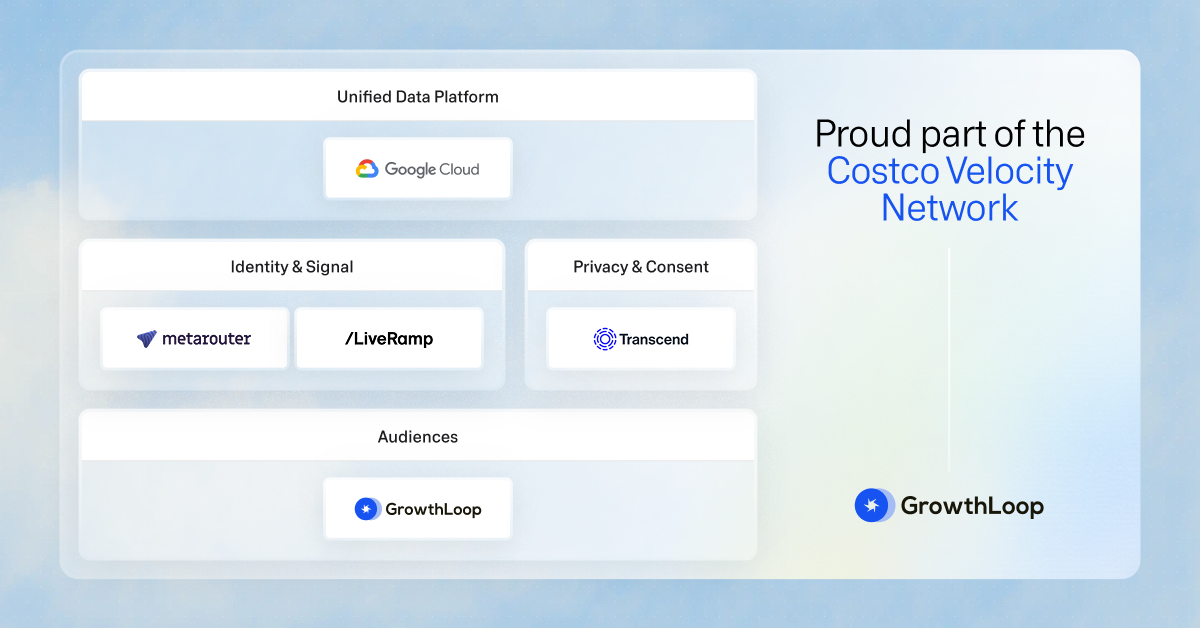
Costco isn’t scaling its RMN with legacy adtech and manual solutions. It’s leaning into a cloud-centric, composable stack.
As part of the Costco Velocity Network, GrowthLoop empowers the retail media team to build audiences directly from the data cloud, enabling faster activation, greater relevance, and better performance — all while maintaining privacy and governance standards.
The result? Exceptional value and experience for Costco members and better ROI for brand advertisers.
Learn why the GrowthLoop Composable Commerce Media solution was the right choice for Costco’s Velocity Network.
The agent did the legwork
The remainder of the episode was an interrogation of agentic commerce. The strict versions require fully autonomous buying, or a journey ending in an AI-driven checkout. Scot's definition as aa self professed "agentic maximalist" is far broader, and he shared a recent example of his own shopping behavior: .
I found this really cool cooler, and I just said to the agent, 'Hey, go see if you can find this for a better price and faster shipping.' And it did, and I said, 'Rip and roll: you do it.' And it just gave me a Stripe link. I clicked that, and it bought it."
Scot discovered the cooler that he wanted himself. The agent took over after that, chasing a better deal and handling checkout.
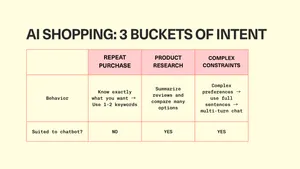
Most of the AI shopping narrative focuses on discovery — "AI is simply the new search" is an argument I've heard.
And that's where retail media's immediate anxiety sits, too. My own Shark Glossi purchase followed that path: ChatGPT did the research, and I landed on the PDP on Best Buy's website, ready to check out immediately.
Scot is using his agent for execution, which either wasn't possible, or palatable, until recently. If other shoppers follow him, the disruption lands somewhere different to where we've been expecting it.
Who pays for the agent?
But how will these agents make money, and who is their allegiance to?
Right now they're free. But remember: if the product is free, you are the product.
Scot says he would happily pay to keep his agent on his side.
Scot: "So at some point someone's gonna have to pay... If the merchant is paying through an affiliate link or something, then suddenly it's no longer gonna be incentive to fight for me."
Jason's view is that most consumers won't pay at all.
Jason: "The vast majority of consumers don't do that, right? And Ben Thompson on Stratechery very famously talks about all the models that involve the consumer paying for the service don't work... Sam Altman started out very anti-ads, and they thought, 'Hey, we'll get consumers to pay for this.' And already ads are a very robust monetization model on OpenAI."
That's the premise of the first episode of AdGentic, my new show about advertising in the age of AI agents.
I look at how agents like Meta's Muse, OpenAI's Dots and Instinct plan to pay their way. Subscriptions cap out at the people willing to pay, and most people won't. Fees are sneakier. Once an agent earns money on every purchase, merchants start paying to get to the front of the line. And paying for placement in front of a shopper is retail media.
So my bet is ads. The open question is whether they're relevant and clearly labeled, or the kind that sneakily influences your agent in the background.
Not all shopping is fun
The last question I want to highlight was about fashion, where brand matters so much. Scot recalled an audience member last year who swore she'd never use an agent for fashion. His daughter tells another story.
Scot: "My 19-year-old, she gets great enjoyment from battling it out on Depop, Poshmark... So she has an agent go do that. She says, 'This is the dress I want in this size. Go hammer them. The retail price is, you know, 150. Mom and Dad aren't paying that. Go find it for 75.'"
She keeps the part she enjoys, finding the perfect dress, and the agent does the haggling.
I wrote about this in "Not All Shopping Is Fun." Some shopping is fun. Plenty of it is a chore, and which bits are which depends on who's shopping and what they're after. Restocking the pantry is a chore for many; hunting down a secondhand dress is the best part for some and a slog for others. People are ready to hand over the chores. What's held them back is technology that hasn't been mature or trustworthy enough.
Now What
Whether agents handle discovery or legwork, someone needs to pay for them. And the person paying the bill gets to choose the incentives.
That's one of the questions I'll be chasing on AdGentic. The plan is to follow the money: who sells the ad space inside AI agents, what the ads look like, what they cost, and what's worth testing.
Find AdGentic on YouTube, listen on Apple Podcasts or Spotify, and subscribe to the free newsletter.
Listen to the full episode of The Jason and Scot Show, Episode 352 - Is Agentic Commerce a Mirage?
And read more from me on related topics: