
I remember when Gimlet Media founder Alex Blumberg launched his StartUp podcast in 2014. Host-read ads had been around for years by then, but Alex wanted listeners to know exactly when one was coming. He announced that he'd now be running ads in each episode, and played a little music jingle that would come before each one, so nobody could mistake a sponsor's pitch for Alex's organic endorsement. At the time, it seemed to me like overkill – to go to such an effort to disclose something that was already so obviously an ad.
But it looks smarter now. That one move told listeners that ads pay for the show, that paid and unpaid content were separate, and that he had no plan to dupe anyone.
That gave the audience something they could check, and trust tends to follow when people can check. Shoppers are applying the same test to AI.
Today I'll share four shared insights across new research from Acosta Group and my recent research in partnership with Bazaarvoice. The running theme is trust, and how in some cases AI is gaining trust, while in others there's still a trust gap. And the gap is where there's opportunity for brands and retailers.
But before we jump in, I want to let you know that I'll be hosting a webinar next week with Bazaarvoice CMO Doug Straton, to present some of the highlights from our recent research, 'What is a brand worth when AI does the shopping'. You can register for the webinar here. It will be short and sharp and actionable for brands of all sizes and categories!
Your advertisers can’t wait weeks for audiences.
GrowthLoop’s Composable Commerce Media solution helps media teams turn first-party data into high-value audiences, launch campaigns faster, and prove what’s working across every channel.
Learn how retail media leaders at Costco, Fanatics, and Gopuff use GrowthLoop to create highly segmented audiences and deliver stronger results for their brand partners.
1 - Ads give shoppers the ick
Acosta asked AI users how concerned they are that recommendations are influenced by ads or sponsorships, on a scale of 1 to 10, with 10 being extremely concerned. 56% answered 7 or higher, and the average was 6.6.
Bazaarvoice found that 54% of shoppers believe a brand they've seen advertised inside an AI tool is more likely to be recommended by that same tool, even though the AI companies say paid and organic content are kept separate.
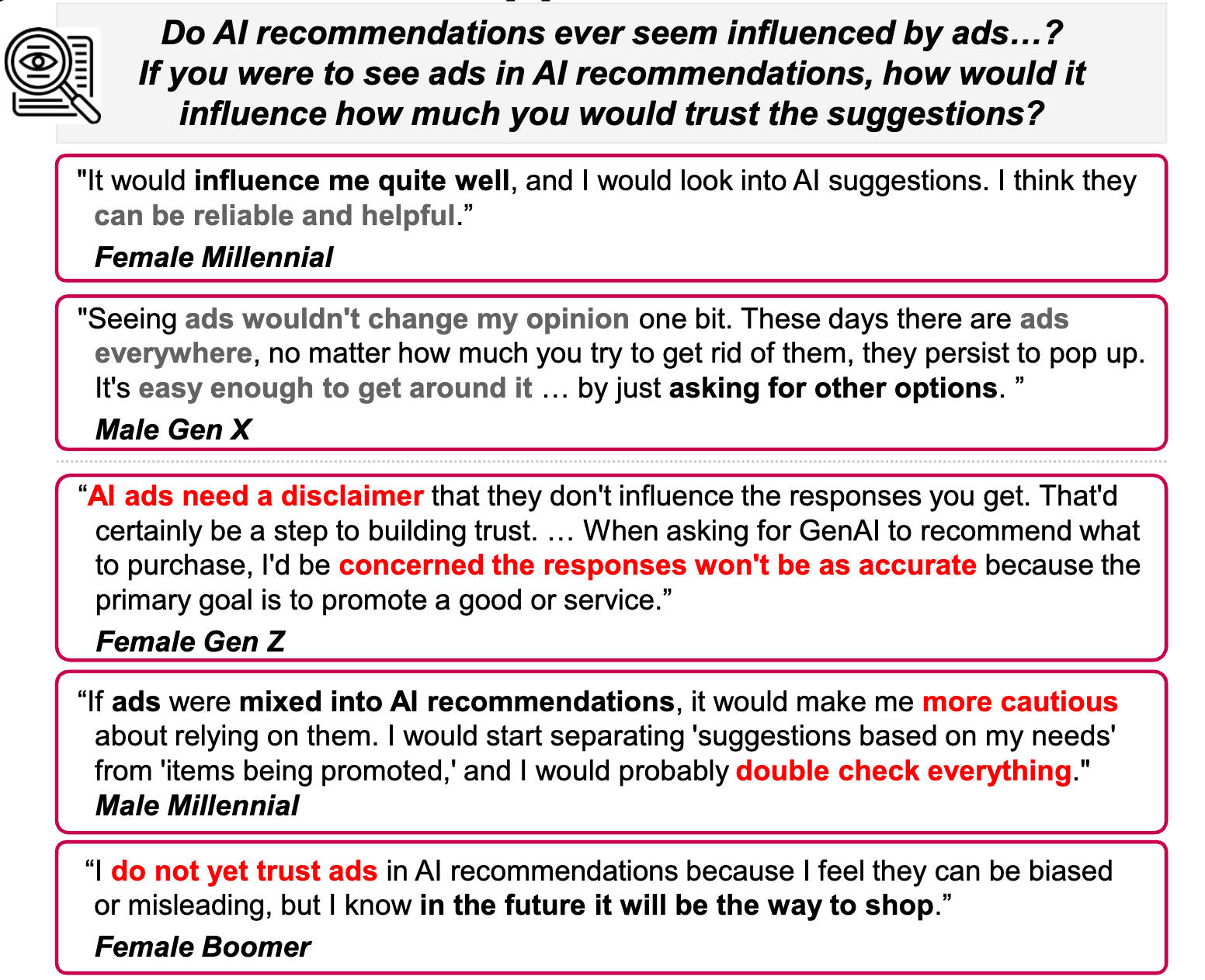
I don't think the answer is for AI companies, retailers or brands to stay out of chat assistants. The answer is disclosure: label the ad, and explain how paid and organic content relate. A Gen Z respondent in Acosta's follow-up discussion group asked for exactly that: "AI ads need a disclaimer."
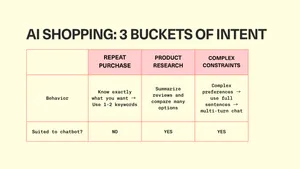
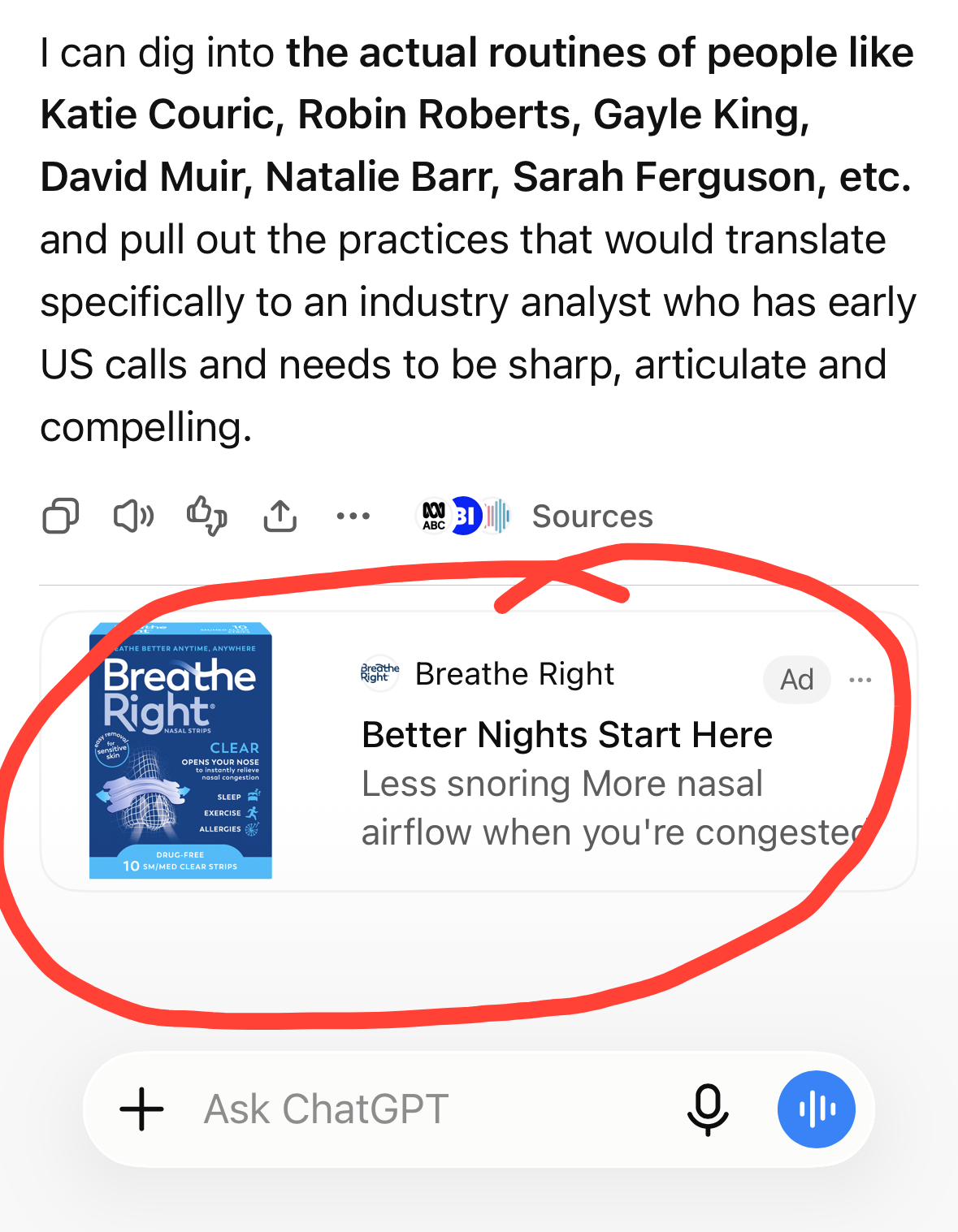
What would the "this is an ad" music jingle for ads in AI chat look like? Certainly couldn't be any worse than how they are currently disclosed:
2 - They trust but verify
Gen AI is a daily habit for 44% of its users, up from 37% last year, and Acosta found they extend it a fair amount of trust. 28% rate its information as more trustworthy than other sources, 60% about the same, and 12% less.
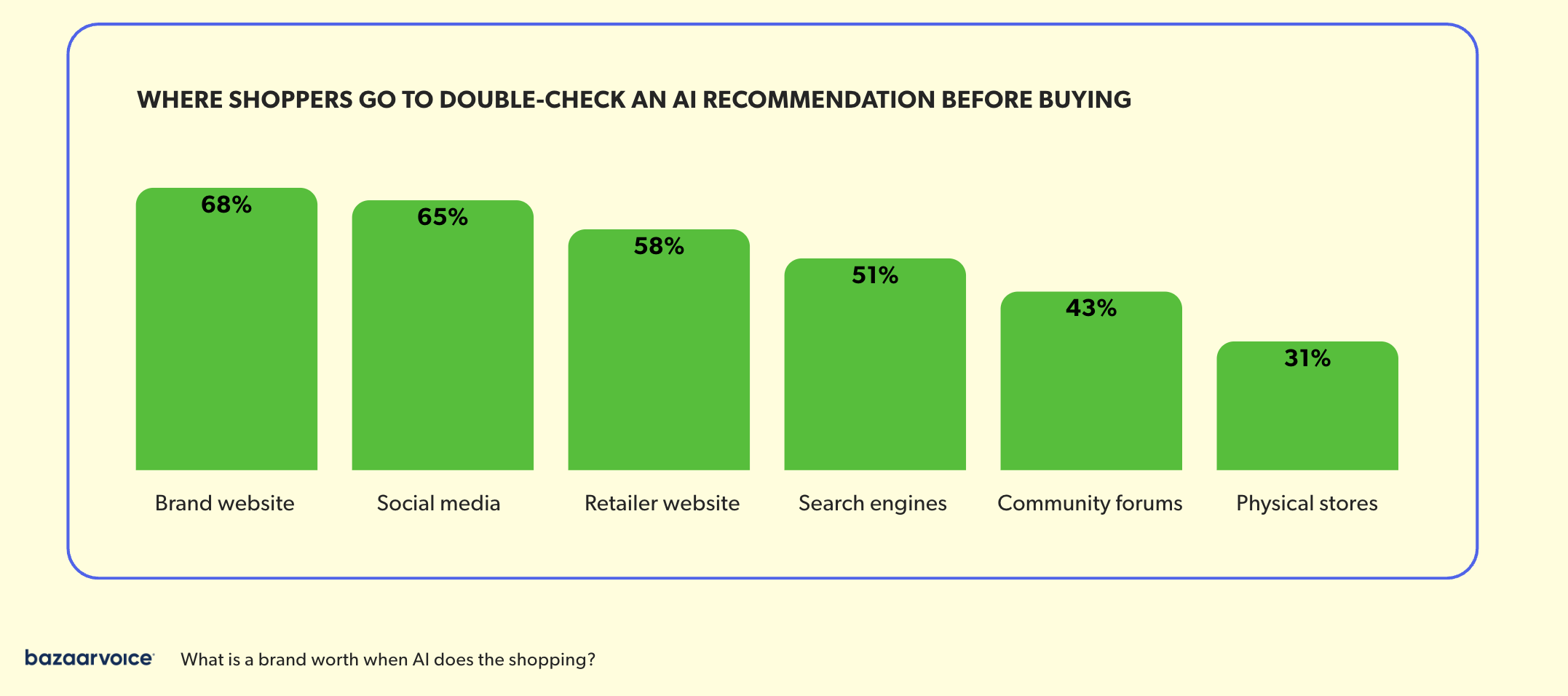
But trust doesn't end the research. In the Bazaarvoice study, shoppers who receive an AI recommendation go on to visit the brand's website (68%), check social media (65%) and look at a retailer's website (58%). When the recommended brand is unfamiliar, the share who do no further research drops from 13% to 6%, and the largest group spends 30 minutes to an hour verifying.
3 - The aisle gets a second opinion
'Showrooming' was the looming threat for retailers in the mid-2010s, when shoppers walked into a store and used Amazon to check product details, reviews and prices. It spurred a wave of ecommerce development.
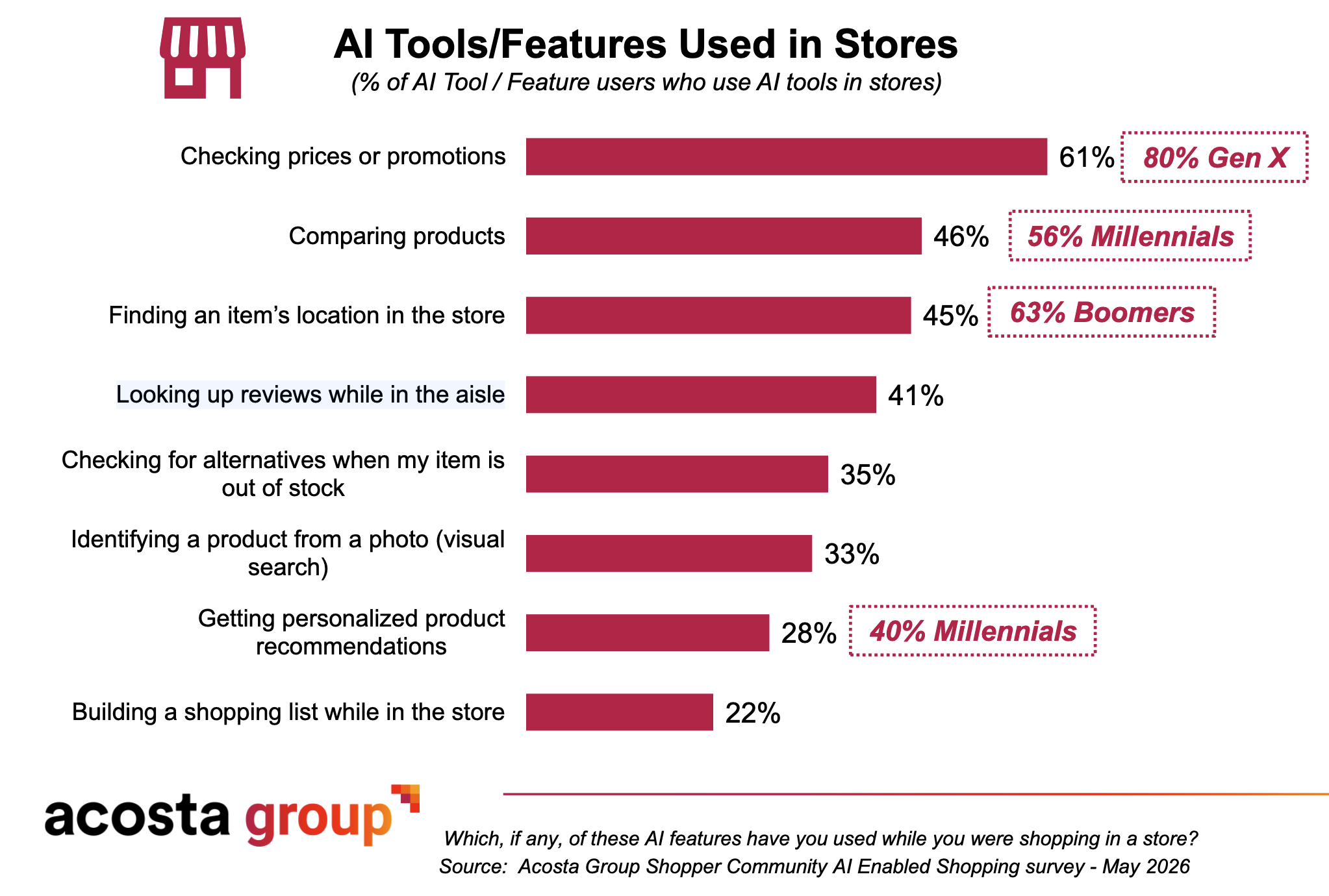
Acosta finds that 39% of AI users now use AI tools while shopping in a store, rising to 55% of Gen Z. The top uses are checking prices or promotions (61%), comparing products (46%), finding an item's location (45%) and reading reviews in the aisle (41%). Retailers who sell mostly in-store might believe they don't need an AI game plan. Their shoppers are already testing the shelf against a chatbot.
4 - Getting out of our comfort zone, with guardrails
Shoppers appreciate the ability of AI to surface new products or brands that they hadn't considered or come across before.
But shoppers still tend to put more weight on the brands they already recognize.
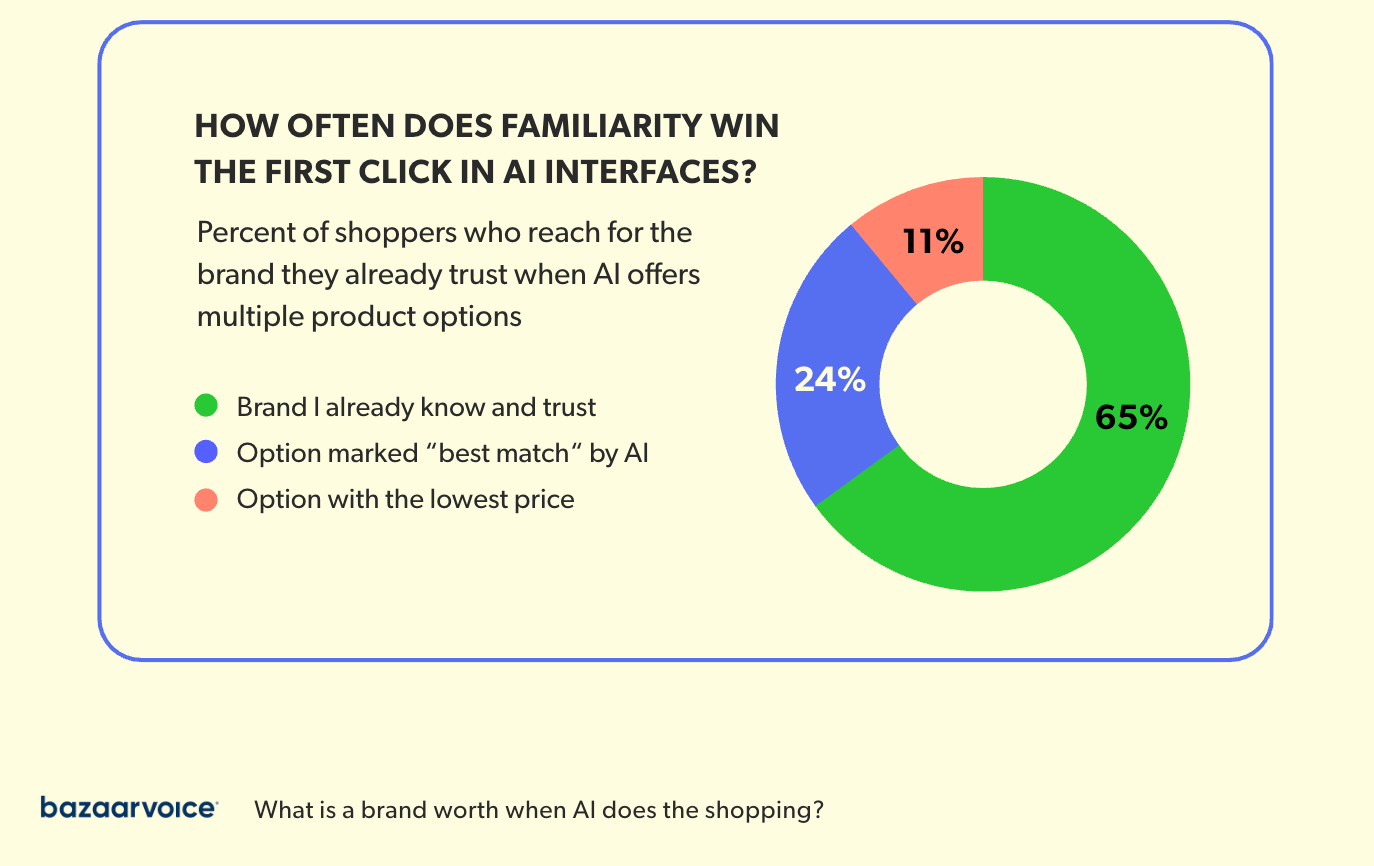
Bazaarvoice found that when AI offers several options, 65% click the brand they already know and trust first. We call this the first click advantage in the report.
Yet among Acosta respondents whose purchases AI had influenced (39% of users), 40% tried a brand they had never bought before, and 25% switched from their usual brand.
In my work with Bazaarvoice, we had a hunch that this openness to unfamiliar brands might vary by category, and that bore out in the data: 38% of shoppers are comfortable buying an unfamiliar brand that AI recommends in a low-risk category, 32% would buy an AI-recommended brand in all circumstances, and 17% would never do this.
What next
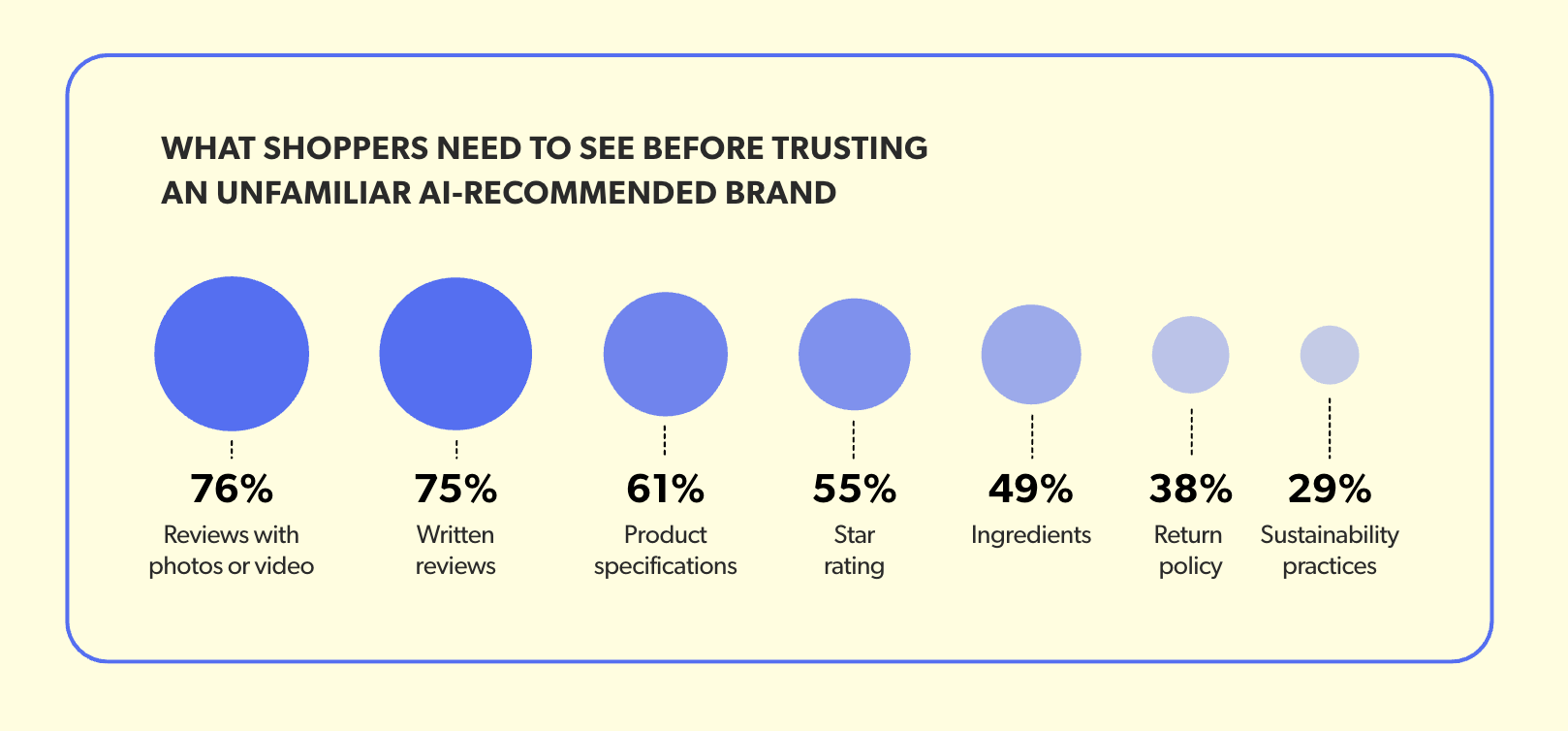
If you're a challenger brand, this is a major opportunity to level the playing field and compete more on product attributes than on brand and packaging alone. But you need to double down on proof. 76% of shoppers want reviews with photos or video before trusting an unfamiliar AI-recommended brand, and 75% want written reviews.
If you're the incumbent brand, you have a first-click lead, but it's on loan. Shoppers said they stay with a brand because the product performs (45%). Only 8% said habit. A highly rated dupe at half the price would move roughly seven in ten shoppers.
If you're the retailer, you are playing the role of the validation arbiter. 58% of shoppers check a retailer's website after an AI recommendation, and many are specifically seeking out rich product content and reviews. Acosta finds that where a shopper chooses to buy comes down to availability and pricing in their preferred channel or retailer (34% and 21%), and only 12% follow AI to the lowest price. I think that's heartening news to any retailer who's concerned about AI leading a race to the bottom.
And finally, don't miss my webinar next week with Bazaarvoice CMO Doug Straton, where we'll present highlights of the research. It's short, sharp and built for brands of all sizes and categories. Register here.
About the research.
- Acosta Group Insights: AI Shopping Evolves: fielded May 15–21, 2026 among 1,271 US shoppers of at least one retail channel in the prior three months. Acosta Group Shopper Community Gen AI Enabled Shopping Discussion Group. Published September 2026.
- Bazaarvoice & Kiri Masters, September 2026: What is a brand worth when AI does the shopping? Bazaarvoice Brand Equity Survey, June 2026, 3,600+ adults in the US, EMEA and Australia; question-level sample sizes range from roughly 3,300 to 3,600.