
Note from Kiri: Today I'm handing the newsletter over to Doug Chavez, EVP of Global Retail Channel Strategy at Mars United Commerce. Doug wrote this last week for the Mars United blog, after Walmart announced how it plans to let AI agents shop on customers' behalf — and the rules those agents have to follow.
Doug's piece from August actually set this concept up, well before Walmart's announcement. Here, Doug pushed back on the pervasive idea that the shopping journey is splintering across more and more places. His view is that a small number of AI assistants are knitting together decisions we used to make across ten open tabs. In essense he was arguing of coming consolidation rather than fragmentation
I'll be back after Doug's short piece below with some more thoughts of my own.
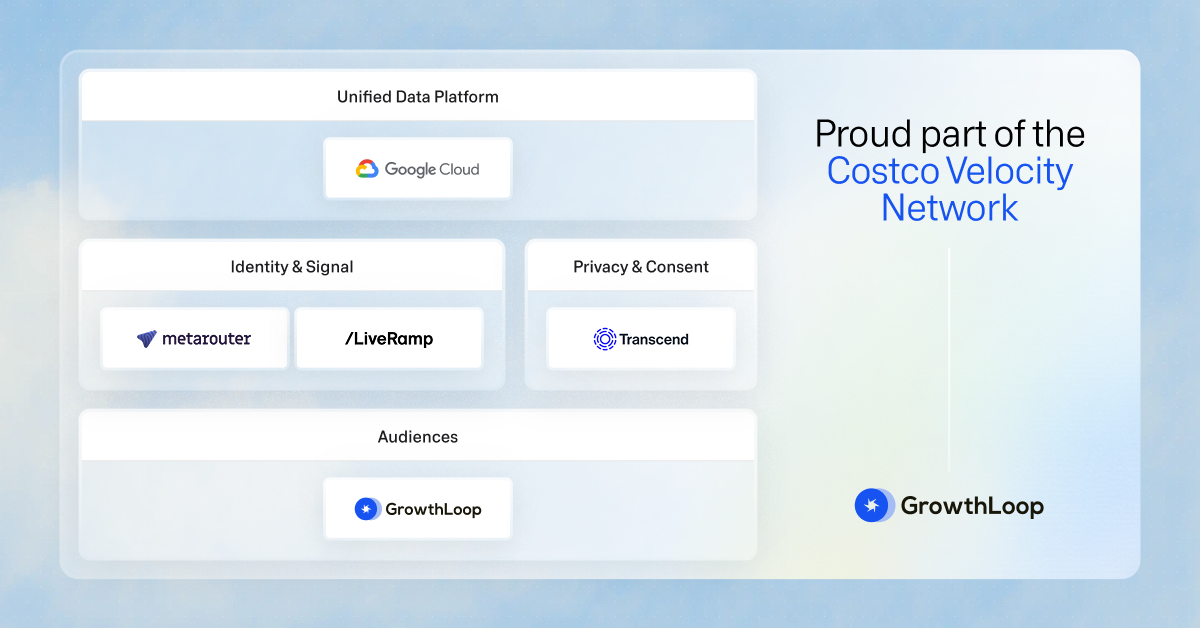
Costco isn’t scaling its RMN with legacy adtech and manual solutions. It’s leaning into a cloud-centric, composable stack.
As part of the Costco Velocity Network, GrowthLoop empowers the retail media team to build audiences directly from the data cloud, enabling faster activation, greater relevance, and better performance — all while maintaining privacy and governance standards.
The result? Exceptional value and experience for Costco members and better ROI for brand advertisers.
Learn why the GrowthLoop Composable Commerce Media solution was the right choice for Costco’s Velocity Network.
Walmart just published its operating rules for AI agents shopping on a customer’s behalf. Most of the media coverage will focus on consumer controls but there is a bigger story for brands sitting underneath them.
There are three parts to Walmart’s plan.
Agent Profiles give each third-party agent its own identity inside a customer’s account, with spending limits and approval rules.
The Walmart Agent Gateway lets agents transact directly over Model Context Protocol (MCP, the open standard that lets agents talk with other systems) instead of clicking through the Walmart.com built for humans.
And new terms spell out what agents can and can’t do, with non-compliant agents getting blocked.
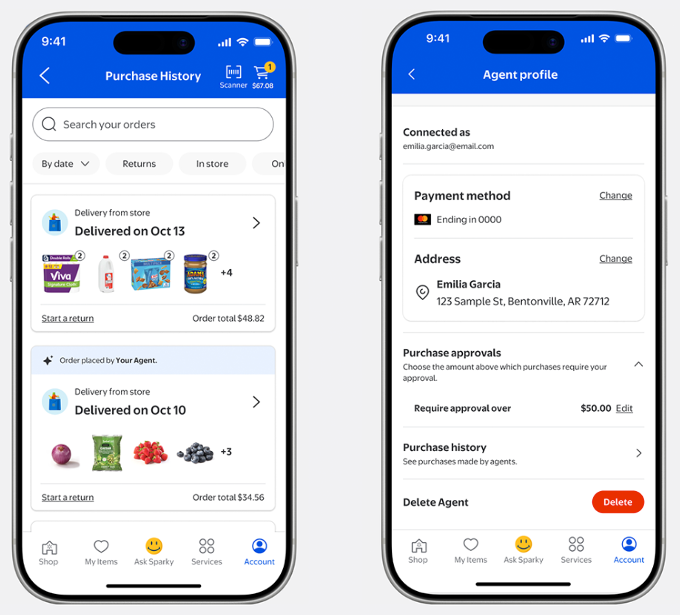
Earlier this year, I spoke at The Athena Group and wrote about how The Shelf is Becoming an API. Walmart just shipped it. Here are five implications for agency commerce practitioners and brand leaders.
- Intent is being disintermediated, not fragmented: The shopper’s request now passes through an agent before it reaches Walmart. But look closely at the design. Walmart retains the purchase history. The agent gets the customer’s “usuals” without seeing the full basket. Walmart has positioned itself as the system of record for intent and the agent as a guest. Every other retailer is likely to make that same move or face being disintermediated.
- The “usuals” feature matters most for CPG: If an agent reorders the favorite cookies and the milk by default, brand choice moves upstream. The first purchase becomes the whole game, because the repeat order may never see a shelf, a search result, or an ad. Physical availability now means shelf, search, and agent. Most brand plans still fund only the first two.
- Retail media now has a pricing problem: An agent calling an API doesn’t scroll past a sponsored tile. Walmart Connect will need to find a way to monetize agent traffic. Until it does, visibility comes from what the agent reads: product data, content, ratings, availability. That is AEO for retail, and it’s no longer optional for brands — most of which are still early in developing a POV and plans.
- Measurement has a new line item: Agent purchases will sit in their own profile, separate from the customer’s. That’s the clearest separation of agent-driven sales I’ve seen from a major retailer. Brands should be asking for that cut in their retailer data now. As I’ve said often this year at industry events, “You cannot govern what you cannot measure,” and you can’t plan for a channel you can’t see.
- Trust is the real product: Same price for agents and humans. No card data is shared with the agent. Walmart’s returns policy covers agent mistakes. Walmart is underwriting the risk of delegation, and that is what can move agent shopping from novelty to trusted partner and create habitual adoption. Retailers need shoppers to adopt early and en masse.
The Takeaway
Agentic commerce is no longer a 2028 experiment. Walmart just published the operating terms. The question for every brand is whether its content, data, and media plan are prepared to be read by a machine shopping on someone else’s behalf.
No single tactic wins an agent. The pace of AI is moving at warp speed, which means teams and brands need to operate with a mindset of “Orchestration beats optimization.” The brands that connect product data, retail media, and measurement into one system will own the next default. That’s the work we’re doing with clients at Mars United today.
This piece originally ran on the Mars United Commerce blog on October 27, 2026, and is republished with permission.
Closing note from Kiri:
I agree with most of what Doug lays out here, especially the bit about the "usuals." But there are a couple of things I'd add.
First, Walmart's Agent Gateway is still a beta for companies and developers, so we're looking at the future plan rather than something shoppers can use yet.
Second, Doug says an agent calling an API doesn't scroll past a sponsored tile. True! But look at how the Gateway works: Walmart says outside agents connect through Sparky, its own shopping assistant. And Sparky has been running ads — sponsored prompts — since earlier this year. So when someone's personal AI agent shops Walmart through the Gateway, it's talking to an assistant that Walmart Connect already sells ads in.
Will those sponsored placements shape what Sparky passes back to the outside agent? I don’t know, and I haven’t seen Walmart say either way. (Walmart Connect friends, I’d love to hear the answer!)
But there’s already a precedent for ads written for machines. Since July, Time has been serving sponsored brand FAQs in stripped-down versions of its pages that only AI crawlers see. Ally Bank and the Project Management Institute were among the first buyers. The ads are labeled as sponsored, but showing bots a different page from the one humans see has made some marketers and developers uneasy.
A publisher feeding brand facts to chatbots is a long way from a retailer nudging an agent at checkout. But between Sparky and Time, I wouldn’t bet on retail media’s “pricing problem” staying unsolved for long.
Third, Doug expects other retailers to follow Walmart's lead. Maybe, but its biggest competitor is heading the opposite way. Amazon is playing whack-a-mole with outside agents. My view is that's at least partly a bid to turn Andy Jassy's theory that horizontal agents won't be effective at shopping into a reality. So for now, brands selling on both are dealing with two very different versions of the "usuals" — one that stays inside Amazon's walls, and one that Walmart will hand to whichever agent the shopper picks.
If you want more on this, I've written about it a few times:
- Amazon is playing agentic commerce chicken. Other retailers should not. Amazon can afford to wait out the agent revolution. Everyone else can't.
- Agentic Shopping Poses an Existential Threat to Retail Media, Part 1 and Part 2 — why the sponsored product ad is the most exposed when shopping moves into an assistant, and my case (from August 2025!) that retailers should roll out the red carpet for agents instead of blocking them. Walmart and Amazon have indeed dug their heels in on either side of this philosophical divide.