I've been hearing from performance advertisers for a while now that ChatGPT ads aren't pulling their weight.
So when Christian Schulze, a professor at the Frankfurt School of Finance & Management, shared a new working paper on LinkedIn this week under the line "ChatGPT's ads don't pay," I wasn't entirely surprised.
Then I remembered a case study that did the rounds a few weeks ago, from measurement firm WorkMagic and supplement brand Dose. It found ChatGPT ads drove 2.3x more orders than click attribution gave them credit for.
On the face of it, these two sources disagree, but both can be true.
The academic paper asked whether a ChatGPT ad click to a brand's or retailer's own website was worth as much as a Google search click. It found a paid ChatGPT visit brought in only about 1/3rd of the revenue of a paid Google search visit, at a higher price per click.
The Dose case study asked whether ChatGPT ads created orders on Dose's own site and on Amazon that click attribution couldn't see. It found they did, including a halo effect on Amazon sales.
Each study answers a different part of the question a brand buying ChatGPT ads has to answer for itself.
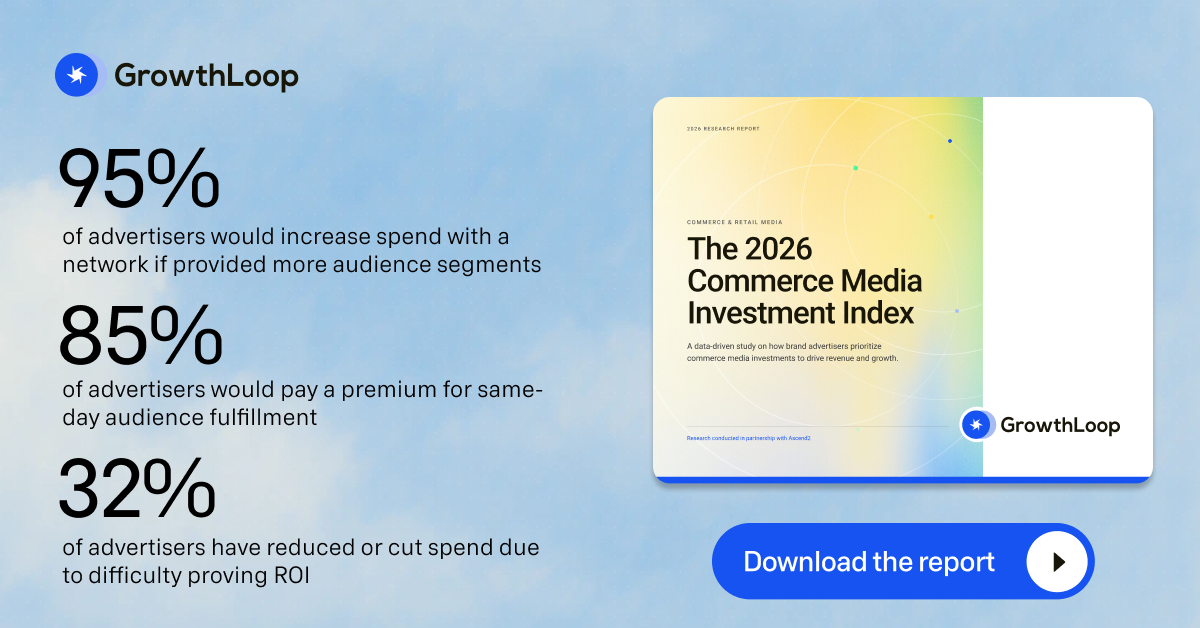
85% of advertisers plan to increase spend with media networks in the next year. So, how do you get a bigger share of those budgets?
New research from GrowthLoop & Ascend2 reveals that activation speed and audience options are decisive factors in where advertisers place their dollars.
- 86% would reduce spend or leave a network if their audience fulfillment is too slow
- 85% would pay a premium for same-day fulfillment
- 32% have reduced or left a media network because of difficulty proving ROI
For more insights into what brand advertisers are looking for in media network partners, download The 2026 Commerce Media Investment Index.
The ChatGPT ad premium vs Google search
Kaiser and Schulze compared visits from ChatGPT ads with paid Google search visits to the same stores, using Google Analytics data donated by analytics firm Grips Intelligence, where co-author Maximilian Kaiser is a scientific advisor. (More on how both studies worked at the end.)
- Paid ChatGPT Visit: $0.89
- Paid Google Search Visit: $2.45
In US traffic, a paid ChatGPT visit brought in $0.89 in revenue, against $2.45 for a paid Google search visit. Because the comparison happens inside the same store, "ChatGPT advertisers just have worse websites" can't explain the gap.
At paid search's rate of return, the authors estimate a ChatGPT click is worth about 26 cents. OpenAI recommends new advertisers start bidding at $3 to $5 a click.
Switching the ads off
Dose's test with WorkMagic, an ad measurement vendor, didn't count clicks. It switched ChatGPT ads off in some US markets and compared sales there with the markets where the ads kept running. The difference is the number of incremental orders the ads drove.
By that measure, ChatGPT ads drove 2.3 times as many orders as Dose's click-based reporting had credited them with, and some of those extra orders showed up on Amazon. Dose's head of paid, Ari Jessel, said the test helped the team "see the demand ChatGPT was actually creating, not just the conversions it could claim."
Where the extra orders went (maybe)
Kaiser and Schulze’s paper, on the other hand, only sees what happens on each store’s own website. The authors did check whether ChatGPT ads gave a bump to the store's other traffic sources, and found nothing measurable. But what about someone who sees a ChatGPT ad and then goes and buys the product on Amazon? That sale is invisible to the paper, and it's exactly the shopper Dose's test was set up to catch.
If you've spent any time in retail media arguing over whether offsite ads drive Amazon sales (I've been down that road in my MTA series), this is a familiar problem.
What wasn't abundantly clear to me is the 2.3x multiplier. The headline says it counts orders on Dose's own site only, while the chart appears to include Amazon too. If it does includes Amazon, the two studies fit together, because the extra orders are being placed on Amazon, where the academic paper didn't see. If it's Dose's own site alone, that's a real disagreement between the 2 sources – though one brand's test doesn't outweigh a study of more than 100 advertisers.
Customer Acquisition Cost
What the case study doesn't tell us is how much Dose paid for those extra orders. So we know ChatGPT ads did more for Dose than the click data showed, but not whether they were a good deal.
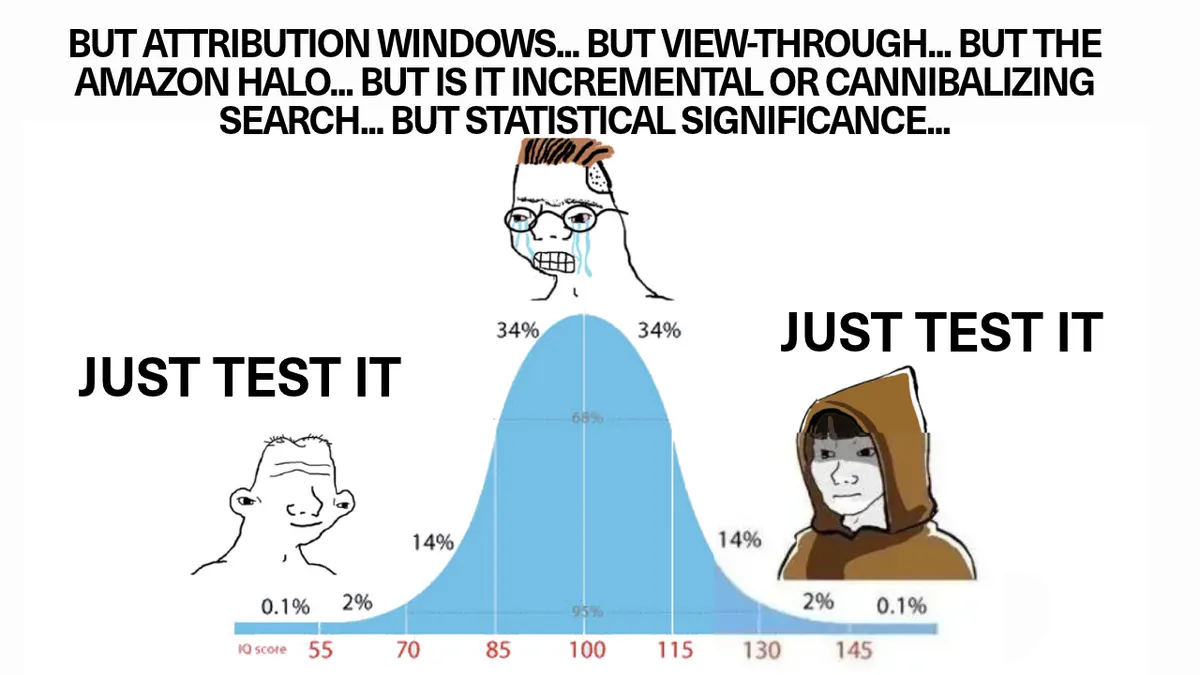
You might be tempted to combine the two studies. If a ChatGPT ad click brings in about a third of what a Google click does, but Dose's click data undercounted the real impact by 2.3x, then surely ChatGPT ads are nearly as good as Google's? Not so fast. Google's ads also drive sales that clicks don't capture, so Google's real number would go up too. The only fair comparison would test both channels the same way.
The academic paper is also comparing an ad platform that launched in February with Google search, where prices and performance have had decades to normalize.
Brands paid a premium to be part of ChatGPT Ads when it was new and exciting and invite-only. One brand-side media leader even admitted to me that they'd joined the ChatGPT ads beta, and spent money there, mostly for the bragging rights. From what I'm hearing, plenty of people in the industry thought the launch prices were inflated, and this research picks that up.
ChatGPT's ad business is less than a year old, and it's still working out its ad units, its targeting and its own point of view. I wouldn't expect today's numbers to hold for long. If clicks are worth 26 cents, bids will drift toward 26 cents, and brands that test properly will find their own number.
If I were deciding whether to put more money into ChatGPT ads, I’d want to know two things.
- What happens after the click, including in places like Amazon where I can’t see everything?
- How are the prices changing?
Dose’s test starts to answer the first question for one brand. But neither study answers the second, and that’s the one I’ll be watching.
How the two studies worked
- Written by Maximilian Kaiser (Vienna University of Economics and Business) and Christian Schulze (Frankfurt School of Finance & Management). A working paper published in October, not yet peer-reviewed.
- Google Analytics data from 1,898 online stores.
- Ads launched country by country from February 2026. The EU stayed ad-free through late August, when the study window ended, and serves as the comparison group.
- That window covers roughly the first six months of ads. Self-serve buying only opened in May, and conversion-optimized campaigns arrived in June.
- Published by WorkMagic (an ad measurement vendor) with Dose, a liquid supplement brand selling on Shopify, on Amazon and at some retailers.
- ChatGPT ads were paused in a set of US markets matched to the rest on seasonality and sales trends, and kept running elsewhere.
- Orders were measured on Dose's own site and on Amazon. Retail store sales weren't included.
- Not disclosed: the number of markets, test length, spend, confidence intervals or raw order counts.