
An earlier version of this piece was published to my column at The Drum on October 27 as 'Retail media was built on the keyword search bar. Its days are numbered'. It is reproduced here with permission.
Political opinion put completely to one side, one of the most instructive website launches of the year came from the White House.
On September 29, the administration launched America.gov, a site that works like a chatbot. Ask it how to renew a passport and it answers in plain language, then points you to the right agency.
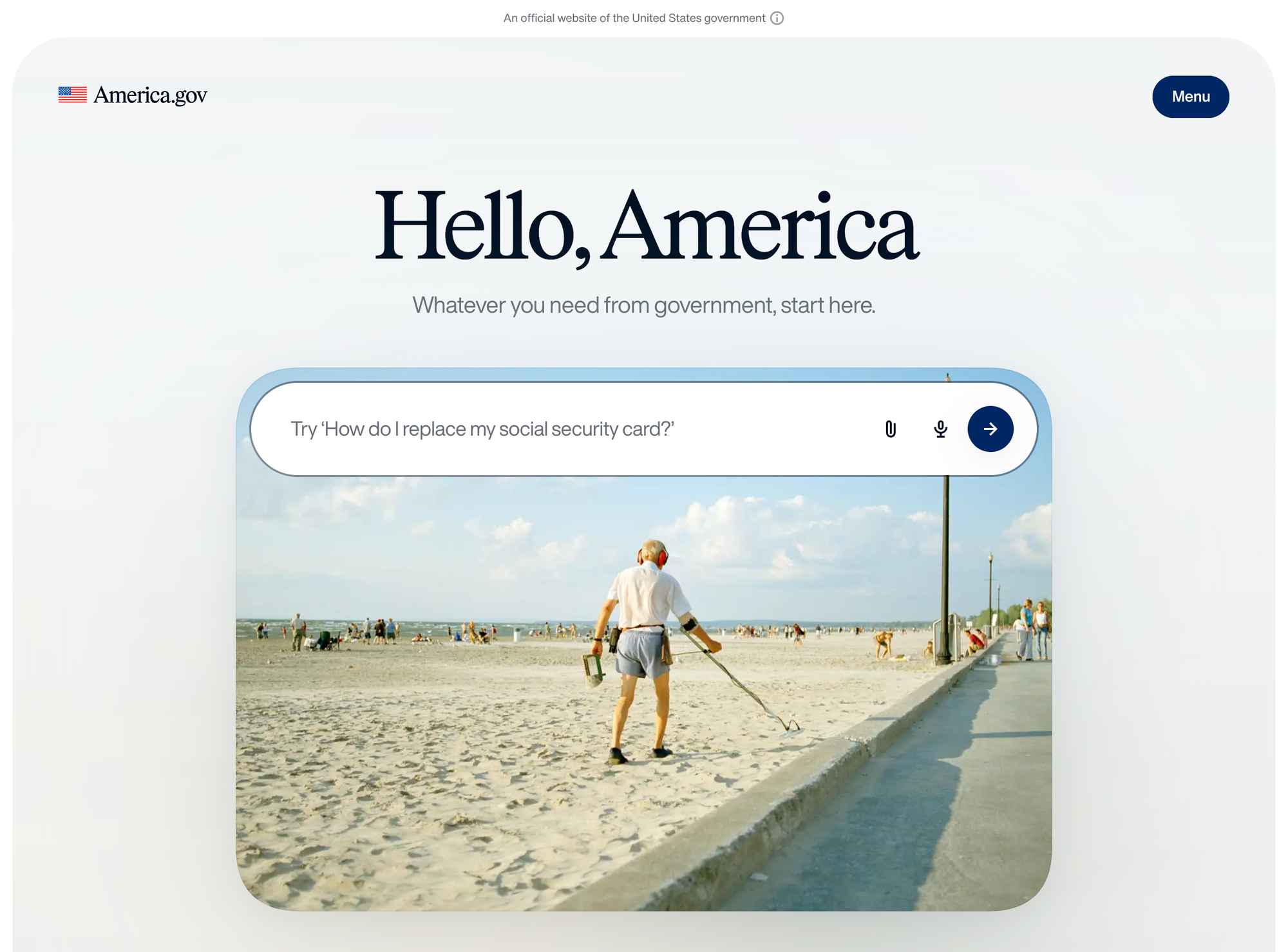
Whatever you think of the administration, the design choice shows where the puck is going. The site assumes visitors will type what they need in their own words, instead of picking through a list of agencies or guessing the right keyword.
Emily Pfeiffer, a principal analyst at Forrester who evaluates commerce search technology, thinks retail websites and apps are headed the same way. If she's right, retail media has a problem.
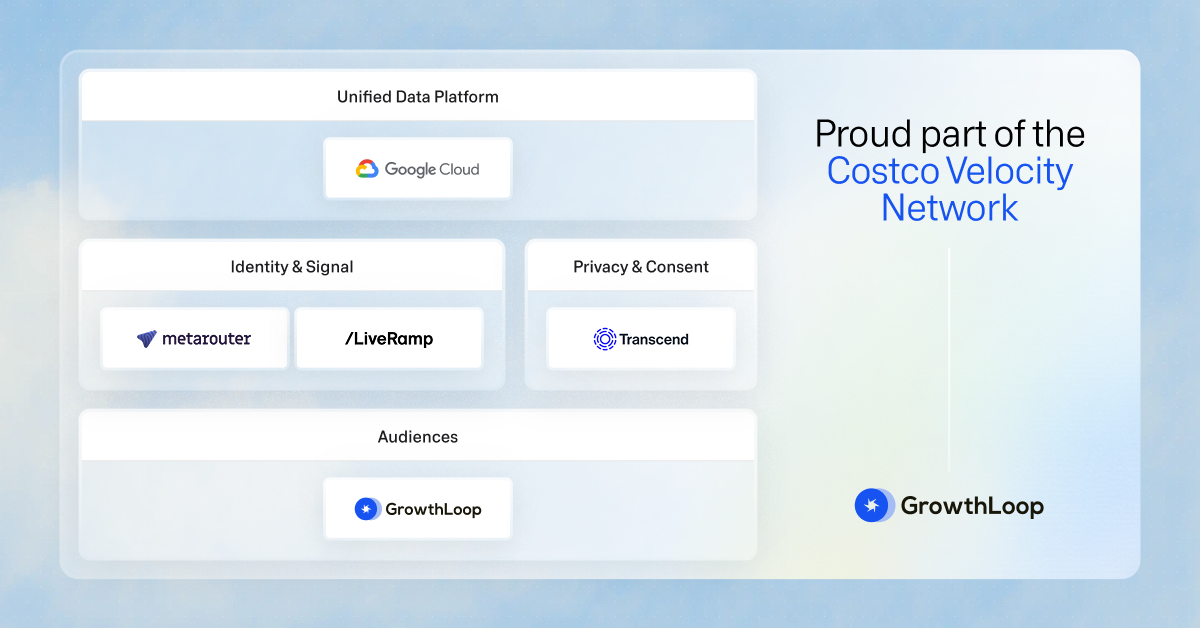
Costco isn’t scaling its RMN with legacy adtech and manual solutions. It’s leaning into a cloud-centric, composable stack.
As part of the Costco Velocity Network, GrowthLoop empowers the retail media team to build audiences directly from the data cloud, enabling faster activation, greater relevance, and better performance — all while maintaining privacy and governance standards.
The result? Exceptional value and experience for Costco members and better ROI for brand advertisers.
Learn why the GrowthLoop Composable Commerce Media solution was the right choice for Costco’s Velocity Network.
Google is training shoppers
"I believe that Google is training us all to change our behavior," Pfeiffer told me. Google has been working AI Overviews, a small version of its Gemini assistant, into ordinary search results.
Google says the average search in AI Mode, its conversational search experience, is 3X as long as a traditional search query, and that people are asking it longer, more conversational questions.
Shoppers are learning to ask questions instead of typing search terms, spurred on not just by the dedicated ‘horizontal’ AI assistants like ChatGPT, Gemini, and the like. But there’s also the ‘vertical agents’ that retailers are building, like Amazon’s Alexa for Shopping and Walmart’s Sparky.
Most retail sites can’t keep up. Pfeiffer evaluates commerce search and product discovery vendors for the Forrester Wave. In her last evaluation, about a year ago, even the vendors that scored highest on conversational product discovery “still were meh,” she said.
I run into this all the time. Grocery apps invite me to take a photo of my written shopping list so they can fill my cart. I don't write my list out. It lives in a notes app, and I can't even upload a screenshot of it.
On October 2, Pfeiffer published Forrester's framework for what comes next. It's called ADVICE: an acronym for six requirements for conversational search on sites and apps. Three matter most for retailers.
- Versatile: one conversation for product discovery, customer service, returns and account management, accepting text, voice and images. Yes, images like that screenshot of my shopping list.
- Individualized: remembering a shopper's behavior, preferences and past conversations.
- Embedded: moving the conversation out of the pop-up chat window and into the search bar and onto the page.
Shoppers seem to want this. In a July survey of Forrester's online consumer research community, 74% of consumers in the US, UK and Canada who had recently used a chatbot to discover products said they would rather just use the main search bar for all their query needs.
Pfeiffer, who spent 20 years in web and digital commerce development before joining Forrester seven years ago, calls it “the first really major change in website layouts in literally decades.” She also thinks retailers don’t want it to be true. Redesigning the most important touchpoint is expensive and risky.
Retail media runs on the keyword
Sponsored product ads are sold against keywords. Brands bid on search terms, ads appear in a grid of results, and search term reports show what shoppers typed before they clicked. The whole system assumes a shopper types a few words into a box.
A conversational search bar breaks that assumption. When a shopper types a paragraph, there is no obvious term to bid on. Nikhil Lai, Principal Analyst, Performance Marketing at Forrester, told me retailers will need to develop conversational ad formats that monetize intent rather than keywords.
“The strategic battle becomes owning shoppers' conversations,” he said.
What Retailers are building
Amazon put ads into Rufus first, and now Alexa for Shopping. Walmart announced ads for Sparky in January. Kroger launched its assistant in late July with product listing ads switched on from day one. In eMarketer’s latest research, which I wrote about for this column last week, retail media networks named onsite native AI ads as the second-biggest expected source of revenue growth in the next 12 months.
Kroger’s setup is telling. Brands already running search and browse product listing campaigns with Kroger Precision Marketing become eligible for the assistant automatically, with no extra setup or bidding, and the results are reported separately. That’s a no-brainer way to start, but it also means the first conversational ad inventory is being sold through campaigns built around keywords.
Daniel Vitiello, co-founder of Cooklist, which built Kroger’s assistant, thinks the bigger change is still ahead. “My shorthand for that transition is that shopping is moving from ‘search and select’ to ‘review and accept,’” he told me in August. In Cooklist’s own data from shoppable recipes, customers accept about 90% of the default product selections.
If he’s right, the most valuable placement becomes the default item in a basket, and nobody buys that through a keyword. Vitiello doesn’t think this has to hurt retail media’s economics. “You might therefore have fewer clicks, with each click costing more and converting better, while a brand’s ultimate customer-acquisition cost remains similar,” he said. That’s a workable business. It is also a different one from what most retail media networks are set up to sell.
Who pays for the rebuild?
Building one conversational experience means joining up parts of the retailer that have never had to work together. Macy’s, Pfeiffer said, uses Google for site search, and the chat button near the search bar will help you find a dress for an occasion. “If you say, I need to return one that I bought last week, it has no idea how to help you.” Inside the retailer, different teams with different budgets own each one.
This all hits a little close to home for retail media teams, who live in slippery silos of their own. Paid results, organic results and on-site merchandising are often run by separate teams. And when the site isn’t ready for ads, the media team often pays to fix it.
I often hear some version of this story: a media leader arrives, finds the customer data platform isn’t fit for purpose, and realizes nobody else is going to fund a new one.
Earlier this year I wrote that retail media is increasingly the lever that finally gets overdue infrastructure funded. AI is now doing the same job. A catalog clean-up that was rejected as a quality project can get approved as preparation for agentic commerce, and conversational search depends on exactly that unglamorous work: catalogs, taxonomies, attributes, pricing accuracy. Agentic AI might be the best thing that happened to the armies of product catalog teams out there, shouting into the void that product content needed upgrading. This is their moment. Don’t look a gift horse in the mouth.
What's holy
So why would a shopper type a question into a retailer's search bar instead of ChatGPT's?
My answer goes back to an idea I set out in my profile of Gopuff's Michael Peroutka. I call it finding what's holy: the moat that keeps customers coming back, which the ad business should exploit and never damage. For a grocer, what's holy includes things ChatGPT can't know: what you bought last week, what's in stock at your store, which delivery slots are open, which physical locations you shop in.
Retailers that don’t put that to work in their own assistants, Forrester’s Nikhil Lai warns, “risk becoming fulfillment endpoints behind answer engines’ discovery and advertising layers.” A fulfillment endpoint doesn’t have an ad business.
Retailers that do build their own assistants will have to decide whether a sponsored item belongs in an answer, and whether that call sits with the merchant protecting the shopper or the media team protecting its revenue line.
For now, my grocery shopping list still lives in a notes app. Whichever grocer lets me upload the screenshot will probably get my order. And the ad dollars that come with it.