
"Retail media is a creative wasteland" is a catchy refrain, and as someone who makes content for a living, I respect the hustle.
It's the frame Ipsos built its new retail media research around — Creativity over Clicks, which compares the 'beautiful and thoughtful work' of traditional brand marketing with the field of retail media, which is 'not winning an award anytime soon.'
I read the first half of the research with my hackles up. Then I took a breath, slowed down, and realized that Ipsos was confirming with data things that many retail media practitioners on both the buy and sell side have known for a long time – but from the POV of being inside the glass bottle, not outside of it and able to see the label.
First, the part that made me mad
Ipsos went for the jugular: Retail media is where "creativity mostly goes to die." The feeds are "cluttered." The creative is "cold, utilitarian, and formulaic." Best case it's forgettable, worst case it's annoying.
What grated on me was the insinuation that creative in retail media lacks any nuance or thought. That somehow media buyers in this space have never considered that ad copy and images might matter. That couldn't be further from the truth. Retail media buyers meticulously test and refine their messaging and their creative. They do it not with the dream of winning a Lion at Cannes, but with the mandate to actually drive sales.
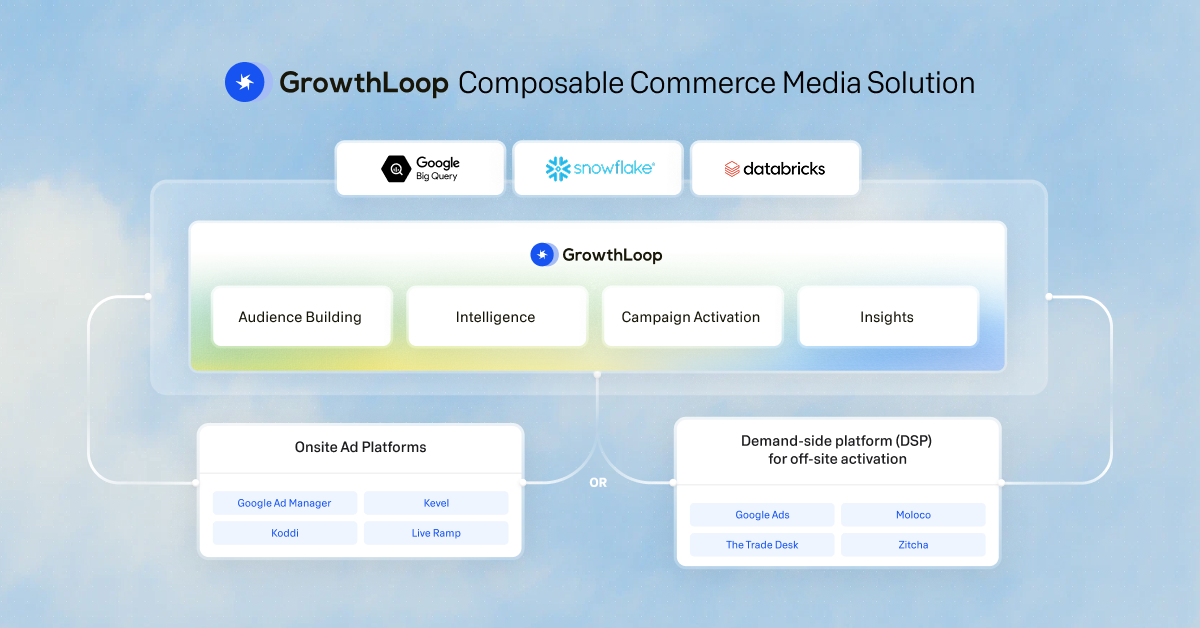
Are manual processes slowing down your RMN momentum?
With GrowthLoop’s composable commerce media solution, retail media and ad teams can build and launch precise audiences in minutes, activate across DSPs and ad platforms, and deliver transparent ROI reporting that drives advertiser revenue.
Learn how retail media leaders at Costco, Fanatics, and Gopuff use GrowthLoop to deliver stronger results for their brand partners.
Retail media pulled in $170 billion globally last year — more than linear TV and connected TV combined. Ipsos' read on that number is that most of it isn't advertising in the way our industry has always used the word. It's distribution: the digital version of shelf space, an end cap, the candy rack at the checkout. Below-the-line, in old media-planning terms.
Perhaps I was on the defense because earlier this month, brand marketing expert Mark Ritson blasted retail media as incapable of building brands people not to let retail media claim it builds brand.
So what I caught was a whiff of the grown-ups turning up to take our crayons away. Here, you clearly don't know what you're doing — let us do this for you.
Why the work looks the way it does
Most of the retail media practitioners I've met on the buy-side — brands and the agencies representing them — are mathy types. Folks who'd categorize themselves as more science than art. There's a reason for that. Retail media is a performance sport. It was built on direct sales data, the kind of deterministic information brand marketers don't usually get to have. The money often came out of the sales team's budget, not marketing's. Both the ad inventory from retailer and the media plans from buyers were built with one goal in mind: grow sales.
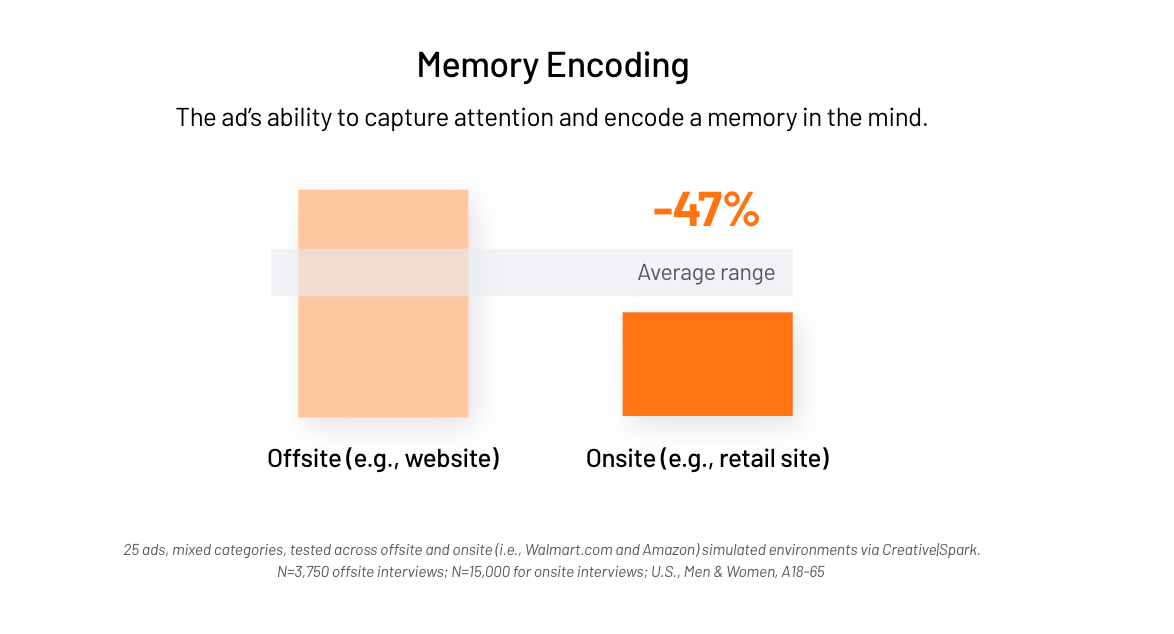
Ipsos' own data explains the rest. The same ad is 47% less likely to be remembered on a retailer site than in a programmatic placement, and the reason they give is mindset. On the open web or scrolling social, shoppers are in passive, leisurely mode. In a retailer environment they're on a mission — "Leave me alone, I need to get my shopping done."
Which answers the question the report keeps asking. Why isn't there more distinctive storytelling in on-site retail media? Because a beautifully crafted brand video isn't helping the shopper's mission. It's in the way. The on-site ad is usually the last reminder in a longer chain, not the only touchpoint, and its job is to clinch the sale.
Retail media is capable of more
Chapter Four is where Ipsos makes my argument for me:
"A large driver of this dynamic is the measurement offered within the channel. If all I can get a read on is lower funnel metrics – and that's how my goals are set – then of course creative choices are going to be geared towards showcasing an immediate call-to-action over implementing brand building best practices."
Of course. That's Ipsos saying the buy-side is behaving rationally. The creative is basic because the thing the channel is uniquely best at is measuring the bottom of the funnel. But there's other reasons, including that the teams responsible for retail media often sit within the sales org, and their mandate is, well, to grow sales. These are the goals that media plans get written against.
That's not to say, as fellow industry analyst Andrew Lipsman recently wrote, that retail media is not capable of much more.
The rest of the report is evidence for it. Video beat display on every brand measure they tracked — 47% higher on memory encoding, 130% on brand linkage, 20% on shift in brand choice.
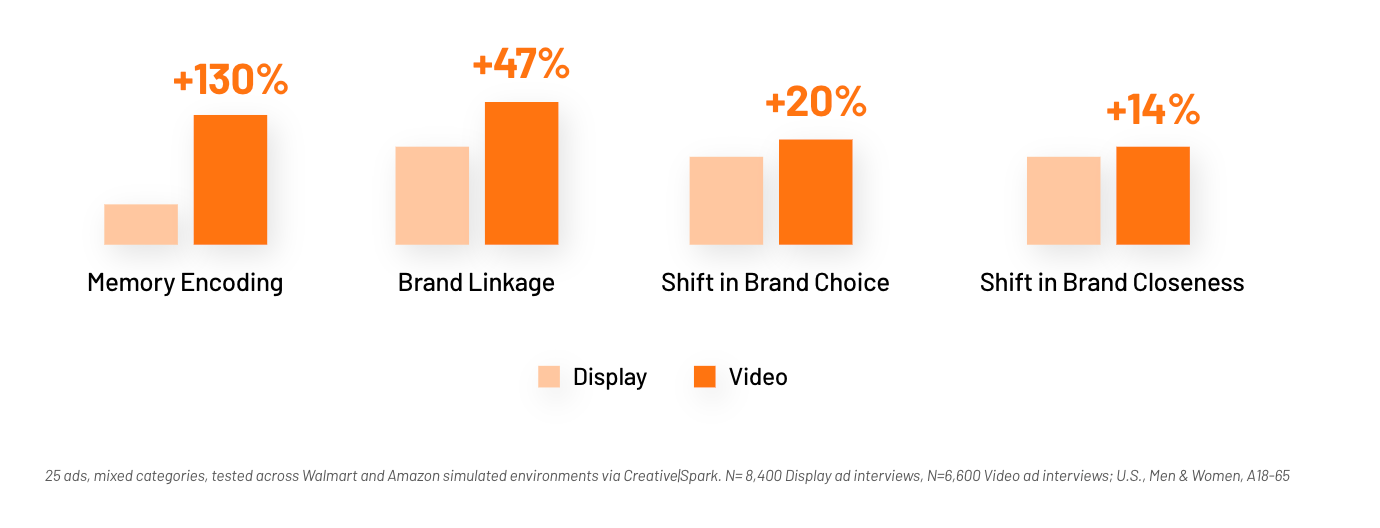
Ipsos notes those premium formats "face internal resistance" because the thin metrics available combined with the belief that cheaper display works just as well. Its for these reasons that retailers are investing in measurement capabilities including MTA – something I'll be sharing in my column for The Drum tomorrow.
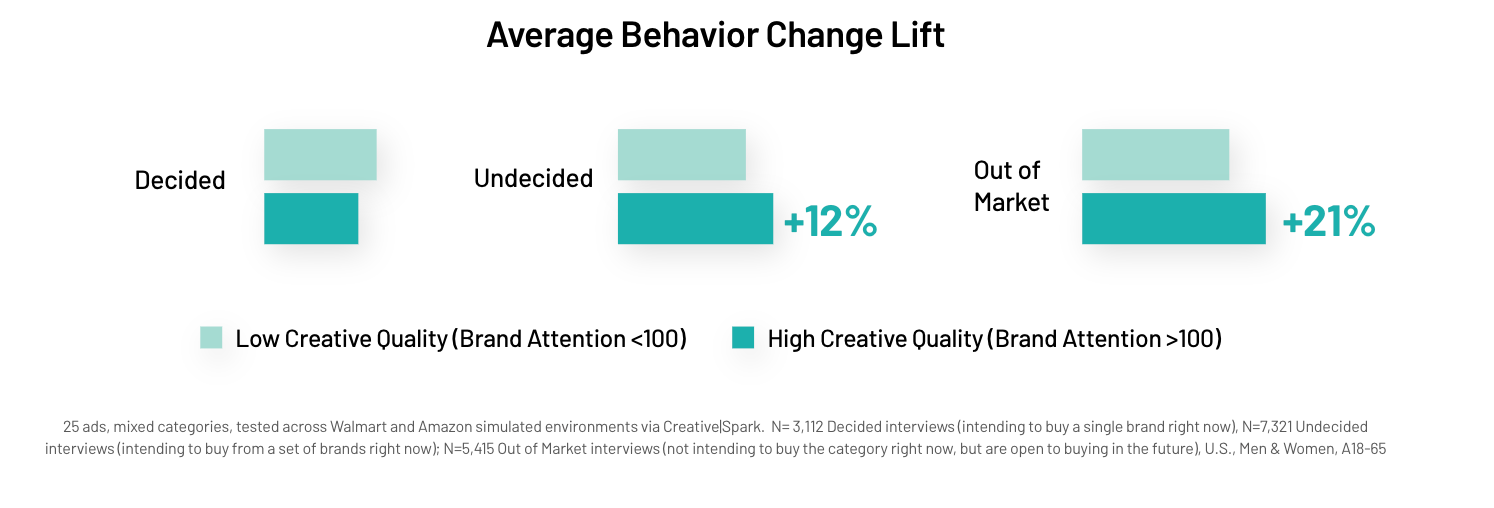
And finally, creative quality drives the most impact among consumers who are not yet in-market. But it doesn't do much to clinch the sale of a consumer who's already decided to buy from a set of brands right now. Ads of "low creative quality" even edge them out slightly.
But for undecided shoppers, high creative quality drives a 12% lift in short-term choice and for consumers out-of-market, superior creative quality unlocks a 21% performance premium over low-quality ads.
What next
Don't get me wrong, it's nice to see retail media taken seriously as a media channel rather than a line item on a trade budget. But I'd argue that we shouldn't be railroaded into the best practices of channels that have shrunk over time, especially on the grounds of prestige or creative expression.
And underneath the wasteland language, what Ipsos found is that retailers sell what they can measure, and brands buy what they can defend. Everyone seems to be behaving rationally.
It might be a creative wasteland, but perhaps that’s because we have been focusing on the deterministic sales outcomes, rather than winning a Lion.