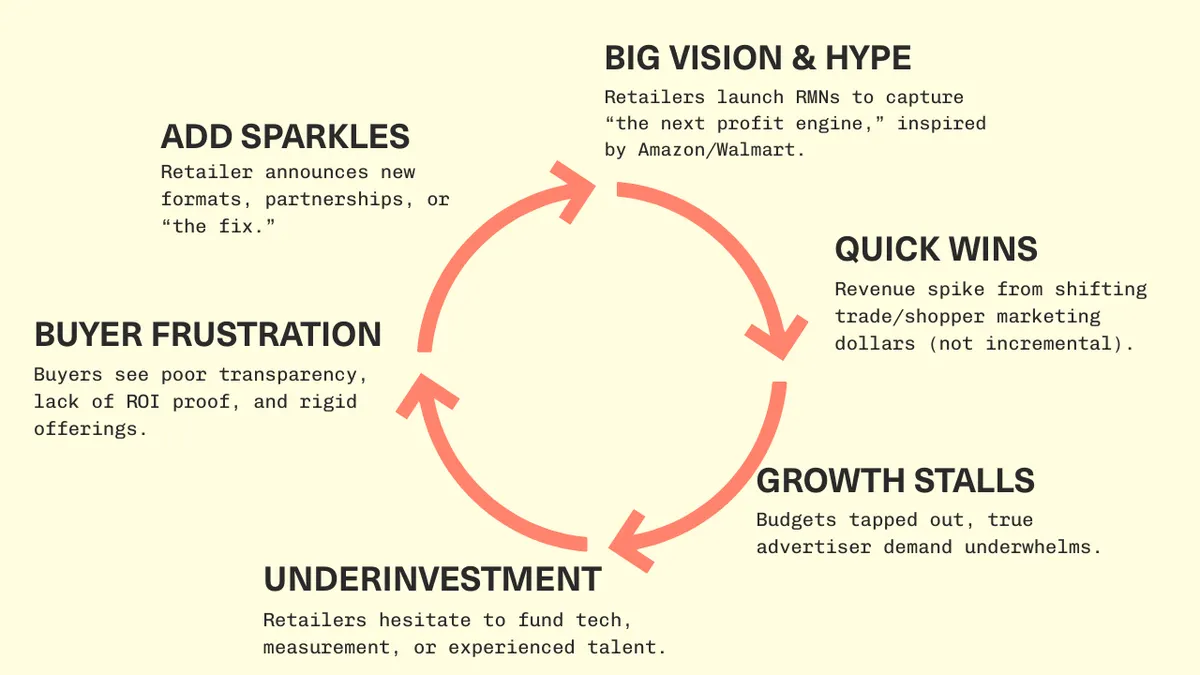
One of my most popular essays last year was The Retail Media Doom Loop.
The premise: a retailer looks at Amazon and Walmart's ad revenue and wants a share. It stands up a network and fills it quickly by moving trade and shopper marketing dollars onto a media line. Growth looks excellent for a year or two, because repackaging is easy. Then the trade budget runs dry, growth flattens, and a flat business can't win the internal argument for the tech and talent that would take it to the next stage.
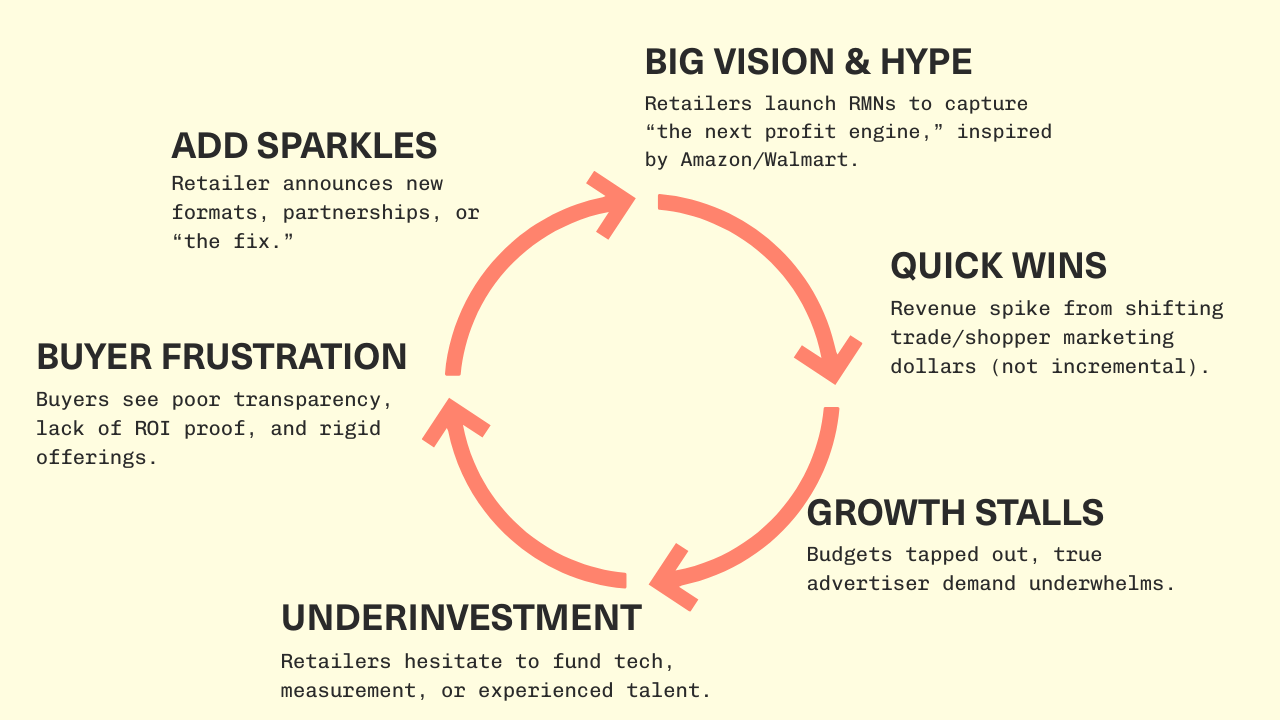
A year later, I'm continuing to hear anecdotes that support this thesis. So I wanted to revisit the concept.
But first, the data
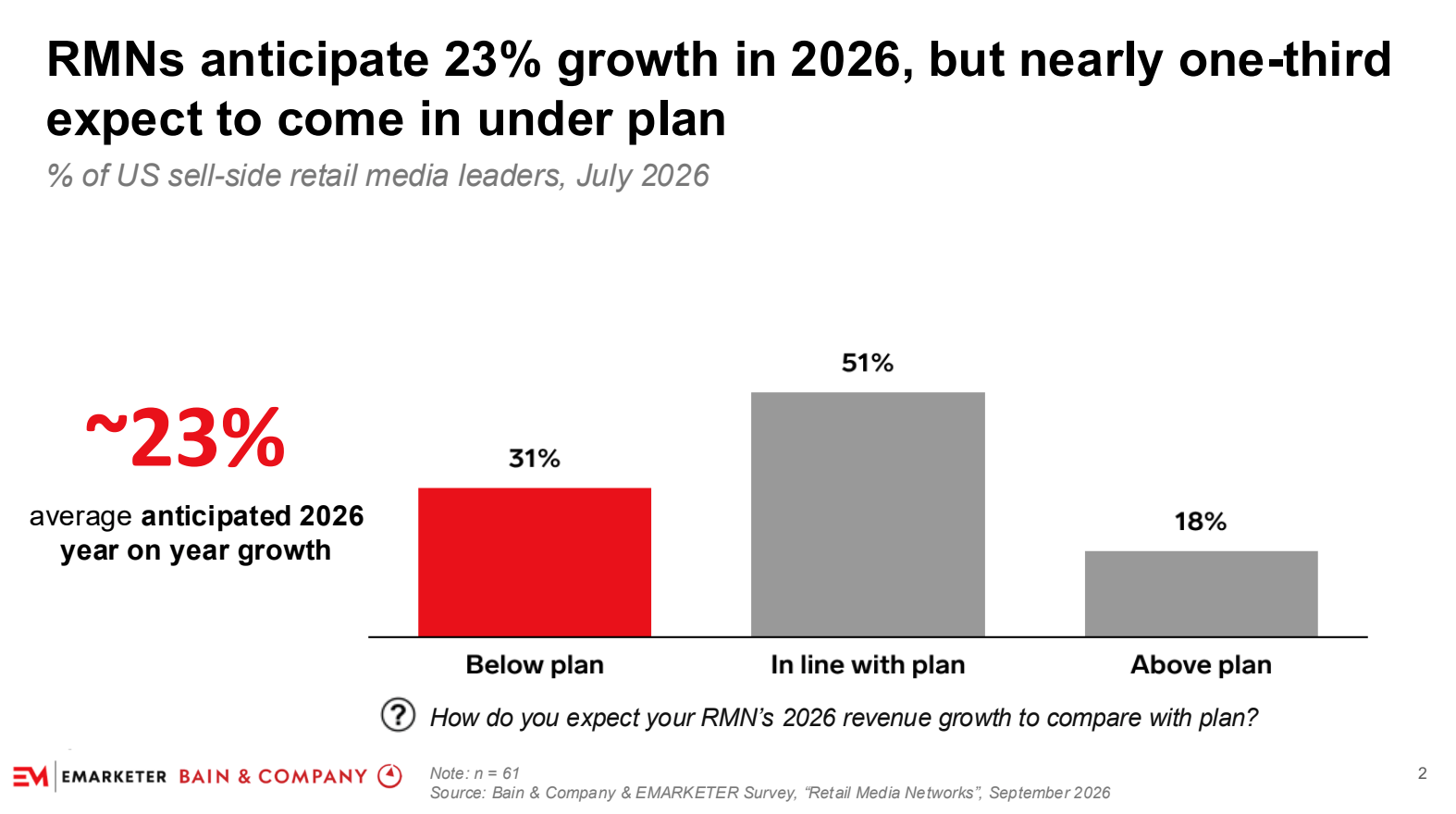
Sarah Marzano, principal analyst for retail and commerce media at EMARKETER, presented findings from work with Bain at Groceryshop last week. Retail media networks expect an average of 23% revenue growth in 2026. That sounds super positive, until you see that fewer than one in five think they'll beat that plan, and nearly a third expect to come in under it.
Add sparkles
The same research says where the growth is actually expected to come from: sponsored search and onsite display.
Onsite ads remain the backbone of retail media ad spending. Most analyst estimates I have seen point to 80% – 90% of Amazon and Walmart ad spend being concentrated in onsite, performance-oriented ad units. Not the new formats — but the stuff these retailers have been selling for a decade or more.
Meanwhile EMARKETER found that 77% of networks say they're pursuing new agentic advertising formats, and a third of those without a native AI agent are building one with plans to monetise it.
Agentic formats aren't worthless. Some of them will matter enormously, and I've written plenty about why.
But this was my point in the doom loop last year: that shiny objects are more fun and newsworthy to pursue than core upgrades. They get press and they get meetings. Quietly swapping out an onsite ad server (and let's be real – it almost always is done with the utmost secrecy for some reason) don't tend to get as much attention.
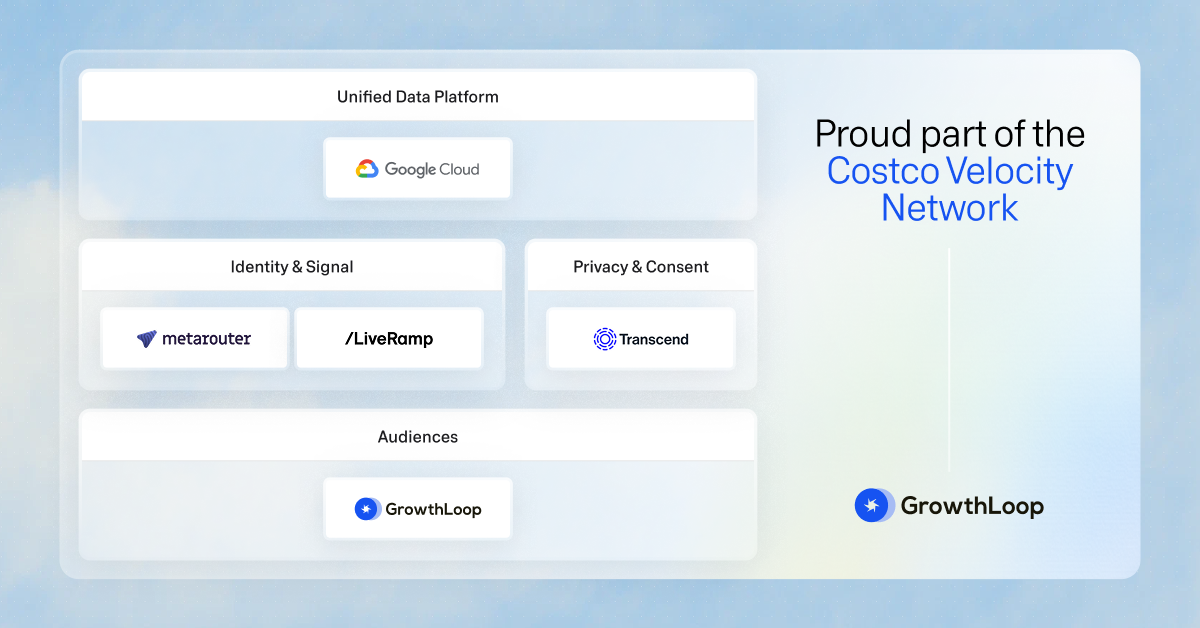
Costco isn’t scaling its RMN with legacy adtech and manual solutions. It’s leaning into a cloud-centric, composable stack.
As part of the Costco Velocity Network, GrowthLoop empowers the retail media team to build audiences directly from the data cloud, enabling faster activation, greater relevance, and better performance — all while maintaining privacy and governance standards.
The result? Exceptional value and experience for Costco members and better ROI for brand advertisers.
Learn why the GrowthLoop Composable Commerce Media solution was the right choice for Costco’s Velocity Network.
What the boring work looks like
That's the unglamorous side. I wrote recently in my column for The Drum about someone I called Art Vandelay, a retail media leader at a mid-sized US network, who audited their onsite ad stack and found an ad server built for legacy publishers. Its forecasting couldn't read a retailer's traffic pattern — after a tentpole promotion week it assumed the spike would hold, paced campaigns against that assumption, then underdelivered when traffic came back to earth.
Vandelay asked for funding to replace it. The request was denied. So they built a seasonality-adjusted forecast by hand, and now feeds it back into the platform every week or two so the system doesn't revert to its own bad guess. Without it, they estimate the network would have missed seven figures in ad opportunities it didn't know it had.
Keep your eye on the (onsite) ball
At Ascendant Network's RMN Bootcamp in Palo Alto this month, there were some further rumblings.
The sparkly add-ons that RMNs have launched over the past year — integrations with creators, offsite media capabilities — struggle to get adoption within brands, for various reasons. Not all CMOs are hot on the concept of creators, for example. Offsite audience targeting and measurement might be a genuinely useful layer on a campaign, but the added cost of that audience data pushes the cost of the campaign up.
Ultimately, the association that many brands have is that retail media equals sales and performance. Shifting that will take a years-long, expensive re-education campaign and charm offensive from RMN leaders.
And if they pulled it off, it might even kill the golden goose — the onsite owned and operated ad inventory that's the largest, most profitable, and most controllable portion of their media ecosystem.
We're not all going to make it
The future of commerce media will be "survival of the fittest," according to one agency exec at the Ascendant Bootcamp event. "We're not all going to make it." More consolidation, more aggregation.
From their lips to God's ears. The following week, Gopuff announced it was deepening its relationship with Instacart — including using Carrot Ads to power its advertising offering.
I'm going deeper on the EMARKETER and Bain research in my column for The Drum next week.
But for now, that's the thing about a doom loop. It whirs silently. Nobody in this industry is going to announce that they've hit the ceiling. They'll probably announce something that sounds cool instead.