This post was first published to my column at The Drum as Six ways through the commerce media squeeze. It is reproduced here with permission.
Last month I wrote a column defending retail media against the people who call it a tax on brands and a rounding error dressed up as a channel. I stand by all of it. So it might read as a strange pivot to open this week by saying that a good chunk of the networks now in market are not going to make it.
But both things are true. Hear me out.
The dismissers build their case on two facts that happen to be correct. Retail media is mostly Amazon. Retail media is mostly sponsored product ads, and therefore the rest doesn't matter. The logical leap that the rest doesn’t matter is the fallacy I took apart last week.
But the opportunity being real doesn't mean there's room for everyone. You can believe, as I do, that non-Amazon retail media is a serious and generally under-executed business, and still do the napkin math and wince.
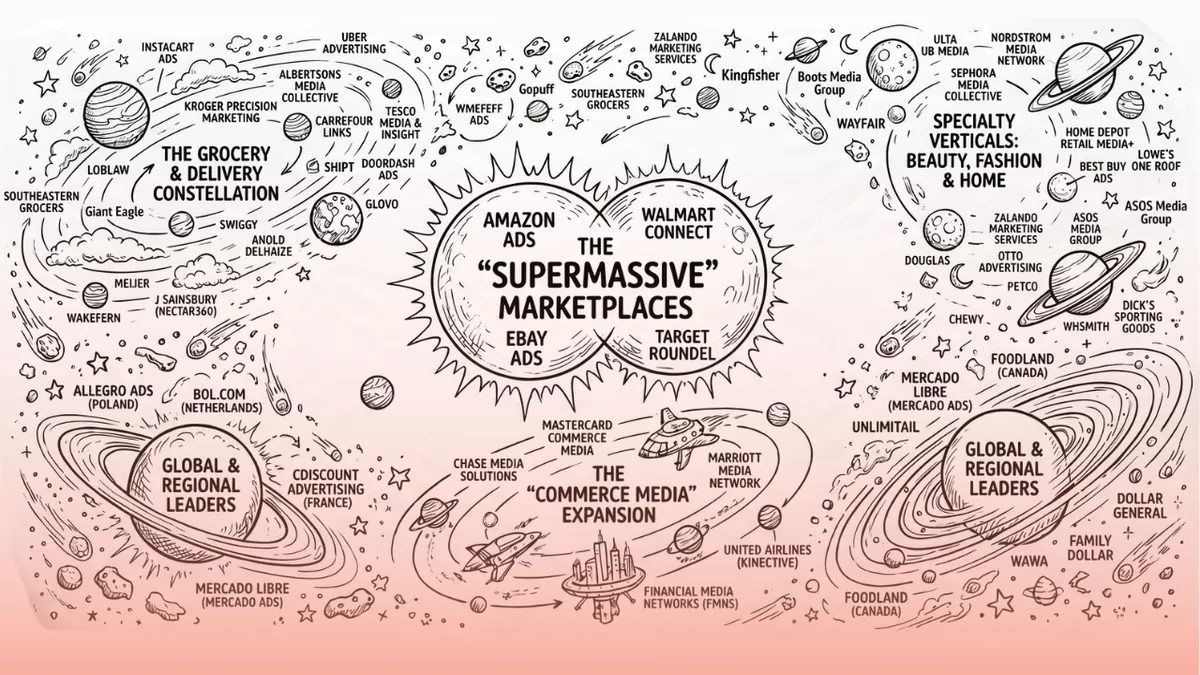
US retail media spend will hit $69.33bn in 2026, per EMARKETER. Of the $10.53bn in new spending that year, $9.42bn goes to Amazon and Walmart — north of 89% of the growth, shared among two companies. A database maintained by software vendor Mimbi currently tracks 270 retail media networks worldwide, and that's before you count the commerce media crowd now spilling out across financial services, payments, travel and mobility. So: a couple hundred-plus networks, eyeing a tenth of the year's growth, with the rest already wearing someone else's logo.
Some of these networks were always going to be disappointed, and not because the opportunity isn't there — because they were sold a number that never had a chance. The management consultants arrive, size the opportunity, unfurl a hockey-stick chart that looks magnificent on a boardroom screen, and stay available to course-correct when it doesn't pan out. (What luck.) Though some consultants tell me it's actually the retailer's own leadership demanding the numbers get pumped, because a sober forecast doesn't get a media business funded. Either way, we’re left with the same hangover. The canny leaders decline the jobs where they'd be set up to fail.
The IAB has now put a name to the reckoning. Its white paper released last month, Building a More Competitive Commerce Media Ecosystem, opens with a line that hits harder than its agreeable title lets on: over the next 24 to 36 months, networks that don't make explicit strategic choices "will be implicitly sorted by the market — often in ways they did not intend."
Choose, or be chosen for.
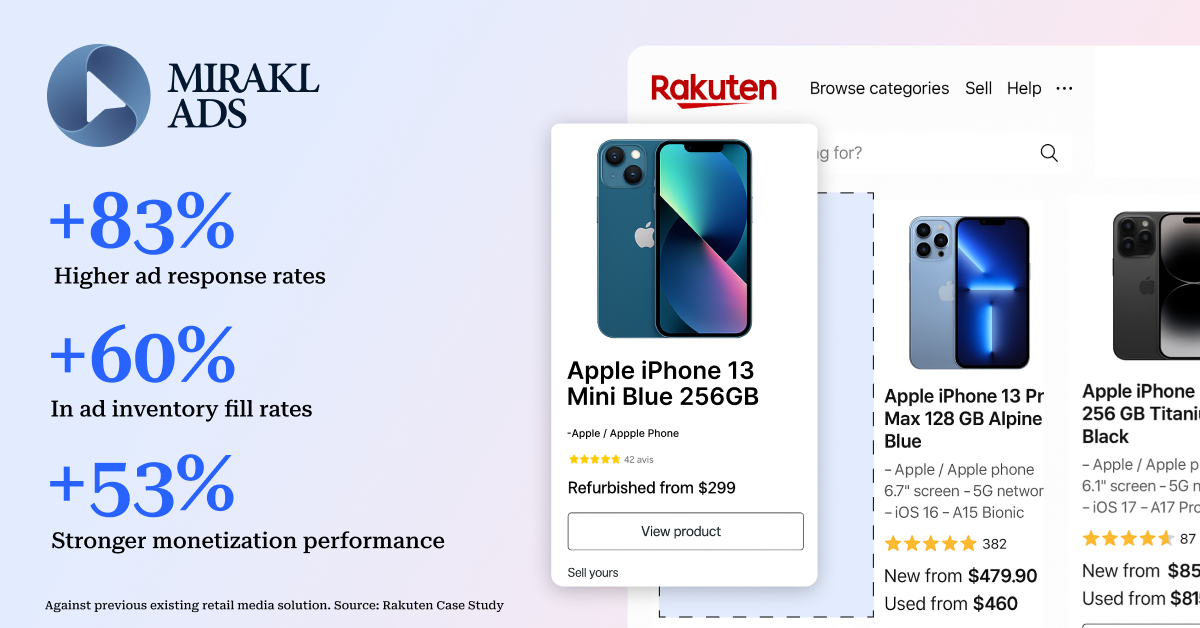
Mirakl Ads is the ad-tech solution trusted by Rakuten and 50+ global enterprise retailers.
That’s because Mirakl Ads was built with both 3P marketplace sellers and 1P suppliers in mind. Both advertiser audiences demand a seamless advertising journey from onboarding to reporting.
You can offer everything from Sponsored Products to video all in one solution.
The paper's real argument is that chasing scale is the wrong default for almost everybody, and that a lot of networks have quietly assumed they're in the small club that can. Flywheel's 2026 commerce trends report sizes up the gravity they're fighting: global leaders, led by marketplaces, will account for 57% of all sales added between 2025 and 2030. When more than half the growth is spoken for before the gun goes off, "we'll get there on volume" isn't a plan.
So the IAB offers six paths instead. I've spent the past year profiling retailers who are, knowingly or not, already running most of them.
Scale, for the few who can afford it
Path one is the one everybody wants and almost nobody can realistically afford: build the full-stack, full-funnel, self-serve platform and go after national brand budgets head-on. The IAB is refreshingly blunt about the investment required — a marketplace model, a mountain of first-party data, and the stomach to lose $100m-plus over several years before it turns.
Best Buy is the cleanest case I've covered of a category retailer making this bet with a marketplace underneath it. Lisa Valentino's ambition to grow offsite "meaningfully larger" than onsite is a company rebuilding itself around media, not bolting an ad business onto the side of a retailer.
Profitability, which means saying no
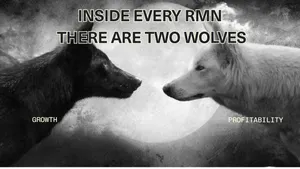
Path two is the one with no press release in it: take a modest share, run lean, stay genuinely profitable. The IAB frames it as treating media as a margin lever rather than a growth engine. But here’s the harsh truth: it "requires saying 'no' to scale ambitions."
This is the path the hockey-stick problem makes almost impossible to choose, because declaring yourself a path-two business reads as failure to a board that was sold path one. Molly Hjelm at Ace Hardware's Red Vest Media got the rarest gift in the category: when she asked what year-one expectations were, leadership said "you come in and you tell us." That breathing room is the whole precondition for path two. Without it, a perfectly healthy business gets managed like a dying one — which is precisely how the doom loop gets started.
Merchant integration, the hardest cultural sell
Path three treats media as a tool for category growth and merchant outcomes rather than a standalone ad shop. The IAB's own risk note gives the game away: media can go "invisible without clear ownership," and the model demands the kind of cultural change most organizations would rather not attempt.
Home Depot is the most committed version of this I've seen. At its Infronts event this year, the company did something you'd never catch at Amazon's Unboxed: it put the merchants on stage first. The opening keynote came from Billy Bastek, head of merchandising; the morning panels were dominated by merchandising VPs; Orange Apron Media's own product leaders didn't appear until the afternoon. Bastek gave the philosophy a name — "merchant aligned media" — and a memory to anchor it: five years ago, a merchandising colleague asked him whether he was going to turn the website into Times Square. His answer was no, because product authority, not ad load, is the asset. A curated catalog earns the customer's trust that what they find belongs there, and an ad business that corrodes that trust damages the thing the whole company is built on.
That positioning is easier for a category specialist than for anyone else. When you sell door locks and lumber rather than everything from groceries to fashion, the merchant's category expertise is the product, and media can credibly serve it. At a general-merchandise or grocery retailer, the media team and the merchant team are usually fighting over the same supplier dollar.
This is the subtext of the white paper in my reading at least: for networks that never reach scale, the media business may be best governed by the merchant. That's an uncomfortable idea for both sides, the media leader that ran a standalone P&L, and the merchant who never asked to run an ad network.
Experience-led, where the white space actually is
Path four uses media to improve the shopping experience instead of interrupting it. Native formats, discovery, context. The IAB grants that it's "difficult to scale and standardize" and only works for a narrow set of players.
This is an exciting new realm for retail media. Sam's Club's parking-lot activations belong here too, as do DGMN's community sampling programs.
The catch is that experience-led media at scale costs real capital and real organizational alignment. It's defensible because it's hard. Which is also why most networks will watch rather than copy.
But experience-led doesn't have to mean physical, and the digital version is the more under-explored half. Some companies I profiled recently are monetizing the moments beyond the banner ad — Rokt on the post-purchase page, Swish dropping full-size samples into baskets, Nift turning a thank-you gift into acquisition.
5 and 6: Infrastructure and coalitions, the paths nobody brags about
The last two have the least ego in them, which may be why they get the least airtime. Path five is becoming the infrastructure other networks run on — white-label tech, data, measurement — and making peace with vanishing from the advertiser's line of sight. Path six is competing by collaborating: pooling reach across networks until you've built something brand budgets will actually write a check for.
On paper, path six is the obvious lifeline for the long tail — if no single regional retailer has the reach to matter, a dozen of them together might. In practice, the US track record is thin. I dug into this last year and the picture hasn't improved much: Amazon's Retail Ads Service landed Macy's as a marquee partner and has gone quiet on adding more; Best Buy's Valentino pitched an open collaboration model and, as far as I can tell, no retailer has publicly taken her up on it. Rippl, a retail media network offered through Cardlytics’ Bridg platform, last signed up Hy-Vee’s RedMedia in July 2025 while banging a very loud PR drum. It has since gotten rather quiet.
And the independent tech these coalitions need is consolidating, with Publicis acquiring LiveRamp, a backbone of the neutral-coalition stack.
The IAB is clear-eyed about why coalitions stall, and points to Europe as the counterexample: federation models hold "only when governance, measurement, and incentives are explicitly aligned." The collaborative vision is the easiest to say out loud and the hardest to actually run.
A new chapter
I closed last week's column on a worry someone in the industry passed to me privately: retail media is feeling mid right now, but it doesn't have to be. It feels mid because too many networks are running the identical playbook in fresh packaging and bracing for a different outcome — outsource the selling, buy the cheapest tech, shelve the change management, ride the easy sponsored-product margin. The IAB framework is really just a long way of saying you get out of this business what you put into it.
What no framework can do is make the choosing comfortable. Picking a path means saying out loud, in a room full of people who'd rather keep dreaming, that your company is not the next Amazon. The IAB created the vocabulary for that conversation. Whether the networks can have it honestly is up to them.