Last week I shared my story about buying the Shark Glossi. I've told this story enough times that people in my professional orbit have either bought one or blocked me.
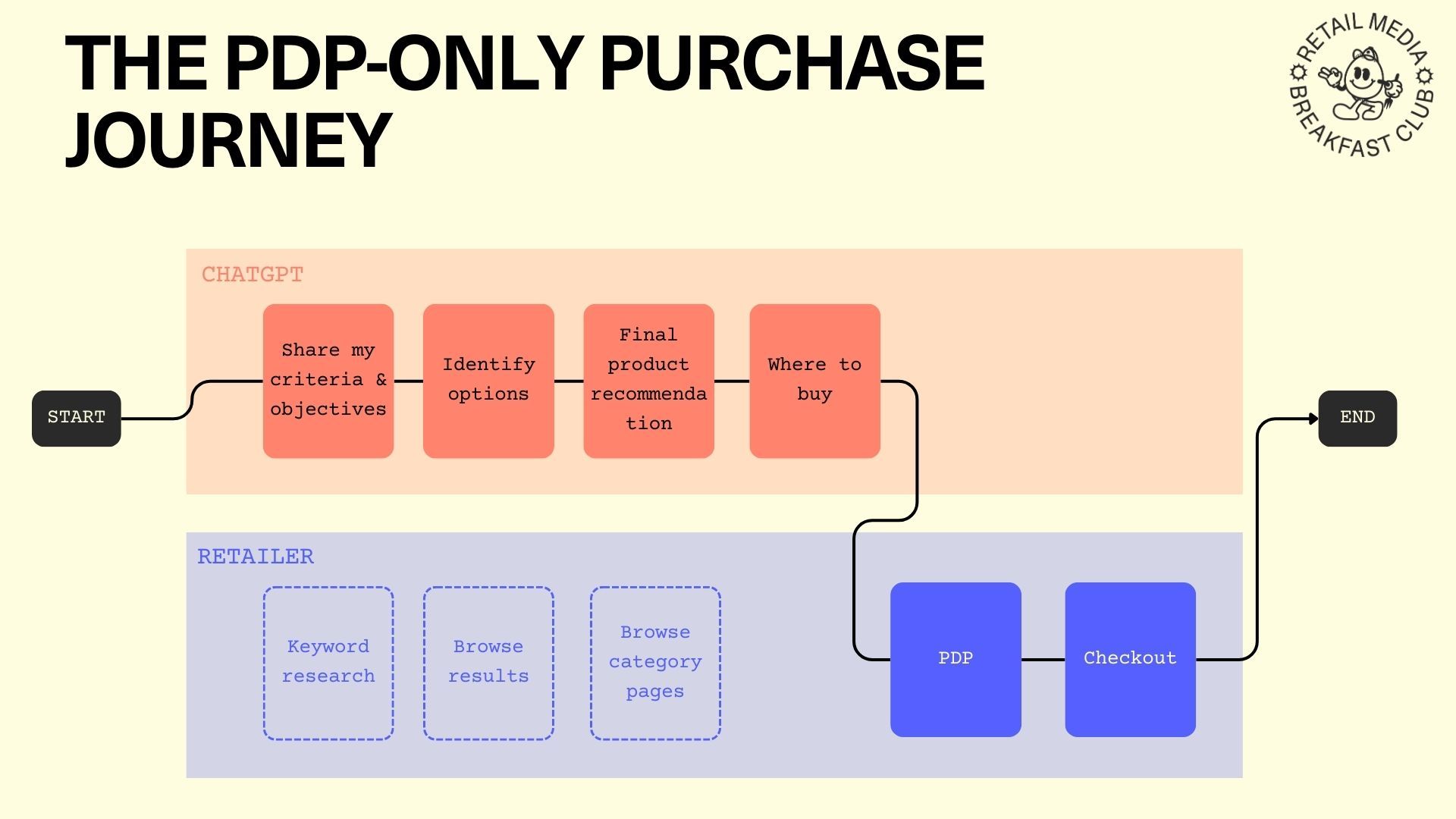
But I keep returning to it because it illustrates new shopping behavior from me: my entire journey on bestbuy.com was two pages. The product detail page and the checkout. That's it. No browsing, no search bar, no sponsored products. Best Buy got the sale — but they got almost nothing else. No behavioral signals. No cross-sell opportunity. No loyalty touchpoint. From an analytics standpoint, I was a ghost.
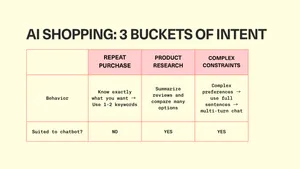
I don’t think that’s just me. It's a pattern that'll become more common as AI-assisted discovery moves the research and decision stages off-site entirely - and into a surface that’s hard to get a view into.
For today’s post, I spoke with Amelia Van Camp, Head of Agentic Commerce at Mirakl and the sponsor of this expert series, to dig into what retailers can do about it. (Click through to read Part 1: ‘Discovery Has Moved Upstream. Here's What That Means for Retailers’)
Here's our conversation, edited for clarity.
SPONSOR: MIRAKL ADS
Retailers know that a marketplace model can dramatically boost product assortment, shopper engagement, and total revenue.
But, to get the most out of your marketplace, you need an ad tech solution that can really engage sellers.
Mirakl Ads is powering the future of retail media for leading retailers — to activate both 3P sellers and 1P brands.
Kiri: When a shopper arrives on a PDP having already made their decision upstream in an LLM, what's actually at stake for the retailer?
Amelia: The affiliate traffic coming from LLMs is often landing directly on that PDP — and that's a fundamentally different entry point than what retailers have traditionally designed for. Historically, the homepage or a category page was where you set the stage, built the relationship, surfaced relevant products, got signals about who the shopper was. When someone comes in through a PDP, you've skipped all of that. You still get the conversion, which is great. But you've lost a lot of the context and the opportunity that used to come with the journey.
Kiri: So how should retailers be thinking about redesigning around that shorter path?
Amelia: The first thing I'd say is: get clear on what your ideal shopper journey actually looks like when someone comes in this way. What do you want to happen beyond that baseline conversion? That has to be the starting point. Once you've mapped that out, then you figure out which components — whether that's loyalty programs, sampling, sponsored placements, post-purchase offers — plug in to support it. You can't just bolt things on and hope for the best.
Kiri: What does a good version of that look like in practice?
Amelia: Sephora is a good example. I often land on a Sephora PDP knowing exactly what I want — I've done my research, I'm there to buy. But when the order arrives, the mailer is full of samples that feel genuinely targeted to me as a consumer. They also have a strong loyalty program, so when I sign in, they're building a picture of who I am over time. That stickiness doesn't happen on the PDP itself — it happens through the programs that extend the relationship beyond that single transaction. I think that's the model worth studying.
Kiri: What's the retail media risk if retailers don't adapt to this pattern?
Amelia: Fairly simply put: disintermediation of your retail media program. The way supply-side partners have historically been able to play in this landscape is very different from what agentic traffic demands. If your media program is built entirely around a browsing journey that a significant portion of shoppers are no longer taking, you have a value delivery problem — for advertisers and for shoppers. I think retailers need to be more experimental right now. Test what works for this traffic. Figure out how to deliver value to advertisers in ways that feel native to a two-page shopping journey, not bolted on top of it.
Kiri: There's something almost retro about where this points — loyalty programs, physical mailers, sampling. Are we entering a golden era for old-school retention tactics?
Amelia: Maybe. Loyalty programs are genuinely having a resurgence. And part of the reason is structural: when a shopper converts through an LLM, the retailer doesn't get the same behavioral data they'd get from a traditional onsite journey. The LLM isn't going to hand that over. So if you can bring the shopper into your own ecosystem — your app, your loyalty program — you start to recapture that knowledge. And that knowledge is what powers better retail media strategies, better personalization, better everything. The channel is new, but the underlying logic is pretty timeless.
Now What
Here's where I land after this conversation: the PDP isn't just a product page anymore. For a growing slice of shopping journeys, it's the first and only page. That doesn't have to be a crisis — but it does require retailers to think differently about what that page is supposed to do, and what happens after someone leaves it.
The conversion is still there. The relationship has to be built somewhere else: in the mailer, in the loyalty program, in the post-purchase experience. Retailers who figure out how to design for that compressed journey will be better positioned as agentic commerce matures.
In Part 3, we'll talk about what happens to signals more broadly as shopper behavior shifts — and how retailers can start building new ones.
Previously in this series:
COMING UP!
Everyone in retail media claims to be "performance-driven." But performance toward what, exactly?
The industry's fastest-growing format — sponsored products — looks, smells, and transacts like a media buy. It's biddable. It's keyword-targeted. Practitioners run it from an ad console. But here's a spicy take from Jordan Witmer: what if sponsored products aren't really advertising at all?

In this live session, we'll talk about whether sponsored product spend is closer to distribution spending than to media buying — more like a field sales rep getting your brand moved up the shelf than a TV ad building mental availability.
We'll unpack the "How Brands Grow" framework and what it actually means for retail media: the difference between physical availability (are you easy to find and buy?) and mental availability (is your brand recognizable and part of the consideration set?) — and why confusing the two quietly warps both strategy and measurement.
Bring your measurement hot takes and your pushback — this one's going to be a 🌶️ debate! Sign up here