
Amazon is a company that has always contended with contradictions.
By being obsessively focused on the customer experience (lowest cost, best service!) such policies inadvertently impact brand suppliers. Because of its ubiquity, most brands don't feel like they have much of a choice but to sell there anyway. And surprise! Those that choose not to, end up having their products available to purchase anyway, with Amazon's 'Buy For Me' shopping agent.
Amazon also built one of the ad industry's leading DSPs — a front door to buying media across the open web — but won't let rival DSPs touch its own inventory. We've all gotten used to this contradiction in terms, the frenemy infrastructure. Still, every so often the bold-faced audacity of it still catches me by surprise.
Last week, Christine Russo's What Just Happened podcast had on Justin Honaman, AWS's global head of retail, consumer goods, and restaurants, to talk about agentic commerce. One segment perked up my ears, when Honaman described what he called "off-site search", where a shopper begins a product hunt inside an LLM rather than on a retailer's site, as a problem that retailers ought to be solving:
"When you hear retailers talking about off-site search, this is where a shopper might start their search on a Perplexity or ChatGPT or Anthropic's platform, and then they're searching for product across sites, and how do you ensure discoverability?"
It's framed as a shared frontier that the industry should tackle together. It isn't. Of all the companies in retail, Amazon is the one opting out of the very behavior it's describing.
Mirakl Ads is the only retail media solution designed for both 1P & 3P marketplace brands. Why does that matter?
Marketplace sellers demand a seamless advertiser experience that still offers full-funnel ad formats. And retailers need a flexible solution that allows you to scale your media business.
Agents going out, agents kept out
Going out: Buy For Me, which most of you know by now, sends Amazon's own agent onto other retailers' sites to transact on a shopper's behalf — including the sites of brands that have deliberately stayed off Amazon. The burden of refusing falls on the brand, which has to email a dedicated address to opt out.
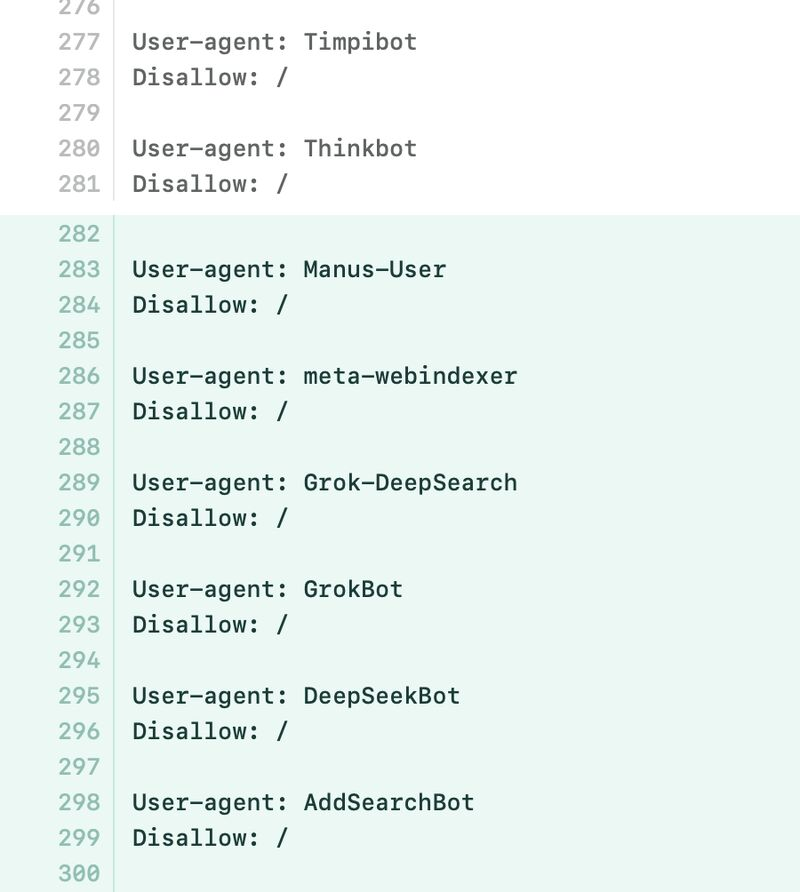
Coming in, the posture flips. In November, Amazon sued Perplexity, alleging its Comet browser disguised automated sessions as ordinary Chrome traffic to shop on customer accounts. In March a federal judge granted Amazon a preliminary injunction — since paused on appeal, so this is far from settled. The court found that Comet accessed accounts "with the Amazon user's permission but without authorization by Amazon."
Amazon's winning argument is that an agent acting on a shopper's explicit instruction is still trespassing if the platform didn't sign off. But apply that exact standard to Amazon's own agent walking onto a brand's storefront, and the argument falls down. When the agent is Amazon's, the customer's permission is enough. When it's someone else's, it isn't.
Perplexity argued in court that the suit was never really about security — that agents bypass the ads Amazon shows human shoppers, and ad revenue was the actual motive. Amazon, meanwhile, has blocked dozens of outside agents, OpenAI's included, while building Rufus, its own assistant, which it says drove close to $12 billion in incremental sales last year. Block the others; build your own.
A strategy, not a quirk
Regular readers know my frame here: retail media is the monetization layer that sits on top of whichever surface a shopper uses to reach a transaction.
Read through that lens, Amazon's behavior is entirely coherent. Blocking inbound agents defends amazon.com as a surface Amazon owns end to end. This is the argument Perplexity used in its case. Buy For Me reaches onto someone else's surface and pulls the transaction back into the Amazon stack.
The DSP does the same to other publishers.
The one objective: own the path from shopper to checkout, wherever it runs.
The trouble is that the path is splintering faster than any one company can wall it off. At Google I/O last week, Google introduced Universal Cart — a checkout that works across Search and Gemini, with YouTube and Gmail to come — and noted that people shop across its surfaces more than a billion times a day. None of those journeys have to begin on amazon.com. (That's a piece of its own, and I'll get to it soon.)
For now, the thing to notice is simpler. Brands are being told to make themselves discoverable in third-party LLMs and to welcome agents onto their own sites. The 900-lb gorilla of ecommerce is telling them to do both while doing neither.
Back when I ran an Amazon-focused marketing agency, the advice I gave clients more than any other was this: watch what Amazon does, not what it says. The two often don't line up, and they don't here either. What Amazon says is that off-site search is a shared problem for retailers to solve. What it's actually doing is defending its own surface and reaching onto everyone else's.
I'm not suggesting that brands and retailers block all bot traffic like Amazon is doing – they are playing a game that no-one else possibly can. But what we should be watching is just how serious Amazon is about agentic shopping. They either see a massive risk, or a massive opportunity – likely both. That's the signal worth watching.