The Cannes Lions Festival Of Creativity is firmly in its retail media era, and that was no more true than on Monday afternoon. eMarketer and Sensor Tower ran an 'executive briefing' on commerce media yesterday afternoon, hosted by The CPG Guys. I was on the closing analyst panel, and sat in on a couple of briefing sessions earlier in the afternoon. A lot of the conversation was about what's holding retail media back from all it can be.
A few weeks ago I started a series with Anne Hallock of Mirakl Ads called The Demons Inside Retail Media — the argument that the biggest threats to retail media in 2026 are internal, not the AI-and-tariffs stuff everyone's bracing for. Two sessions yesterday were, in effect, a room full of analysts arriving at the same place through different doors.
The hypergrowth era is normalizing
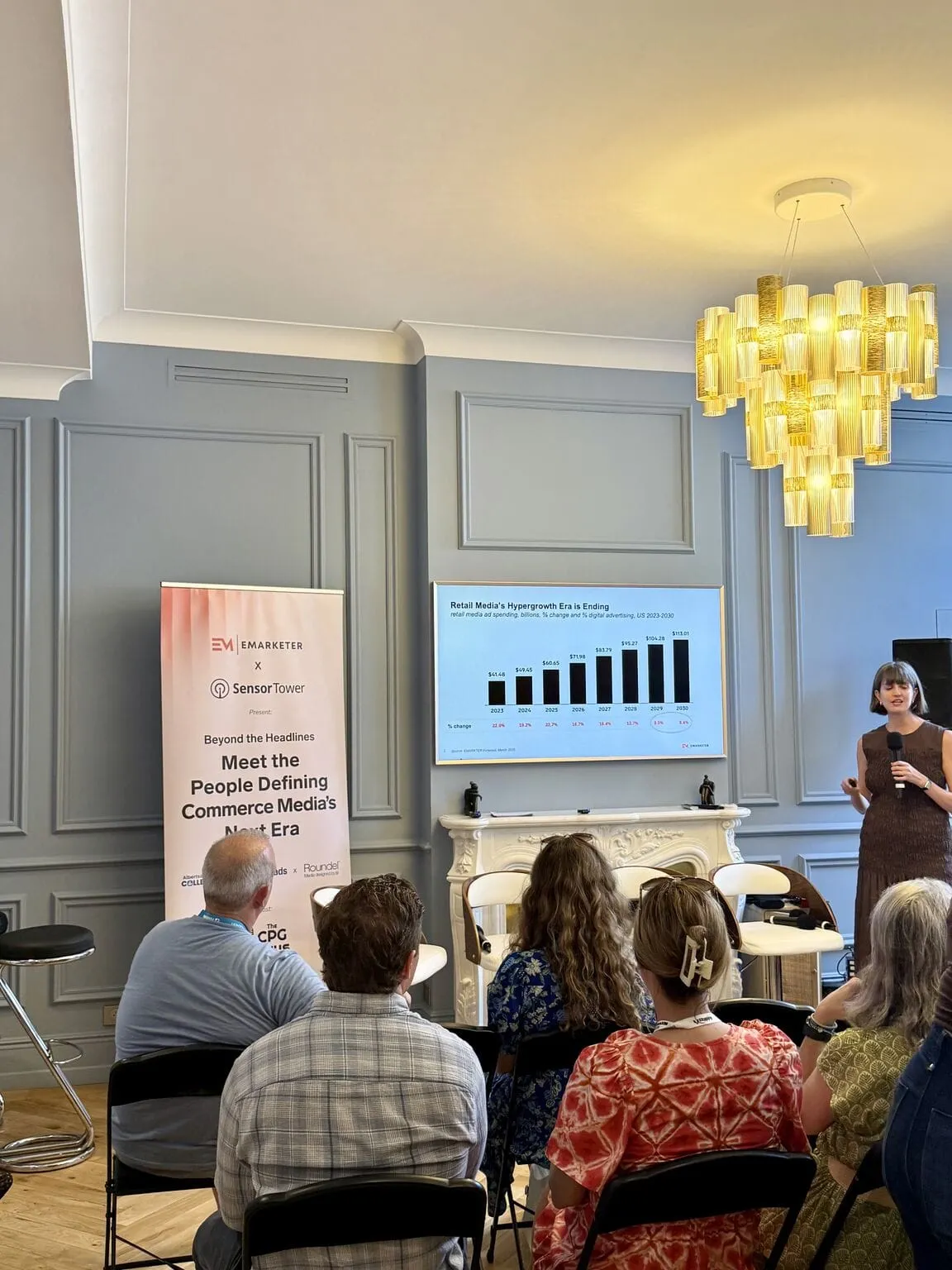
Sarah Marzano (VP & Principal Analyst, eMarketer) opened with a forecast: US retail media passes $100 billion by 2029 — and that's the same year growth dips into single digits for the first time. Her read is that the channel has the top-line traits of a mature ad medium but a lot of unevenness underneath, because players hit scale at very different speeds.
Another sober number came from eMarketer's survey of RMN leaders, run with Bain. Leaders felt confident on strategy and product roadmap, less so on the foundational stuff — operating model, team structure, measurement. And inside the strategy pillar, 56% said they were very confident their retail media goals aligned with their org's objectives, but there was a roughly 30-point drop when asked whether the broader organization believed in that strategy.
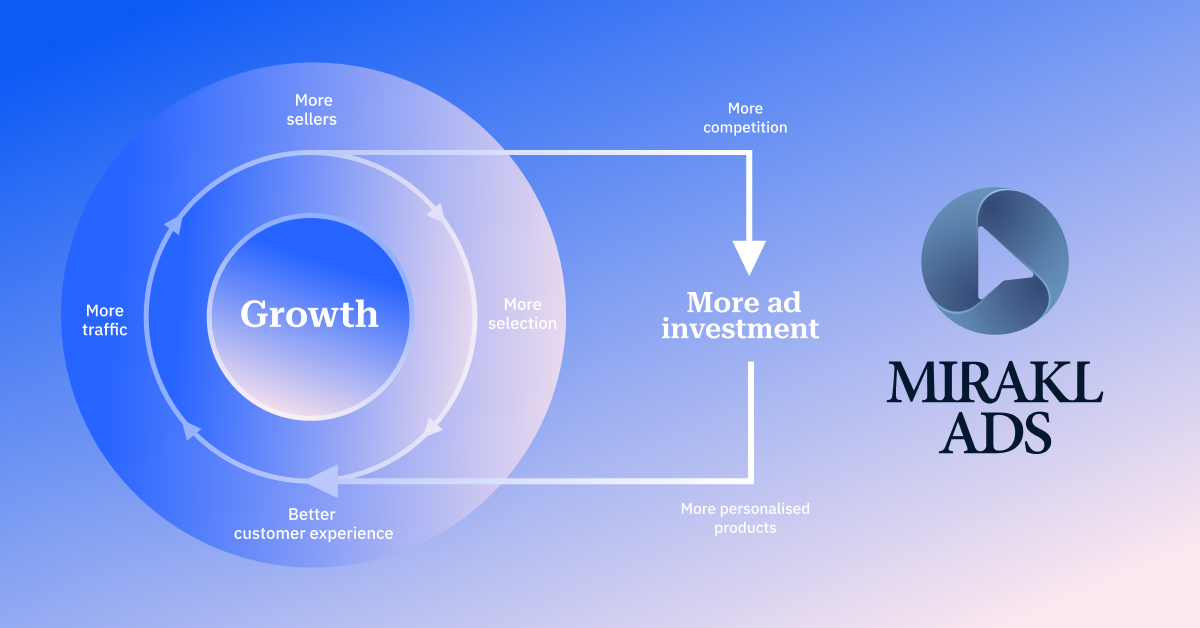
Mirakl Ads is the only retail media solution designed for both 1P & 3P marketplace brands. Why does that matter?
Marketplace sellers demand a seamless advertiser experience that still offers full-funnel ad formats. And retailers need a flexible solution that allows you to scale your media business.
Same words, different meanings
The growth-engine panel kept snagging on vocabulary. Growth, loyalty, incrementality — everyone is using these words, but perhaps they don't mean the same thing.
Claudia Johnson (Technical Advisor to the CEO, Omnicom, Flywheel) had the line of the afternoon. Her argument: the problem isn't common language, it's common understanding. Her analogy was the fork from The Little Mermaid — the media and creative teams brushing their hair with it, the retail team eating steak with it. "We both know what a fork is. We both believe in the fork, but we have very different understandings of what the fork should be doing."
Shweta Bhardwaj (Partner, Consumer Products, Bain & Company) brought the brand-side version. Brand teams have grown suspicious of retail media, she argued, because they keep getting asked to spend more on it — to starve the top of the funnel so sales teams can hit next-day conversion goals. The fix she's seeing at sophisticated advertisers is an operating-model change: pulling media out of multiple corners of the org into one group that looks at the full funnel.
That's the same point Anne and I have been making about RMNs, aimed at the brand side of the table. The silos aren't unique to retailers.
Dark search
Ian asked me to dig into "dark search" — the term for a purchase decision made inside an AI assistant, with the shopper landing on the retailer already decided. I've written about it here.
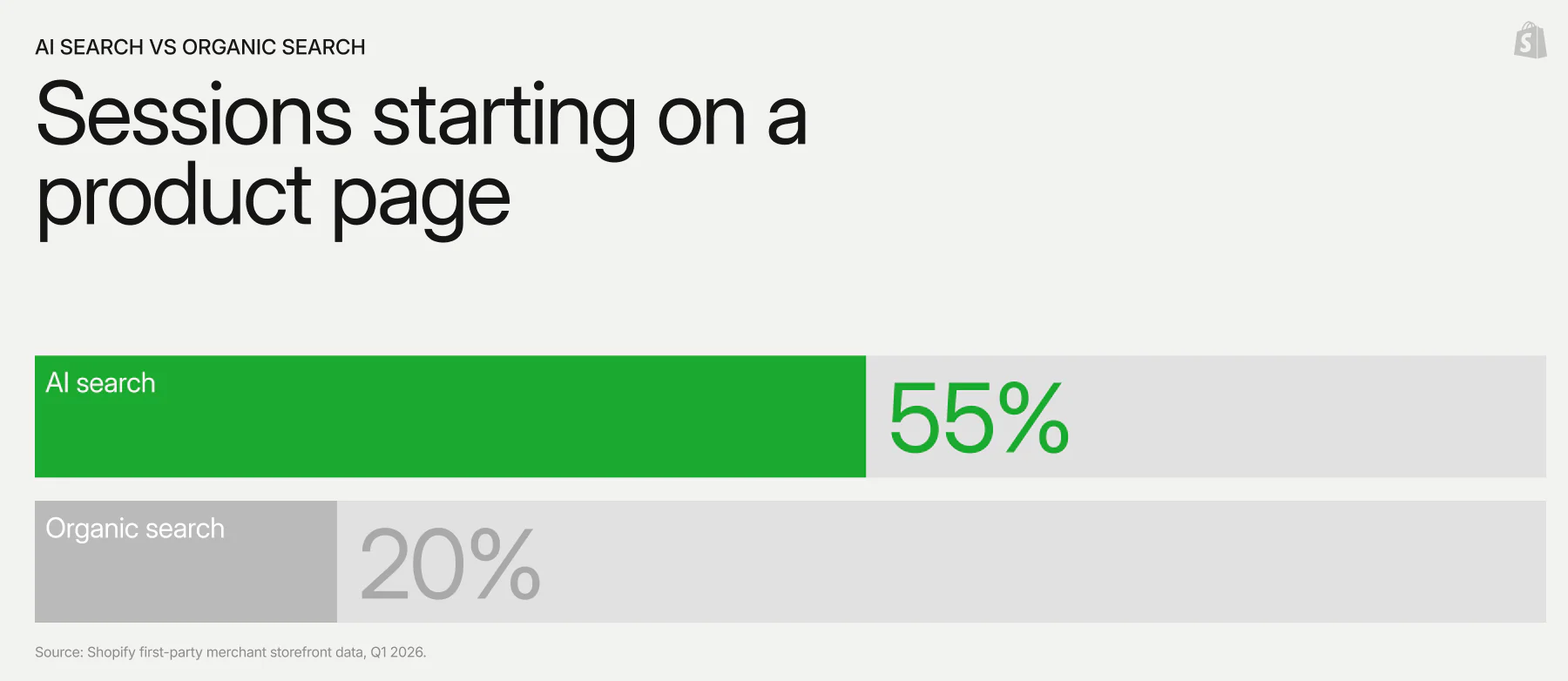
The mechanics: a lot of LLM-referred traffic arrives with no referral tag, so it reads as direct traffic. Retailers see a direct surge and don't always clock that it's AI. And a growing share of LLM-referred users land straight on a product page — Shopify's Q126 read is 55% of sessions referred from AI start on a PDP, compared to 20% for organic search. The decision got made somewhere the retailer and the brand never touched.
Andrew Lipsman (Media, Ads + Commerce) pushed on the framing. His point (elaborated on in a blog post here): it's dark from an analytics view, not truly dark. Panel-based data like Sensor Tower's can show you the visit that preceded the visit. You lose the UTM granularity, not the whole picture.
His argument is that the core gap is in attribution, not in whether the behavior can be observed at all — and those are different problems with different fixes.
Sarah added the longer view: retailers have navigated imprecise purchase journeys forever. Word of mouth, the physical store, the social swipe-up. Her case for giving them some credit is that they're used to customers changing how they decide and showing up anyway — and that retailers were among the first advertisers into ChatGPT supports it.
On AI, the analysts didn't agree
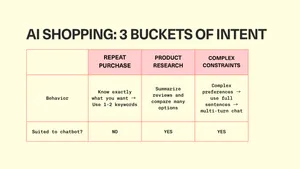
Andrew and I have been running this debate in public for months — his Reality Check(mate) is the most recent volley. His position: most of what gets called agentic commerce isn't agentic at all. Call it advanced search or AI-assisted shopping. Agentic means autonomous decision-making, and he doesn't see humans handing over the middle of the funnel, where we build conviction in a purchase. His Rufus data is the evidence — Amazon sessions convert at 21% baseline, rising to 58% for sessions with 11+ Rufus queries. More AI querying, more conversion, not less. "It's an evolution, but it's not a revolution."
Debra Aho Williamson (Founder & Chief Analyst, Sonata Insights) sat in the other chair — the self-described "vegan at a barbecue," the AI person in a room of retail media people. Her example was her own morning: woke up with a red, swollen eye, asked ChatGPT, got pointed to a specific French pharmacy with a translated sentence to hand the pharmacist, who sold her two products. The intent signal never reached a retailer.
She also shared Sensor Tower numbers on early ChatGPT advertising: shopping brands were nearly 40% of ad impressions in the first few months, with Best Buy the top advertiser over the full period. The detail underneath is the interesting part — Best Buy went big out of the gate, about 28% of all impressions in the first week of ads, then by mid-May had vanished from the data entirely. And every Best Buy ad she could find was a product ad, not a brand ad. Her framing, which is the uncomfortable one: the categories investing first in ChatGPT ads are among the most exposed to the discovery shift AI is creating.
So: four analysts on a panel, reading the same moment differently. Is AI a distraction from billions in low-hanging on-site fruit, or the thing that's already reshaping discovery? We didn't settle it this time.
Thanks to Sensor Tower for inviting me to speak at this event. You can check out their retail media insghts offering here.