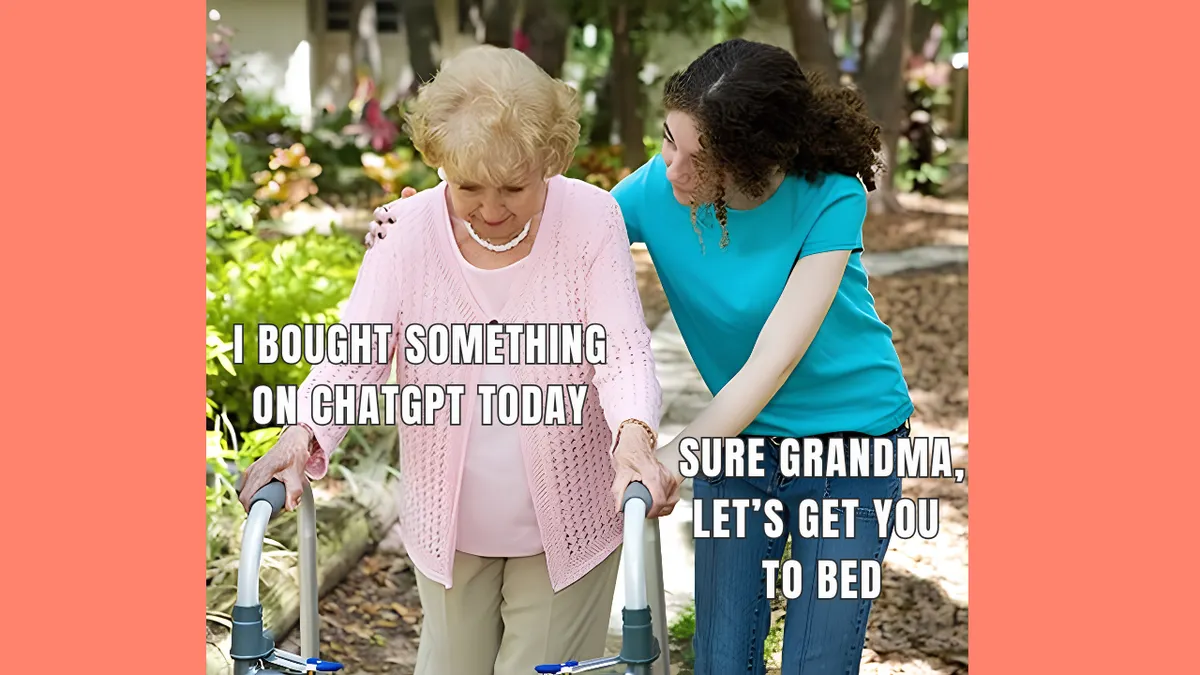
My son had this word when he was little. He's far too grown up to use it now, but he'd say, "Sorry, I misunderheard you." Misheard + misunderstood. A great amalgamation that I personally continue using.
And it's exactly what consumers are doing with their AI chat assistants.
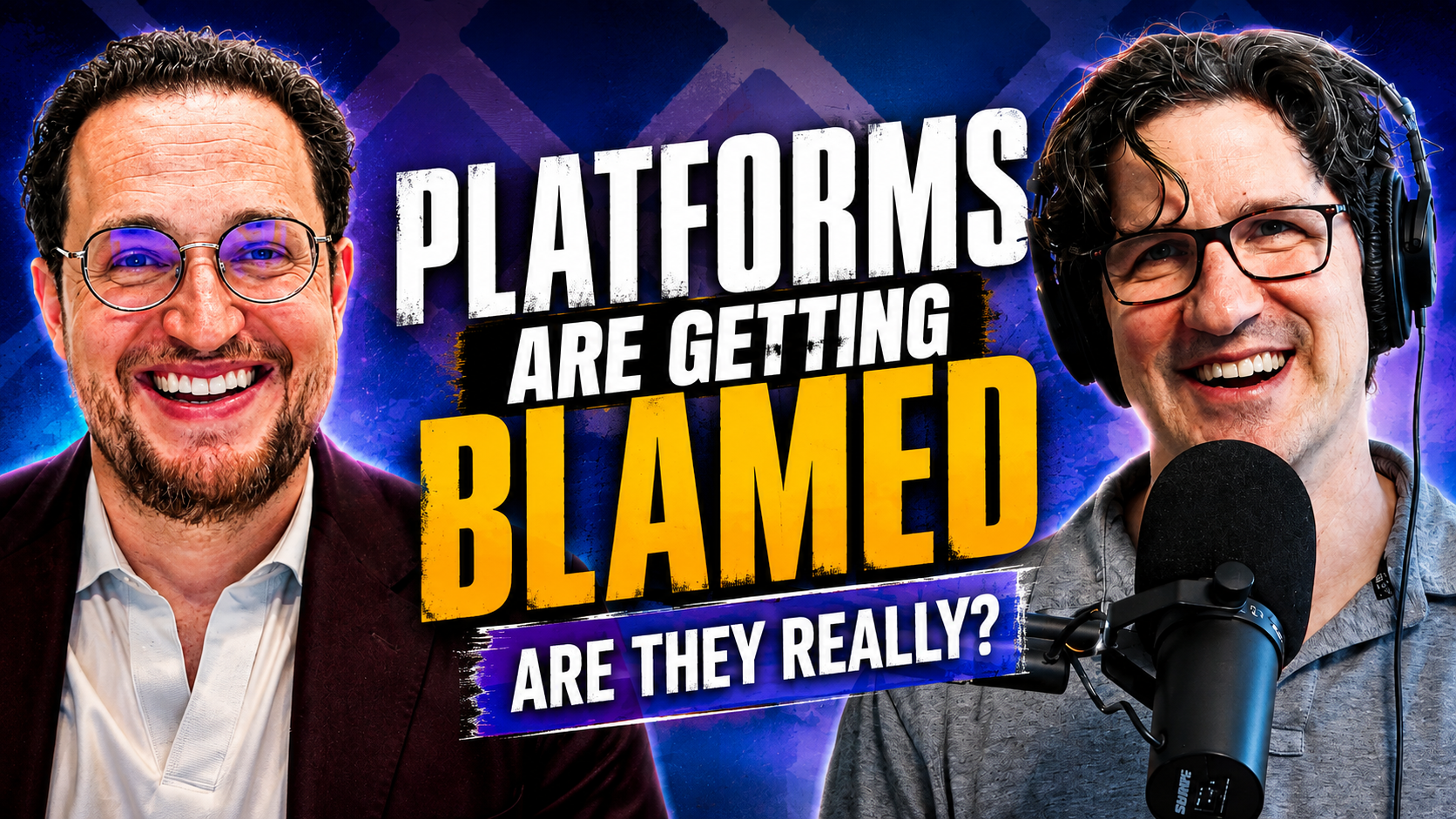
On the most recent episode of The Watson Weekly, one of my favorite podcasts, host Rick Watson interviewed Holden Bale, Global Chief Strategy Officer at Merkle. Holden brought stated-preference research and the purchase receipts Merkle sees across its network.
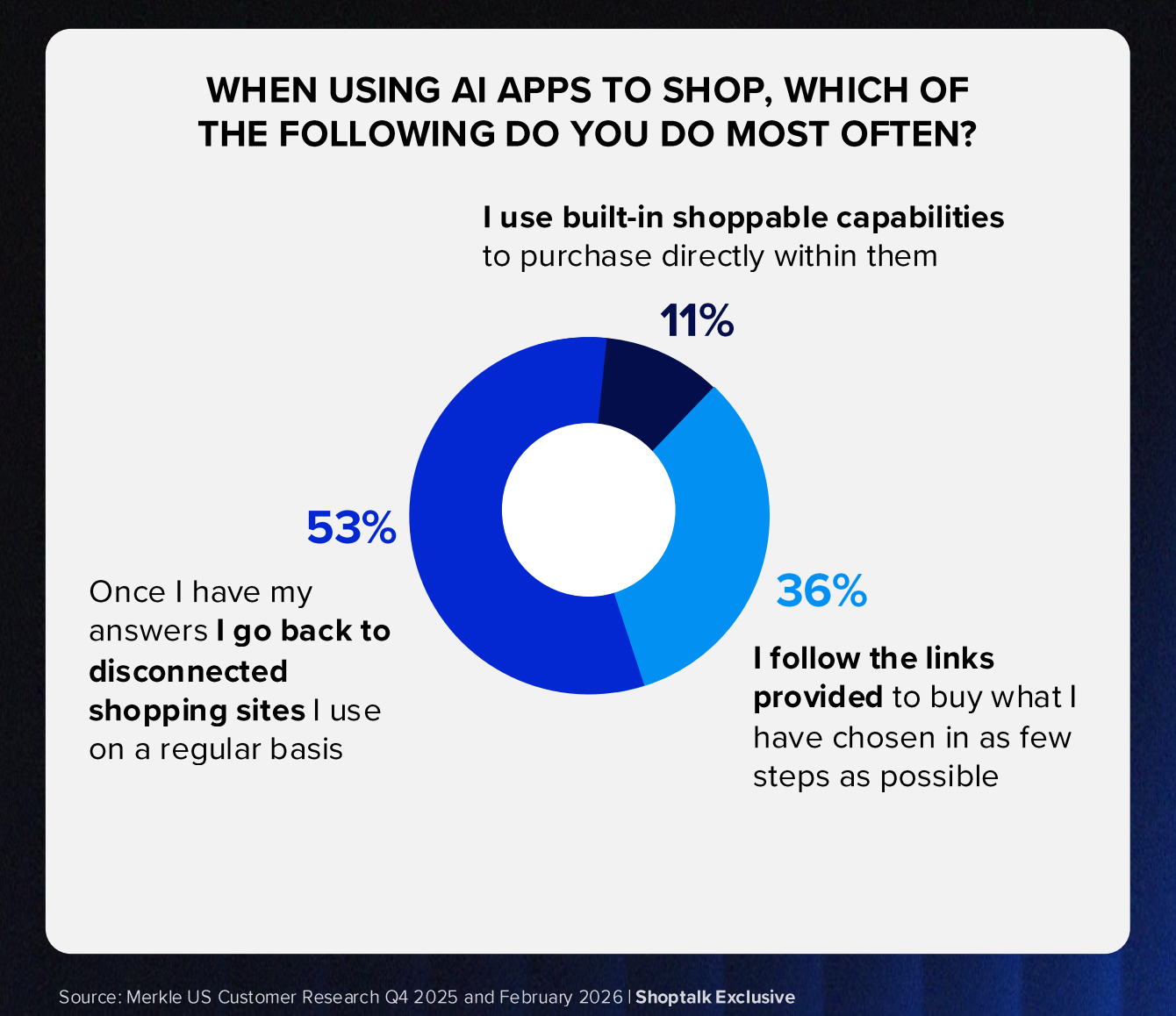
The standout stat that Holden shared: 11% of shoppers using AI believe they have bought something through an AI chat assistant like ChatGPT or Gemini.
They haven't. As Holden puts it, that cannot possibly be true. They are misunderhearing themselves. But he makes the case that we should listen to them anyway — in fact, particularly because they're wrong.
We've Seen This Movie Before
Rick: "We saw this with social commerce, where people wouldn't admit or didn't fully understand that halo effect. Do you think something similar is happening here?"
Holden: "I have data that says 60% of North American consumers above 40 years old think they've bought something through social commerce in the last four months. Is that true? No. Of course it's not true. The math doesn't make sense. But it is their perception. They're clicking through a shoppable tag, and they're going to your website. In their mind, they've purchased through social commerce."
Holden thinks that same siloed-attribution problem is now playing out with AI.
Poor audience targeting is frustrating. But for retail media teams, it can be costly, too.
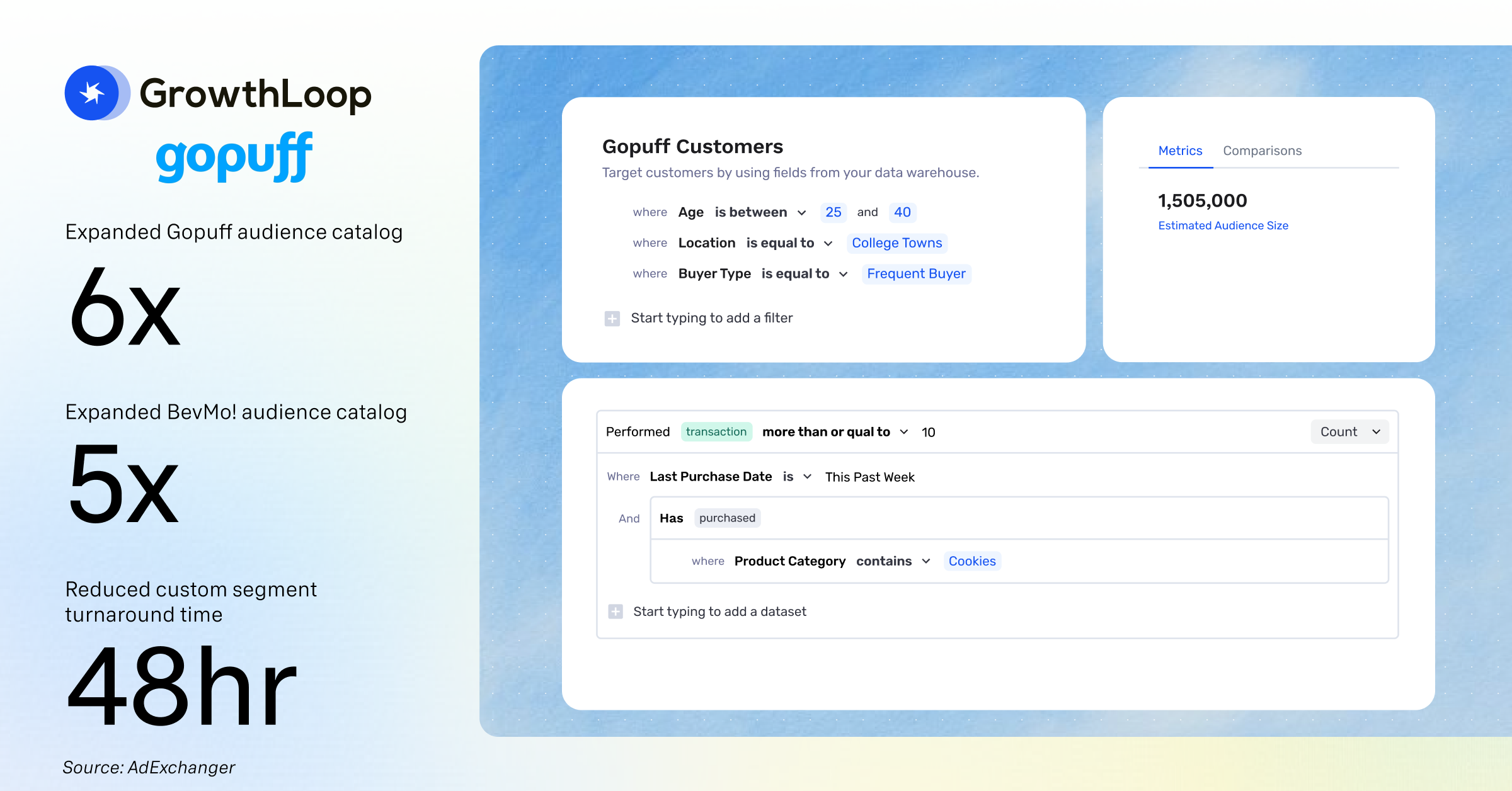
With GrowthLoop’s Composable Commerce Media solution, you can turn your first-party data into hundreds of high-value audience segments and launch campaigns faster.
After partnering with GrowthLoop, instant commerce pioneer Gopuff scaled from 100 syndicated audience segments to more than 600. And it now takes less than 48 hours to turn around a custom segment for one of their brand partners.
Learn more about how GrowthLoop is powering Gopuff’s best-in-class retail media operations.
Holden: "11% of consumers are telling us they purchase inside the AI app. No, they don't. They literally don't, because the math isn't there, and most of them don't have the connections to do embedded checkout. And there's a little bit of arrogance almost on the brands that say, 'Well, who are you to say, because they checked out on your .com?' But their perception is that their source of travel was through an AI app. AI is exposing the exact same thing that social exposed, which is if a consumer thinks that they're shopping through a thing, they're shopping through a thing."
I just love this framing.
Barely anyone has actually transacted inside an AI model — they hardly had the chance before our most likely agentic commerce contender, ChatGPT, killed off Instant Checkout. But Holden's point is that it doesn't matter. They think they did, and they're attributing the journey to AI regardless.
So when transaction capabilities come back around there's already a halo effect sitting there. Consumers believe they've been shopping this way for a while.
Who Has Time To Train Their AI?
My other highlight from the episode was around context: how do horizontal AI assistants ever build up the order history that Amazon already has? Because part of the appeal of AI-enabled shopping is personalization and automation.
Holden started with replenishment.
Holden: "The most obvious thing is a replenishment trip mission. I need Dove body wash. I'm out. I need detergent. We estimate, if you could code the share of wallet of basically the entire internet into trip missions, on the B2C side, at least 25% would be replenishment. And that's the stuff where you can imagine over time I'm training a personal AI assistant with a tremendous amount of context about my life."
Rick pushed back here, pointing out the current deal-breaker in the user experience. Most consumers don't have the time or interest to sit there and train an AI model on their preferences and rationale for how they shop. "Who has time to do that?" he asked.
Holden: "What you need — one thing the model doesn't have, which is why it's important they come to terms with marketplaces — is I need your order history. That is the one piece of context data that I have if I'm a marketplace or a retailer, and I don't have if I'm an LLM app."
So why would Amazon ever give that up? Holden's read: they won't. They'll build their own AI app instead, like Amazon's Rufus or Walmart's Sparky.
But the pressure builds anyway. Holden said that he used ChatGPT to help plan his mother's elder care. If he trusts it with that, he says he won't hesitate at "I've got three grand, go find me a TV."
Now What
Perception and trust are running ahead of capability. Consumers already think they're shopping through AI, and they're already handing these apps things far more consequential than a TV purchase. The capabilities are lagging — not the willingness.
The one asset the LLMs don't have is order history. Which is exactly why I've been running an experiment: exporting my entire Amazon purchase history into an LLM to see what changes. More on that next week.
In the meantime, listen to the full conversation on The Watson Weekly, there's many more nuggets like these.
 Rick Watson