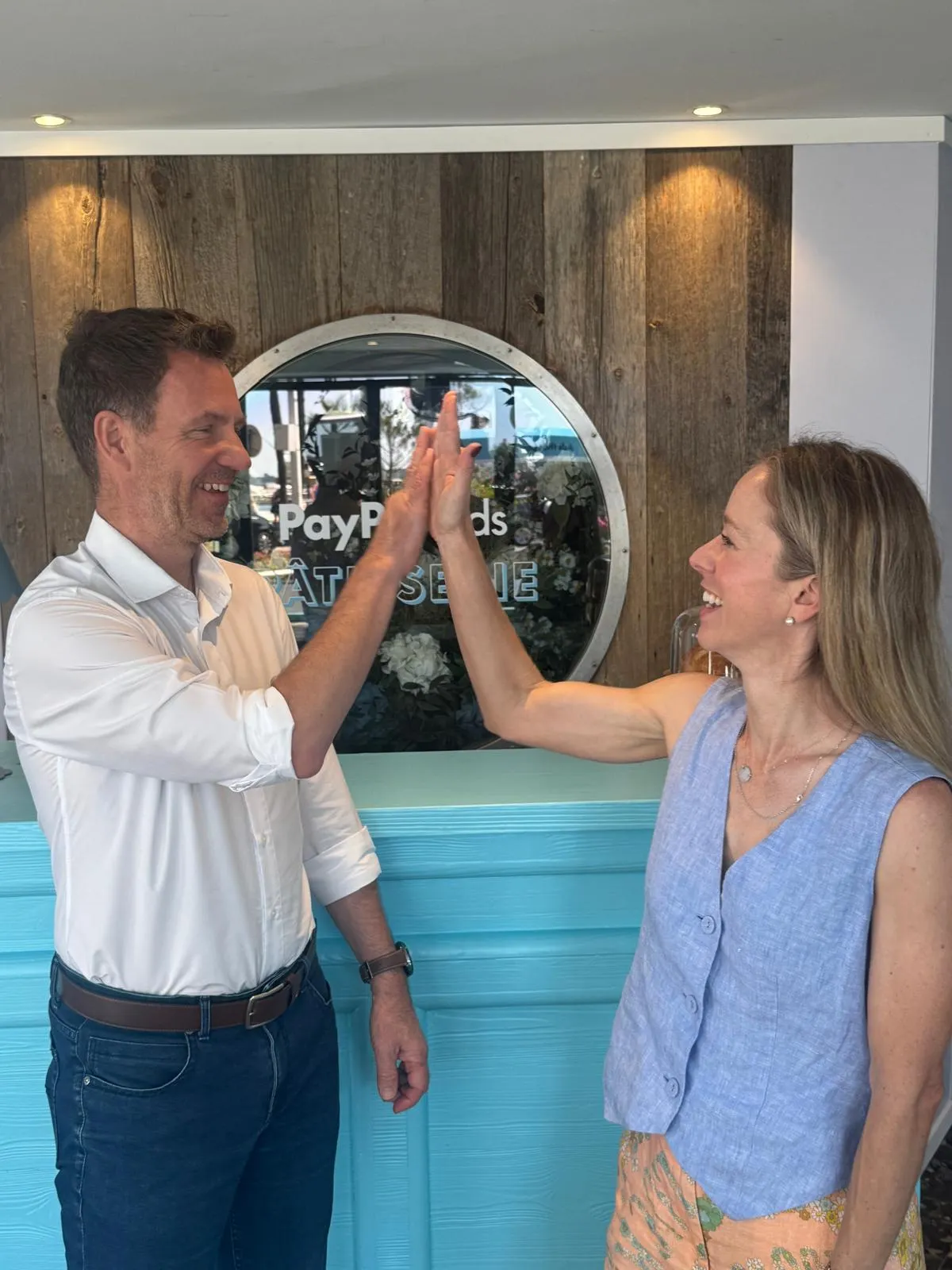
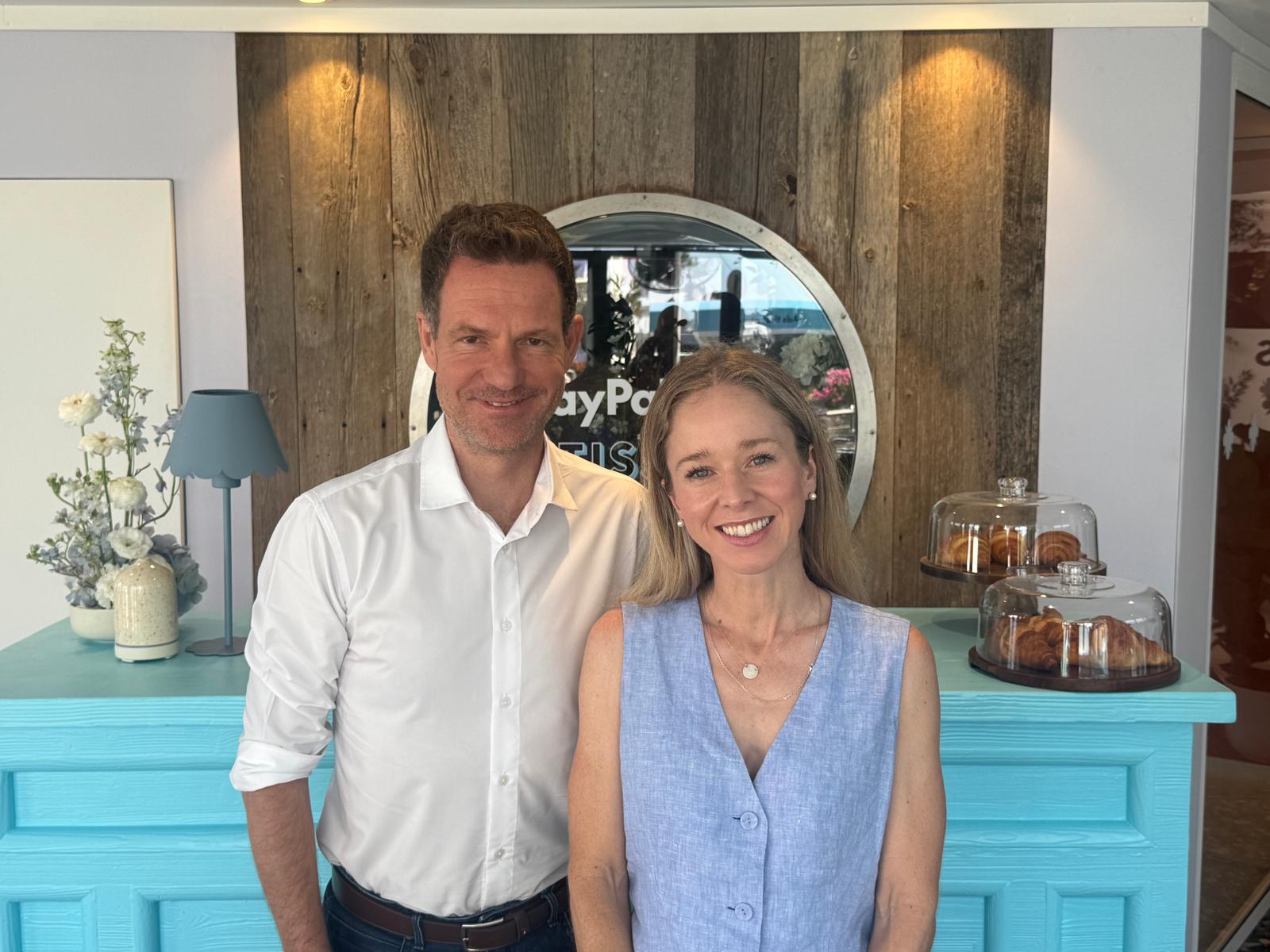
I sat down with Dr. Mark Grether (SVP & General Manager, PayPal Ads) at Cannes this week. His opening was almost deliberately anti-conference: PayPal wasn't announcing anything new.
The reasoning was that they'd announced enough. A proprietary identity layer, a transaction graph built on 400 million consumers and 30 million merchants, campaigns running across PayPal, Venmo, CTV, and a shoppable ad unit they call Storefront Ads. This year, Grether said, was about proving that the pieces actually work together.
What Storefront Ads do
The core idea: a consumer who's been browsing DSLR cameras sees an ad — on a publisher site such as Adorama, in a CTV placement, wherever — and can complete the purchase inside the creative itself. One or two clicks, no redirect to a landing page, no re-entering an address or card number. PayPal already holds all of that data.
The identity layer is what makes it possible. Cookie-based shoppable ads have never really worked because you still have to identify yourself inside the creative, which defeats the purpose and pushes people back to the traditional checkout flow. PayPal has to know exactly who you are for payments purposes, so that identity verification and robust fraud protection travels automatically into the ad unit.
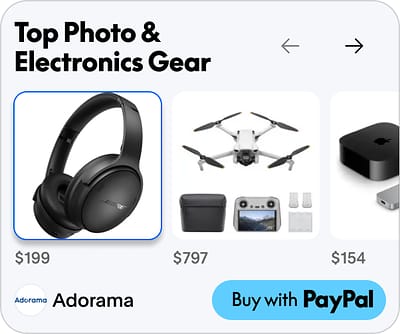
Grether also pointed out something that often gets missed in the shoppable ads pitch: the publisher angle. In the old model, a reader clicks an ad and leaves the site for good. If the transaction happens inside the creative, they stay on the publisher's page. That's a meaningfully different proposition for media owners, not just merchants.
There's a merchant-side benefit too. As more consumer journeys start on LLMs rather than search, merchants are seeing less direct traffic to their own sites. Storefront Ads, in Grether's framing, extend a merchant's storefront into whatever environment the consumer is actually in. You get the reach without needing them to come to you.
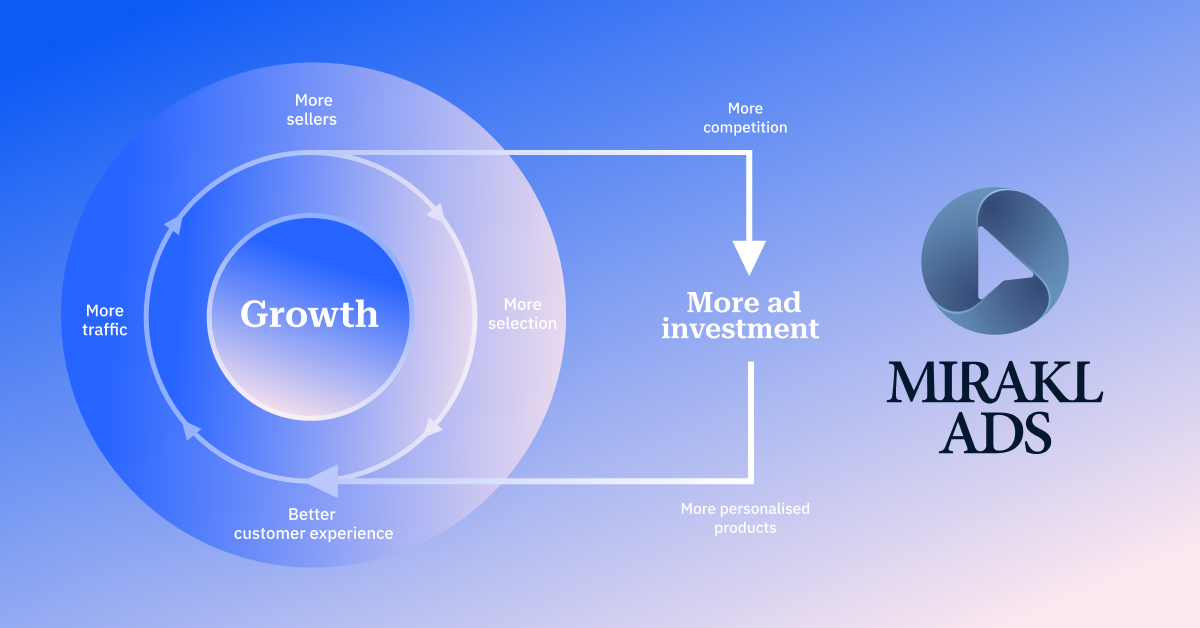
Mirakl Ads is the only retail media solution designed for both 1P & 3P marketplace brands. Why does that matter?
Marketplace sellers demand a seamless advertiser experience that still offers full-funnel ad formats. And retailers need a flexible solution that allows you to scale your media business.
The results so far
The proof points Grether brought to Cannes: Adorama saw above a 7x ROAS using Storefront Ads; Best Buy came in around 6x, with roughly 15% of those buyers new to the retailer. So according to Grether, Storefront Ads are functioning as a serious customer acquisition tool, not just a conversion boost for people who were already going to buy.
The cross-merchant view
The other part of PayPal's pitch is cross-merchant measurement, and it's distinct from what most retail media publishers can offer. A typical publisher can only confirm a sale that happens on their own site. PayPal sees across merchants, so a CTV campaign that drives a purchase anywhere can be traced back to the original exposure. For a brand like Nike, which sells through dozens of outlets, that opens up market share reporting by merchants and informs how budgets get allocated across retailers. Grether's framing was that most retail media publishers see only what happens in isolation on their own properties. PayPal sits horizontally across all of them.
The SMB strand
PayPal is also running a separate program for small merchants, announced in October 2025. The idea: individual SMBs are too small to build their own ad network, so PayPal pools their inventory. They earn ad revenue from it, and can choose to reinvest in campaigns that drive traffic back to their own stores. Hundreds of merchants are on the platform now, Grether said, though he was frank that it's still early days.
The operational challenge is real. A café owner thinks about the morning rush, not CPMs. The product has to run without much active involvement from them to have any chance of gaining traction at that end of the market.
The feature-count problem
Grether's closing argument was aimed at the industry as much as at PayPal's own positioning. He used a supermarket analogy: ten versions of cornflakes and you buy nothing; two and you pick one. His read is that retail media is in the ten-cornflakes moment. Too many networks, too many features, agencies and advertisers overwhelmed, defaulting to Amazon and Walmart because those are easy to buy and easy to justify internally.
His suggestion was that challengers need to come together rather than keep out-featuring each other. He pointed to upcoming Ascendant Network’s inaugural SHOWCASE upfront as an opportunity to present a simpler, unified buying option to the market.
Whether that coalition actually forms is a separate question. But it was a notable thing to hear from someone trying to be one of the alternatives.