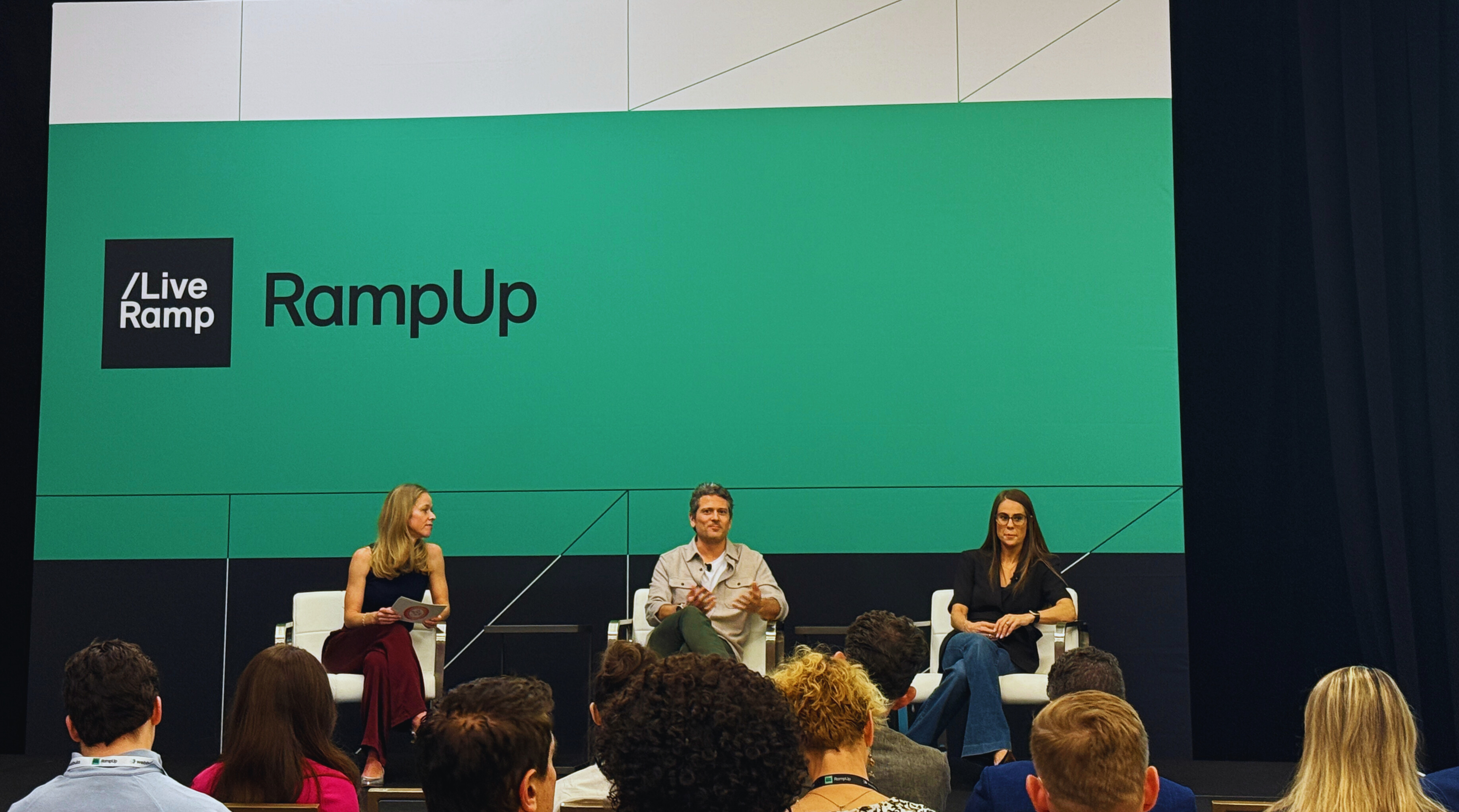
Last week I shared what people were saying in the hallways at the RampUp conference last week. Today I'm emptying the rest of the notebook.
If there was a thread running through everything — the sessions, the panel I moderated, the side conversations — it was data collaboration. Not as a talking point, but as the practical thing that kept determining who wins budget, who loses it, and who gets invited back. LiveRamp's conference, LiveRamp's DNA. But it also happens to be where the industry's real energy is right now.
Here are five takeaways from my notebook.
SPONSOR: MIRAKL ADS
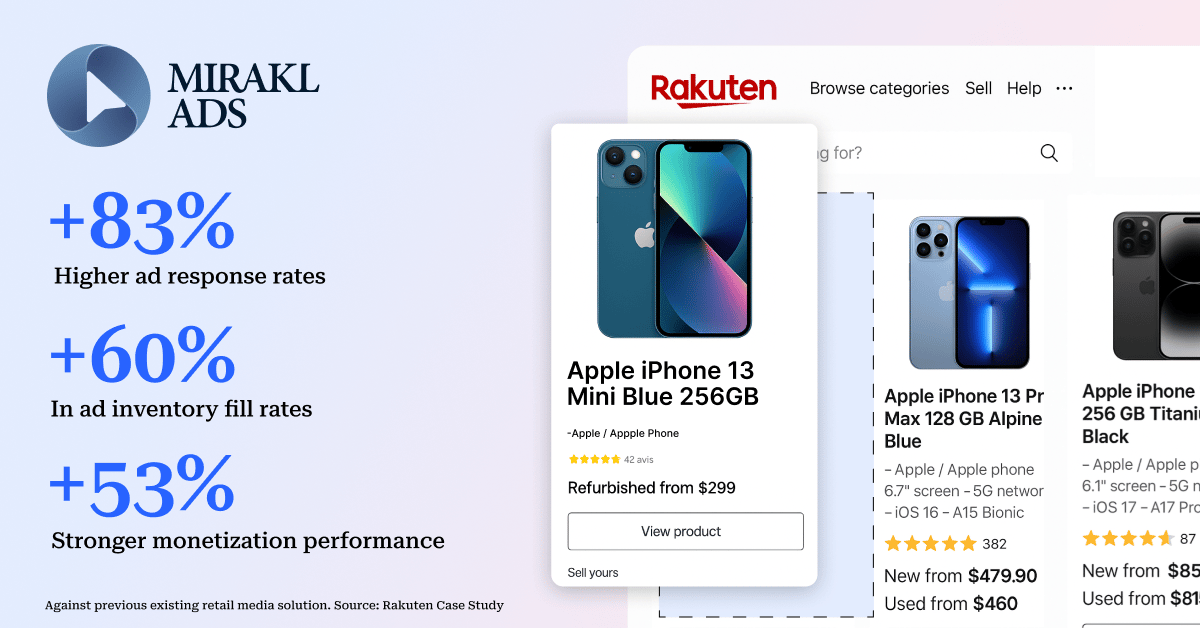
Did you know leading retailer media networks drive 85% of their ads revenue through mid- and long-tail advertisers?
Mirakl Ads provides full funnel ad formats tailored to both 1P and 3P advertisers, leveraging unique AI-capabilities that provide unprecedented levels of relevance and engagement.
Retailers who want to capture ad spend from the long tail of 3P marketplace sellers use Mirakl Ads in their tech stack.
1. Brands are building scorecards (but not against who you’d think)
I'm hearing from multiple large CPG companies that they're using structured frameworks — bubble grids, investment matrices, weighted scorecards — to rank commerce media networks against each other. Sophistication, capabilities, scale, reach. And the competitive set isn't limited to other RMNs. Several brand-side leaders I spoke with made it clear: they're evaluating retail media networks against Google and Meta for the same dollars.
This tracks with what Mars's Global Retail Media Strategy Director Kelly Spehar described at the Path to Purchase Institute conference last year, explaining a two-dimensional matrix evaluating networks on media capabilities and commercial growth potential. [LINK: Mars investment matrix piece] Different companies, similar logic: scored evaluation rather than gut feel.
What earns you a higher spot on these grids? Beyond performance, CMNs could score extra points by helping brands better understand the consumer. Most CPG companies don't sell direct to consumer. They often don't have loyalty programs that generate first-party data. The retailer or commerce media network is the bridge — and the networks that share consumer data generously are the ones climbing up the scorecards.
Any RMN selling to the top 20 CPGs should probably understand where they sit on these grids.
2. How DoorDash went from pennies to a priority
I moderated a panel at RampUp with Peter Giordano, GM of Strategy and Platform at DoorDash's ads business, and a brand partner. The brand-side panelist noted how their investment in the platform started very modestly. But DoorDash had climbed into priority territory because, in their words, "they've done the work."
Part of that work is measurement. Peter described DoorDash's ghost ads methodology — a holdout study where they simulate consumers in an auction, identify who would have seen an ad, withhold it, and compare outcomes. Higher-fidelity incrementality than what most networks offer.
But the brand partner's reaction wasn't just about the campaign metrics. Those results, they said, help with the internal narrative too — proof points that cascade up to leadership and influence future investment levels. That reframed who the audience for incrementality data really is. It's not just the media buyer. It's the executive team that still questions whether e-commerce spending is cannibalizing brick and mortar.
Peter also described a "food graph" built on 13 years of purchase behavior across 56 million monthly active users, increasingly available as self-serve insights. The brand partner's team has used it to spot signals like emerging cuisine trends in delivery occasions — the kind of data that feeds a product innovation pipeline one to five years out. That's data collaboration producing value well beyond targeting and campaign planning. It's the kind of two-way exchange that earns a network a bigger bubble on the grid.
3. CPGs push hard on self-service
This came up repeatedly at the event. One CPG leader described how a few years ago, most of the retail media networks they worked with were managed services. Now they're pushing their retail partners to go self-service — and the reasons connect directly to data access.
Self-service gives brands direct visibility into consumer insights for campaign planning, something they lose when everything runs through a managed service layer. One leader argued it's also better for brand safety — managed services introduce too many risks, while self-service lets a brand closely monitor where their ads show up. That's a benefit for the retailer too, who doesn't want the liability if an ad appears somewhere it shouldn't.
Another point that stuck: if retailers want to compete for national media budgets, they need self-service tools that operate at the same velocity as the platforms brands are already buying through.
This reminds me of what Anne Hallock, VP Americas at Mirakl Ads, said at the EMARKETER Commerce Media Summit in December. She'd been calling 2025 "the year of self-serve" — and for a practical reason. Retailers are being told by their leadership to go capture the long tail of advertisers. Thousands, not hundreds. You simply cannot service that many accounts with humans. Mirakl recently announced a partnership where 15,000 advertisers are being activated on a single platform. That only works if the tech handles campaign setup, reporting, and revenue recognition without a managed service layer in between.
Anne put the buy-side need plainly: imagine you're traveling, it's 3am, and you need to pull reporting for something you owe your boss. "You want be able to just go in and pull that reporting yourself," she said. "You don't want to have to email someone." Self-service isn't a nice-to-have. It's table stakes for capturing spend beyond the top 50 advertisers.
4. How many ad servers are you running?
This one's less of a takeaway and more of a "huh." During a session on experiential retail media featuring Lyft, Marriott, and United, I learned that United's Kinective Media runs five ad servers. Five? When you think about all the places ads get deployed across a United travel experience — seat-back screens, personal devices using the Skylink network — it starts to make sense. The implication is that delivering a cohesive media buying experience across all of them is no small thing.
After the session, I turned to an acquaintance who runs measurement for a grocery retail media network. I asked them how many ad servers they operate. "In-store? At least four," they said, expressing that this isn’t exactly their dream scenario.
I don't have a grand conclusion here. Just filing it away as a reminder that the operational complexity underneath these networks is often invisible to the buy side — and it goes some way toward explaining why data collaboration between brands and retailers is still harder than it should be.
5. RampUp offers a blueprint for customer events
One observation about the event itself. LiveRamp has built RampUp into a proper destination event — and they've done it without making anyone feel like they're sitting through a sales pitch. At no point did it feel heavy-handed. It just so happens that every conversation comes back to data connectivity and collaboration. What a coincidence.
But I say that with genuine respect, because it works. The quality and diversity of the audience was impressive, the programming was strong, and the corridor conversations were better than most main stages I've been on this year. It also happens to align with a lot of what I've been writing about — that the networks winning budget are the ones sharing data, not hoarding it.
Further reading on this topic: