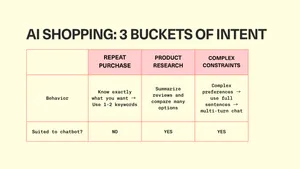

Shortly after OpenAI launched Instant Checkout last year, I made a fully agentic purchase through ChatGPT. A lavender candle. The experience was... fine. Not bad. Not broken. Just not meaningfully better than what I already do on Amazon or Target. I never went back.
If I — someone who covers this space for a living and genuinely wants AI to handle more of my shopping — couldn't be bothered to return, imagine how the average consumer felt.
So when The Information reported that OpenAI is killing Instant Checkout and routing purchases back through retailer apps like Instacart and Target, I wasn't exactly shocked. I wrote my initial take for The Drum, and the response — both the cheers and the jeers — has been more interesting than the news itself.
Here's what the conversation on LinkedIn surfaced.
SPONSOR: MIRAKL ADS
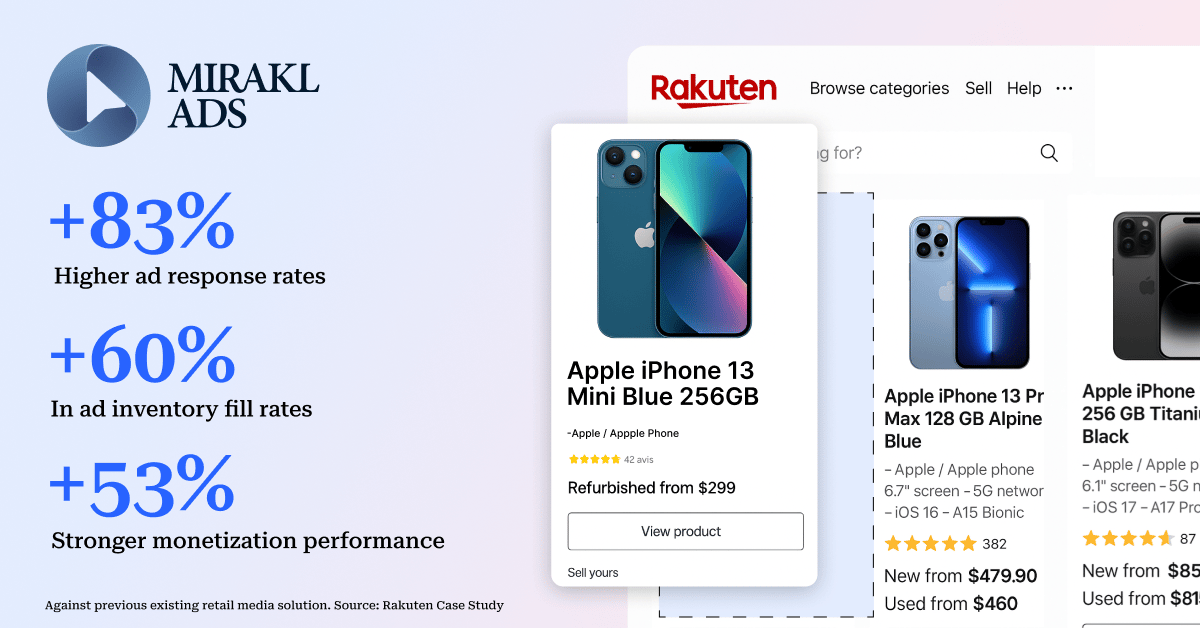
Retailers know that a marketplace model can dramatically boost product assortment, shopper engagement, and total revenue.
But, to get the most out of your marketplace, you need an ad tech solution that can really engage sellers.
Mirakl Ads is powering the future of retail media for leading retailers — to activate both 3P sellers and 1P brands.
What happened
OpenAI is scrapping the feature that let users buy products without leaving ChatGPT. Going forward, purchases get routed through third-party apps built inside ChatGPT, or you get bounced to the retailer's own site. As of this month, OpenAI had integrated only about a dozen of Shopify's millions of merchants. It hadn't built sales tax collection. The in-chat checkout layer is gone.
The victory laps arrived on schedule.
The skeptic case, taken seriously
The strongest version of the counter-argument came from Heather Hershey, Research Director at IDC, who argued that OpenAI wasn't offering merchants anything of real value — no liability for errors, no tools to manage data fragmentation, just FOMO as the primary sales pitch. Her point: don't let OpenAI get away with blaming messy merchant data when they should have known about that mess before they got into commerce. Merchants of all sizes are capable of thinking critically before jumping on a big-tech bandwagon.
And it's not just the skeptics saying this. Kelly Goetsch, President of order management firm Pipe17, shared a damning detail: his organization pitched OpenAI on the Order Network eXchange (onX) standard — backed by 86 participants including major order management systems and 3PLs — which would have addressed the inventory visibility problems that plagued Instant Checkout. OpenAI's response, according to Goetsch: "We're not the merchant of record and don't do anything with order management, so this isn't a fit for us." He also noted that OpenAI's commerce team job postings don't include the word "commerce" in their qualifications. The industry was offering solutions. OpenAI wasn't interested.
This seems to indeed be a fair hit. The "product data is too fragmented" narrative does let OpenAI off easy. They built a pre-alpha product, onboarded a handful of merchants, skipped tax compliance, rejected industry standards designed to solve the exact problems they faced, and pulled the plug after five months. That's not a data problem. That's an execution problem.
But Hershey goes further, arguing that most people use ChatGPT to chat and generate content, not to search or shop — and that claims to the contrary are hype. That's where I think the skeptic camp overreaches. ChatGPT users ask an enormous volume of shopping-related questions every day. Capgemini research found that 53% of US consumers have made a purchase based on AI recommendations. The discovery behavior is real, even if the checkout wasn't ready.
Why OpenAI really pulled back
Jason Goldberg made the most useful observation in his Forbes column this week: OpenAI isn't retreating from commerce because consumers don't want it. They're retreating because they're fighting for survival on multiple fronts — and losing ground.
Goldberg surfaced Apptopia data showing ChatGPT's share of US daily AI app users dropped from 57% to 42% between August 2025 and February 2026, while Google's Gemini doubled its share to 25% and Anthropic's Claude tripled its. OpenAI is simultaneously building a hardware device with Jony Ive, launching an ad business, and fighting benchmark wars. Dedicating the engineering resources to build a complete commerce stack — product feeds, tax systems, fraud prevention, customer service — simply wasn't the highest-priority use of finite resources.
Goldberg also flagged that OpenAI's CEO of applications is Fidji Simo, who ran Facebook's monetization engine, then took Instacart public as CEO. If anyone understands what building a commerce platform costs, it's her. This wasn't a naive miscalculation. It was a deliberate decision to invest elsewhere — for now.
The purchase signal
Jeff Clark, VP of product and commercialization at Walmart Connect, made a sharp observation in the LinkedIn debate. Owning the transaction, he argued, is what allows a retailer to truly know the shopper: what they bought, what else was in the basket, what drove the sale, what builds loyalty. That closed loop is the foundation of retail media.
His question: what happens to that purchase signal when intermediaries sit in the middle?
This is the retail media angle that matters most. Even if checkout stays with retailers for now — and OpenAI's retreat suggests it will, at least in the near term — discovery has already moved upstream into AI assistants. Consumers are using ChatGPT, Gemini, and Perplexity for product research, comparison, and narrowing consideration sets right now. That shift erodes the value of on-site advertising surfaces where retailers earn 70-80% margins, regardless of where the transaction ultimately happens.
And the platforms with the infrastructure to actually close the loop — Amazon with Rufus (300 million+ customers, nearly $12 billion in incremental annualized sales according to their Q4 earnings) and Walmart with Sparky (50% mobile app adoption, 35% larger carts) — aren't pulling back. They're accelerating. As I've argued previously, the retailers who own the AI model, the marketplace, the payments, and the logistics are the ones who'll crack agentic commerce. OpenAI tried to replicate that without owning the stack. That's what failed — not the concept.
What "agent-ready" actually means
Bryan Leach, CEO of Ibotta, offered a practical reframe: the real executive challenge isn't where the transaction happens, it's whether your brand is ready when an agent comes looking.
When a consumer asks their AI for a "sustainable laundry detergent," will yours be the brand the AI has been trained to trust? When agents go hunting for digital promotions, will your offers be findable? When an agent builds a shopping list optimized for value, is your pricing competitive?
That framing aligns with what I've been advising in my series on agentic threats to retail media.
Most of these investments pay off even if agentic commerce never reaches the scale its advocates predict. That's the beauty of the "agent-ready" posture: it's good hygiene regardless.
The metric that matters
The grave-dancing over OpenAI's retreat misses the forest for the trees. We should be measuring all transactions influenced by AI agents — every product researched, every recommendation considered, every comparison made inside a chat window — not just the tiny fraction completed inside the agent itself. By that measure, agentic commerce is growing fast.
The skeptics got the short-term call right. This version of agentic checkout was oversold and underbuilt. But confusing a failed implementation with a failed concept is a category error that could leave retailers flat-footed when the next attempt — from a platform that actually owns the stack — gets it right.
I'd keep your running shoes on.
Read more from me on this topic:



COMING UP! Thursday March 19…
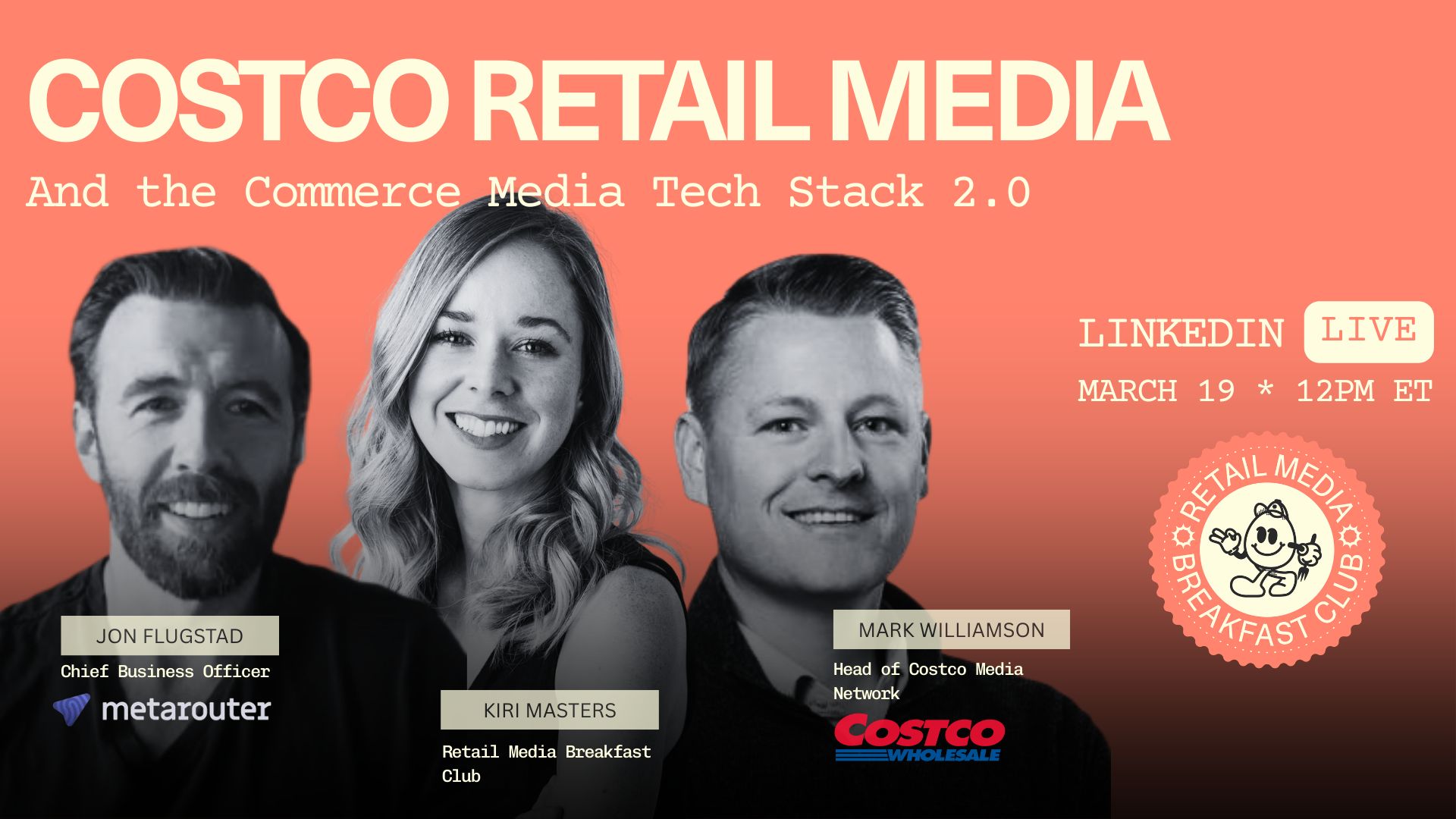
What does it look like when one of the US' largest and most-loved retailers starts building its commerce media story more intentionally? (And publicly)
Join Kiri Masters (Retail Media Breakfast Club), Jon Flugstad (MetaRouter), and Mark Williamson (Costco Media Network) for a candid conversation about the next phase of retail media infrastructure — and why the old playbook for building a retail media network is starting to look incomplete.
In this LIVE session, we'll explore:
* The thinking behind “Costco Velocity,” what it signals to the market
* Why transparency is still such a weak spot across retail media
* What separates a real next-gen commerce media stack from a dressed-up legacy approach
* Why clean, connected data infrastructure matters more than ever
* How Costco’s positioning could influence broader industry expectations
Join LIVE -- we'll take audience questions!