This piece was originally published to my column at The Drum on February 5, 2026.
A year ago, roughly 7% of website referrals to US retailer sites came from ChatGPT. By October 2025, that figure had climbed to 16%, according to SimilarWeb. And it’s not even just online shopping that’s changing. Acosta Group’s Shopper Insights found that 18% of its shopper panel used LLMs such as ChatGPT, Gemini, and Perplexity while shopping in-store over the Thanksgiving weekend.
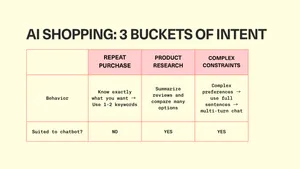
I’ve previously written about how AI-enabled shopping poses an existential challenge for retailers across multiple fronts. But I’m not talking about full-throttle agentic shopping where a bot completes transactions or reorders your weekly essentials. Consumer behavior has already changed. The early stages of many shopping missions now happen inside an LLM.
Here’s how that looked for me over the weekend: I get a sudden urge to buy a fancy new hair styling tool. I run it by ChatGPT, we hash out the options based on my preferences and requirements. Then, with ChatGPT’s help, I select a retailer based on price and delivery time. I arrive on the retailer’s website having already decided on the exact SKU. (The Shark Ninja Glossi, for those playing at home.)
The retailer still makes the sale. So what’s the problem?
SPONSOR: MIRAKL ADS
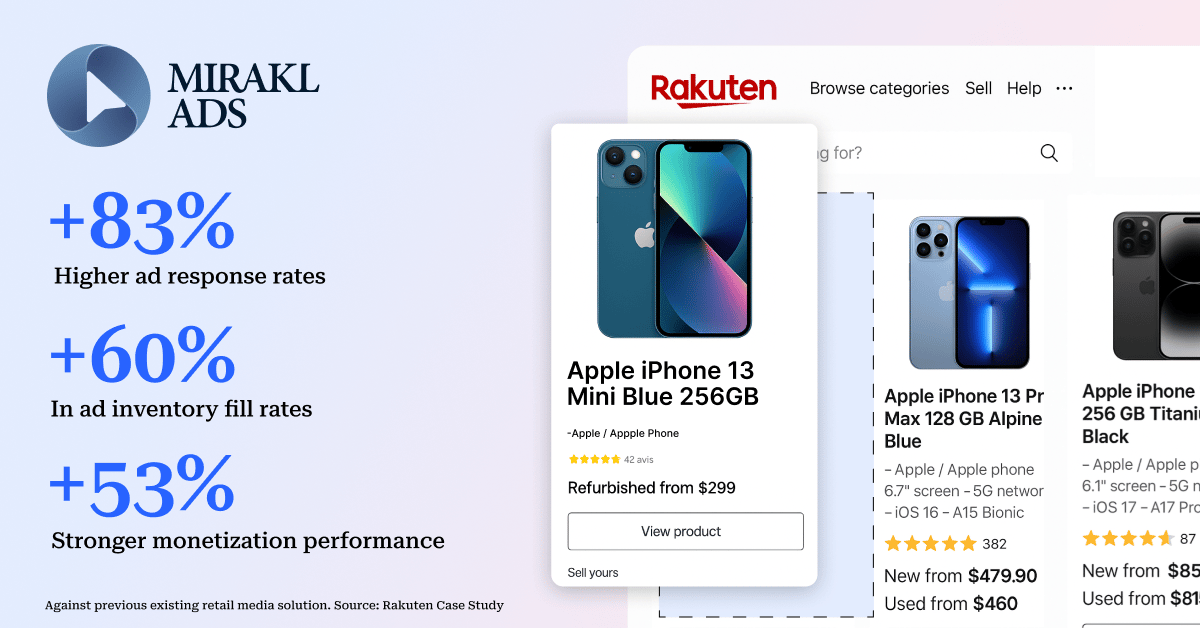
Did you know leading retailer media networks drive 85% of their ads revenue through mid- and long-tail advertisers?
Mirakl Ads provides full funnel ad formats tailored to both 1P and 3P advertisers, leveraging unique AI-capabilities that provide unprecedented levels of relevance and engagement.
Retailers who want to capture ad spend from the long tail of 3P marketplace sellers use Mirakl Ads in their tech stack.
The problem is that I’m no longer browsing, comparing, or researching on a retailer’s own properties. That upper-funnel activity is essential to retail media networks.
It’s where the intent signals live – browsing behavior, search terms, and category exploration are the raw material for building high-performing audiences.
It’s where the inventory lives – less onsite discovery means fewer sponsored placements and fewer chances to influence decisions before the shopper locks on a SKU.
It’s where the measurement narrative starts – onsite journeys make attribution clean and explainable.
In other words, AI-enabled shopping ushers in an era of fewer signals, fewer surfaces, and a fuzzier story for brands already disenchanted with retail media measurement.
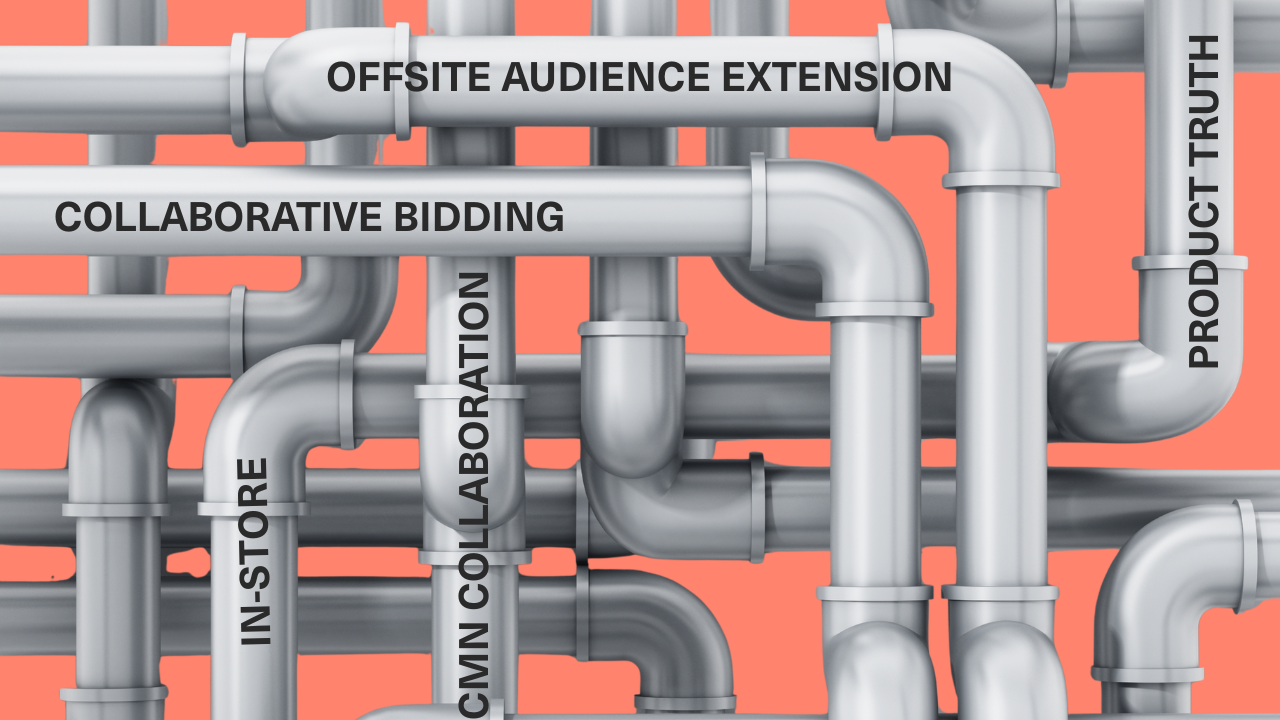
This isn’t a funeral for retail media. But it does demand a different playbook, one where retailers double down on the data moats that still hold. Here are four ways commerce media can thrive as shopper behavior fragments.
1. Fuel the inspiration stage
The AI-informed journey introduces a formidable intermediary at research and consideration. But the “inkling” still starts elsewhere. I didn’t wake up craving a fancy hair tool; social media put the idea in my head.
That’s where offsite commerce media already works: retailers use loyalty and transaction signals to find in-market shoppers and likely switchers, brands activate those audiences across CTV, social, and search, and the retailer closes the loop with outcomes that media buyers actually care about – incremental sales, new-to-brand, share shift.
Even if the shopper detours to an LLM for a gut-check, this model holds because the conversion still lands in the retailer’s lane. The receipt is the receipt.
Collaborative bidding as an ad unit extends this logic. Retailers and brands bid together on offsite moments using the retailer’s first-party view of who’s actually in-market, so the brand can win the impression and the retailer can win the sale. Both can then measure what happened. This makes commerce media networks more resilient in a world where discovery has splintered across social and entertainment channels.
The only way retailers blow this is by killing the golden goose. If everyone can buy the same audiences everywhere, or the take rates get silly, buyers feel burned. Exclusivity of signals, surfaces, or outcomes is the point. Bain & Company’s recent guidance to retailers is straightforward: retain ownership of data, fulfillment, and checkout. If you control the checkout, you control the receipt, and the receipt is the scoreboard.
2. Data collaboration becomes table stakes
If shoppers stop leaving clues on retailer sites, commerce media networks have two options: accept being blind, or bring in other data that adds context.
Some of that context comes from other retailers. Even the largest retailer in a given category would benefit from collaboration. Consider a major grocery network and a specialty retailer network working together in a clean room. Big Grocer sees repeat purchase and household replenishment. Specialty sees higher-intent category behavior in baby, beauty, or electronics. Together, they can prove to a brand whether advertising across both drives more new-to-brand buyers, whether they’re reaching different people, and whether exposure in one place lifts sales in the other. This is how smaller networks act big without merging.
Other context comes from the wide range of non-retailer commerce networks.
In my Glossi example, Chase Media Solutions sees that I spend a lot of money at Drybar getting my hair styled. Marriott Media Network sees those salon visits correlate with hotel stays in various cities. In a clean room, Shark Ninja could advertise against this audience of ‘business traveler who spends on hair styling’ on social or CTV, and Best Buy closes the loop with transaction data proving whether the campaign drove Glossi purchases.
This kind of collaboration also requires shared measurement frameworks. Right now, a lot of retail media measurement assumes a linear journey: ad, click, onsite browse, add to cart, purchase – all inside one retailer. When discovery fragments across AI, streaming, and social, those clicks and browsing sessions go missing.
Instead of obsessing over site traffic, commerce media networks and their partners need to align on verified incremental sales, new-to-brand acquisition, share shift, and consistent attribution windows. The collaboration here is less about sharing customer data and more about agreeing how success gets defined.
3. Product truth as a media lever
When discovery happens offsite, and shoppers narrow to a SKU before they hit a retailer’s site, the old retail media playbook (keyword targeting and browsing-driven sponsored products) shrinks. What replaces it is answering a simple question: who can reliably fulfill what the shopper wants, right now, with the least risk?
That’s “product truth”: in-stock status, accurate price, delivery ETA, pickup windows, return policy, substitutions. These become increasingly important in an age of perfect competition that LLMs offer us. To be clear, retailers can compete on many dimensions beyond unit price. But having those dimensions legible and trustworthy is crucial.
Once I’d decided the Shark Ninja Glossi would get me out of my hair rut, I had to choose which retailer to buy from. ChatGPT and Gemini both provided incorrect information about a discounted price at Best Buy – a sale that had apparently ended the day before.
This is the gap. LLMs are working with web-scraped data that goes stale. Retailers control what’s actually true right now.
For advertisers, that control translates to real value. High-intent offsite ads conditioned on product truth – only serving when the item is in stock and available for pickup or fast delivery – reduce wasted impressions. Fulfillment details in the creative remove friction at the moment of decision. And incrementality measurement becomes more credible when availability is accounted for, rather than “lift” just meaning “we were the only place in stock”.
In an AI-shaped journey, real-time product truth is something that generic web-scraped information can’t guarantee. Retailers who surface this data through their media products have a genuine edge.
4. In-store as the durable arena
Here’s the twist: in an AI-shaped shopping world, in-store may become the most defensible part of the retail media stack.
No LLM can replicate physical presence, sensory context, or real-time proximity to products. When everything else becomes abstract and chronically online, the physical store becomes more valuable, not less. For many people, shopping remains a third place, something to do, a form of discovery and inspiration.
I’ve covered how Sam’s Club is scaling in-store media with serious investment in various surfaces, experiences, and measurement solutions. Instacart’s Caper Carts were highlighted by the company’s advertising chief as a critical part of its roadmap. And the president of Best Buy Ads, Lisa Valentino, says the future of retail media lives in the store.
In-store is a defensible advantage for retailers willing to invest.
Now what?
Many retailers are embracing this new shopping paradigm and building for an agentic future. But it does call into question the future of the media businesses within these retailers, which is generally build on a foundation of onsite sponsored product ads.
The retail media networks who thrive in this cosmic reset will be the ones who recognize what they still uniquely own: transaction data, identity, loyalty signals, physical stores, and the checkout event itself.
That ownership demands different muscles than the sponsored product playbook that built retail media’s first decade. It means investing in offsite activation tied to real outcomes. It means collaborating with other retailers and adjacent categories instead of hoarding data in isolation to claim exclusivity. It means treating product truth as a media asset—because LLMs are powerful research assistants working with yesterday’s information, and that gap is an opportunity. And it means doubling down on physical experiences that no algorithm can intermediate.
For the record, I did buy the Glossi. The receipt is in Best Buy’s dataset. What they do with that signal is up to them.
Read more from me on this topic:
- While We Debate What's 'Really' Agentic, Retail Media's Foundation Is Already Shifting
- Why OpenAI's Ad Network Should Concern RMNs
- 'The Biggest Change in My Lifetime' — Marketecture CSO on AI Shopping
- 7 Ways to Break the Retail Media Doom Loop
ATLANTA HAPPY HOUR — NEXT WEEK
Join me and a couple dozen of your new commerce media besties for a relaxed, Happy Hour where the focus is on conversation, camaraderie, and real connections. Whether you’re new to the industry, a seasoned expert, or working remotely and craving IRL banter, this meetup is your chance to be part of Atlanta’s growing retail media community.
On Wednesday, February 25, come grab a drink, trade stories, and be part of a community that supports and inspires one another. RSVP here
This happy hour is proudly sponsored by GrowthLoop. Monetize your first-party data with a cloud-powered retail media network.