
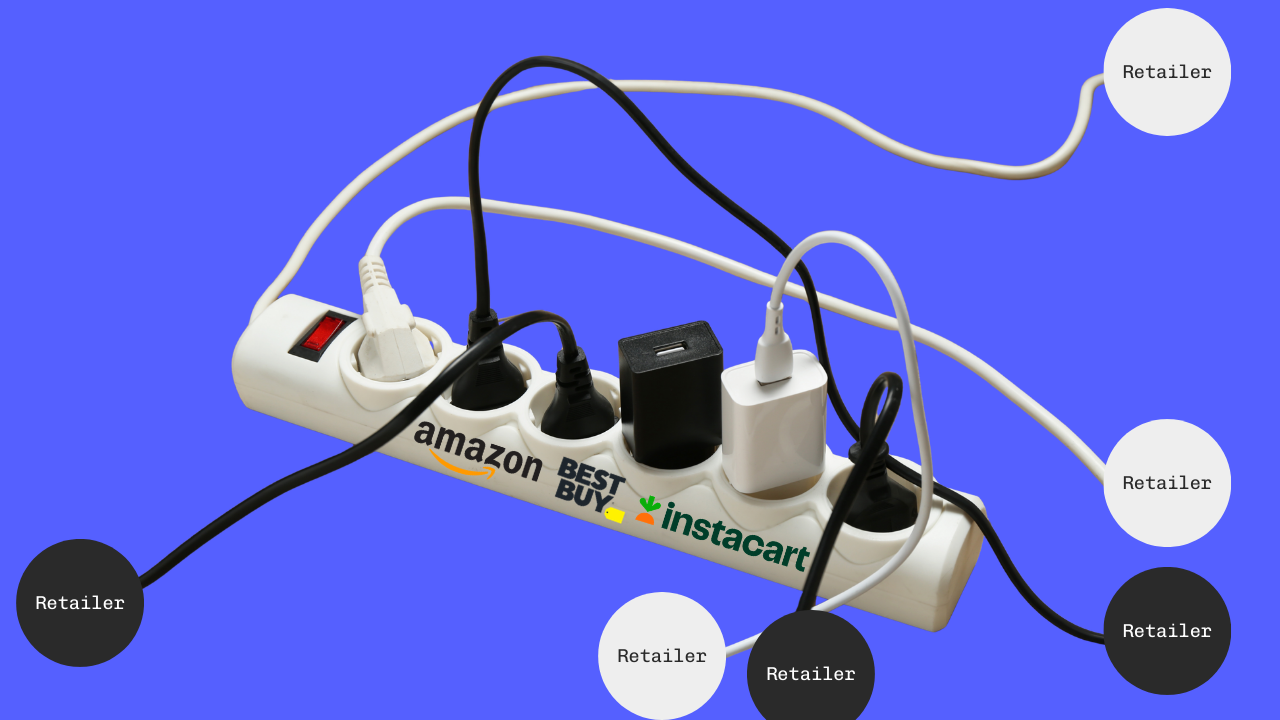
You probably have something in your home that's ugly but essential. It conjures feelings of overwhelm but also sanity. It's color-coded, duct-taped together, and constantly changing. It has multiple contributors as data sources — some capable, some of whom need everything done for them. So you embrace the ugliness, the chaos, as the imperfect solution. Because there's really no other way.
I'm talking about the family calendar.
I'm also talking about how brands manage retail media in 2026.
The best-performing brands have stopped waiting for any single retailer to hand them a clean, unified view of their advertising. Instead, they're building their own control layers — their own operating systems — on top of retail media networks. Possibly even a bit ugly right now. But functional in ways that no individual retailer dashboard can replicate.
The fifth annual Stratably × Skai State of Retail Media report puts real numbers behind this shift. With 166 marketers surveyed (61% at director level or above) and 40 qualitative interviews with retail media leaders, it's the longest-running study of its kind — and this year's findings point to a widening gap between brands that are designing systems and brands that are still managing platforms.
SPONSOR: MIRAKL ADS

Did you know leading retailer media networks drive 85% of their ads revenue through mid- and long-tail advertisers?
Mirakl Ads provides full funnel ad formats tailored to both 1P and 3P advertisers, leveraging unique AI-capabilities that provide unprecedented levels of relevance and engagement.
Retailers who want to capture ad spend from the long tail of 3P marketplace sellers use Mirakl Ads in their tech stack.
What the Data Shows
Brands now plan to manage an average of eight retail media networks by the end of 2026. Platform-by-platform management is breaking under its own weight. So brands are building unified control layers, and their priorities are telling:
- 77% want better measurement across networks — a single view of performance instead of fragmented reports from each retailer
- 68% want operational efficiency — less manual labor wrangling siloed tools
- 52% are shifting budget from open-web DSPs to retail media DSPs, chasing the closed-loop attribution that native and open-web tools struggle to provide
- 20% are already applying incrementality insights in-flight — not waiting for post-campaign reports to ask "did this work?" but steering active campaigns in real time
- Only 12% fully integrate media spend with commerce-side data like inventory health, pricing, and digital shelf performance.
What Separates Leaders from Everyone Else
The report doesn't just survey averages — it segments respondents into "Leaders" and "Laggards" based on hard criteria. To qualify as a Leader, a brand must be outpacing its category in ecommerce growth, rate its own retail media maturity as above average or highly sophisticated, and be meeting or exceeding KPI goals for the year. That's a high bar. And the behavioral differences are stark.
Leaders commit 27.2% of their total media budget to retail media, versus 23.1% for Laggards. They manage more networks (7.2 on average, expanding to 8.5 by end of 2026). They treat measurement as a real-time steering tool — "what should we change right now?" — not a post-mortem exercise. And they're far more likely to have integrated media and commerce operations.
That 12% full-integration figure? The report is blunt about it: "Connecting media and commerce operations isn't just organizational tidiness — it's what separates performance leaders from everyone else. Brands optimizing campaigns without visibility into inventory, pricing, and promotions are fighting with one hand tied behind their back."

Why Brands Are Building This Themselves
When I dug into retail media's measurement problem last year, the uncomfortable finding wasn't that standards don't exist — the IAB released comprehensive guidelines back in 2024. The problem is that the infrastructure underneath is often broken. Identity fragmentation, siloed impression logs, tech stacks cobbled together from non-retail-native partners. As one retail media leader told me then: "The problem isn't that the IAB guidelines are wrong — it's that the infrastructure they depend on is often broken."
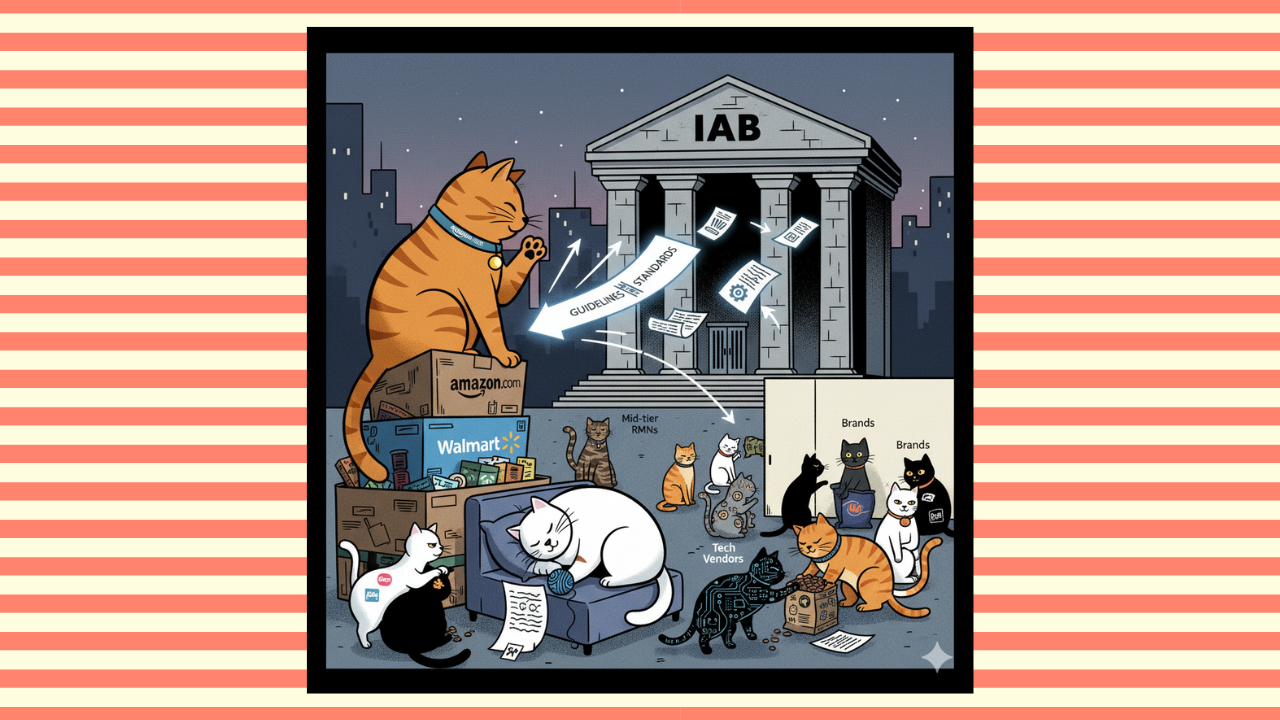
That's the context that makes the Skai report click. Brands aren't building control layers because they enjoy complexity. They're doing it because the fragmentation problem isn't getting solved for them.
Retailers still provide the essentials: inventory, shopper data, native ad tools. But brands are layering on top: cross-retailer normalization, independent measurement, incrementality testing, budget orchestration. They're building the connective tissue that doesn't exist natively — the family calendar that no single family member was going to make for them.
The Retailer Side Echoes It
Anne Hallock, VP at Mirakl Ads, flagged a telling pattern at the eMarketer 2026 Commerce Media Summit in December.The most innovative RMNs, she said, are the ones where a Chief Digital Officer now oversees both ecommerce and retail media — breaking down the old silos between merchant teams who own the website and media teams who sell the ads. When those teams are pulling in the same direction, retailers move faster. But most haven't gotten there yet. (Disclaimer: Mirakl Ads sponsors this newsletter)
That's the retailer-side version of exactly what Leaders are building on the brand side: integrated operations where media and commerce pull in the same direction. But most retailers haven't gotten there yet — and brands can't afford to wait for each one to reorganize.
The Real Divide
Here's where I get spicy: the industry's fixation on "which RMN should I add next?" is the wrong question. The right question is what system am I building to manage all of them?
Most brands aren't asking it. The gap between Leaders and everyone else isn't budget size or agency roster. It's architecture. Leaders are compounding advantage through measurement infrastructure, tighter organizational integration, and automation. The rest are logging into eight separate dashboards and hoping the spreadsheet holds.
And that gap compounds. Better data feeds better decisions, which wins more internal budget, which funds more investment in the system. The brands on that flywheel are pulling away. The brands not on it are watching it spin.
Retail media's next winners won't be decided by who spends the most. They'll be decided by who builds the best system around that spend. The family calendar isn't pretty — but the family without one is the one that misses everything.
Download the full report from Skai’s website here.