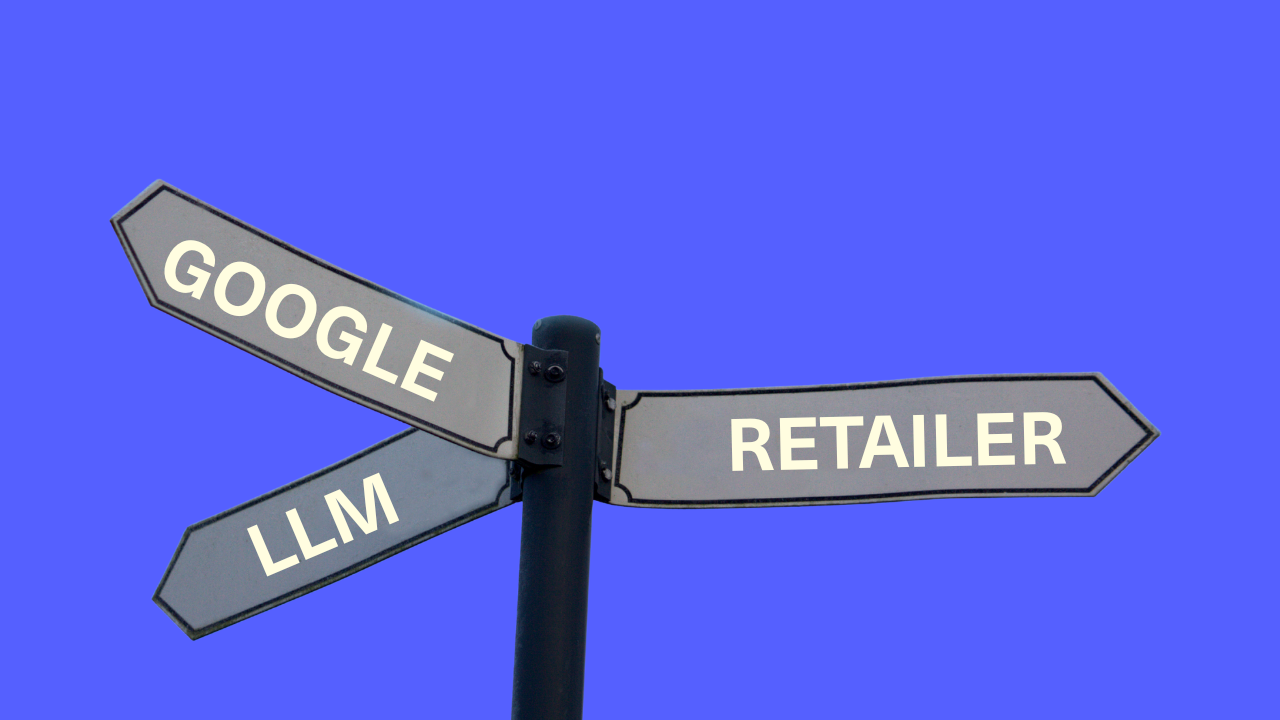
Sometimes I feel like a real Debbie Downer about how AI will affect retail media. Like I’m the town crier in the town square ringing my bell and yelling "the end is nigh!"
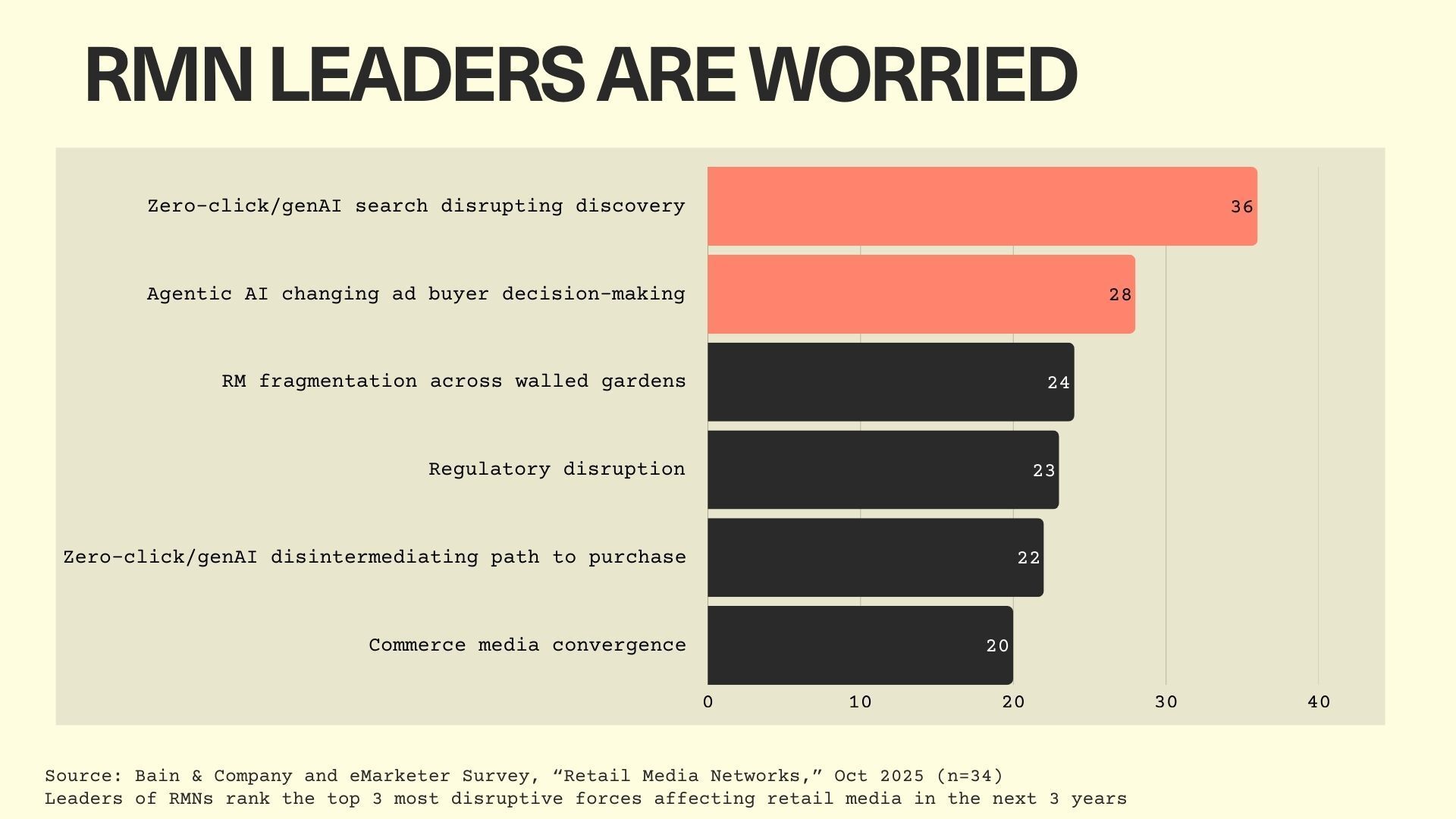
I'll just say that retailers generally keep pretty quiet on this topic when I bring it up. The silence is telling, especially since AI was the top-rated concern among RMN leaders in a survey conducted by Bain & Company & EMARKETER late last year.
So I was encouraged to hear this topic is top of mind for Marketecture, an AdTech publication I greatly respect. Sam Khoury, their Chief Strategy Officer, appeared on the ADSN podcast last week and said something I've been thinking about constantly: people are generally trying to hide from this shift, hoping it goes away.
But the consumer behavior is already changing.
SPONSOR: MIRAKL ADS

Did you know leading retailer media networks drive 85% of their ads revenue through mid- and long-tail advertisers?
Mirakl Ads provides full funnel ad formats tailored to both 1P and 3P advertisers, leveraging unique AI-capabilities that provide unprecedented levels of relevance and engagement.
Retailers who want to capture ad spend from the long tail of 3P marketplace sellers use Mirakl Ads in their tech stack.
On the pressure everyone's feeling:
Sam Khoury says:
"I think what we're feeling right now, and I say this with care and love for everybody we work with, I think everybody is feeling a little bit of pressure in 2026. I don't think publicly people speak about how big of a risk the changes that's coming in the next 12 to 18 months. And this isn't fearmongering, I think this is true. User consumer shifts in the way they consume content and how you can reach them. And I think people are generally trying to hide a little bit from it and hoping that it just goes away. But the consumer behavior is absolutely changing."
Sam's right that people are hiding from this. But the data doesn't lie. ChatGPT referrals to US retailer websites more than doubled year-over-year, climbing from 7% to 16% according to SimilarWeb.
And Acosta Group found among its shopper panel that 18% of shoppers used AI chatbots while shopping in-store over Thanksgiving weekend.
This isn't a future problem. It's a now problem that's accelerating.
On how his own behavior has changed:
"I look at myself and my journey online and how that's changed. I think historically, Google was my source of research, my source of finding a restaurant, my source of taking a look at flights. My behavior has entirely changed. I start with ChatGPT. That's the first place I go when I say, what's the best alternative flight from Los Angeles to New York City. I click the link and then it lands me somewhere for me to research more. Any research documentation I need starts there.
So my biggest fear and what keeps me up at night is what happens to the open web, and if these numbers continue to drop the way they have dropped over the last few years."
Sam's experience mirrors my own. I shared in my column for The Drum last week how I recently had a sudden urge to buy a fancy new hair styling tool. I ran it by ChatGPT, we hashed out the options, selected a retailer based on price and delivery time. I arrived on the retailer's website having already decided on the exact SKU.
The retailer still made the sale—so what's the problem?
The problem is I'm no longer browsing, comparing, or researching on a retailer's own properties. That upper-funnel activity is where the intent signals live, where the ad inventory lives, and where the measurement narrative starts. AI-enabled shopping ushers in an era of fewer signals, fewer surfaces, and a fuzzier story for brands already disenchanted with retail media measurement.
On the scale of this change:
"What exactly does this mean for a brand? If they were targeting users on Google or on webpages, and now that user has shifted 30, 40, 50% of their time away and is using Gemini—what does that mean for them in terms of targeting that user that was once on a website and is now no longer on the website 50% of the time?
We really want to address on the advertiser and brand side, what does this mean for you? How are you shifting your budgets? I think this is probably one of the biggest changes we've seen in our industry in my life, at least. Maybe the last time was maybe the shift to mobile."
Sam comparing this to the shift to mobile is significant—that was an industry-redefining moment. But I'd argue this one cuts deeper for retail media specifically. Mobile changed where consumers shopped. AI is changing how they discover, research, and decide.
When I wrote about OpenAI's advertising announcement for The Drum, I predicted that onsite retail media feels the heat first—but offsite retail media could face an even bigger threat. If ChatGPT processes transactions and accumulates cross-retailer behavioral data, they could build an audience extension business that competes directly with what retailers have been building.
Why OpenAI's Ad Announcement Should Concern Retail Media Networks The onsite revenue stream feels the heat first—but my prediction is that offsite retail media is next.
Kiri Masters, The Drum
Now What
Sam comparing this to the shift to mobile is significant—that was an industry-redefining moment. But I'd argue this one cuts deeper for retail media specifically. Mobile changed where consumers shopped. AI is changing how they discover, research, and decide. Those upper-funnel moments are the foundation retail media was built on.
This pattern recognition is important. The retailers and retail media networks who recognize this shift early have runway to adapt. Those who dismiss it as futuristic speculation will find themselves reacting to market forces rather than shaping them.
We don't get to choose whether these shifts happen. But we do get to choose when we notice them.
Until tomorrow,
Kiri