A note from Kiri:
I’m thrilled to welcome a guest post from Debra Aho Williamson, one of the most widely trusted analyst voices in digital advertising and platform strategy. Debra spent nearly two decades at EMARKETER producing research that helped advertisers and agencies make sense of major shifts across social platforms—and she’s now applying that same rigor to the biggest shift yet: consumer AI. Through Sonata Insights and her newsletter The AI Ad Economy, she’s focused on what’s changing, what’s real, and what marketers should do next.
Today you’re reading an excerpt of a great post Debbie shared to her Substack, titled ‘Should Your Industry Advertise in AI Media in 2026?’
TL:DR
Four categories should put AI media on the front burner in 2026: Travel, retail, healthcare/pharma and technology/electronics. But the reasons why are not the same for each category.
I conducted an analysis of search ad spending across 9 industry categories (using data provided by EMARKETER) alongside third-party survey data that examines how consumers use AI platforms for research and purchase decisions (scroll to the bottom for the full Methodology).
In this article, I explain:
- Why retail, travel, healthcare/pharma and technology/electronics advertisers should invest in AI media now
- Which consumer AI behaviors in these categories stand out
- How the typical ad strategies and objectives that travel, retail, healthcare and technology/electronics advertisers use map to AI media
- Why marketers in consumer packaged goods (CPG), automotive, financial services, media/entertainment and telecom can take a slower (but not too slow) approach
Let’s dive in!
SPONSOR: MIRAKL ADS
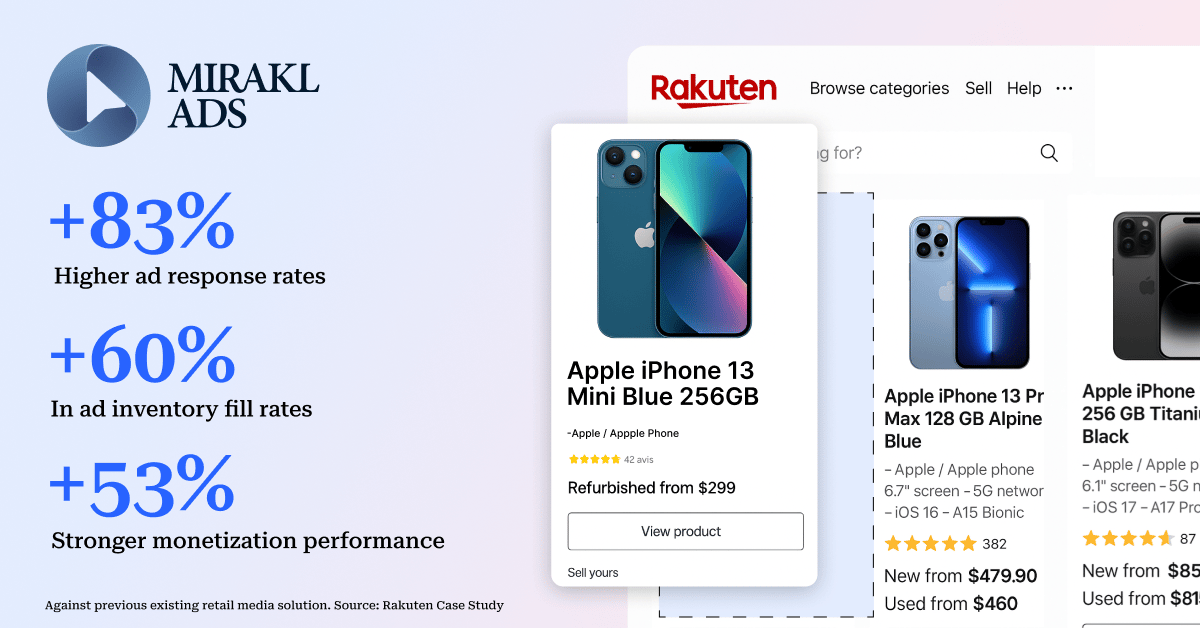
Did you know leading retailer media networks drive 85% of their ads revenue through mid- and long-tail advertisers?
Mirakl Ads provides full funnel ad formats tailored to both 1P and 3P advertisers, leveraging unique AI-capabilities that provide unprecedented levels of relevance and engagement.
Retailers who want to capture ad spend from the long tail of 3P marketplace sellers use Mirakl Ads in their tech stack.
WHICH INDUSTRY CATEGORIES SHOULD INVEST IN PAID AI MEDIA FIRST?
After the big news last week that ChatGPT was going to start selling ads, many advertisers are now wondering: Should I test ads in AI media?
The short answer is yes. But how quickly you move depends on your industry category.
Three factors help determine an industry category’s readiness for AI media:
- What percentage of consumers are using AI platforms to research information or purchases related to an industry category? The more your audience is gravitating toward AI, the more likely it is that you need to be there.
- How much does the category spend on search advertising on an annual basis? Many advertisers use search as a proxy for understanding AI, so they are most likely to pull from search budgets first to fund paid AI media.
- What share of a category’s digital ad spending goes toward search vs. other formats, such as display? Because most current AI ad formats are lower-funnel, a heavier weighting toward search advertising indicates greater category readiness.
My exclusive analysis of search ad spending data from EMARKETER and consumer AI usage data from multiple surveys shows where each of nine major industries falls in this matrix.

My analysis shows that four categories stand out from the others:
- Retail
- Travel
- Healthcare/pharma
- Technology/electronics
(A fifth category, financial services, is very close, but doesn’t quite meet the criteria. More on that later.)
Spotlight: Retailers
Why AI media should be on the front burner: High search ad spending and significant consumer AI usage.
Retailers will spend $45.5 billion on search advertising in 2026, by far the most of any industry category, according to EMARKETER’s forecast. 43% of total retail category digital ad spending will go toward search, the third-highest share among all industry categories.
Key consumer behaviors: 49% of US adults have used AI to make retail & CPG purchasing decisions, according to data from First Page Sage. Consumers who visit retail sites after using generative AI sources show 8% higher engagement compared to consumers who come from non-AI sources, according to Adobe. They also browse 12% more pages per visit and have a 23% lower bounce rate.
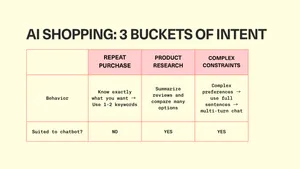
Typical ad objectives and strategies: Retail advertisers heavily rely on lower-funnel, performance-based advertising, aimed at driving immediate conversions and capturing high-intent demand. Messaging is typically price-led, with clear calls to action (CTAs).
AI media alignment: By deploying AI media ad units, retailers can experiment with new methods to drive traffic to retail destinations, deliver discounts or other offers, and spark interest and demand from consumers. Their objectives align well with AI environments that feature comparisons, deals and product recommendations, and AI ad formats such as Google’s Direct Offers, a retail-focused product.
Editor’s note: click over to Debbie’s full article for analysis on Technology & electronics, Travel, Healthcare, and Financial Services
Can Other Industry Categories Wait?
It could be argued that less reliance on search means less friction when it comes to shifting budgets, but the challenge is that early forms of AI media advertising are mostly lower-funnel. That structurally disadvantages categories like automotive, CPG and media/entertainment, which are more focused on the upper funnel. The AI ad formats haven’t been built for them yet.
For these categories, waiting to deploy paid AI media can be considered a strategic choice, not a failure to innovate.
Key Takeaways
- Paid AI media isn’t just another platform to test. It reflects a shift in how consumers express and act on intent.
- Travel, retail, healthcare/pharma and technology/electronics advertisers should start investing in paid AI media today.
- These four industry categories have the strongest blend of existing consumer AI behavior and search advertising usage.
- Advertisers in other industry categories, such as CPG and automotive, can take a slightly slower approach. As upper-funnel ad opportunities emerge, they should be prepared to start experimenting.
Methodology
This article is based on an analysis of two types of data:
1) US digital ad spending forecasts provided to me by EMARKETER, broken out by ad format and industry category. EMARKETER forecasts ad spending for the nine categories included in this analysis. It breaks out spending in each category for search, display and other formats (classifieds/directories, lead generation, email, mobile messaging). I worked for EMARKETER for 19 years and have 100% confidence in their forecasts.
2) US consumer AI usage data from multiple surveys. I gathered survey data from a variety of publicly available sources, including BCG, McKinsey, Adobe, OpenAI, J.D. Power, First Page Sage, Cognizant and Cars.com. The dataset includes statistics related to US consumers’ use of AI platforms to research and/or make purchase decisions in industry categories.
I used the EMARKETER data to calculate the share of 2026 US digital ad spending going toward search for each category. I also used EMARKETER’s estimate for total search ad spending (in dollars) for each category.
Next, I analyzed the consumer survey data and normalized it, where possible, to the US AI user audience. I then developed estimates of the percentage of US AI users in each category who use AI to gather information or research purchases.
Finally, I constructed an XY chart that compares search’s share of spending for each category to the estimated percentage of consumers using AI tools in each category. Total search spending provides a third layer of detail to inform the analysis.
You can subscribe to Debbie’s newsletter, The AI Ads Economy on Substack or on LinkedIn.
COMING UP
The Atlanta Retail Media Breakfast Club Meetups are back!
Join me and a couple dozen of your new commerce media besties for a cocktail while we natter about attribution models and debate why on earth OpenAI launched their ad product with a CPM model!
Wednesday February 26 @5-7PM in Buckhead, Atlanta.
Our wonderful new happy hour sponsor Growthloop is picking up the tab ❤️