This piece was originally published to my column at The Drum on January 20, 2026.
OpenAI is blasting ahead with its ad network, going from announcement just a few short weeks ago to users now seeing ads inside their accounts.
I've been presenting this exact scenario to retail media executives in recent months, explaining how AI-enabled shopping would capture the high-margin onsite advertising revenue that's fueled retail media's explosive growth. Last week's announcement validates that the ground is already shifting under retail media's foundation, whether the industry wants to acknowledge it or not.
OpenAI capturing sponsored product placements is just the opening move. The real threat extends beyond onsite advertising revenue - and I predict the bigger disruption is still ahead.
But this is not a funeral for retail media. The industry has a chance to reinvent itself. Here’s what I predict comes next.
SPONSOR: MIRAKL ADS
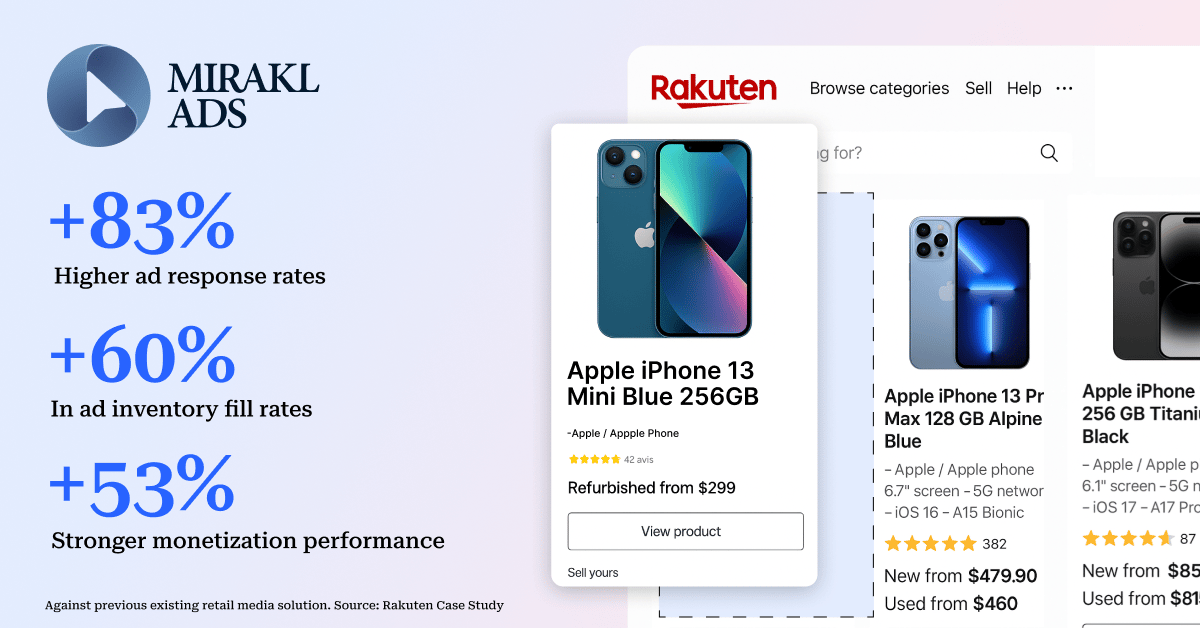
Did you know leading retailer media networks drive 85% of their ads revenue through mid- and long-tail advertisers?
Mirakl Ads provides full funnel ad formats tailored to both 1P and 3P advertisers, leveraging unique AI-capabilities that provide unprecedented levels of relevance and engagement.
Retailers who want to capture ad spend from the long tail of 3P marketplace sellers use Mirakl Ads in their tech stack.
Why This Shift Will Stick
Not every hyped technology reshapes consumer behavior. The metaverse flopped. Voice commerce stalled. So why will AI-enabled shopping be different?
I've developed a framework for identifying lasting change in retail, and it comes down to five conditions that must all be present: pain, technology, frictionlessness, culture, and economics. AI-enabled shopping, while not yet in its “final form” as a fully agentic shopping assistant, is rapidly checking off the boxes.
Start with pain. The current ecommerce experience is objectively painful, even if we've normalized it. Consumers wade through fake reviews, millions of identical products, twelve open browser tabs comparing prices, and opaque pricing that makes trust impossible. A proposed class-action lawsuit filed in late 2025 accuses Amazon of fake sales and misleading discounts during Prime Day, alleging inflated list prices to make deals appear better than they were. When shoppers can't trust whether a "deal" is actually a deal, they're primed for an alternative that provides genuine transparency.
The technology piece is straightforward. AI can already compare options, explain features, filter choices, and build shopping baskets. While fully agentic shopping pathways are limited right now, we don't need full autonomy for disruption to begin - we just need consumers to trust AI assistance more than they trust traditional search and browse behavior.
Frictionlessness matters because shifts stick when they slide seamlessly into daily life. AI shopping assistants sit right in our pockets - no new hardware required, no behavioral learning curve steeper than typing a question. As this capability disappears into operating systems, it becomes invisible infrastructure rather than novelty. According to Salesforce's Holiday Predictions 2025 report, 30% of global consumers already use AI chat assistants while shopping in brick-and-mortar stores, with that number jumping to over 40% for Gen Z and Millennials.
Culture is where the real transformation lives. Consumers don't adopt new behaviors because technology exists. They adopt new behaviors because they trust it. And our relationship with AI has evolved rapidly through three distinct stages: from intern we supervised, to companion who knows our preferences, to coach who guides us toward our private dreams and ambitions. When you trust something with your health goals, your budget constraints, your taste preferences, and your aspirations, you trust it with your purchase decisions.
That brings us to economics - the final and most powerful force. When consumer behavior shifts, money follows. And right now, the economic incentives for AI platforms to capture commerce are overwhelming.
The Onsite Revenue Stream Feels The Heat First
Retail media today operates on three distinct revenue models, each with dramatically different margin profiles. Understanding these distinctions is critical for seeing how AI-enabled shopping threatens each one differently.
Onsite advertising - those sponsored product listings and display banners on retailer websites and apps - generates profit margins of 70-80% in the US market. These are industry estimates, but they reflect the reality that serving ads on surfaces you already control costs very little while commanding premium pricing from brands desperate to capture high-intent shoppers.
OpenAI's sponsored product ads will compete for this revenue. When a shopper asks ChatGPT for dinner party menu ideas instead of searching on a grocery retailer's website, that retailer loses the opportunity to serve sponsored placements. This isn't capturing new budget pools. It's capturing the same high-intent moments that used to generate those 70-80% margins for retailers.
Some compression of onsite inventory is inevitable as discovery increasingly happens in AI interfaces. But onsite retail media isn't dead - it's being reshaped. Shoppers will still arrive on retailer websites, just later in the purchase journey and after conducting research elsewhere. As a result, ad inventory compresses, and the focus for advertisers might shift from awareness to conquesting or cross-selling.
My Prediction: Offsite Retail Media Is Next
Offsite retail media - where retailers sell their first-party transaction and behavioral data to help brands target shoppers across third-party publishers like Disney or Instagram - generates roughly 40% profit margins for retailers in the US. The entire value proposition rests on data exclusivity. Retailers tell advertisers: "We have purchase signals you can't get anywhere else. Our audience of shoppers with proven buying intent is unique. You need our data to reach them effectively."
But what happens when that exclusivity erodes?
When ChatGPT processes a transaction through Instant Checkout, both OpenAI and the retailer possess that purchase signal. The retailer still owns identity, loyalty program data, and certified transactions. But OpenAI now holds something potentially more valuable: cross-retailer behavioral patterns. They see what consumers compared, which recommendations converted, how shopping missions evolved across multiple merchants.
No LLM has announced an audience extension or offsite advertising capability yet. But to me, this is a no-brainer path to monetization for LLMs: the upside of advertising revenue, without eroding the user experience inside the app. I'm predicting we'll see this move from at least one LLM in 2026. Why would OpenAI sit on cross-retailer transaction data when they could monetize it the same way retailers do - by allowing brands to activate against those audiences across the web?
As more transactions flow through AI intermediaries, the data moat retailers built to justify premium CPMs gets systematically drained. This is the bigger threat - less visible than onsite displacement but potentially more damaging to retail media's total revenue.
Media commentator John Battelle wrote in his LinkedIn newsletter yesterday:
“If you line up OpenAI’s pledges, it sounds awfully familiar: We won’t sell your data … but we will lease it in aggregate and target you personally. Ads won’t effect chat results … but we reserve the right to “evolve our advertising program to support additional formats, objectives and buying models and build new ways for businesses to interact with consumers in ChatGPT.”
Batelle concludes that this all sounds awfully familiar when lined up with the historical advertising incarnations of Google. “Truck, meet wide open hole.”
The Unexpected Survivors
In-store retail media - shelf displays, digital screens, audio advertising - is still a small percentage of the overall retail media market in the U.S.
But this is the format that may become the most defensible part of the retail media stack precisely because it can't be intermediated by AI. No LLM can replicate physical presence, sensory context, or real-time proximity to products. When everything else becomes abstract - mediated through screens and algorithms - the physical store becomes more valuable, not less. As the world moves online, humans increasingly seek real-world experiences and third places. The act of shopping in stores remains something many consumers genuinely enjoy.
Loyalty programs also emerge as critical moats. When an AI agent comparison shops on a consumer's behalf, it weighs loyalty program status alongside price. If a shopper is close to the next tier with meaningful benefits - free delivery, gas points, exclusive access - the agent might recommend paying slightly more to hit that threshold. Retailers who build compelling loyalty ecosystems that AI agents can understand and factor into recommendations create advantages that pure price comparison can't breach.
Other monetization models that retailers could adopt are those that benefit both the retailer and the brand in growing category share: collaborative bidding, product sampling, post-purchase offers, and other win-win opportunities which I have previously covered in my column for The Drum.
What This Actually Means
This transformation doesn't represent the end of retail media. It might actually force a healthier model.
For years, many brands have quietly viewed certain retail media placements as an unavoidable tax - bought because the retailer relationship required it, not because the performance justified the premium. AI doesn't destroy retail media, but it could usher in a reset where retailers compete on actual differentiated value rather than presumed data exclusivity.
The retailers who recognize this shift early have runway to adapt. Those who dismiss it as futuristic speculation will find themselves reacting to market forces rather than shaping them. The technology exists, consumer trust is building, and the economics make sense for AI platforms to capture commerce revenue.
We don't get to choose whether these shifts happen. But we do get to choose when we notice them. And noticing early remains the closest thing to a competitive advantage.
Read more from me on this topic:
- While We Debate What's 'Really' Agentic, Retail Media's Foundation Is Already Shifting
- Why Agentic Shopping Poses an Existential Threat to Retail Media (Part 1)
- Agentic Shopping Poses An Existential Threat To Retail Media (Part 2)
COMING UP: ATLANTA HAPPY HOUR
Join me and a couple dozen of your new commerce media besties for a relaxed, Happy Hour where the focus is on conversation, camaraderie, and real connections. Whether you’re new to the industry, a seasoned expert, or working remotely and craving IRL banter, this meetup is your chance to be part of Atlanta’s growing retail media community.

On Wednesday, February 25, come grab a drink, trade stories, and be part of a community that supports and inspires one another. RSVP here
This happy hour is proudly sponsored by GrowthLoop. Monetize your first-party data with a cloud-powered retail media network.