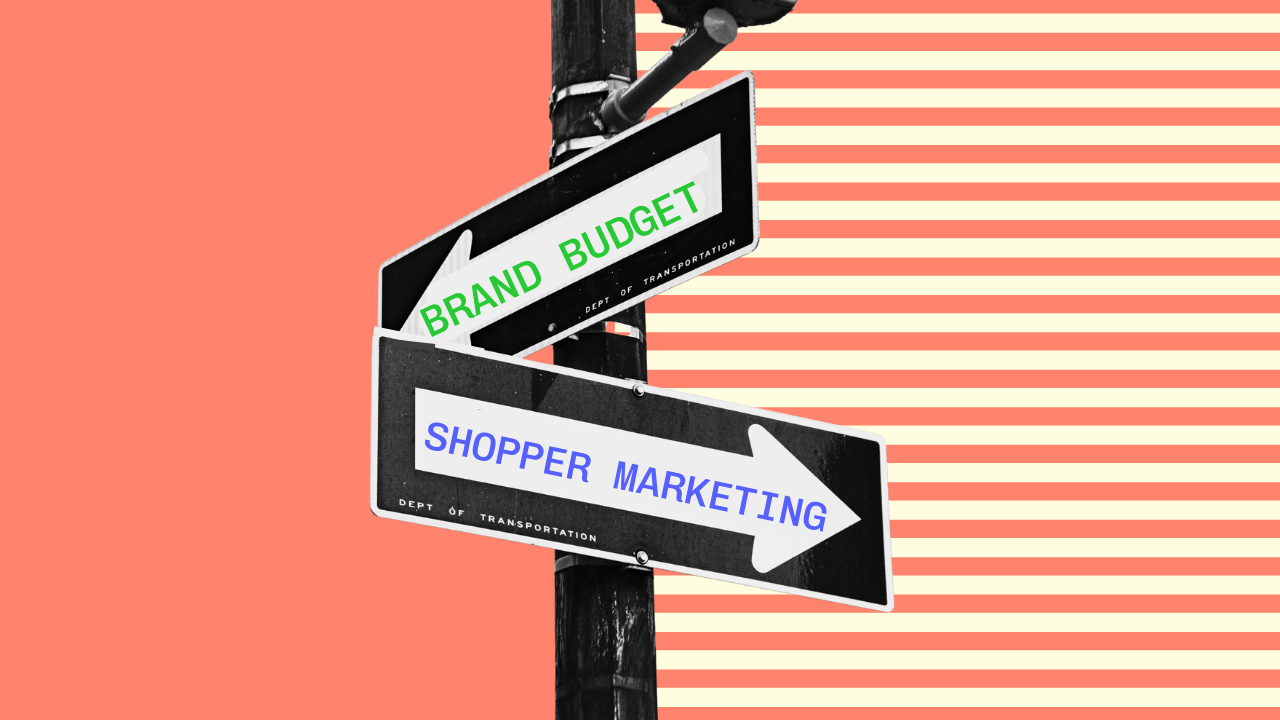
In-store experiential activations can drive significant same-store sales lifts while building lasting brand recall. But most of these programs, despite their big potential, get stuck in a no-man’s land somewhere between the shopper marketing and brand teams.
Today's newsletter recaps a lively LinkedIn Live conversation I had last week with Jordan Witmer, who leads retail media strategy at experiential marketing agency Salt XC. Salt was just named North American Experiential Agency of the Year, and Jordan spent years on the brand side at Hershey, Kenvue and Stanley Black & Decker before going agency-side.
I asked Jordan a cheeky question: how much time did he really spend thinking about in-store experimental activations while he was brand-side?
“Very little,” he admitted — though this is hardly unusual. Fortunately in the world of retail media things evolve so quickly that we all reserve the right to change our minds and perspectives in the face of new evidence (right?) and stay open-minded about new ways of achieving an objective.
For his part, Jordan has now been exposed to some eye-opening examples of experiential done right — and why he’s ringing the bell for brand-side marketers to build this type of spend into their media plans.
The question is, when it comes to actually owning and budgeting for these activations, where exactly does it go?
SPONSOR: MIRAKL ADS
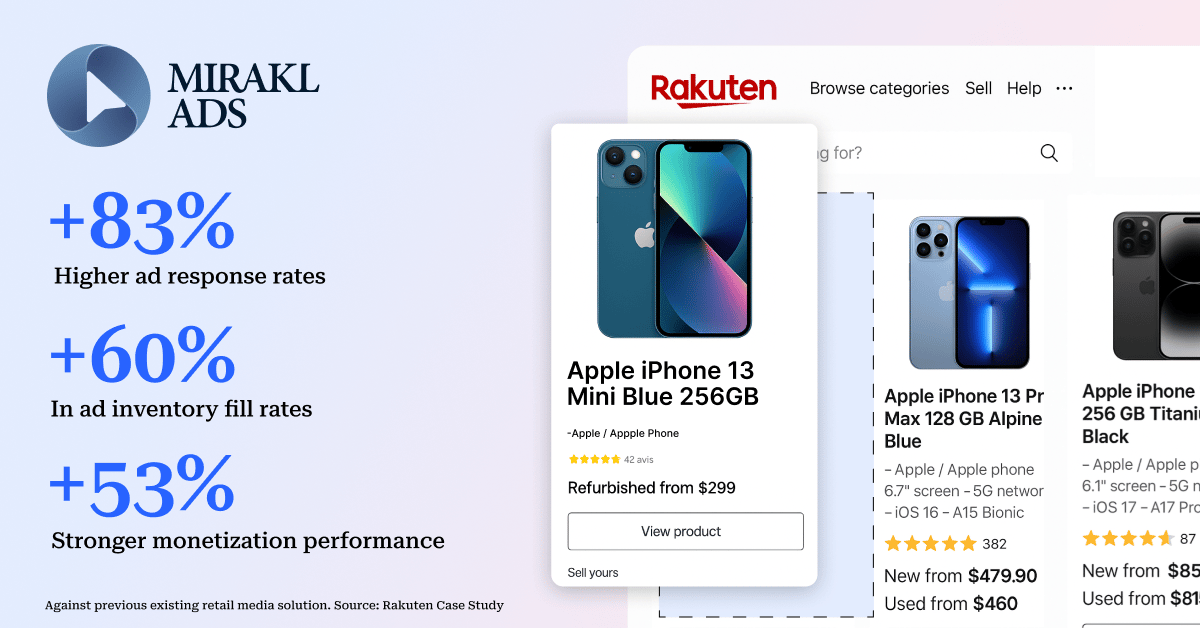
Did you know leading retailer media networks drive 85% of their ads revenue through mid- and long-tail advertisers?
Mirakl Ads provides full funnel ad formats tailored to both 1P and 3P advertisers, leveraging unique AI-capabilities that provide unprecedented levels of relevance and engagement.
Retailers who want to capture ad spend from the long tail of 3P marketplace sellers use Mirakl Ads in their tech stack.
From "Boring" to Unmissable
Jordan was characteristically blunt about the state of most in-store activations: boring. (His word, not mine.)
And he's not wrong. The standard playbook is a sign on a cart, a standing banner, and someone handing out samples. At Hershey, he watched his head of media walk through the math on a whiteboard and show that for some categories, the economics of "stand there and hand it out" just don't work.
But Salt's recent work with CPG brands shows what happens when you put real creative energy into the in-store environment.
For a Dove Men+Care activation, they created take-home scent samples that let consumers test whether the deodorant actually lasted the 72 hours it claimed — clearing the trial barrier without anyone needing to spray product in the middle of a Target aisle. For a shampoo and conditioner launch, they set up before-and-after hair texture displays with combs so shoppers could feel the difference. Simple, but memorable. As Jordan put it:
"When was the last time you ran a comb through a model's hair in a Target? You'd probably remember it if you did."

Then there's beverage brand Topo Chico. Salt built an immersive installation in Target stores across Texas — reactive screens, rushing water sounds, the whole floor responding to your movement. Jordan said same-store sales jumped more than 3x on average during these activations.

"This is the one that, yes, it lifts from a commerce next day, did the ROI happen perspective, but a lot of the real value you're getting out of it is you've deepened a memory, you've deepened an association between what your brand stands for, and a feeling that it creates for consumers."
A study from Harris Poll backs this up: 71% of consumers say experiential activations deepen their brand connection. And the top individual response? "Make a purchase right away in the store." Both outcomes from a single activation.

So Who Pays for This?
This is where it gets complicated. If in-store experiential delivers both brand building and shopper conversion, it should be able to pull from both budgets. In practice, it almost never does. Jordan says:
"The hurdle has not largely been cleared to create that idea that this is investment that is truly brand building activity. Yes, it happens to be in a retailer owned environment. The majority of funding for these types of activities sit in shopper budgets right now."
Industry Analyst Andrew Lipsman recently made a related observation about Hershey's latest global campaign: the brand is centering retail media in their $20M Olympic push, not sidelining it. As he put it, "Any CMO that continues to sideline retail media is committing malpractice."
But here's the organizational friction Jordan identified: CMOs often don't see in-store experiential as retail media at all—they see it as shopper marketing. And that perception determines who controls the budget.
But he pointed out that brands have already solved a version of this problem — just not for in-store. The precedent is Amazon streaming TV. When a brand buys Prime Video inventory through Amazon, that's clearly a brand-building investment, even though it runs through a retailer's P&L. Bigger brands have started to separate that out: streaming TV bought from a retail partner is brand money, not shopper money.
"If I'm buying streaming from my retail partner, that's not shopper money, 'cause it's not a shopper objective. I think that's the model that is available to us as marketers."
The logic transfers cleanly to in-store experiential. A multisensory Topo Chico installation that drives brand recall and emotional association — that's brand investment, same as a 30-second TV spot. It just happens to sit inside a retailer's four walls.
Why the US Is ‘Behind’ on In-Store
Jordan raised something I've been thinking about too: in-store experiential is already an established part of retail media in Canada, the UK, and across Europe. The US is the outlier.
The US was operationally ready for the e-commerce boom during COVID, so online retail media — and specifically sponsored products — grew faster here than anywhere else. That created a decade-long cycle where brand teams got hit up constantly to fund their retailer teams' sponsored products budgets. Every year, more paid slots. Every year, more spend needed just to maintain the same distribution.
"The amount of times that your e-comm team has hit up your brand team because it's gonna cost me X dollars more this year, because now on Retailer Y, they've gone from two paid spots to four paid spots in the top row. That's been happening every year for the last 10 years, and there's fatigue. Real fatigue."
So when those same retailer teams come back with "hey, now we also want you to fund in-store experiential" — brand marketers are understandably skeptical. In other markets where sponsored products didn't consume all the oxygen, in-store had room to grow alongside digital from the start.
Now What
I've been writing a lot about how AI-enabled shopping is eroding the online surfaces where retail media lives — search results, browse pages, the upper-funnel research that generates intent signals and ad inventory. In-store is resilient to all of that. You can't disintermediate a Target run with a chatbot.
But the funding model has to catch up. Andrew Lipsman's research shows brand marketers give their CMOs middling scores when it comes to retail media attention (6.1 out of 10) and investment (5.2 out of 10)—with even worse scores for in-store retail media specifically.

Three reasons consistently emerge: CMOs believe retail media lacks creative and doesn't build brands, they see it as a tax rather than a marketing lever, and they don't take retail media execs seriously as stewards of brand dollars.
In-store experiential directly challenges all three assumptions. It's inherently creative (combing through model hair at Target is memorable). It builds brands while driving immediate sales. And it delivers what CMOs claim they want most: scale, cultural relevance, and performance—all three simultaneously.
The stores aren't going anywhere. The question is whether the budgets will follow, and where they will come from.
You can watch the full LinkedIn Live with me and Jordan Witmer here. Thanks to Salt XC for partnering with me on this livestream series.