
I got married the smart way: my husband and I eloped at city hall in New York. No planning, no audience, no budget, no fuss. For us, it was perfect.
Then the doubt crept in. Shouldn’t we at least have a party, for our family’s sake? Aren’t they missing out? Are we missing out?
It was meant to be casual. But I got swept away: fancy white dress, hall, caterers, 100 people. It was fun and I’m glad we did it. But damnit! … Turns out we basically just had a wedding anyway.
That’s how “ads in a trusted environment” usually goes too. It starts with principles and restraint. Then comes the pressure to scale, the urge to add “just one more thing,” and suddenly you’ve rebuilt the very machine you were trying to avoid.
SPONSOR: MIRAKL ADS
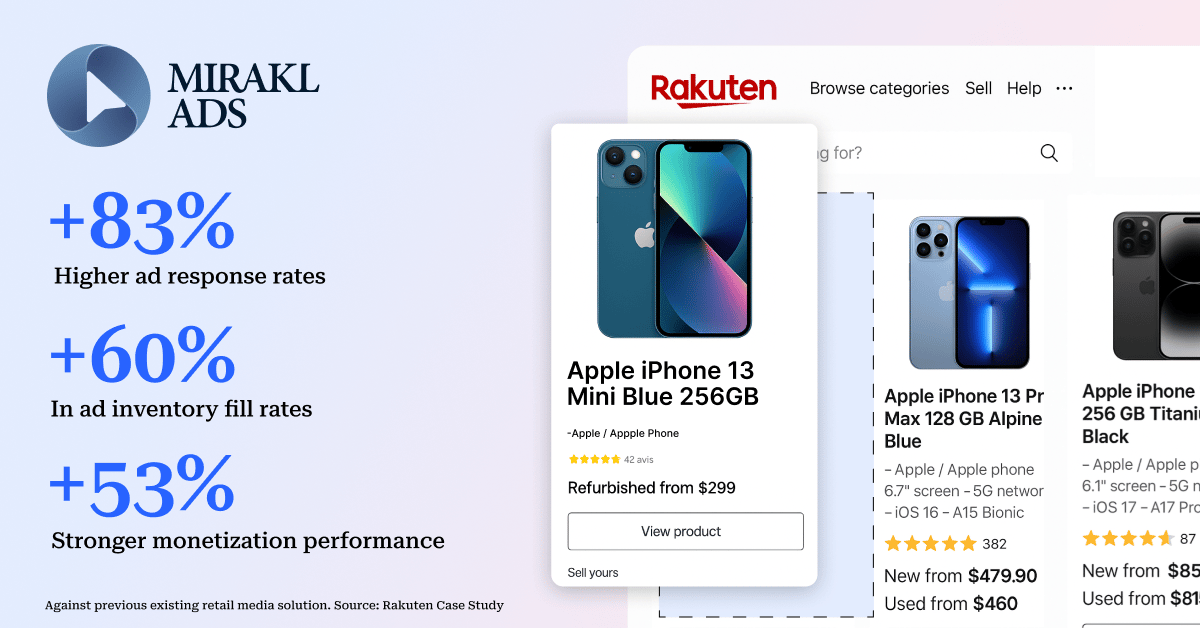
Did you know leading retailer media networks drive 85% of their ads revenue through mid- and long-tail advertisers?
Mirakl Ads provides full funnel ad formats tailored to both 1P and 3P advertisers, leveraging unique AI-capabilities that provide unprecedented levels of relevance and engagement.
Retailers who want to capture ad spend from the long tail of 3P marketplace sellers use Mirakl Ads in their tech stack.
Checking My Own Homework
Back in November, I wrote a piece for The Drum arguing that ads inside AI assistants don't necessarily have to be terrible. It was, by my own admission, hopelessly optimistic. Predicting that OpenAI would launch ads wasn't exactly bold — Sam Altman hired Fidji Simo from Instacart to run the applications business, which told you everything you needed to know. The harder questions were always about how they'd do it.

An advertising lead at OpenAI, Asad Awan, just went on the record about exactly how ads will work inside ChatGPT. So now that the ads platform actually exists and OpenAI is talking about it, it's worth checking whether the optimism was warranted. Here's where my earlier thinking lines up against what Awan described:
✅ The ad layer should be architecturally separate from the model. This means that answers shouldn't be corrupted by who's paying. Awan confirmed this explicitly: the model doesn't know an ad exists. If you ask ChatGPT about an ad on your screen, it'll say "I don't know." You have to press a button to bring the ad into the conversation. That's a harder wall than I expected.
✅ Contextual targeting over surveillance-based tracking. Awan described matching ads to conversation themes, with sensitive topics (health, politics, violence) automatically excluded. Users can see exactly what data is being used, clear their history, or turn off personalization entirely. Again, more robust controls than I'd assumed.
✅ Targeting content rather than people. The new model that ad-tech veteran Brian O'Kelley calls "agentic advertising" — could avoid the privacy nightmares that broke trust in traditional digital ads. Awan's rubric fits this mold: user trust comes above user value, which comes above advertiser value, which comes above revenue.
Now that sure sounds like AI ads may have been paying attention to some of the challenges happening over here in our strange little corner of the media universe, retail media… Retailers like Costco are putting things like membership renewals ahead of ad revenue growth, understanding that a laser focus on media revenue could in fact kill the golden goose of their core retail business.
Those were the easy calls I landed. The more interesting stuff is what I didn't anticipate.
What's New
A few things from the podcast stood out.
"One good ad is enough." If there's no relevant match, OpenAI would rather show nothing. "You don't want advertisers to pay randomly for impressions. You don't want users to see too many ads. You want to share the one right ad," Awan said. This is the polar opposite of Amazon's approach, where search results now carry 25+ sponsored products per page with coverage approaching saturation. It's a deliberate bet that restraint builds more long-term value than filling every available slot.
The black box algorithm. Awan described a future where a small shoe brand doesn't need to hire three performance marketers. Instead, the founder tells ChatGPT: "Sell more shoes in the Midwest" and the system handles campaign creation, bidding, and optimization. To be honest, this is where my spidey sense goes up. Algorithmic performance models like this work well for SMBs. But sophisticated advertisers -- brands and agencies alike -- need more granularity and precision. I hope that algorithmic buying is optional.
The haves and the have-nots. Ads appear only on free and Go tiers. Paying subscribers — Plus, Pro, Enterprise — see nothing. That's a classic freemium play, but think about what it means: the highest-intent, most valuable users are ad-free. Advertisers get the free tier. Whether that audience proves valuable enough to justify serious spend remains an open question. Or maybe, just like traditional media, subscribers still see ads. Just like I pay for a WSJ subscription and see ads there too.
What This Means for Retail Media
Awan doesn’t seem to be thinking about retail media networks. But retail media leaders sure should be thinking about him.
The most immediate implication: there's now a high-intent ad surface that sits upstream of the retailer. Someone asking ChatGPT "what's the best air fryer under $100?" is expressing purchase intent that used to flow through Amazon search or Walmart.com. If that intent gets captured — and monetised — before the shopper ever reaches a retailer's site, it chips away at the on-site advertising inventory that generates 70-80% margins for RMNs.
Then there's the data question. Retailers have built their ad businesses on the strength of first-party purchase data — they know what you actually bought. OpenAI is matching on conversational context — they know what you're thinking about, planning, and researching. These are different signals. In theory, they're complementary. In practice, they'll compete for the same brand dollars.
I’ve gone deeper on this topic in some past pieces:
While We Debate What's 'Really' Agentic, Retail Media's Foundation Is Already Shifting
The 3 Ways Agentic Commerce Could Destroy Retail Media
And Awan teased something that connects directly to the agentic commerce thesis I've been developing all year. He described a future where ads work "behind the scenes" — an AI agent that knows you like ramen discovers a new vegan brand, surfaces it, and facilitates the purchase. If that becomes real, the entire discovery-to-purchase journey happens inside the AI layer. Retailers would become fulfilment partners, not media destinations.
Now What
Awan said all the right things to get advertisers excited about OpenAI’s ad product. But every platform says the right things at launch. Google didn't set out to make search results indistinguishable from ads. Amazon didn't plan for sponsored products to overwhelm organic results.
The real test isn't how this looks today. It's what happens in year three when there's an entire division with revenue targets, and someone asks whether that wall between the model and the ads really needs to be quite so rigid. Will the AI ads ecosystem face a version of the retail media doom loop when the ‘easy money’ from advertisers is gone?
Awan's answer to this: "We are in the business of trust. You can't drift when the incentive is set up to be the best at this." Maybe. OpenAI's diversified revenue (enterprise, subscriptions, API) gives them less pressure to squeeze ads than for traditional publishers for example, where advertising is the core revenue stream; or retailers, where media is a small but much more profitable revenue stream versus product sales.
I learned the hard way that a “small party” doesn’t stay small unless you keep coming back to your principles. OpenAI’s real test won’t be launch week — it’ll be year three, when the growth targets show up.
Until tomorrow,
Kiri