
Retail media was built on browsing. Shoppers searched, compared, clicked around category pages, and left a trail of behavioral data that powered ad targeting, measurement, and personalization. But as AI-enabled shopping moves more of the discovery and decision-making process upstream — into ChatGPT, Gemini, and other LLMs — the customer journey on retailer websites is getting shorter. In some cases, it's collapsing to a single product page and a checkout.
That's the thread running through this 4-part expert series I’m producing in partnership with Mirakl Ads, speaking with Amelia Van Camp, Head of Agentic Commerce at Mirakl. In Part 1, we covered how discovery is relocating into LLMs and what that means for retailers (‘Discovery Has Moved Upstream. Here's What That Means for Retailers’). In Part 2, we looked at what happens when the PDP becomes the homepage — when a shopper arrives already knowing exactly what they want, and the retailer gets the sale but almost none of the signals that used to come with it.
This week: if browsing shrinks and the data exhaust disappears, how do retailers earn new signals through experiences people actually want to engage with?
SPONSOR: MIRAKL ADS
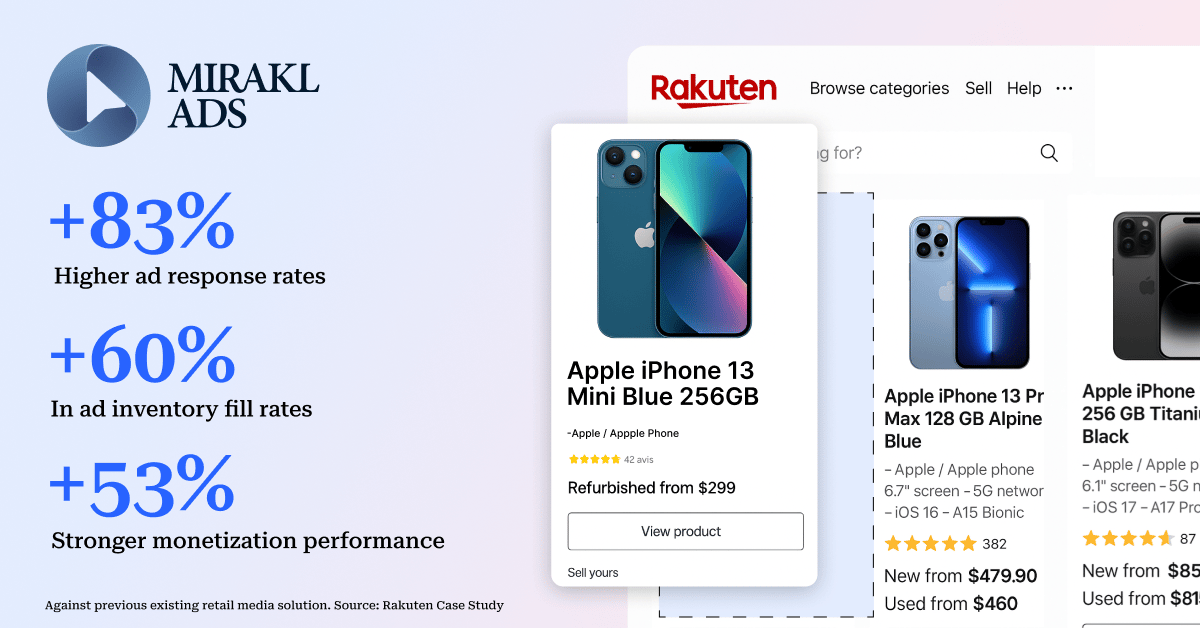
Retailers know that a marketplace model can dramatically boost product assortment, shopper engagement, and total revenue.
But, to get the most out of your marketplace, you need an ad tech solution that can really engage sellers.
Mirakl Ads is powering the future of retail media for leading retailers — to activate both 3P sellers and 1P brands.
Most Onsite AI Assistants Aren't Ready
I kicked off our conversation with a cheeky question: why are so many onsite AI assistants bad, even when the underlying technology works?
Amelia: "I think that's probably a symptom of us being inside of this first wave. So it's a bit of trial by error. But beyond that, there is an acceleration inside of agentic commerce where I'm sure all of us feel that you have to do something. And so in many of these cases, when a retailer has decided to launch a shopping agent, the concept is certainly there. The idea of how it would work or how it could look is there, but the nuances between how it works, what's behind the scenes, can perhaps get a bit jumbled, and that can actually impact the user experience."
She made a point that I think is underappreciated: retailers aren't starting from zero, even though many are acting like it.
Amelia told me in a separate conversation that she sees retailers too often throwing out everything they already know about their customers in the rush toward agentic. They already have data on how people search their site, which PDPs get the most engagement, how shoppers interact with reviews and tutorials. Synchronizing that existing knowledge into an agentic strategy is critical — otherwise you're starting from scratch when you don't need to.
I saw this firsthand at NRF earlier this year. Retailer after retailer got on stage to announce their onsite assistant. (‘At NRF, Retailers Say "Bring On All The Bots".) I'd go check them out afterward and find tools that were claiming to do recipes, style advice, project planning — far more than any shopper was asking for — while struggling with the basics of knowing the product catalog. The ambitions were outpacing the foundations.
Product Truth Is the Foundation
This led us to what I think is the most important and least glamorous topic in agentic commerce: product data accuracy. Pricing, inventory, claims, shipping details — the essential information that both consumers and AI agents need to trust a retailer.
Amelia's framing here was sharp. The fundamentals of e-commerce don't change just because the channel is new. But in an agentic context, getting them wrong carries a compounding penalty.
Amelia: "If you have pricing anomalies, if you have shipping delays, if you have a poor after-sale process — those are all things that would impact you in e-commerce full stop. They're going to impact you the same way negatively inside of agentic. Where it can potentially have a double-negative impact is this notion of AI agents needing to trust you as a retailer and as a brand. If you have several faults or several negatives where you haven't been able to fulfill an order, there have been negative reviews based on after-sales, negative reviews based on purchase experience — those are things that are going to impact the agent's trust of who you are and who your products are, to potentially impact things like discoverability and ranking, and even your brand showing up inside of a search result."
In traditional e-commerce, a bad product page costs you one sale. In agent-facilitated commerce, it can cost you visibility across an entire category — because the agent remembers, and the agent decides who to recommend next time.
Brands Aren't Powerless Here
I also raised a question I hear constantly from CPG brands: what can we actually do when we're selling through retailers and don't control the product page?
The answer is — maybe more than you'd think. Brands have direct influence over much of what AI agents evaluate — reviews on third-party platforms, YouTube content, Reddit discussions, their own DTC site data. An agent isn't just scraping the retailer's PDP. It's assembling a picture from across the web. That means brands have levers to pull on their own discoverability and trust signals, independent of any single retail partner.
That said, the relationship still matters. I'm talking with brands who are actively asking their retail partners: what's your agentic strategy? How can we provide better data? How do we make sure our attributes are structured for the way agents search? The brands pushing those conversations now will be better positioned when this channel scales.
At the very least, these forward-thinking brands will the ones that retailers will call when they have a pilot to stand up.
Now What
The signals don't magically appear. That's my main takeaway from this conversation. Retailers have to design moments that earn engagement — in the post-purchase experience, in education, in reviews, in loyalty programs. The browsing behavior that once generated rich behavioral data is compressing. Waiting for it to come back isn't a strategy.
And the foundation underneath all of it is less exciting than any AI assistant launch, but far more important: accurate product data, reliable fulfillment, clean catalogs. The retailers who get that right will have something to build on. The ones chasing the shiny agent launch without it will keep producing tools that shoppers try once and abandon.
In Part 4 next week, we'll tackle the big question: AI-powered ads. Where they show up, how trust is protected, and what homework retailers and brands should be doing now to get ready for whatever formats emerge.
Previously in this series, presented by Mirakl Ads: