
RETAIL MEDIA BREAKFAST CLUB
Today I’m re-hashing an article posted to my column at The Drum last week from my time on the ground at NRF, listening in to retailers talk about how they’re approaching the new paradigm of AI-enabled shoppers.
"We've spent the last decade saying, 'no bots on our site,'" Rob Frieman, CIO of URBN, told Stripe's chief revenue officer of AI at the National Retail Federation conference this week. "Now we're saying the opposite. We're saying, 'bring on all the bots, buy all the things.'"
That line captures the philosophical whiplash retailers experienced at NRF 2026, where agentic commerce dominated stage conversations, booth demos, and hallway debates. For a decade, retailers fought to keep bots off their properties. Now they're racing to welcome AI agents that can research, compare, and potentially transact on behalf of consumers.
But welcome them to do what, exactly? And how fast?
I spent three days at NRF attending panels and tracking announcements from major retailers. What emerged wasn't a unified vision of autonomous shopping agents buying dish soap while you sleep. Instead, I found a spectrum: some retailers already live with AI-powered shopping assistants, others testing carefully, and a few openly questioning whether full autonomy is even desirable.
Here's what six major U.S. retailers said about their agentic commerce strategies—and more importantly, what they're actually building.
SPONSOR: MIRAKL ADS
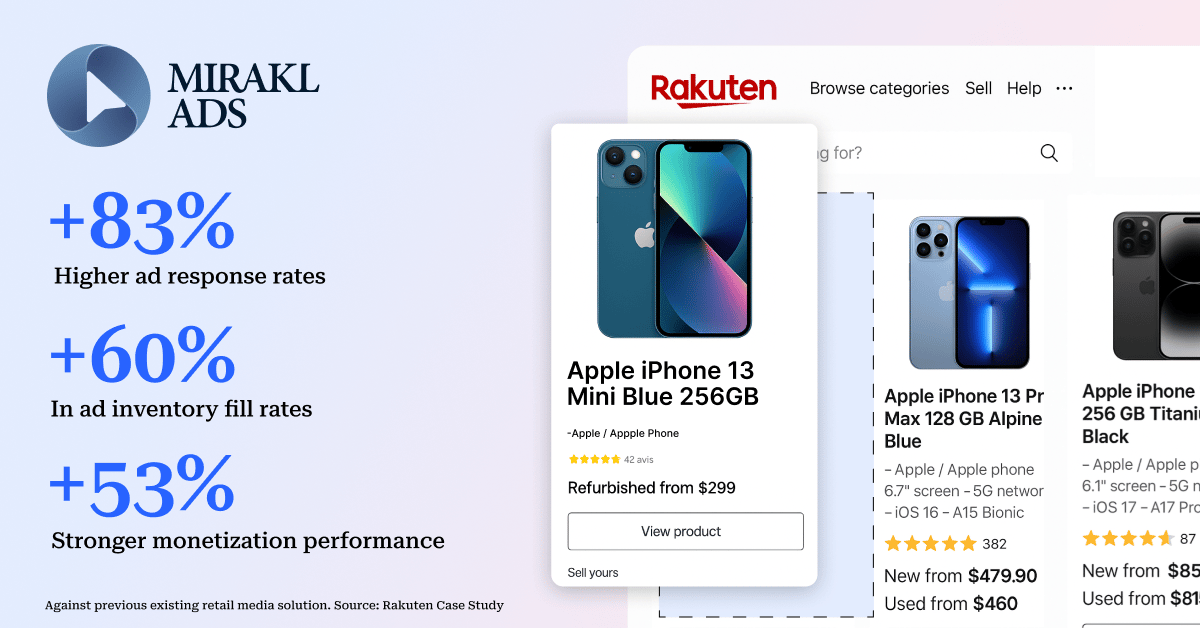
Did you know leading retailer media networks drive 85% of their ads revenue through mid- and long-tail advertisers?
Mirakl Ads provides full funnel ad formats tailored to both 1P and 3P advertisers, leveraging unique AI-capabilities that provide unprecedented levels of relevance and engagement.
Retailers who want to capture ad spend from the long tail of 3P marketplace sellers use Mirakl Ads in their tech stack.
Kroger: Leaping Out the Gate
Kroger is officially live with agentic commerce as of this week, announcing a partnership with Google. The integration includes both a Meal Assistant and Shopping Assistant that can handle complex, multi-step tasks from a single instruction.
"We know our customers want an experience that is seamless and adapts to the context of their day," said Yael Cosset, executive vice president and chief digital officer at Kroger. "A customer planning a week of dinners, seeking recipe inspiration, or jumping into a new food regimen, will be able to ask our integrated assistant to create a shopping list based on their immediate needs, their budget, and family's unique preferences."
Importantly, Kroger’s recommendations are grounded in actual assortment, pricing, and availability—not generic suggestions that might not match what's actually in stock. The system can convert requests like "I want to prepare vegan tomato soup" into guided recipes with detailed ingredient lists that populate shopping carts with a single click.
Lowe's: "Instead of Testing and Learning, We Are Going"
Lowe's made headlines by being among the first retailers to launch Google's Business Agent, which went live during NRF. The agent allows customers searching for Lowe's on Google to engage in conversation with what Neelima Sharma, SVP of technology for e-commerce and omnichannel product, calls "the voice of Lowe's, the knowledge of Lowe's"—and complete transactions without leaving the browser.
"Our mission is solving problems and fulfilling dreams for the home," Sharma told Omni Talk Retail at NRF. "As AI and agentic AI is taking us by storm, I really think that Lowe's will be making more and more judgment calls on behalf of the customer, that trust will continue to grow, and we are actually going to allow customers more time to dream and less entangled in solving problems."
Joe Cano, SVP of digital at Lowe's, emphasized the shift in mindset: "Instead of testing and learning, we are going." Other AI investments include a kitchen visualizer built on Google's Imagen model, and ‘Mylowe,’ an onsite shopping assistant, which customers have adopted faster than the company anticipated.
Ulta Beauty: Marketplace as Agentic Infrastructure
Ulta took a different angle at NRF, positioning its year-old marketplace as strategic preparation for agentic commerce. By expanding product assortment through third-party sellers via Mirakl's platform, Ulta is creating the content depth that AI shopping assistants will need to make relevant recommendations.
"We kind of knew that in the back of our head it wasn't always a primary objective for us in the marketplace, but we knew having more assortment would matter," said Josh Friedman, SVP of e-commerce and digital at Ulta, speaking NRF.
As a founding partner in Google's Universal Commerce Protocol (UCP) announced at NRF, Ulta is betting on standardization to scale efficiently. Adrien Nussenbaum, co-founder and co-CEO of Mirakl, emphasized what he sees as the stakes: "Diversity in your content needs to be set up to make sure the picture matches the intent. You need to be prepared to have your position as a merchant showing the best price, because agents are going to show the best price. If you don't have the best price, you are out."
The team is thinking about agentic commerce in two dimensions: optimizing their own site for conversational shopping (“onsite agentic” as Paypal’s VP of Agentic Commerce Mike Edmonds framed it in an earlier session) and considering how its loyalty program acts as a competitive advantage in that context. But Ulta is also preparing for agent-to-agent commerce where platforms like Google might route customers to Ulta based on product availability and fulfillment capabilities.
Home Depot: Solving Problems, Not Chasing Autonomy
Home Depot is taking a problem-first approach to agentic commerce, resisting the hype around fully autonomous shopping. "Anything that is truly solving a customer problem, it's hard to say that it's getting too much attention right now," said Angie Brown, chief information officer at Home Depot, during a panel discussion at NRF on Sunday.
The retailer's onsite Magic Apron assistant focuses on helping customers navigate complex home improvement projects—understanding what they're trying to accomplish and recommending products accordingly. "You can interact with Magic Apron and tell us about the project you're trying to accomplish, and we'll give you a list of items you need for that," Brown explained. The tool is gradually being moved higher in the customer journey, from buried on project pages to more prominent placement.
As for ‘offsite’ agentic commerce, Brown emphasized that Home Depot will maintain the merchant of record role even when transactions happen on other platforms. "You think about this buying experience and it's not just about the research you do beforehand. You also think about what happens as you are transacting with that retailer—warranty, returns. Us being there as the merchant of record to continue to bring our brand to the experience is a key part of that."
Wayfair: Category Complexity Demands Caution
Fiona Tan, chief technology officer at Wayfair explained how the furniture retailer’s category is "very emotional, very style-based, very difficult to describe," making it particularly well-suited for conversational interfaces and visual AI. "We've been handicapped with the 20-year e-commerce experience—a search bar. Now we have the ability to leverage not just the conversational part but multimodal capabilities: how do I show you with real products from my catalog that you get to see and pull off of it."
The company is investing heavily in foundational capabilities like product data quality and structured content—which she says is much easier today with new technology than in the past.
Wayfair is testing placement and integration carefully, working to avoid the immediate user instinct to close an annoying and unhelpful chatbot popup on a retailer website. But Tan was clear about participation: "We want to give customers the choice. If you're wanting to do the research and discovery on one of the platforms and then check out, we still own as a merchant of record the ability to fulfill, manage customer service, handle returns."
Urban Outfitters: "Bring On All The Bots"
Perhaps no retailer captured the philosophical shift more succinctly than Rob Frieman, CIO of URBN (the parent company of Urban Outfitters, Anthropologie, Free People, and Nuuly), speaking with Stripe's chief revenue officer of AI at NRF.
"We've spent the last decade saying, 'no bots on our site,'" Frieman said. "Now we're saying the opposite. We're saying, 'bring on all the bots, buy all the things.'"
That pivot informed URBN's partnership with Stripe to ensure secure transactions while maintaining brand control over the customer experience. The urgency became clear last week when Microsoft launched its first agentic commerce experience in the U.S., featuring Anthropologie and Urban Outfitters among its first partners. URBN is now live in one of the first mainstream agent shopping deployments, making the "bring on the bots" philosophy operational reality rather than aspiration.
What "Bring On The Bots" Actually Requires
The span from Kroger's nationwide deployment to Wayfair's learning mode reveals something important: welcoming the bots requires more than flipping a philosophical switch. It demands foundational work on product data, measurement frameworks, and organizational alignment that many retailers are still building.
But perhaps the most telling pattern across every conversation was the insistence on maintaining the merchant of record role. Retailers will meet customers on Google, ChatGPT, or whatever surface emerges next—but they're not ceding ownership of fulfillment, returns, or customer service. The bots can come. The relationship stays with the retailer.
As Mike Edmonds of PayPal noted when asked what's not getting enough attention: "The business model. How are companies going to make money without jeopardizing what matters most—working backwards from customers?"
That question is still wide open. But at least now, the bots are invited to help answer it.
A version of this article was published to my column at The Drum. It has been reproduced here with permission.
Until tomorrow,
Kiri