
A version of this story was first published to my column at The Drum on February 24, 2026.
When my former boss Jared Belsky launched a very public campaign against media rebates last week, my first thought wasn't about traditional media. It was: what does retail media's version of this look like?
Belsky, CEO of independent media agency Acadia, is returning media rebates to his clients and challenging other agencies to do the same. As he told Ad Age, a decade after an industry report exposed undisclosed payments, agencies still pocket rebates from publishers for hitting spending targets with clients' money.
Full disclosure: Acadia acquired my retail media agency in 2022, and their retail media practice was built from that foundation. I worked there for two years. This rebate campaign is Belsky's, not mine — but it got me thinking about what ethical dilemmas exist specifically in retail media.
Retail media sells itself on transparency and closed-loop measurement — the performance-driven antidote to murky traditional media buying. But as this channel matures and the money gets bigger, some uncomfortable tensions are emerging. I talked to brand-side leaders, agency executives, and ad-tech operators to figure out what's going on.
SPONSOR: MIRAKL ADS
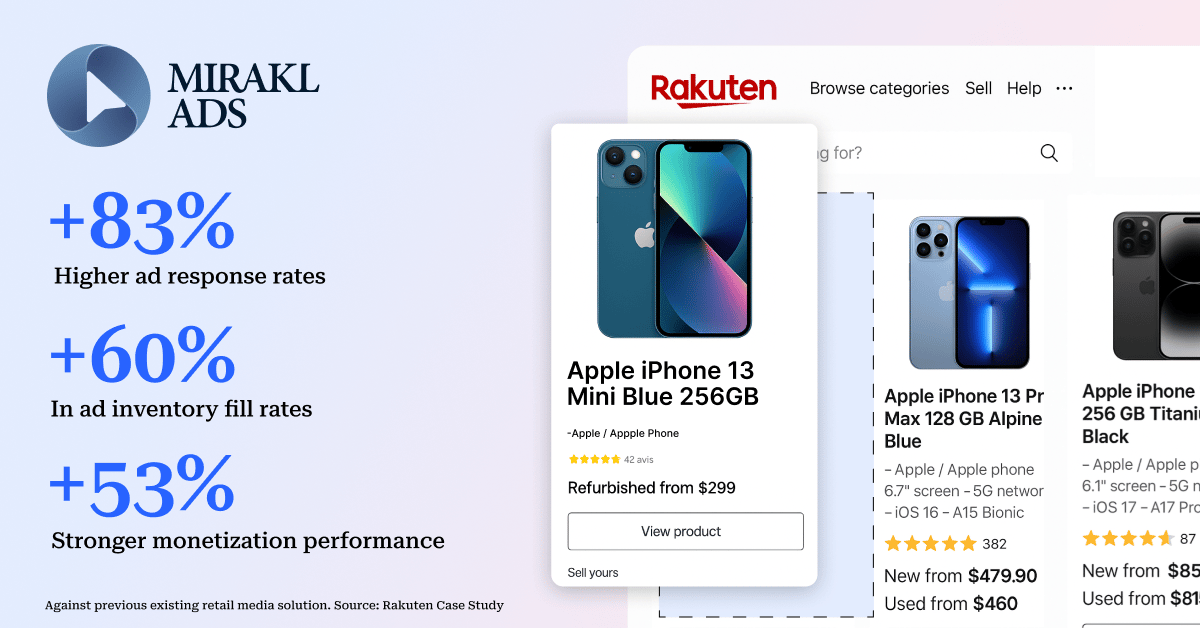
Retailers know that a marketplace model can dramatically boost product assortment, shopper engagement, and total revenue.
But, to get the most out of your marketplace, you need an ad tech solution that can really engage sellers.
Mirakl Ads is powering the future of retail media for leading retailers — to activate both 3P sellers and 1P brands.
1. Spend Incentives That Tilt The Playing Field
Belsky's rebate campaign focused on all forms of media, but retail media has its own version of this problem. I asked Belsky about how he sees this play out for retail media specifically. “I actually don't think Amazon, Google, or any publisher is in the wrong. They are creating incentives to move inventory. That is well within their right. What is wrong is that agencies are taking the fruits and/or shuttling client funds into deals where they win versus perhaps sending that last dollar to a niche RMN to test — but they don't have a deal there. Yes, this is an ethics issue."
What do these incentives look like in retail media specifically? An Amazon-focused agency leader I spoke with confirmed that incentives are happening "across the board." They described incentives involving the development of ad creative — free creation of streaming TV assets and similar added-value perks — in exchange for media spend increases, along with spend percentage decreases for reaching certain thresholds. Walmart is doing similar, they said.
These aren't the straight cash rebates Belsky is fighting against. But the structural effect is the same: the perks are "typically tied to a pretty high barrier of spend," they noted, meaning smaller agencies and brands are systematically disadvantaged versus larger ones.
In my own time agency-side, I learned that my agency had a higher fee on our DSP seat than competing agencies — differences supposedly driven by spend thresholds. Nothing new in media, perhaps. But it should give brands pause that the playing field isn't as level as it appears, and that agency-of-record designations may be tilted toward larger agencies that get preferential rates.
2. Brands Funding Their Own Competition
This one is unique to retail media. Retailers' private-label products compete directly with branded products on their own marketplace — but those private-label lines don't pay into the retail media system. Branded manufacturers fund the data, the targeting, the measurement infrastructure. And their private-label competitors ride along for free.
It goes beyond budgets. As one brand-side retail media leader told me: "On key retailer marketplaces, the retailers' own private-label product shows up first on both branded and non-branded search results — often before even ads. Brands are disadvantaged by spend but also don't have the opportunity to defend themselves on the same brand equities that helped these retailers initially find scale."
Belsky takes a more pragmatic view. "I don't see this as an ethical dilemma but rather Darwinian reality," he told me. "Over time, more store brands will encroach and it just means brands have to get more creative. Survival of the fittest versus ethics."
But the retailer's side is more nuanced than it appears. For some retailers — Costco in the US as an example — their private-label brand is the best-performing product in their assortment. Once you introduce paid placements, you're deciding whether the best shopper touchpoints get awarded by what's best for the shopper or by who pays the most. Protect private label too aggressively and brands feel the playing field isn't fair; let paid ads dominate and the store starts to feel like "brand land," eroding the private-label identity customers came for.
That's a genuine dilemma about fairness and trust, not just revenue — and the retailers face it just as acutely as the brands complaining about it.
3. Consultants Selling The Dream
Here's one that doesn't get discussed in the open: the prestigious management consulting firms that come in, sell the dream of retail media revenue, and happen to be available to help clean up the mess when those projections fall short — for another fee.
One ad-tech source was blunt: "Consultants can be incredibly valuable, but they also have a habit of painting hockey-stick charts that look amazing on a boardroom screen and impossible in real life. When the targets turn out to be fantasy, the consultants are somehow always available to help 'course correct' — for another fee."
I've also heard the defense argument: "We gave our projection, but the retail execs pushed for the projection to be higher." That could also be true. Either way, the downstream effects on RMN teams are real — strained internal credibility, unrealistic growth expectations, and environments where pressure to hit inflated targets creates the conditions for some of the other ethical shortcuts on this list.
When I profiled Molly Hjelm, the head of Ace Hardware's Red Vest Media, for this column last year, she told me that one of the key reasons she took the job was that Ace let her set her own targets. "You come in and you tell us," they said. That breathing room creates a fundamentally different operating environment — one focused on doing the right thing by advertisers rather than chasing unrealistic numbers.
4. A Brandless Echo Chamber
Walk into many retail media industry events and you'll see retailers talking to tech vendors, tech vendors pitching to consultants, and consultants nodding at each other. What you won't see: a meaningful number of brand-side media buyers. As one ad-tech leader told me: "Some industry events are 99% vendors and that means really low value." Not just for that company’s prospective efforts, but in developing a fully-realized view of the industry and its constituents.
Jason O'Toole, head of connected commerce and media at Gildan, puts it simply: "When the people allocating capital and owning incrementality aren't part of the conversation, retail media begins optimizing for sellability over growth."
Without the people who control the budgets in the room, retail media risks building solutions for sellers instead of buyers. That's how you end up with features nobody asked for and measurement frameworks nobody trusts.
5. No Such Thing As a Free Lunch
Another dilemma that’s by no means unique to retail media is the topic of corporate hospitality, gifts, and splashy ‘educational’ events sponsored by the big players.
Yachts at Cannes, retreats in the Caribbean, and lavish hospitality are accepted costs of doing business in many B2B industries beyond media writ-large. But the pervasiveness outside our industry doesn’t mean that the waters don’t get murky.
As the industry matures and finance teams start asking harder questions about ROI, there’s the question of whether that cabana on the Plage at Cannes was a better investment than improving the technical foundation. As one source put it: "When advertisers are screaming for better measurement, cleaner attribution, self-serve tools, and basic standards, watching platforms drop millions on schmoozing doesn't generate the best partnership."
On the agency side, Belsky describes what he calls the 3-way rule to decide if a hospitality encounter is ethical: “Does this "thing" benefit Client, Agency, and Publisher?” he asks. “So, if you have a great and expensive dinner but Amazon, Agency and Client all attend then great… 3-way benefit. If some young kid gets $2000 for a new apple computer to shuttle money to some media source...then, yuck.”
What Next
Many of these dilemmas aren't exclusive to retail media. Kickbacks, hospitality excess, and inflated projections exist across the advertising ecosystem. But that doesn't mean we shouldn't try to address them — and it certainly doesn't mean brands should remain unaware.
These dynamics ultimately add costs for brands through higher advertising costs and inflated CPCs. And they're unevenly distributed: bigger media buyers and holding company agencies get more favorable treatment, lower fees, and better incentives than independents and smaller brands.
As retail media growth decelerates — from 25.1% in 2024 to 15.6% in 2025, according to the IAB — the pressure intensifies. Will slowing growth make platforms and intermediaries more desperate for performance, and more likely to seek out the kinds of workarounds described here?
Retail media built its reputation on being more transparent and accountable than traditional advertising. As the industry matures, that reputation faces a test. Will the players involved will hold themselves to the standard they've set, or lower the bar when the money gets tight?
COMING UP - LIVE DISCUSSIONS
I have 2 exciting LinkedIn Livestreams coming up next week. I love doing LinkedIn Lives with industry folks because they are conversational, like a podcast interview. BUT even better than a podcast, they provide an opportunity for listeners to ask questions too. If these topics interest you, try to join live!
On Tuesday March 17…
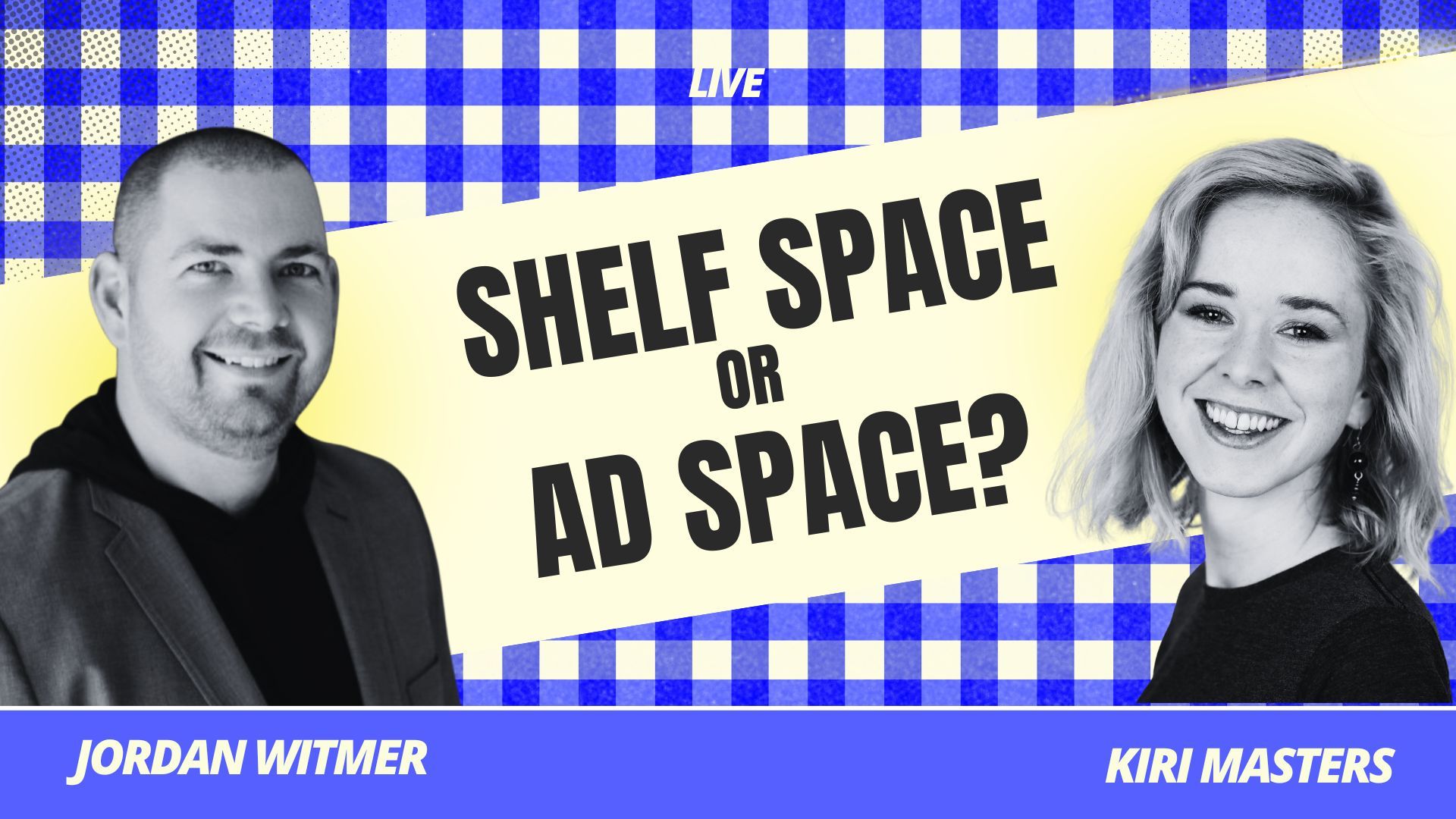
Everyone in retail media claims to be "performance-driven." But performance toward what, exactly?
The industry's fastest-growing format — sponsored products — looks, smells, and transacts like a media buy. It's biddable. It's keyword-targeted. Practitioners run it from an ad console. But here's a spicy take from Jordan Witmer: what if sponsored products aren't really advertising at all?
In this live session, we'll talk about whether sponsored product spend is closer to distribution spending than to media buying — more like a field sales rep getting your brand moved up the shelf than a TV ad building mental availability.
We'll unpack the "How Brands Grow" framework and what it actually means for retail media: the difference between physical availability (are you easy to find and buy?) and mental availability (is your brand recognizable and part of the consideration set?) — and why confusing the two quietly warps both strategy and measurement.
Bring your measurement hot takes and your pushback — this one's going to be a 🌶️ debate!
And on Thursday March 19…
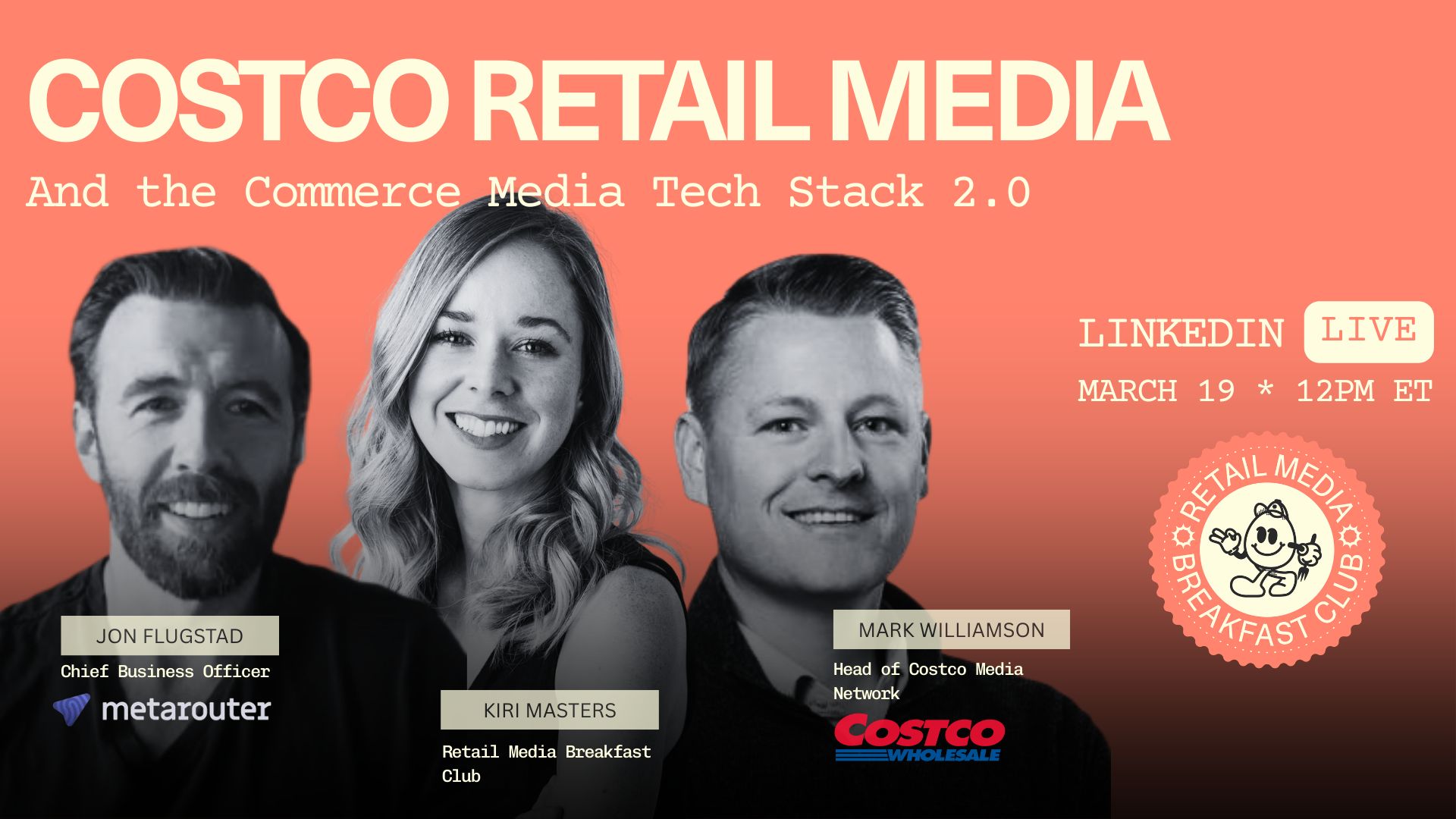
What does it look like when one of the US' largest and most-loved retailers starts building its commerce media story more intentionally? (And publicly)
Join Kiri Masters (Retail Media Breakfast Club), Jon Flugstad (MetaRouter), and Mark Williamson (Costco Media Network) for a candid conversation about the next phase of retail media infrastructure — and why the old playbook for building a retail media network is starting to look incomplete.
In this LIVE session, we'll explore:
* The thinking behind “Costco Velocity,” what it signals to the market
* Why transparency is still such a weak spot across retail media
* What separates a real next-gen commerce media stack from a dressed-up legacy approach
* Why clean, connected data infrastructure matters more than ever
* How Costco’s positioning could influence broader industry expectations
Join LIVE -- we'll take audience questions!