Most shoppers are now using AI tools to shop, and they're increasingly discovering new brands and products inside a chat window.
Which raises a practical question for anyone buying or selling commerce media: what does it actually take to get a shopper to switch to a brand they've never heard of, on an AI's recommendation?
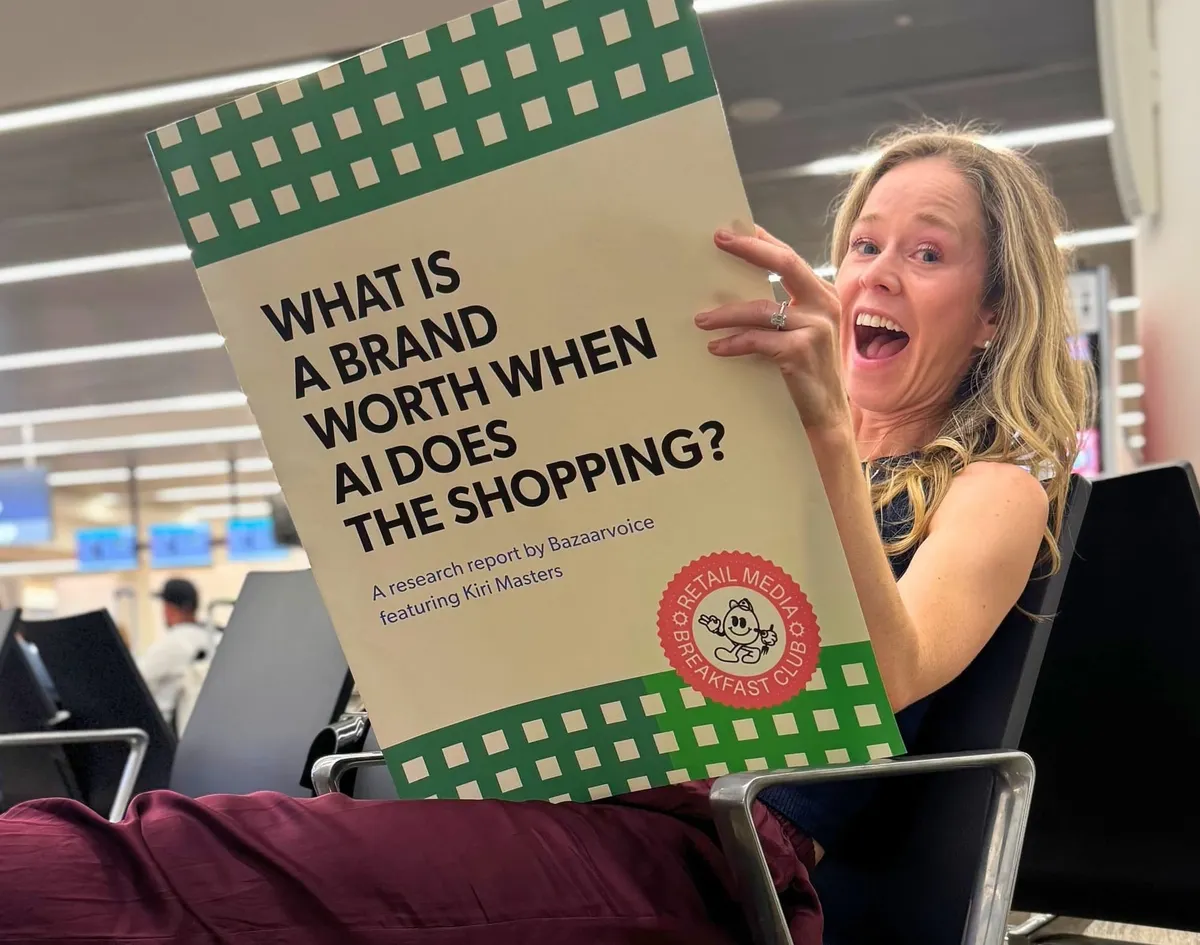
That's the question I partnered with Bazaarvoice to answer in their latest consumer study, 'What is a brand worth when AI does the shopping?'
The concern I kept hearing from brands that have spent decades building trust was that AI assistants would kick off some kind of race to the bottom — recommending dupe swaps that shoppers would accept without thinking. Perfect information leading to unflattering comparisons, perfect competition flattening decades of brand architecture into specs and price.
What we found is that switching is expensive, and price is the least effective way to pay for it.
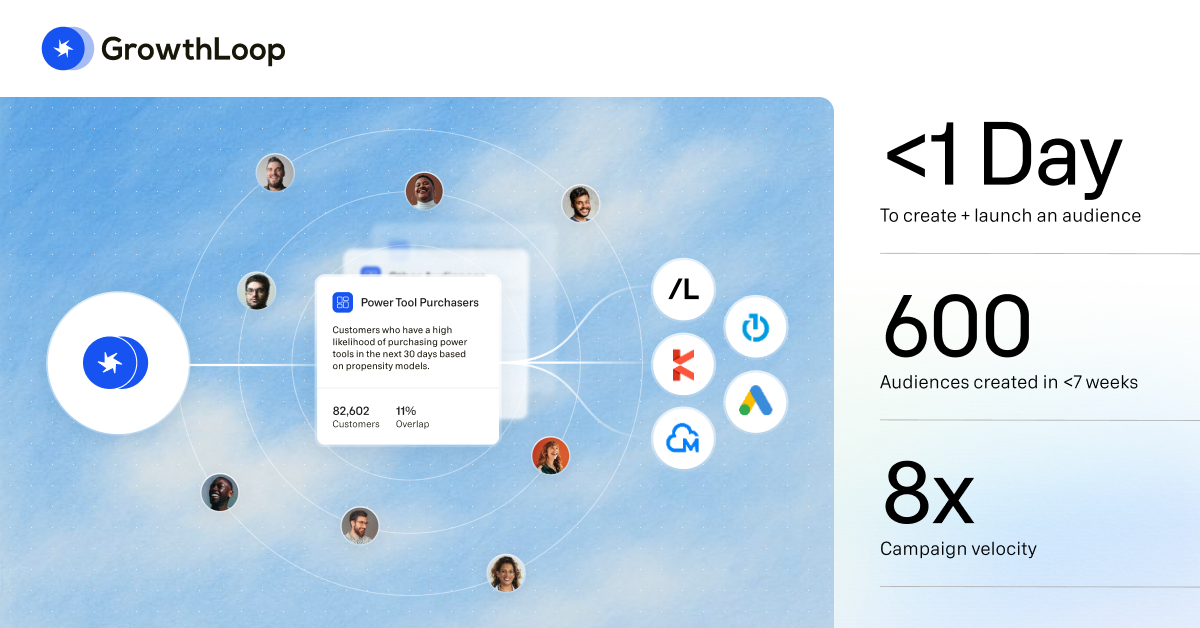
Your advertisers can’t wait weeks for audiences.
GrowthLoop’s Composable Commerce Media solution helps media teams turn first-party data into high-value audiences, launch campaigns faster, and prove what’s working across every channel.
Learn how retail media leaders at Costco, Fanatics, and Gopuff use GrowthLoop to create highly segmented audiences and deliver stronger results for their brand partners.
Price barely moves anyone
I'll start with the reassuring part.
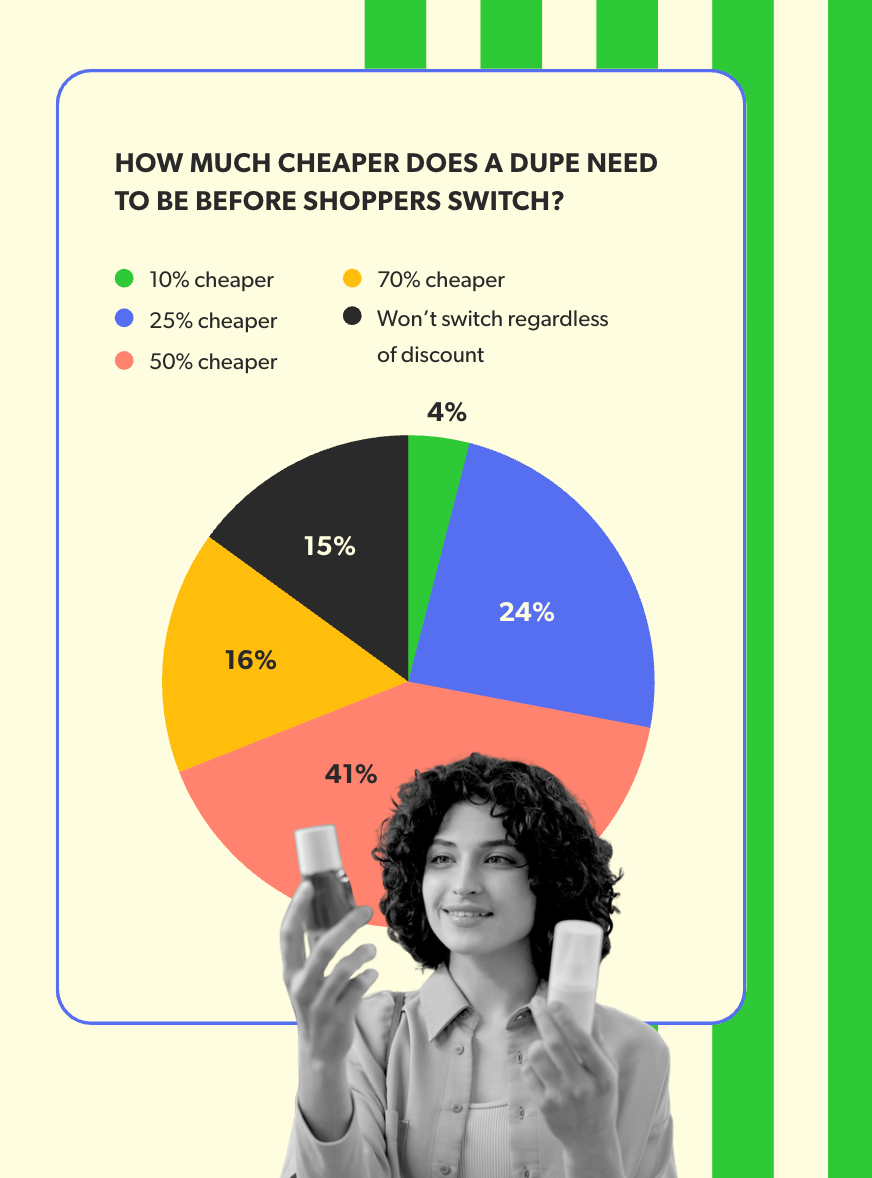
Only 4% of shoppers would switch to a highly rated dupe of their usual product for a 10% discount. 57% say a dupe has to be at least half the price before they'd consider it. 15% say they wouldn't switch at any discount.
The same pattern turns up everywhere price appears in the study. When AI puts several options in front of a shopper, only 11% click the cheapest. When it comes to deciding where to buy, only 12% go wherever AI says the price is lowest.
It's worth being precise about why the race-to-the-bottom fear was shaky to begin with. Perfect information collapses prices only for genuinely identical goods. For everything else it does something different — it makes it harder to charge for a premium that isn't earned, and easier to get paid for a difference you actually have. AI shopping is a threat to unearned brand premiums rather simply to all national brands.
Beauty is the category most exposed to dupes, and even there a cheaper lookalike fails to win by default.
"Beauty is about the most dupe saturated category there is, so it's reassuring that a cheaper lookalike doesn't win by default. It's also a challenge to us: The premium we charge at U Beauty has to be backed by a real, provable performance difference. When it is, shoppers will pay to stay."
— AJ Patel, SVP of global growth, U Beauty
Familiarity holds the door
If price isn't doing the work, what is?
When an AI tool puts several products in front of a shopper, 65% click the brand they already know and trust. 24% click whatever the AI has labelled its best match. 11% click on price.
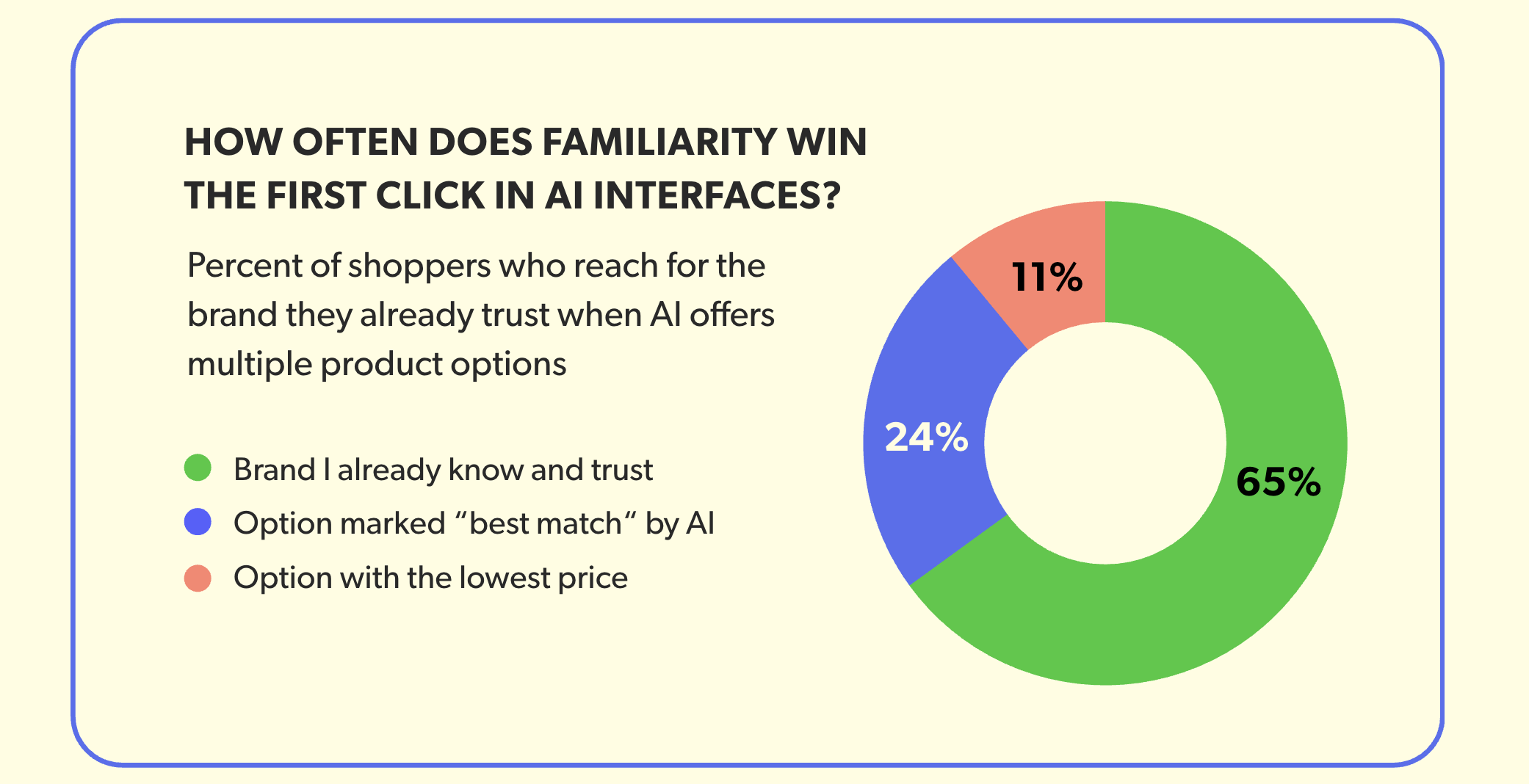
The AI's own pick is free, algorithmic, and delivered with the assistant's full authority — and shoppers reach past it for the name they recognize.
The familiarity advantage depends on your category
When AI recommends several options to a shopper, that recognizable,
trusted brand wins the first click almost two-thirds of the time.
But that advantage is different by category: 69% used the brand familiarity shortcut in beauty and personal care, down to 56% in DIY and home improvement.
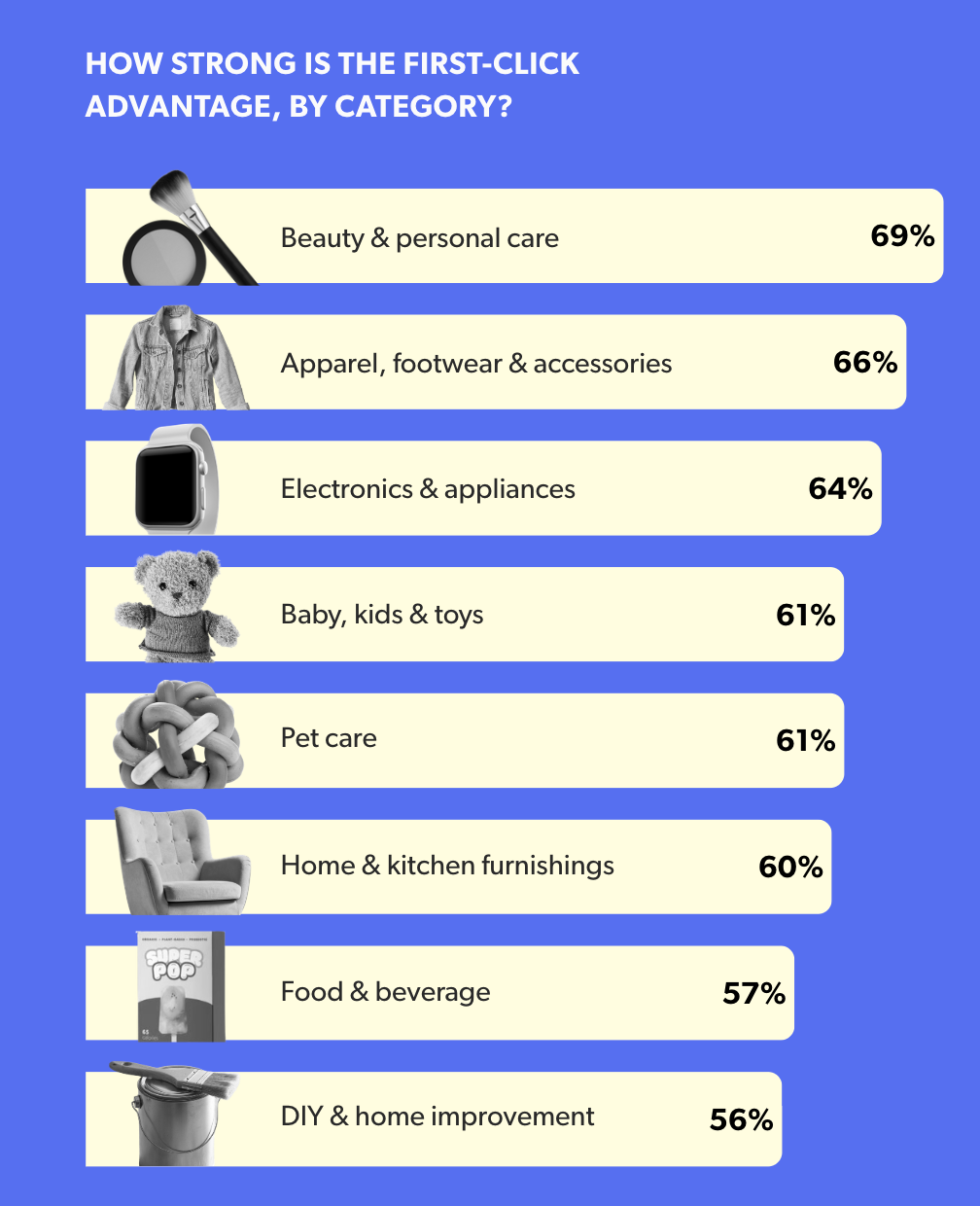
My reading is that this is a risk gradient. The question a shopper is really asking ranges from "will these headphones last a month" to "are these children's pyjamas fire-resistant." 38% say they're comfortable buying an unknown brand only in a low-risk category. 17% are never comfortable with it.
"Brand loyalty is heavily dictated by category risk/reward. In low-ticket categories like food & beverage, price elasticity can more easily trump equity because the risk is minimal; if a consumer tries an unfamiliar brand and doesn't like it, they can switch back on the next shopping trip. This doesn't hold as true for high-ticket purchases, like appliances or electronics, where consumers demand far more proof before purchase."
— Kim McDermott, senior brand manager, Egglife Foods
Proof is what price can't buy
So if a challenger brand can't discount its way in, what does work?
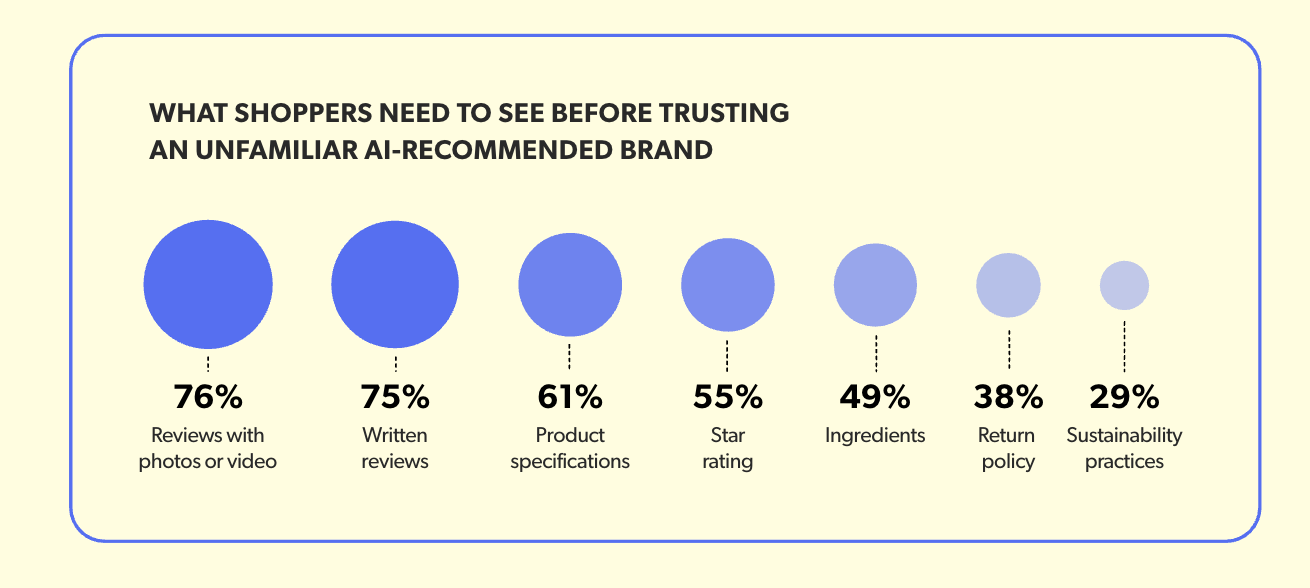
- Multi-format validation. 76% of shoppers want reviews with photos or video before buying an unfamiliar brand an AI has recommended. 75% want written reviews.
- Brand-supplied claims about features and benefits are the raw input. Reviews and other customer content are what make those claims credible enough for a shopper to act on — and legible to the models reading on the shopper's behalf.
For retailers, it's understanding what your USP is and leaning into it. Not all consumers are price-motivated, and even then, not across every shopping mission. Both brand and retailer's websites were top 3 destinations for consumers looking to validate a product that an AI assistant recommended.
Now what
The categories where it's cheapest to dislodge an incumbent — food and beverage, DIY, baby and kids — are the categories where retailers push own-brand hardest.
Worth noting that private label is the largest organized dupe operation in retail, and this research puts a rough price on entry: about half off. Which means retailers are running the challenger playbook against the same national brands they sell media to.
For both retailers and brands, the practical work is making sure the proof shoppers go looking for is actually findable — by them, and by the models.
About the research:
The Bazaarvoice Brand Equity Survey was fielded in June 2026 among 3,600+ adults across the US, EMEA and Australia. I was engaged by Bazaarvoice to co-author the research report. You can download the full report here.