
This piece was originally to my column at The Drum on August 4 as Media buyers are nowhere near ready for the agentic revolution. It has been republished here with permission.
AI agents: everyone and their mother seems to be launching them. That’s doubly so in the retail media space, where a buyer might be running campaigns across a dozen networks, a good number of them mandatory under the terms of a supplier agreement. The pitch writes itself.
Keeping track of the announcements is a full-time job. From management platforms like Skai and Pacvue, to agencies, and even the retailers themselves are all getting in on the game of launching agents that optimize every stage of the planning, buying, and reporting process. An army of agents running your ad campaigns for you! How can we possibly fill all this free time?!
The natural next question in the face of all this efficiency is who gets cut out. Does the agent displace the platform, the agency, or the retailer's own sales team? That's a column for another week.
A new survey from Skai, published in July, poses a duller question first. Is anyone actually using this stuff?
The research
Ad management platform Skai surveyed 332 paid media practitioners in April of this year, scoring them across nine dimensions of agentic readiness. The mean score across categories and seniority: 35.7 out of 100.
- 30% sit at Unprepared, meaning no central data layer, no integration platform, no formal AI roles.
- 49% are at Exploring — early activity, isolated experiments, no portfolio.
- 3% have AI embedded in routine workflows at scale.
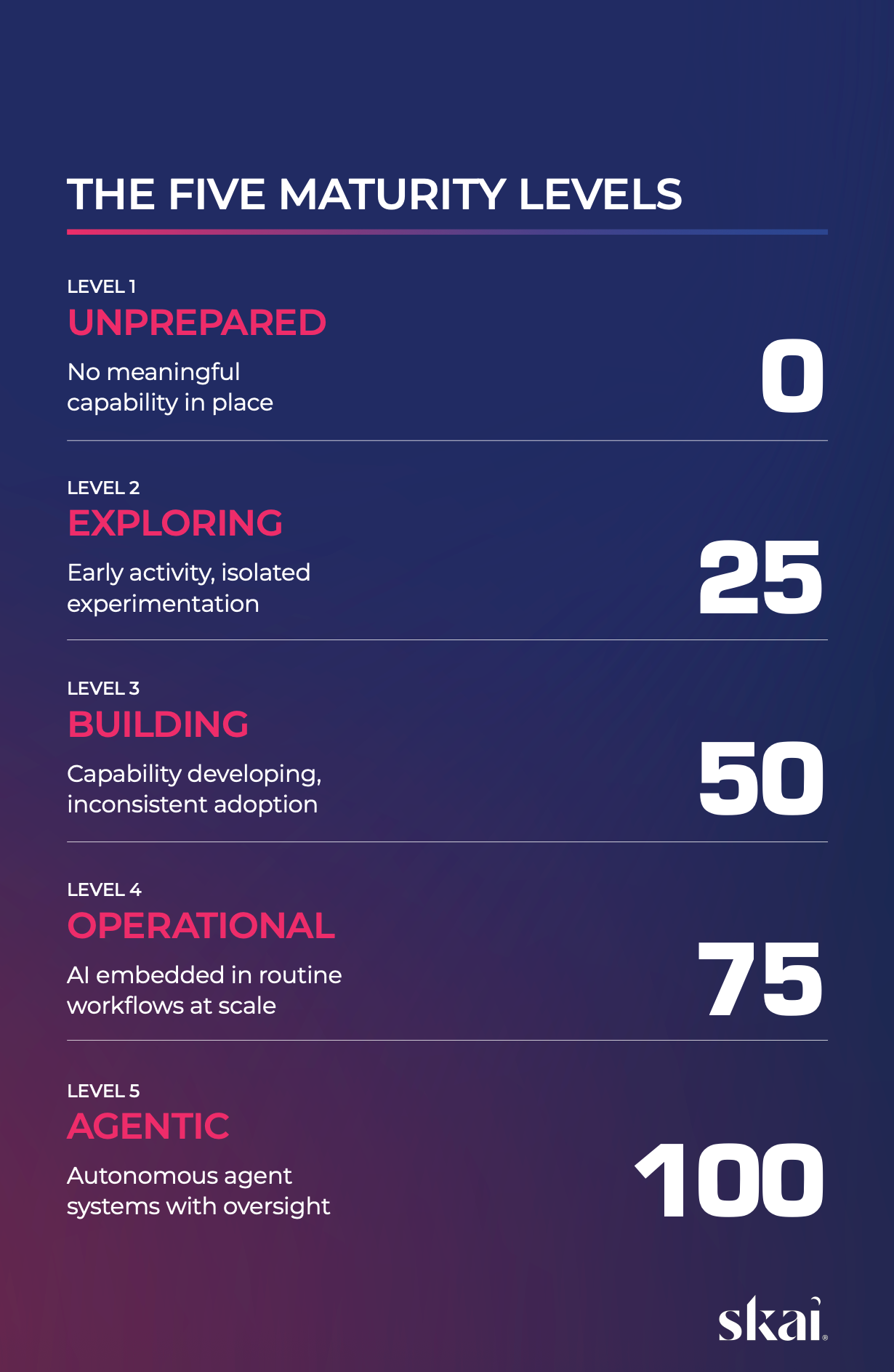
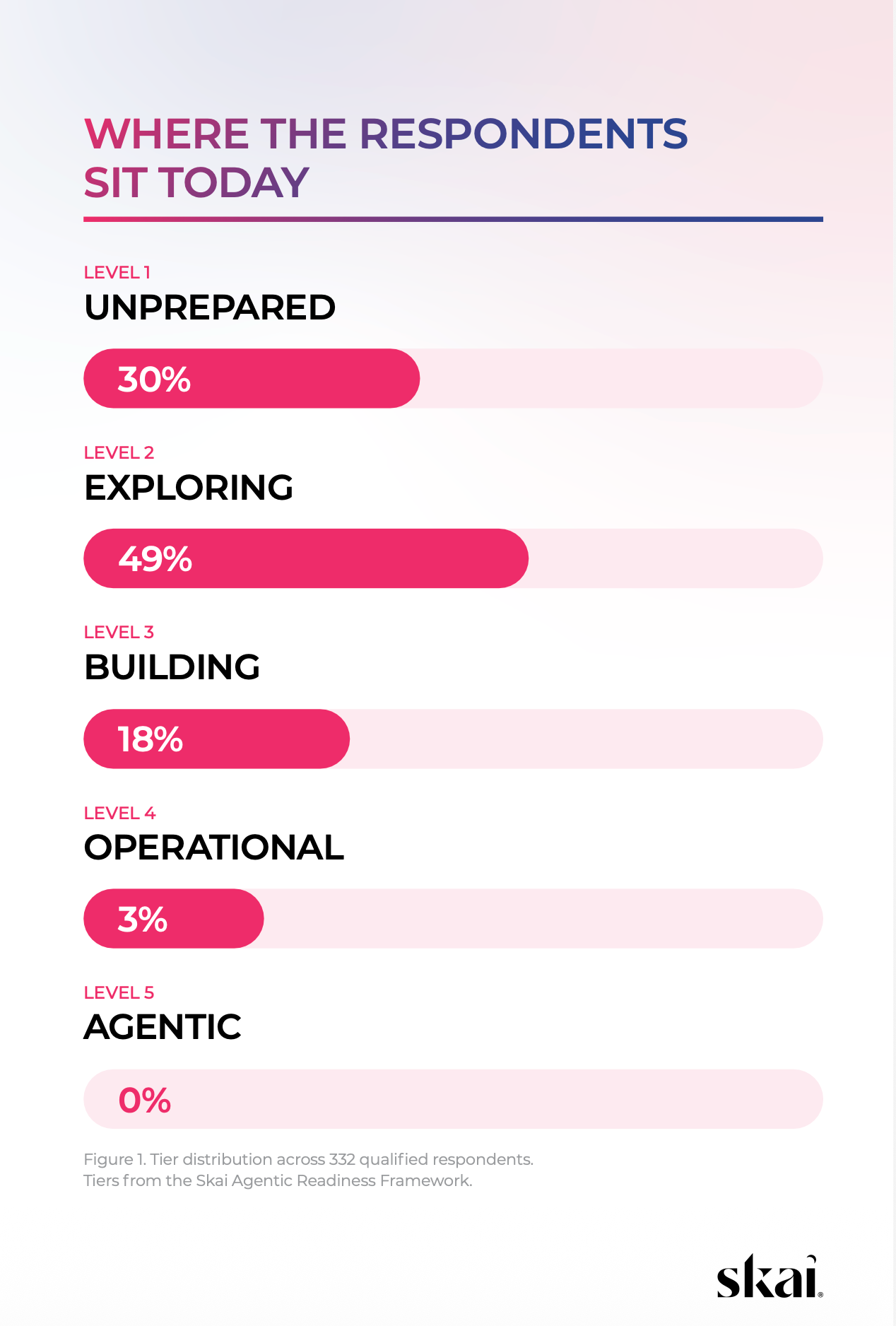
Only one respondent among the total of 332 described an organisation running autonomous agents with oversight.
Retail media’s big spenders are the least ready
Retail and ecommerce made up 35% of the sample and scored 37.4 — above the cohort mean, but still below the ‘Building’ tier. CPG and FMCG scored 32.2, the lowest of the six industries Skai broke out.
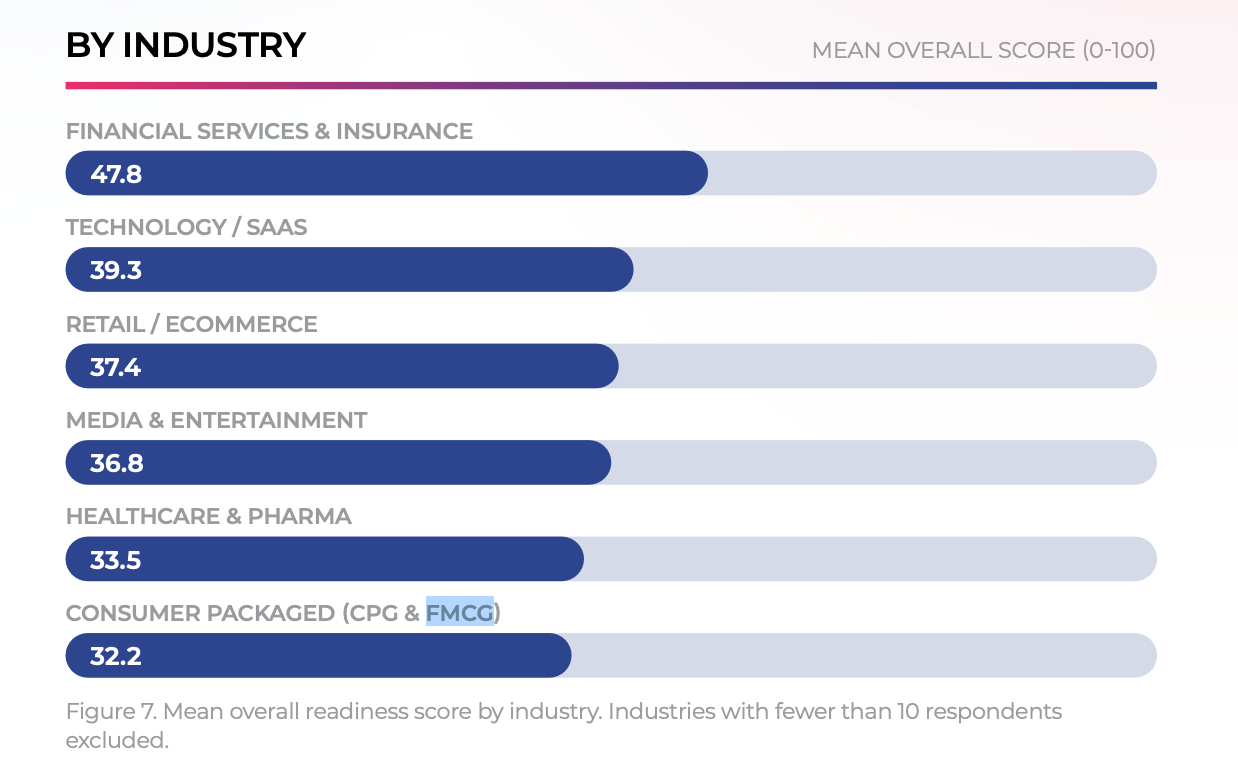
Both sides of the retail media transaction are below Building. The brand side is the weaker one. The people writing the cheques are less equipped to buy agentically than the retailers selling to them.
Which tracks, if you've watched how retail media gets built inside a retailer. The media business is usually what forces the tech investment. You can't sell audiences without a working CDP. You can't do closed-loop measurement without joining transaction data to identity. Standing up an RMN drags the whole organisation's data infrastructure forward with it. Brands may not have an equivalent forcing function.
The boardroom versus the buyer
I always like to come back to incentives. Who has the most to gain or lose from a given scenario? The usual way to slice that is by position in the value chain — platform, agency, publisher. But the more revealing cut here is seniority.
Readiness scores slide steadily down the career ladder. C-suite respondents self-report 41.7. The managers with hands on keyboards report 34.6.
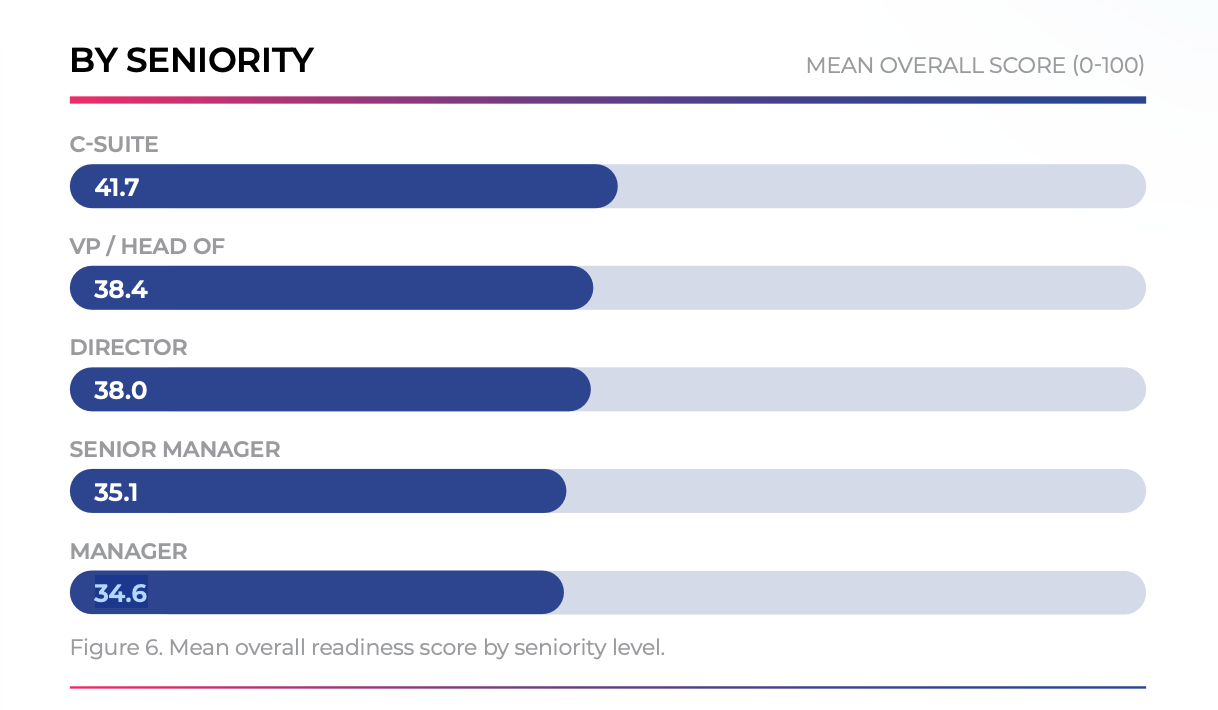
Skai's read: leaders are describing the strategy in the board deck, practitioners are describing the systems they actually log into.
Are some practitioners quietly sandbagging technology that might redefine their jobs? The report suggests not, or at least not consciously — people feel fine about agents in the abstract. Human and change readiness is the strongest dimension at 46.5, and psychological safety scores 62.3.
The likelier story is duller and worse. Leadership sees what the technology could do. Their teams are still stuck on what it takes to run a client campaign across a dozen byzantine platforms.
The real opportunity is in the plumbing
Agentic buying ought to favour retail media. Real-time sales data, conversion signals, a closed loop of transactions. An agent optimising toward units sold rather than clicks should award retail media as the most legible channel of them all.
Except the loop lives inside each retailer's walls, and the buyer's agent can't get inside. Only 5% of Skai's cohort has paid media and business data unified with agent-readable access.
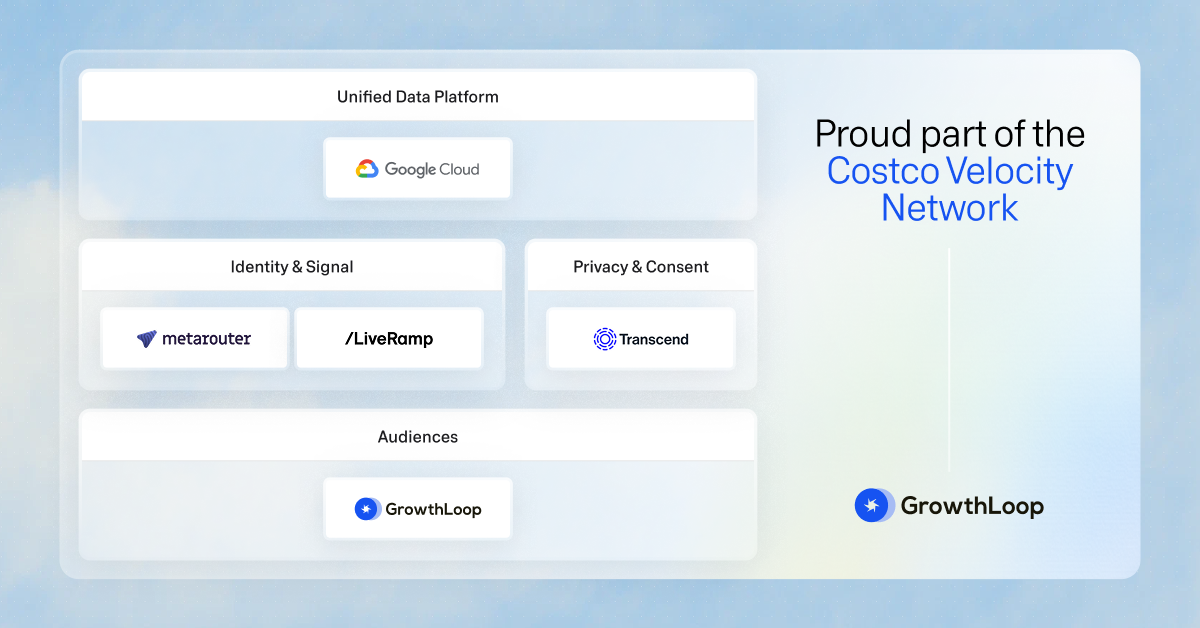
Costco isn’t scaling its RMN with legacy adtech and manual solutions. It’s leaning into a cloud-centric, composable stack.
As part of the Costco Velocity Network, GrowthLoop empowers the retail media team to build audiences directly from the data cloud, enabling faster activation, greater relevance, and better performance — all while maintaining privacy and governance standards.
The result? Exceptional value and experience for Costco members and better ROI for brand advertisers.
Learn why the GrowthLoop Composable Commerce Media solution was the right choice for Costco’s Velocity Network.
One respondent verbatim named the golden opportunity: “The single biggest gap is linking paid media spend to SKU-level profit and inventory in near real time.”
But only 2% report end-to-end orchestration via MCP or an equivalent.
Which raised a question for me: has any retail media network shipped an agent-readable interface? Not a self-serve UI, not an API a developer can integrate against over six weeks — an endpoint that an agent can call. I'm not aware of one. If retail media's structural advantage in an agentic world is its data, and that data is only reachable through a login and a CSV export, the advantage is theoretical, and remains at the pleasure of the retailers.
The barbell of media buyers
Adoption looks inversely correlated with sophistication.
Tail advertisers (as in, the brands with smaller budgets) use algorithmic buying because they have no alternative. Sophisticated head advertisers refuse it, because they have their own capability and no interest in handing it over. The mid-tier — the actual growth market — got burned by Google’s Performance Max in the early days and is understandably touchy about anything resembling a black box.
Pet retailer Chewy has built for this tension. Frank Mulcahy, who leads Chewy Ads, described the design to me as a barbell: an objective-based product for vendors who don't have the time or the team to manage bids across 25 networks, and a clean room for the dozen multinational CPGs who were always going to run their own numbers anyway. "I'm going to give you my numbers. You're not going to use them anyways. I know that," he said of the sophisticated end.
Importantly, the automated product is optional. "We're very intentional in our design principles on transparency and giving people the option," Mulcahy said. That's a direct read of what the mid-market learned from PMAX, and it's the opposite of where several networks are heading.
Plenty of RMN leaders — on the record and off — are enthralled by the fuller version: advertisers input objectives, the platform handles the rest. I'm skeptical on advertiser-trust grounds. The Skai numbers add a duller objection. The buyers those networks need to bring along aren't structurally able to come, and won't be for a while.
The AI token bill is coming due
There's a version of the next eighteen months where every network, agency and platform builds its own agent, independently, to roughly the same spec, because that's the current flavour of technological one-upmanship. If everyone gets there on the same timeline, the first-mover advantage evaporates and all that's left is the bill for tokens.
The performance delta will show up somewhere less exciting: governance. What objective is being optimised. What constraints apply. How trade-offs get surfaced. What gets logged, and who gets the blame when a recommendation goes sideways.
But the announcements will keep coming. Every network, platform and agency shipping the thing that will finally automate the buy.
Meanwhile the people who'd have to use it are exporting CSVs, and the retail and CPG teams that fund this industry aren’t exactly leaning in.
Perhaps someone should give those eager C-suite execs a DSP seat.