
There's a dreamlike quality to AI's impact on marketing right now. Every week brings another announcement, another "test," another platform dipping a toe into commerce or advertising or agents. It's easy to drift through it all in a haze — half-convinced it's real, half-expecting to wake up and find everything back to normal.
Debbie Aho Williamson has seen this dream before. She spent 19 years at eMarketer and was one of the earliest analysts to identify social media as something marketers should pay attention to — writing her first report on it in 2006 when Facebook was two years old. She now brings that same pattern-recognition lens to AI's impact on advertising and commerce in her work at Sonata Insights and her excellent Substack, The AI Ad Economy. [She has previously contributed a piece to this newsletter, too: Should Your Industry Advertise In AI Media In 2026?]
She's not here to lull you back to sleep. She wants to shake you awake — not with doom and gloom, but with practical clarity about what's actually taking shape while most of us are still squinting at it.
Today's newsletter comes from her recent conversation with Scot Wingo on the Retailgentic podcast, where they covered the ChatGPT ad rollout, the competitive landscape, and where this whole thing is headed.
Here are three things I took away from this conversation.
SPONSOR: MIRAKL ADS
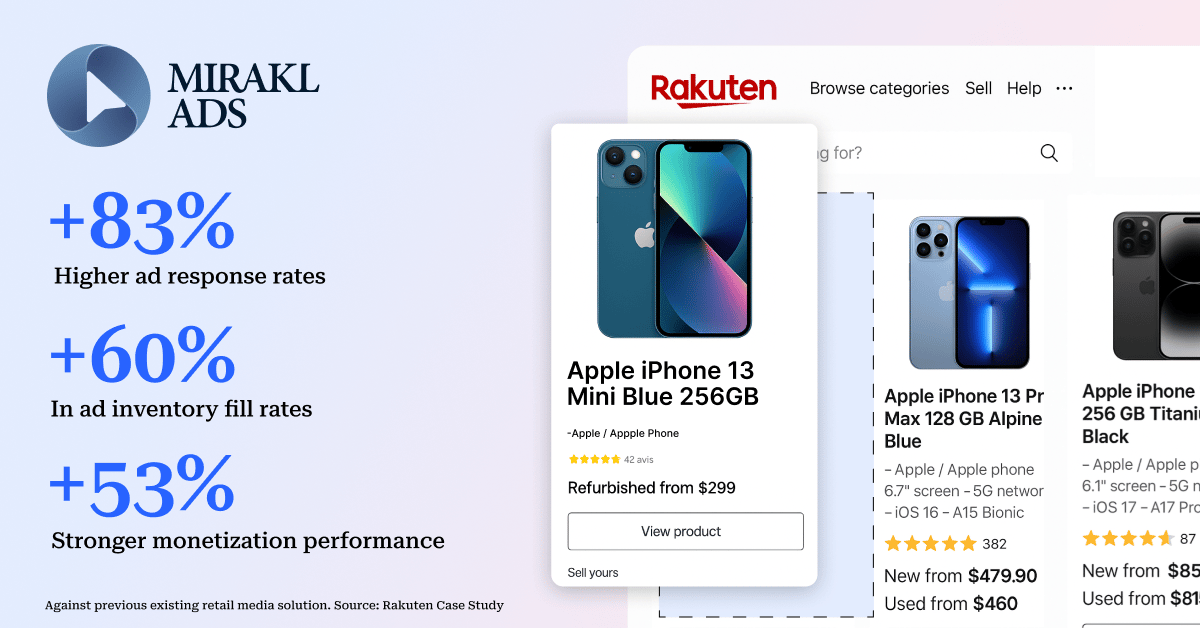
Retailers know that a marketplace model can dramatically boost product assortment, shopper engagement, and total revenue.
But, to get the most out of your marketplace, you need an ad tech solution that can really engage sellers.
Mirakl Ads is powering the future of retail media for leading retailers — to activate both 3P sellers and 1P brands.
This Is Not a Test
ChatGPT launched ads about a month before this episode recorded. OpenAI called it a test. Debbie's read: sure, technically. But nobody hires an entire ad sales organization for an experiment they might walk away from.
"This is a test that's leading towards something much bigger. ChatGPT is hiring for ad engineers, product managers, developers, people to lead the ad business. So this is not something that they're going into lightly or as an experiment to just kind of see if maybe advertising fits."
OpenAI is leaning hard into the trust angle — ads are clearly labeled, separated from organic responses, and supposedly don't influence what users see. The formats themselves are deliberately boring right now. Basic search-style units with an image and copy. Debbie says that's intentional — it made it easy for advertisers to get into the program and compare performance against existing search campaigns. Don't mistake simple for unambitious. This is scaffolding, not the finished building.
I wrote about this a few months back when I joined Mike Shields on the Next In Media podcast — my take was that LLM ads don't have to suck, and could actually be better than what we've seen before given the depth of context these platforms have on us. ('ChatGPT Ads Are Here. I'm Not Panicking.') Debbie's framing reinforces that: the early formats are a starting point, not a ceiling.
Eighteen Years vs. Eighteen Months
The most useful frame from the conversation was Debbie's comparison between Amazon's trajectory and OpenAI's. Amazon existed as a retailer for roughly 18 years before it built an ad business. ChatGPT got there in a fraction of that.
Debbie's point isn't that OpenAI is rushing — it's that AI is compressing every timeline. Amazon could afford to wait because it was building in a slower era. OpenAI can't, because the speed at which consumer discovery behavior is shifting demands it. As she put it:
"I don't think OpenAI could afford to wait a year, two years, five years. They needed to move fast because they knew what they had built in terms of something that would be valuable to people."
And retailers clearly feel the urgency. Sensor Tower data showed roughly a quarter of early ChatGPT advertisers were retailers — Target, Best Buy, and Albertsons among them. Debbie called it the "frenemy conversation": you get in bed with a new platform because you're scared of it, but you also want to learn. Amazon and Walmart, meanwhile, are building ad formats into their own AI assistants — the sponsored prompt inside Rufus is getting attention as a potentially AI-native unit. Makes sense. Those two have retail media empires to protect.
In that same Next In Media conversation, I flagged the risk I keep coming back to: if LLMs build offsite advertising businesses using all the rich intent data they're accumulating, that's direct competition for the audience extension products retailers have spent years building. We haven't seen any LLM pursue that path yet. But the data is there, and the economics point in that direction.
3. Ads Aimed at Agents, Not Humans
The conversation closed with Debbie looking forward — past the current search-ad-lookalikes to what AI advertising might actually become. She expects entirely new ad formats to emerge as ChatGPT evolves beyond a text box into different interfaces for shopping, travel, entertainment. That tracks.
But her most provocative point was about where this ultimately leads:
"It's going to lead to an environment where the advertising is not aimed at human eyeballs or human sensibilities at all, but is aimed at the agent and is designed to get the agent to perform an action. So it's not even going to look like advertising."
We already know from the Columbia and Yale research I covered that today's AI agents penalize sponsored products by 8-14% in selection probability. They've learned to avoid ads. But Debbie's point is that the next generation of AI advertising won't look like ads at all. It'll be structured data, product feeds, and trust signals designed to influence agent decision-making — not catch a human eye.
Now What
Debbie compared AI to the social media shift she started tracking in 2006. But there's a key difference in tempo: with social media, each year brought a new chapter. With AI, each month does.
This isn't a dream. The hiring is real, the ad budgets are moving, the retailers are already at the table. The question is whether you're awake enough to notice — and practical enough to act on it.
Check out Debbie's newsletter, the AI Ad Economy, on Substack, and listen to the full conversation on the Retailgentic podcast.
COMING UP!
I'm hosting a LIVE event with In-Store Marketplace and Catalyst Media Consulting on April 22 about In-Store Retail Media: are we measuring the wrong things?
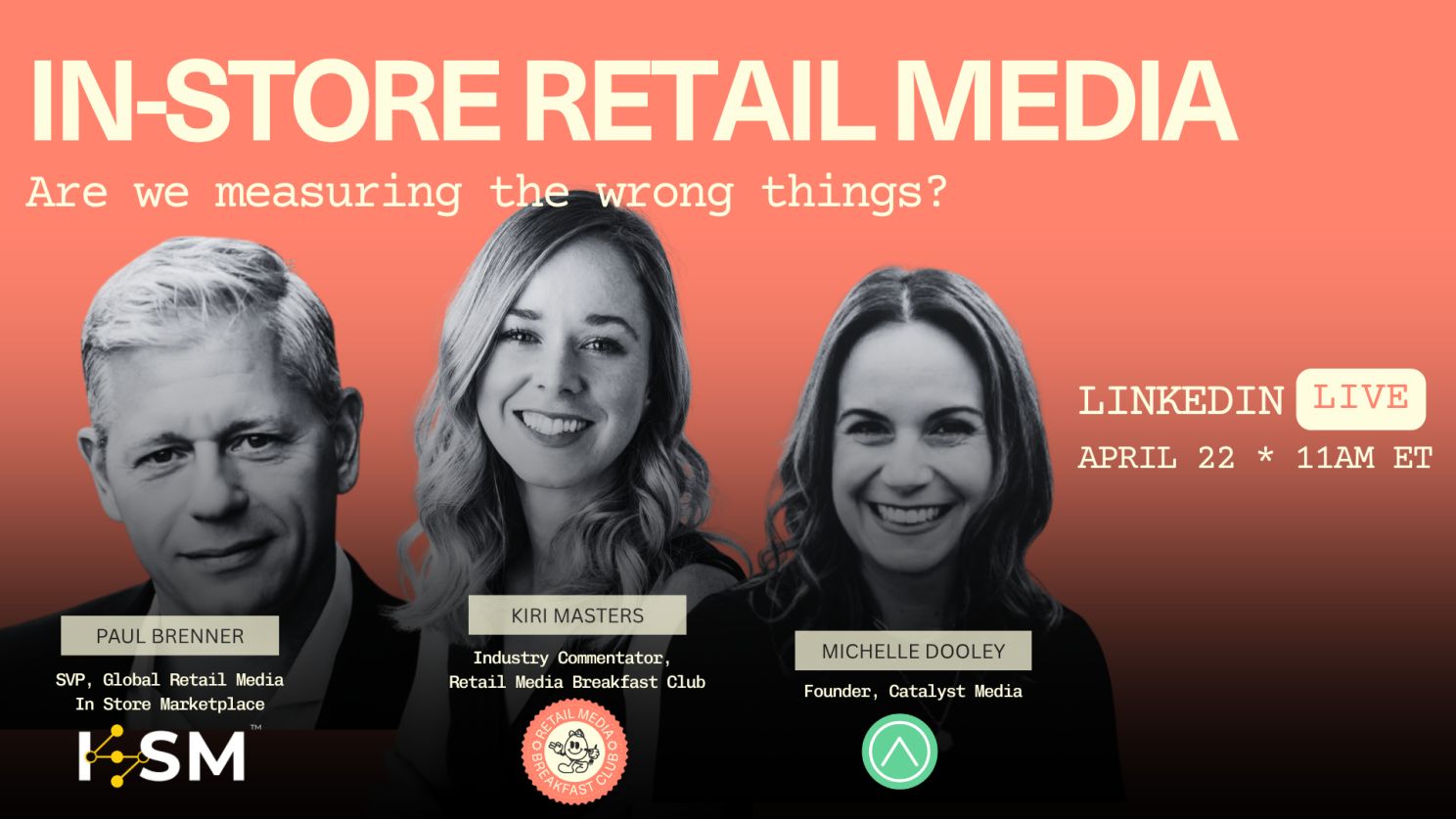
We'll discuss New Research on the state of in-store retail media measurement — and why the path forward may actually be simpler than the industry is making it. REGISTER HERE