
This piece was originally published at my column for The Drum on November 3, 2026. It is reproduced here with permission.
Amazon is the third-largest digital advertising platform in the world. EMARKETER expects it to take 9% of global digital ad spend this year, about $82bn.
Shoppers like its ads, too. In Kantar's Media Reactions 2026 study, which surveyed more than 23,000 consumers across 33 markets, Amazon ranked second for ad equity, behind only Google.
The year before, on a pure ad preference measure, Amazon came first, with Twitch and Prime Video also in the top five. Kantar changed its headline metric this year, so the two editions aren't directly comparable, but the direction is the same.
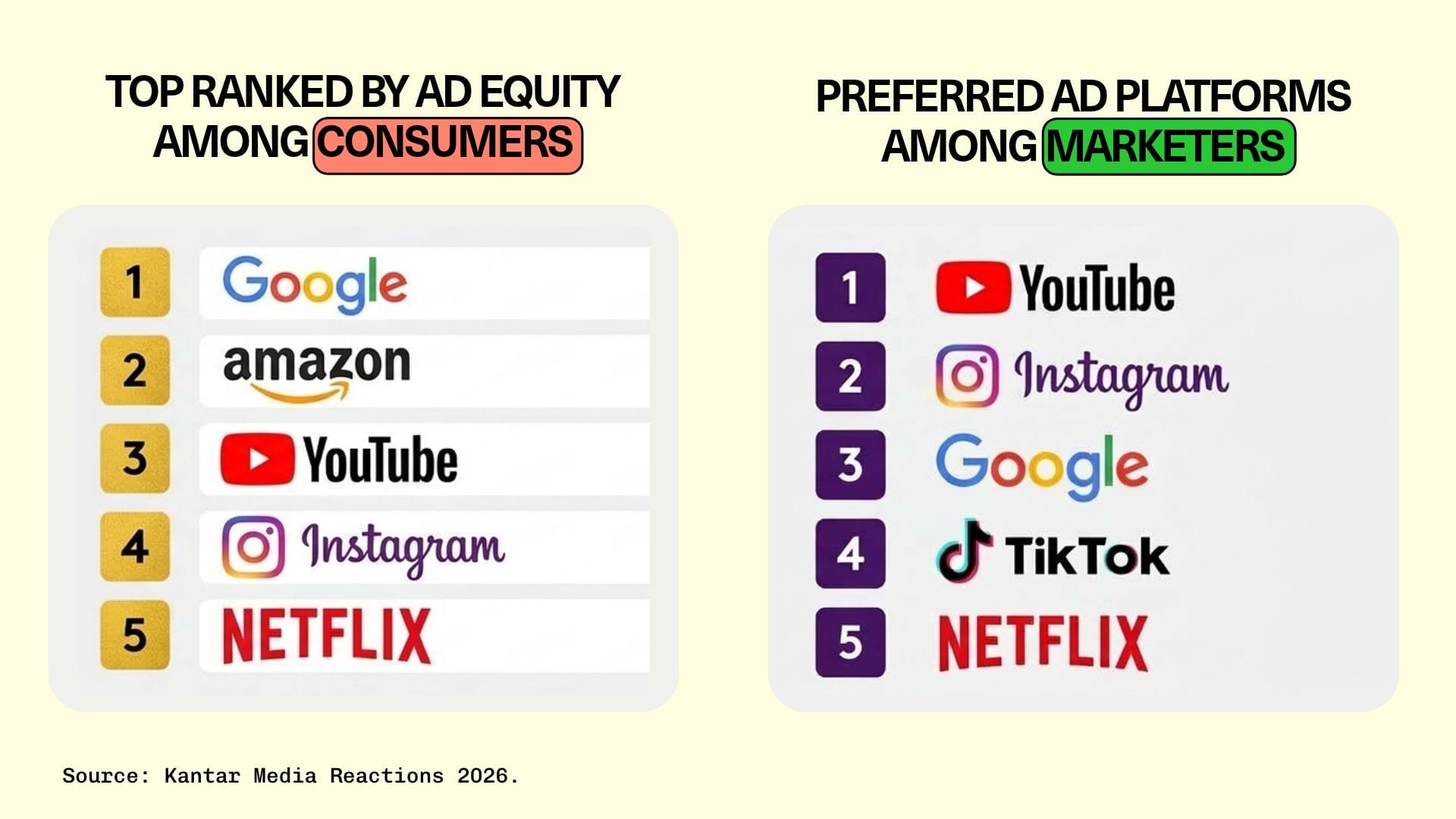
The roughly 800 senior marketers in the same study see it differently. Their top five this year was YouTube, Instagram, Google, TikTok and Netflix. This isn't a one-off. "Amazon has never been in the top 5 for marketer preference as a whole," Gonca Bubani, global thought leadership director, media at Kantar, told me.
So why don't the people buying the ads rate the platform that consumers like best? It's easier to start with what doesn't explain it.
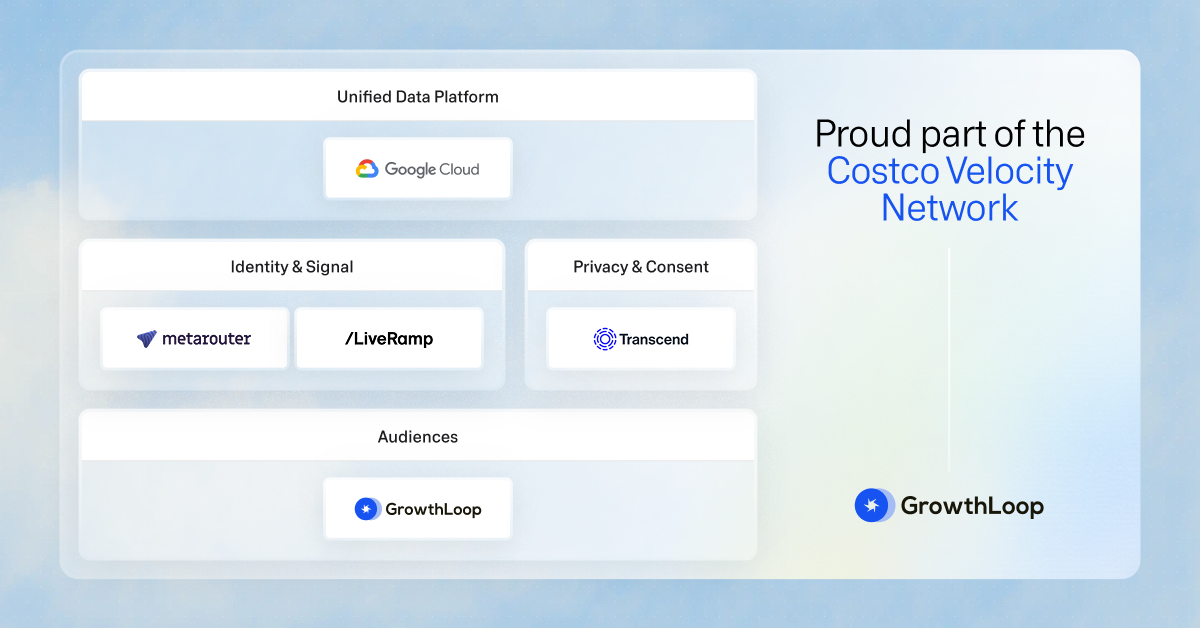
Costco isn’t scaling its RMN with legacy adtech and manual solutions. It’s leaning into a cloud-centric, composable stack.
As part of the Costco Velocity Network, GrowthLoop empowers the retail media team to build audiences directly from the data cloud, enabling faster activation, greater relevance, and better performance — all while maintaining privacy and governance standards.
The result? Exceptional value and experience for Costco members and better ROI for brand advertisers.
Learn why the GrowthLoop Composable Commerce Media solution was the right choice for Costco’s Velocity Network.
It isn't ‘too new’
Bubani's explanation is that there’s a lag. Amazon has only focused seriously on advertising in the past five or six years, she said, and marketers stick with platforms whose measurement and transparency they already trust. "It is their comfort zone."
But it’s remarkable how quickly comfort zones can move. TikTok launched TikTok For Business in June 2020, and this year it made marketers' top five for preference and, for the first time, for trust. Presenting the findings, Bubani credited years of investment in measurement and transparency.
Presenting the findings in a webinar, Bubani said TikTok had been investing in the things marketers say earn their trust (measurement, brand safety and consumer receptivity) since launch, “and we’re now observing their efforts pay off.”
Amazon has been selling ads for much longer, and investing in the same things. I was already buying Amazon ads for clients when I founded my agency in 2015. Its clean room, its measurement products and its ad-quality reporting have all grown up in that time. The investment hasn’t paid off in the same way -- at least in terms of advertiser perception.
It isn't the offering
Amazon has the shopper data, and over the past decade it has bought and built the media to go with it. It acquired Twitch in 2014. It became the exclusive home of the NFL's Thursday Night Football from the 2022 season. It made its clean room, Amazon Marketing Cloud, available globally in 2023, and turned on ads by default in Prime Video in 2024. Its DSP buys well beyond Amazon's own properties.
When that media shows up under another name, marketers notice. In Kantar's 2025 US data, marketers ranked Prime Video fifth. But Amazon itself didn't make the list.
Amazon has been misfiled
My best answer is that advertisers have misfiled Amazon. It sits under retail media, and retail media means endemic brands and the bottom of the funnel. Both sides helped put it there.
Brand marketing guru Mark Ritson dismissed retail media as "slotting fees with a fancy name and a dashboard" . An Ipsos report called it a “creative wasteland," devoid of anything that could win advertisers an award.
As I wrote in response to that report, retail media is often a performance sport. The money often comes out of the sales team's budget, not marketing's. Buyers test and refine their creative, not with the dream of winning a Lion at Cannes, but with a mandate to drive sales. That's rational behaviour: retailers sell what they can measure, and brands buy what they can defend.
Retail media analyst Andrew Lipsman makes the case that retail media is both a channel and a layer, capable of far more than it's used for. But the budgets treat it as a channel. Even Lipsman acknowledges search ads take 70% to 80% of retail media dollars.
(Related: Retail Media's Loudest Brand-Side Defender On Where It Wins and Still Falls Short)
Whose fault is that?
It's tempting to place the blame on advertisers, lecturing them that: you could be using retail media this way, so why aren't you?
But I don't think that's fair. Uncovering a buyer's problem and building a reason to care is the seller's job.
Amazon has tried. In 2023, it was promoting an in-person training program on how non-endemic advertisers (brands that don’t sell on Amazon) could use its DSP. I thought it sounded great for the agency I worked for at the time, whose clients included quick-service restaurants and a family entertainment chain. Our sales leader had no interest in attending, seemingly too busy selling Meta and Google search strategies to exactly those clients.
Amazon dominates retail media, with roughly three-quarters of US spend last year. But it never found a reason to care that worked for the non-endemic buyer, and without that buyer, it stays filed under retail media.
Traders on Reddit’s r/programmatic forum value its DSP for the data and the Prime Video inventory, but complain that conversion tracking gets messy if you don’t sell on Amazon, and that the platform keeps steering spend towards Amazon’s own properties.
Bubani's prescription points the same way. Amazon is already very strong among consumers for its ad experience, she said. "The key is to showcase that to marketers at scale." Its measurement capabilities, she added, "need to be conveyed clearly."
But marketers aren't off the hook either. Brand-side or agency, the job is to put money where it works hardest for the brand, not where the team is most comfortable.
Incentives play a part. Retail media platforms do offer perks to win spend, as I've written before for this column. What I never came across, in years of buying through Amazon and other retail media partners, was the rebates and principal buying that pad agency margins elsewhere. The ANA reports principal buying is still growing, mostly in TV. Retail media doesn't give agencies those extra reasons to push it. That's a good thing for transparency, in my view, and I hope it isn't a major reason retail media falls behind.
What now
So marketers are missing part of the picture, and Amazon still hasn't found a way to shake off the limits of its retail media history.
For the marketers willing to look past the label, that's a possible competitive opening: an ad platform shoppers already rate near the top, which most of their peers still don't take seriously.