
When Mark Ritson told ADWEEK readers not to let retail media pass itself off as brand building, Benoit Vatere pushed back harder than anyone. His argument: brands need velocity off the shelf, and you can't get that properly without retail media.
So it's no surprise that Benoit, Liquid Death's Chief Media and Digital Commerce Officer, told the hosts of the CPG Guys Podcast recently that retail media will take "definitely majority of the spend, so over 50%" in 2027. Most goes mid-funnel: the brand has plenty of awareness, and now needs people to try a can.
But he's honest about the limits too. Here are my top 5 highlights from the episode, which you can watch or listen to here.
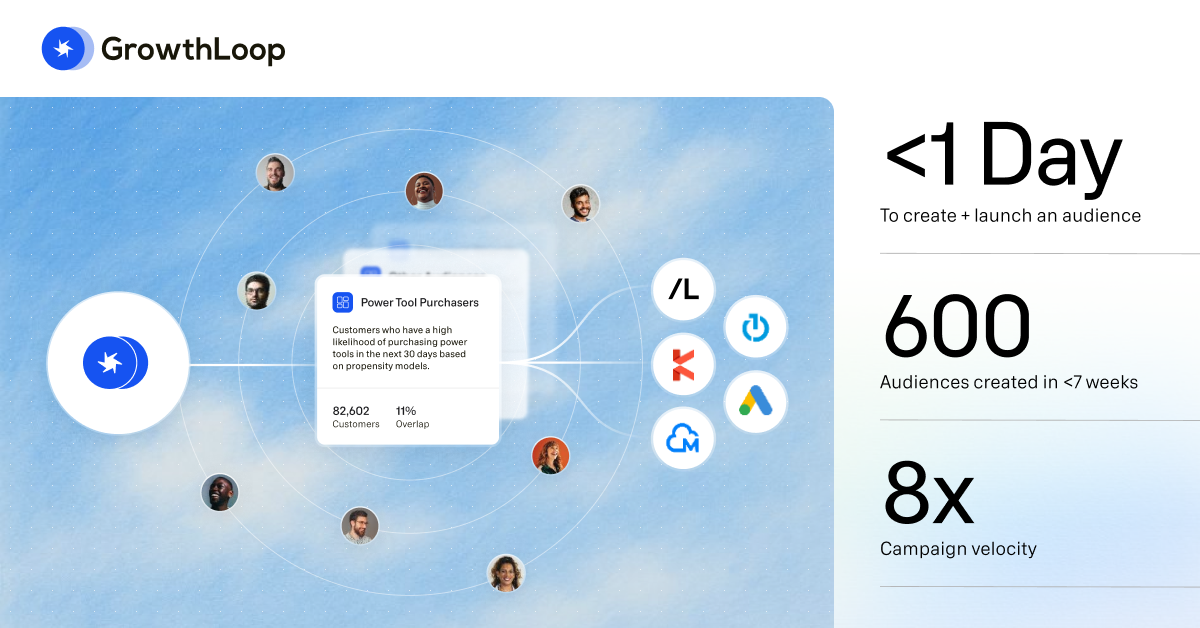
Your advertisers can’t wait weeks for audiences.
GrowthLoop’s Composable Commerce Media solution helps media teams turn first-party data into high-value audiences, launch campaigns faster, and prove what’s working across every channel.
Learn how retail media leaders at Costco, Fanatics, and Gopuff use GrowthLoop to create highly segmented audiences and deliver stronger results for their brand partners.
1 - Even true believers stick to the big networks
"So the smaller [RMNs], yes, it's interesting. Yes, I want to support them to build better, but I cannot deal with 20 retail media networks. I can't."
Running a campaign with a mid-sized grocer takes the same work as with a national one, he said. And if he splits his budget across 20 networks instead of four, the effect on Liquid Death's revenue gets too thin to see.
This is the hard truth for long-tail networks. Benoit is an ally with real budget and a team, and he still won't spread it past the biggest players. As AI takes over more media buying, he might manage ten or twenty networks "down the road." Until then, smaller networks need to consolidate or build a truly unique value proposition.
2 - Are retailers under-counting brand fandom?
Retailers usually bring the audience to the brand. Liquid Death, with roughly 50 million followers across Instagram and TikTok by Benoit's estimate, can run that in reverse.
"So if we tell [our fans] to go shop somewhere, because there is a Limited Time Offer (LTO), for example, like a product that you can only find. Let's take this example of sCREAM Soda that we launched at Walmart, was only at Walmart. Right? Now we tell them that it's there. Guess what? They're gonna go on Walmart.com or they're gonna walk into that store, even if Walmart is not their destination of preference."
Grocers appreciate this, he said, but he isn't sure they understand it. He didn't share the deal terms. My guess is the exclusive came with a better media rate.
3 - Retail media is a creative wasteland. So what?
Liquid Death is a disruptive brand, but it saves its disruptive creative for other channels.
We don't necessarily bring the craziness of the brand on site […] At this point, I need to tell them this is healthy, it tastes like lime, this is the right pricing. I don't need to have Jason Kelce pee on the data center on a Target.com website, right? So I can stick with their framework. And it works."
This takes me back to my reaction to an industry report calling retail media a creative wasteland. Benoit just explained why that's entirely beside the point. Use retail media to reach the audience when you're top of mind, and tell them what SKU to try. Tasting notes, price, the healthy angle.
Retail media is not the place to run the Jason Kelce campaign asking fans to mail their pee to AI data centers. But it's where all that brand goodwill is clinched into a sale.
4 - Retail media protects the physical shelf
"For in-store shelf space, retail media is defensive because it helps me to keep momentum on key SKUs that pull from the shelf. I need to keep having that velocity. It's offensive from things that are not even in store sometimes or that are in stores that I can start and conquest against competitors."
Retailers give more shelf space to products that sell faster. So targeting competitors' shoppers online lets Liquid Death steal share, lift its sales rate and win more space in the physical store. Most networks now allow conquesting of this nature. Benoit says they used to refuse, to keep the big brands happy, but emerging brands now spend enough to change that posture.
5 - Retail media tech is good and getting better
Benoit gave some well-earned shout-outs to the people building these networks: "You have a lot of smart people in those retail media networks on the tech side now."
Here's what I took from that recognition: brands do really care and notice what tech is under the hood. And my read on that is that retailers should share more about their tech partnerships too.
Austin Leonard at DG Media Network illustrates this playbook perfectly. On another recent CPG Guys episode, he walked through initiatives like in-store audio. It's a win/win for DGMN and the in-store audio vendor. Lean into the co-marketing those vendors are so eager to do. Brands notice.
What's on Benoit's wish-list from RMNs
Throughout the conversation, Benoit dropped some hints as to what he wants from RMN partners.
- Real-time inventory, so he can turn ads on and off. Display ads often keep running on out-of-stock products. Liquid Death's shelves are stocked by distributors, and as Benoit put it, "who knows if they're going to show up at the store or not." He assumes about 20% of his media goes to waste on out-of-stocks. Grocers that can ship from a warehouse are the exception.
- Moving exposed offsite audiences onsite, like Amazon does. If he targets Kroger's sparkling water buyers on TV and again on Kroger.com, TV reaches only about half of them. "The pipes are out here," he said, and he's beta-testing a fix with some big retailers. Most networks don't do it yet, but they understand it and are working on it.
- Merchants who treat retail media as more than a margin line. The retail media teams want to partner, he said. Too many merchants still see it as "some kind of margin that they can add." That's changing now that merchants are measured on online sales, and retail media drives online sales. Benoit thinks this is the year they finally get it.
I'm so glad there's people like Benoit in the ecosystem, calling it how it is – that's why he's one of my favourite follows on LinkedIn. And check out the full CPG Guys interview with Benoit here.