
This article was originally published to my column at The Drum on August 18, 2026 as The best advertising advice Amazon gives isn't in a slide deck
According to the law of large numbers, Amazon should be finding it hard to keep growing. It already takes roughly 40% of every dollar spent online in the US. And yet the hits keep coming. North America net sales were up 16% in Q2 2026, and advertising — now a $19.8bn quarterly business — grew 26%.
I usually write about Amazon as an ad platform, where it is a dominant retail media force. But what gets less air-time is how Amazon spends its own advertising budget. Where is it spending in order to grow its retail business?
Amazon hands out advertising recommendations to brands every day. But the best advertising advice Amazon gives isn't in a slide deck. It's in where it puts its own money.
To find out, I turned to research firm Sensor Tower, which tracks ads shown on digital surfaces and linear TV.
A note on the data before we start. Out-of-home, print, radio, cinema and sponsorship aren't covered. The dataset also includes co-op and vendor-funded marketing — ads Amazon has purchased on behalf of its advertisers and on-sold to them, either directly as offsite inventory or at an aggregate level. So this is Amazon's media plan, not strictly Amazon's own checkbook.
Poor audience targeting is frustrating. But for retail media teams, it can be costly, too.
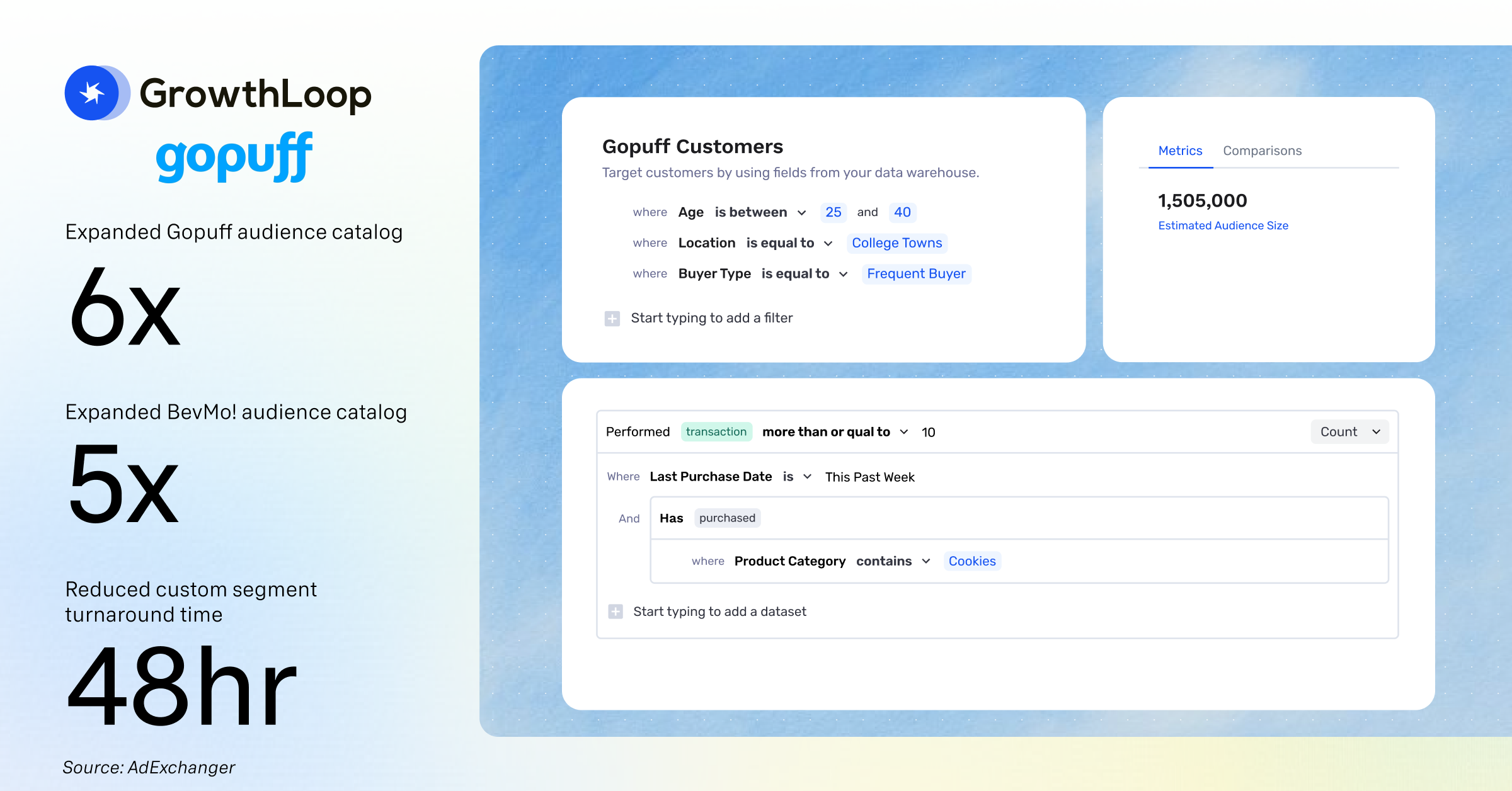
With GrowthLoop’s Composable Commerce Media solution, you can turn your first-party data into hundreds of high-value audience segments and launch campaigns faster.
After partnering with GrowthLoop, instant commerce pioneer Gopuff scaled from 100 syndicated audience segments to more than 600. And it now takes less than 48 hours to turn around a custom segment for one of their brand partners.
Learn more about how GrowthLoop is powering Gopuff’s best-in-class retail media operations.
What Amazon Actually Buys
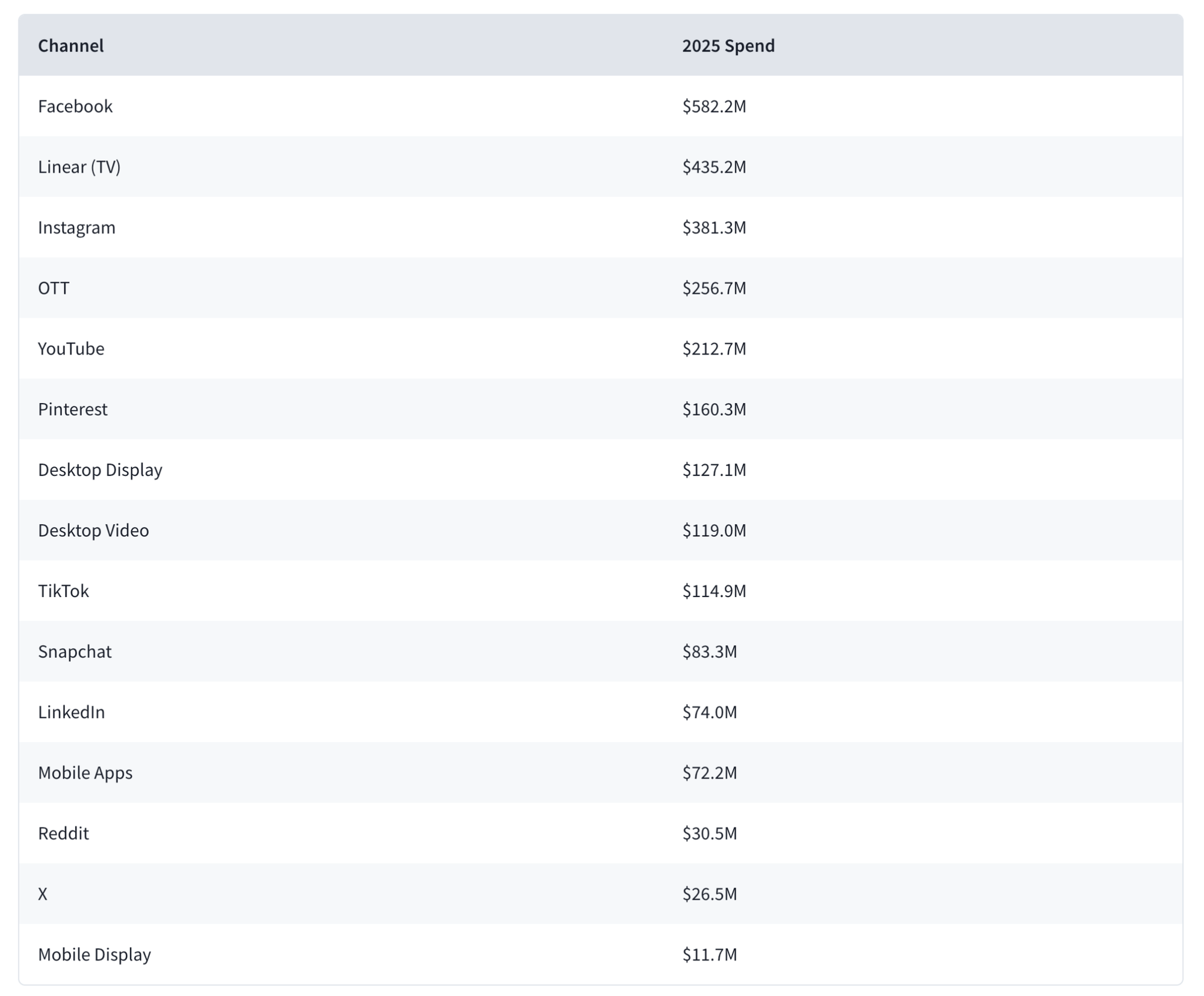
Sensor Tower estimates that Amazon put $7.39bn of tracked media into the US market over three years. In 2025, it spent $2.69bn on ads.
"Amazon established the first Retail Media Network long before the term was even coined, so there's no surprise they're incredibly savvy and well-funded in traditional digital advertising too,” says Julia LaRosa, vice-president of innovation and strategy, Sensor Tower.
She says that Amazon has been the number one or number two advertiser annually going back to at least 2020, and there's no sign that's changing as they continue to grow.
What's interesting about this breakdown is how unremarkable it is.
Amazon's single largest advertising line is Meta. Add Instagram to Facebook, stand linear television next to them, and those three account for about 52% of everything Amazon bought last year. The biggest lines here are the boring ones.
Now, to be fair, Amazon can't buy retail media. No retailer sits above it, so Amazon can’t eat its own dog food.
Amazon also isn’t choosing between closed loop and reach. Amazon is the closed loop. It has better purchase data than any network can sell, and it can measure a Meta impression to an amazon.com order with more certainty than Walmart Connect can measure its own. So Meta isn't where Amazon settles because it can't measure elsewhere, it’s because Meta actually passes Amazon's own measurement bar.
As for what it's advertising: about half the spend markets the store — retargeting for products you viewed, ads for categories you might be interested in. A surprising amount markets subscriptions. Amazon spends considerably more advertising Prime Video and Prime than it does AWS.
The Big Format Swap
While there’s no surprising hacks in the actual channels Amazon tapped into, the format of the ad is where there could be some instructive insight for advertisers.
Tracked spend rose 17.3% over three years. Tracked impressions rose 2.1%. Amazon bought roughly the same quantity of advertising three years running and paid meaningfully more for it — and the difference is display coming out and video going in.
2023 vs 2025 breakdown of Amazon's US desktop advertising impressions by channel:
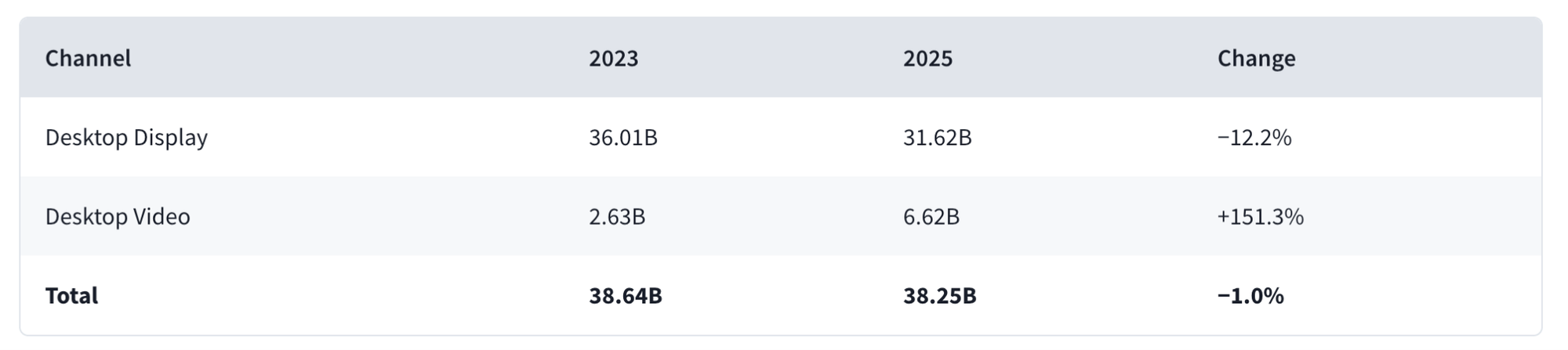
On desktop web, where this trend is most pronounced, Amazon held volume almost exactly flat — 38.6bn impressions in 2023, 38.2bn in 2025 — and swapped about four billion display impressions for four billion video ones. Video went from 6.8% of desktop impressions to 17.3%.
Ross Walker, director of retail media at the agency Acadia, has been running the same play on the buy side:
"Banner ads are a trap. Low engagement, low incrementality. Video has real impact to traffic and sales long term. We've moved a ton of budget out of banners — kept lower funnel in rec ads — and into video.”
Walker says that the volume loss in impressions is not really proving to be a problem, because the impressions that he and his team buys with video are much more engaging.
“The cost and loss of reach are worth it because the effective reach is better and the costs pay for themselves, " he added.
The takeaway for any advertiser considering a shift to video: the same reach costs more, and your impression counts will go backwards before they justify themselves. Amazon's media plan and Acadia's experience both say the trade is worth making. But it's a trade you plan for, not one you discover in a quarterly review.
And an emerging channel to watch
ChatGPT's ad product has been met with a range of reactions, but retailers have been among its earliest and most visible adopters.
Best Buy and Target moved first. Amazon took a moment to dip a toe in — and since April 2026 has led the retailer cohort Sensor Tower tracks on the platform.
April 2026 - August 2026, Sensor Tower has been tracking advertiser activity in ChatGPT ads
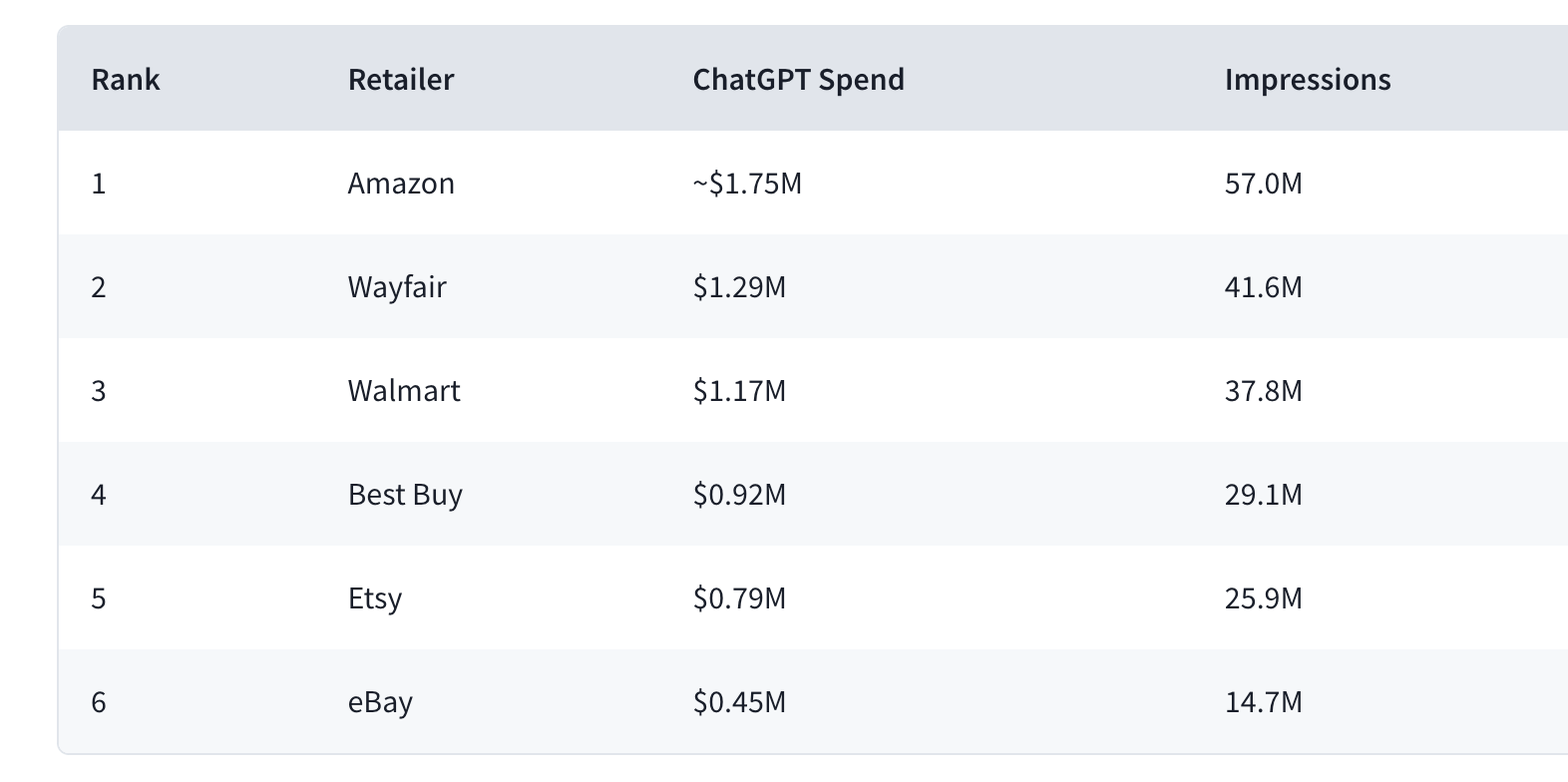
In dollar terms it is a rounding error against Amazon's favoured channels. That's the point of it.
The lesson isn't that ChatGPT ads work. That’s still early days for anyone, least of all Amazon. It's that the largest advertiser in the country keeps a live position in a channel that doesn't matter to it yet, at a cost that doesn't hurt. Test-and-learn budgets are not a luxury line item.
Watch What They Do
Three years of Amazon's own buying comes down to three habits: go where the reach is, pay more for the format that works harder, and keep a small bet running on whatever is next.
None of that is exotic — and that is the finding. A company with the best purchase data in retail, free to spend its money anywhere it likes, put half of it into Meta and television, changed its formats before it changed its budgets, and set aside a rounding error for ChatGPT.
Amazon hands out advertising recommendations every day. Its own media plan is the one worth reading.
Watch what Amazon does, not what it recommends you do.