
Advertising has long been the bright shiny hero of ecommerce, relative to the unsexy and underfunded work of product catalog maintenance, new item setup, and inventory forecasting.
I remember that well from my agency days: Clients would happily adjust their media spend upward, based on a percentage of sales or tracking overall growth. But getting them to invest in fresh product content was like pulling teeth.
But at no time has this interdependence between media and content been more obvious than today, where we have recently learned how Amazon's Sponsored Prompts build an ad dynamically, based on PDP content and other signals, billing the brand for a prompt, and an answer, it never got to see or approve. (Note: Amazon's position is that only the prompt is the ad; the conversation that follows is organic content.)
I shared earlier this week some new analysis from Andrew Bell of Amazon's patent for Sponsored Prompts, which finds that Amazon writes a fresh argument about a brand's product, partly from source material they don't own, and charges upfront for it.
That was Part 1. Today, in Part 2, we're digging into the consequences of that.
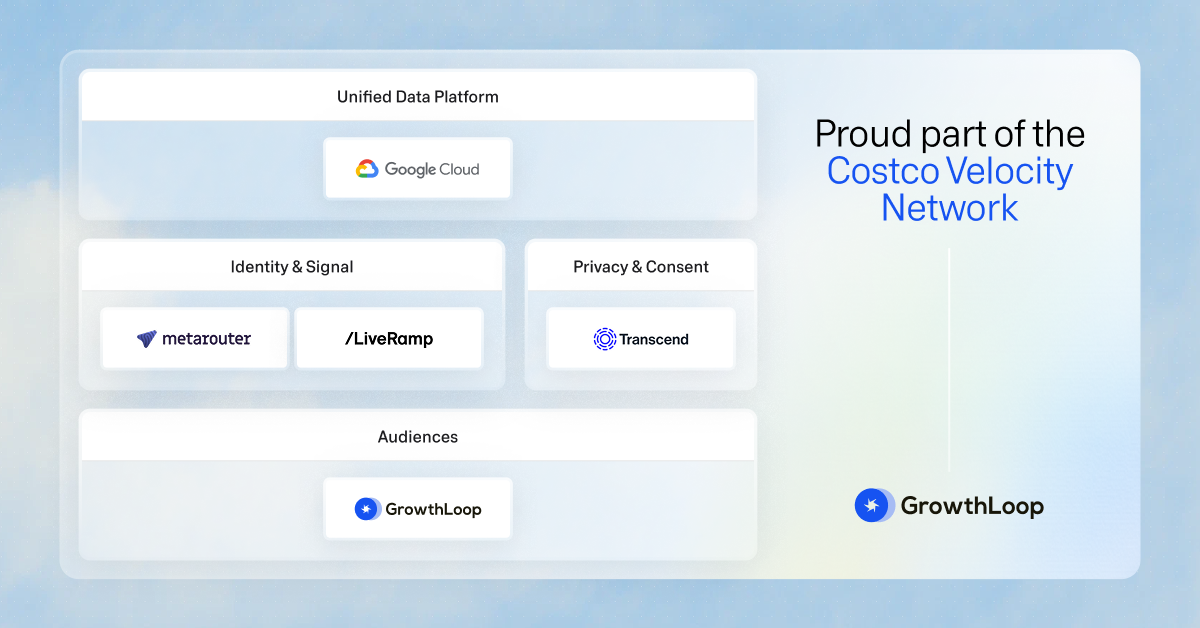
Costco isn’t scaling its RMN with legacy adtech and manual solutions. It’s leaning into a cloud-centric, composable stack.
As part of the Costco Velocity Network, GrowthLoop empowers the retail media team to build audiences directly from the data cloud, enabling faster activation, greater relevance, and better performance — all while maintaining privacy and governance standards.
The result? Exceptional value and experience for Costco members and better ROI for brand advertisers.
Learn why the GrowthLoop Composable Commerce Media solution was the right choice for Costco’s Velocity Network.
Your ad account is now downstream of your operations
Reviews, product content, stock position, your commercial terms — the things advertising used to compensate for are now the things generating the ad. This is the argument that Ladi (Ladipo) Fagbola, an ecommerce account director at the agency Monks, articulated in a cool follow-up from my post this week. Here's how he explains it:
- There are four 'legs' to the Amazon 'stool' for brands: commercials (COGS, referral fees, net PPM), logistics, content, and ads. Three can be in poor shape and you still advertise, he says.
- Advertising is no longer interdependent on those legs. It is now completely dependent on those 3 legs because that prompt is coming from the back end.
- The advertising amplifies all these edges that the advertising could smooth out in the past.
The net/net here is that content is no longer an input into ads. It IS the ad.
Fake reviews are ad copy now
The asset that just got a glow-up here is product reviews. Product reviews have been highly prized to a degree that brands and sellers engaged in actual criminal activity to get more of them and bury or remove ones that weren't positive.
Over time, Amazon has launched and sunsetted a variety of programs to help brands build reviews, but the only longstanding Amazon-sanctioned one is Vine. The whole ecosystem remains weird and shadowy.
But in this Sponsored Prompt architecture, the review corpus – this longtime hotbed of manipulation and scams – is also the raw material Amazon retrieves to build your paid answer.
The consequence is that review manipulation is no longer just organic-ranking problem. Fake reviews are now, functionally, ad copy that Amazon generates and bills for.
And with the increased stakes, comes the increased risk of manipulation among competitors. Amazon's own incentive to police reviews changes when it's selling ads assembled out of them. So my fingers and toes are crossed that Amazon introduces some more robust product review or syndication capabilities.
But for today, the job of managing a brand's review ecosystem now sits in two places — post-purchase/CX and media input. Whoever owns them today (which is never the media team, and often nobody at all) now has a media outcome attached.
Checking the hype-meter
We don't yet know whether this ad form factor is the one that lasts. As I wrote on Monday, we're early in the life of ads inside AI, and for now most of them look like the units we've lived with for a decade — sponsored products, banners, video, ported into a new surface. Sponsored Prompts is the first genuinely new shape I've seen in a while. Whether it's the enduring shape, or just the first draft of one, is something we'll have to track.
Before concluding that everything about paid search on Amazon just got upended, it's worth noting that both bidding and reporting for these ads is still extremely basic. Such a slow roll-out of features after nearly a year of going live makes me a little skeptical: Does Amazon not really believe in this format? Are the results not quite as good?
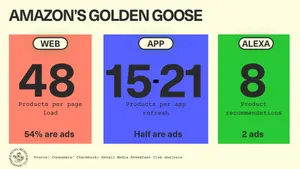
Or conversely, does this simple prompt work so well that it undermines the bigger, more expensive SPA ads that it's currently monetizing so well? (Related: What it means for retail media when AI chat has only 2 ad slots)
The great re-bucketing
Andrew Bell, who analyzed Amazon's patent for Sponsored Prompts last week, talks in his piece about "answerability" as a new function that brands will need to build.
But I see it re-allocating some money and labor that already exist in the ad space.
- Developing creative (copy, claims, images) — re-allocated
- UGC strategy (reviews, social listening, influencer) — becomes essential media input
- Bidding strategy, management, reporting — least disrupted
A key implication here is around agency scope & fees. If the work moves from bidding (what agencies are currently staffed and priced to do) to content governance and answer-monitoring (what they mostly aren't), then the agency scope and pricing will need to undergo a major overhaul.
The upside for brands
Lest everyone starts losing their hair, there are some real upsides here for brands.
When I ran my agency, we kept auto-campaigns running on almost every account — even the ones where we had sharp keyword research and processes we were proud of.
A few clients hated it, because it looked lazy: why pay Amazon to spend on autopilot when we already knew the winning keywords? But auto was where the best, lest obvious keywords came from. We were paying Amazon to find demand we couldn't have guessed at.
Sponsored Prompts do the same thing to your creative. Because Amazon picks which aspect to surface and builds the answer from your reviews, it will sometimes make an argument for your product that you wouldn't have led with — a use case, an objection, a selling point you'd underrated.
The generated-prompt report shows you all the questions that converted, and so can become a form of research. Important to note, the Prompts report only surfaces prompts with at least one click. We only get to see the prompts that actually worked, so it's not as helpful as something like a search term report where you can also see what flunked.
Still, this is helpful information. Most brands know they have blind spots when it comes to how consumers see them. Sponsored Prompts could become the cheapest, most compelling form of consumer research a brand can do.
Ten years ago when I was in agency-land, the work of content and operations was under-funded and undersold. Today – just like then, no ad campaign could make up for out-of-stocks, poor product reviews, or poor product content.
But Sponsored Prompts takes that paradigm and raises it 20.
Are we ready for these under-hyped functions to shine?
Updated September 2, 2026: Clarified that a brand's own detail pages, Brand Store and campaign data are named inputs alongside other first-party signals, and added Amazon's position that only the prompt question is the paid ad unit. See the note on Part 1 for detail.