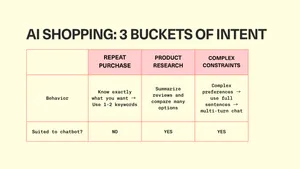

I've spent a lot of time writing about the threats that AI-enabled shopping poses to retail media. Compressed shopping journeys, fewer page views, less onsite inventory for retailers to sell. But I actually think there's a version of this that's better for everyone — brands, retailers, and shoppers. Getting there means being honest about what's broken today.
Today's post recaps my personal highlights from the Retailgentic podcast, hosted by Scot Wingo. Retailgentic covers the intersection of retail, e-commerce, and AI agents.
Full disclosure: I'm an advisor to Scot's company Refibuy, but that doesn't stop us from disagreeing, which is part of why these conversations are fun.
SPONSOR: MIRAKL ADS
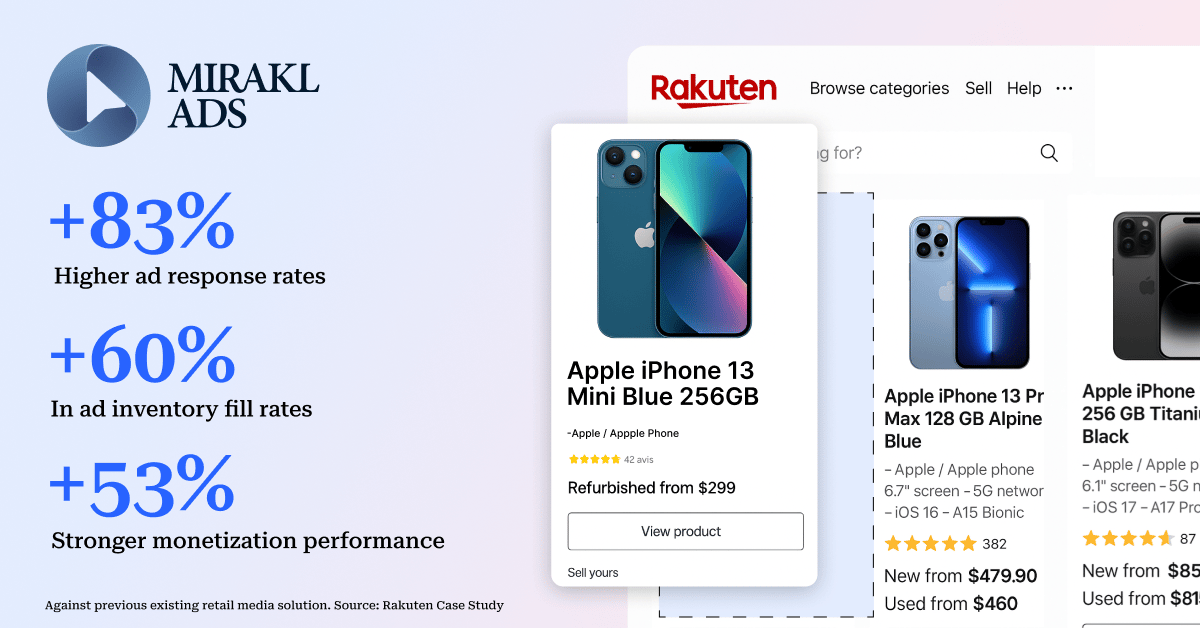
Did you know leading retailer media networks drive 85% of their ads revenue through mid- and long-tail advertisers?
Mirakl Ads provides full funnel ad formats tailored to both 1P and 3P advertisers, leveraging unique AI-capabilities that provide unprecedented levels of relevance and engagement.
Retailers who want to capture ad spend from the long tail of 3P marketplace sellers use Mirakl Ads in their tech stack.
Retail Media 3.0: Not A Tax
Scot and I spent the first part of the conversation mapping out the threats to each layer of retail media — onsite, offsite, and in-store. Onsite is the big one: 80% of US retail media spend, with nice profit margins. If shoppers arrive at a retailer's site later in their journey, having already decided on a SKU through ChatGPT, there's simply less inventory to monetize.
But I don't think the story ends there. Some revenue streams will shrink, but I see new opportunities for brands and retailers to partner together. A retail media 3.0 is on the horizon.

Here’s the harsh reality: or many brands, retail media spending has felt like margin extraction rather than a truly additive investment. Brands feel forced into it by their retailer partners. That's not always the case — there are genuine win-win activations out there. But there's a reputation problem, and pretending it doesn't exist won't help anyone build something better.
In my recent profile of Parbinder Dhariwal at CVS Media Exchange for The Drum, even he acknowledged it head-on: "As we've built certain retail media networks, we've gone in and strong-armed the marketing departments to spend money. It's like, 'Hey, you gotta spend money. And if you don't, there's ramifications.'"
And data from the Path to Purchase Institute backs it up — the share of brands that view retail media as "just a money grab by retailers" more than doubled from 8% to 19% between 2024 and 2025.
If retail media 3.0 is going to work, it has to solve for this. The next generation needs to be built on genuine value creation, not obligation.
Collaborative Bidding Is One Model For The Future
So what does a win-win actually look like? Scot was walking through the new ad surfaces emerging in agentic commerce — sponsored prompts in Amazon's Rufus, "direct offers" in Google's Gemini, and what he's calling "agentic storefronts" where retailers get a branded experience inside an LLM. It reminded me of a mechanism that already exists but could become much more important.
It's called collaborative bidding, and it's when a retailer and a brand both chip in to run an ad together. You might have seen this on social media or in Google search — an ad shows up from the retailer's handle, but the brand co-funded it, using the retailer's audience data to target the right shoppers.
This is a genuinely aligned model. The retailer gets the sale. The brand gets the sale. Their interests point in the same direction. As new agentic surfaces emerge — whether that's a Lowe's storefront inside Gemini or a sponsored conversation in Rufus — collaborative bidding could be the mechanism that makes retail media feel less extractive and more like a partnership.
This is actually how the early ads on ChatGPT look. Target says:
Sponsored, contextual and clearly labeled ads from Target and from our Roundel retail media business partners will appear alongside users’ shopping conversations in ChatGPT, helping them discover products, deals and inspiration that meet what they’re seeking at that moment.
Target Company Blog, Feb 9, 2026
I have shared more potential win-win ad surfaces and collaboration opportunities in earlier pieces:
- AI Is Claiming Browsing Behavior. Commerce Media Must Compete On Its Data Advantage
- 7 Ways to Break the Retail Media Doom Loop
- ChatGPT Ads Are Here. I'm Not Panicking.
A Bright Spot: Contextual Targeting
Collaborative bidding is one piece of the puzzle. But the bigger shift I'm hoping for is in how targeting itself works in AI environments.
Right now, ad targeting is built on surveillance: your browsing history, what you clicked on, what you might be in-market for. That's how it works on retailer sites, and it's largely how it works across the programmatic web. And some of the creepiness factor that people associate with ads comes from exactly this — "they're following me around" feels invasive.
But AI environments offer something different. These models have the context of what you're actually working through right now. Not who you were last week, but what you're trying to solve in this moment.
I referenced the Anthropic Super Bowl ad during our conversation — the reason those fictional ads were funny is that the AI character served up endorsements that missed the actual context of what the person was asking about. It was a great illustration of what bad contextual targeting looks like. But the flip side is powerful: good contextual targeting, based on the substance of a conversation rather than a creepy dossier, could make ads feel genuinely additive.
I would love to see LLMs figure out how to target the context of the query, not who I am as a shopper. If someone is working through a decision about which dishwasher to buy and genuinely weighing features, that's the moment a well-placed recommendation could be helpful rather than annoying. That's fundamentally different from retargeting me for three weeks because I once looked at a dishwasher.
This is purely algorithmic, which opens its own challenges — advertisers want control over their spend, and purely algorithmic targeting means giving up some of that control. But I think it's the path toward ads that don't erode the trust that makes these AI tools valuable in the first place.
Now What
The threats to retail media are real. Onsite inventory will shrink, offsite data pools will thin out, and new competitors for ad dollars — including the LLMs themselves — are emerging fast. But the next chapter doesn't have to be a doom loop.
If retailers and brands move toward models where their interests are genuinely aligned — collaborative bidding, contextual targeting, new ad formats that go beyond the sponsored product textbook — retail media 3.0 could be better than what we have today.
Check out the full Retailgentic podcast episode for the complete conversation, including Scot's detailed breakdown of every agentic ad format announced so far by Google, Amazon, and OpenAI.