Happy Friday. I’ve actually been on spring break this week with the fam, in a cottage in the hills of North Carolina. We hiked, made campfires, sat in hammocks, and I made a from-scratch key lime pie for my husband's birthday in one of the tiniest kitchens I’ve seen.
I’m punished for the bliss of such time off by writing this email via hotspot in the car on the way home, and having done double-duty last week in writing and recording the requisite content that went out this week while I was away.

There’s no such way to schedule responses to clever comments on my LinkedIn articles yet, so I’ll be wading through those in due time.
But for now, let me share with you a recap of all the stuff I posted this week.
Retail Media’s Fermi Paradox
A guest piece from Drew Cashmore (Vantage, formerly Walmart Connect). The question that opens it: there are ~95 global retailers with over $10B in revenue. Why aren’t more of them building $100M+ retail media businesses? Amazon and Walmart capture 85% of US retail media spend despite owning just 17% of US retail consumer spending. Drew maps four behavioral “great filters” — the tactic trap, the investment trap, the commodity trap, and the fragmentation trap — and lays out how to break through each. Read here
iROAS Results Can Be Easily Gamed. But We Shouldn’t Just Throw It Away.
Originally published in my Drum column. New research from Albertsons Media Collective, Ovative Group, and Northwestern’s Kellogg School: the same 42 campaigns, same media, same spend — yet iROAS varied by an average of 6.5x based solely on how it was measured. In 83% of campaigns, the result could flip from positive to negative depending on methodology. The paper isn’t arguing iROAS is broken; it’s arguing that transparency matters more than standardization — and that curiosity is the real competitive advantage here. Read here
Agentic Commerce Is a Sequencing Problem, Not an Existential One
The dread around agentic commerce has cooled into something more useful: practical questions about what to actually do, and in what order. Costco’s Mark Williamson called it “an order of operations thing.” Target rewrote 60% of its app code to be AI-ready. Home Depot and Lowe’s are choosing their battles. The uncomfortable truth: every quarter a retailer spends without member-level identity or closed-loop measurement, the gap widens. The clock doesn’t pause while you catch up. Read here
The AI Ad Economy Is Here.
Debbie Aho Williamson wrote her first social media report in 2006, when Facebook was two years old. She now applies that same pattern-recognition to AI advertising — and she’s not here to lull anyone to sleep. Three things from her recent conversation: OpenAI’s ad rollout is not a test (they’re hiring a full ad organization); ChatGPT got to ads in a fraction of the time it took Amazon because AI is compressing every timeline; and the most provocative point — future AI advertising may not be aimed at human eyeballs at all, but designed to influence agent decision-making through structured data and trust signals. Read here
Personal Shopper: How AI Is Changing the Game for Retailers (Arthur D. Little PRISM)
My hair dryer died. I opened ChatGPT. Fifteen minutes later I'd bought a Shark Glossi — a product I'd never heard of — and visited a retailer's site only to complete the purchase. That's the shadow shopping economy in a nutshell: discovery, research, and evaluation happening in a private AI conversation before a retailer ever gets a look in. This piece for Arthur D. Little's PRISM journal goes deep on what that means for retail executives — why your analytics dashboards are now structurally incomplete, why product data is the new strategic moat, and why AI shopping may not stay a solo activity for much longer. Read here
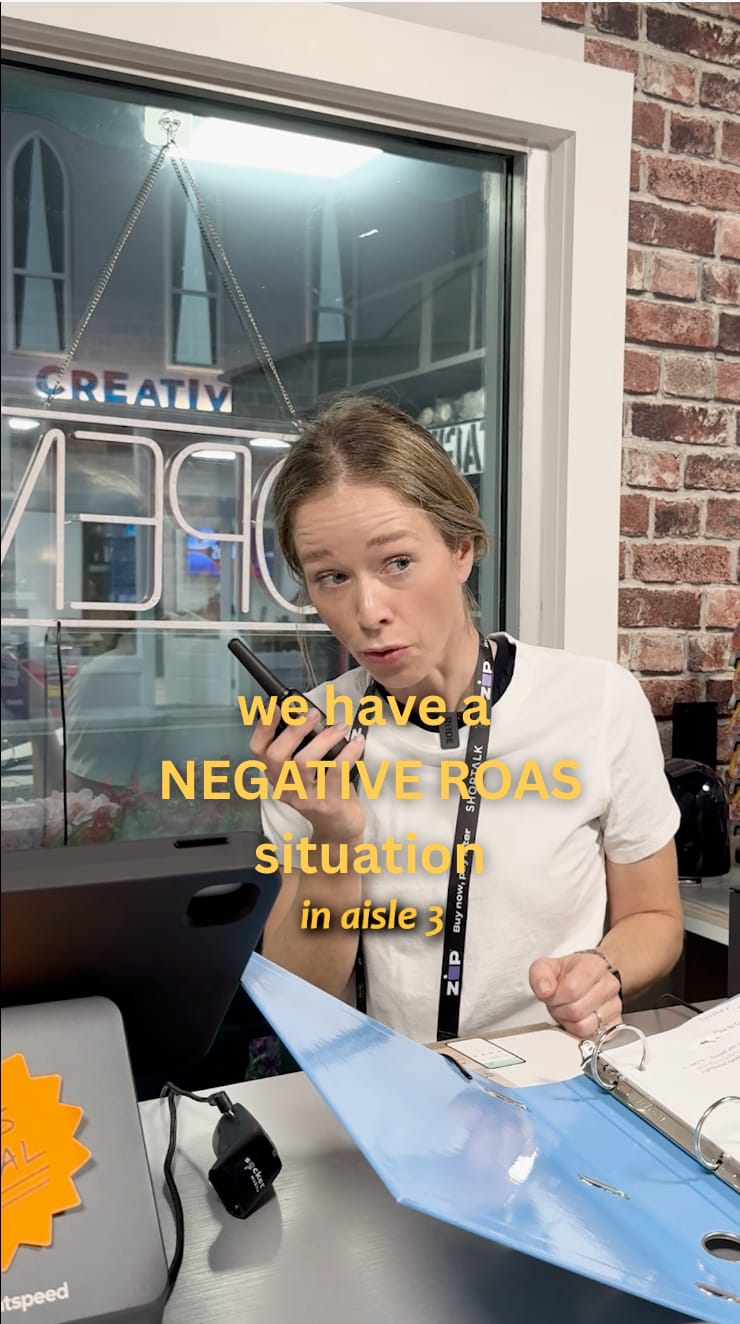
Who touched her last? [skit video]
In case you missed it, I shared this skit video on LinkedIn and my new Instagram account, about the ridiculousness of attribution in retail media.
Have a great weekend!
PS: These posts go out at 6AM ET Monday–Thursday. If you want them hot instead of at end of week, reply to this email and I’ll update your preferences.