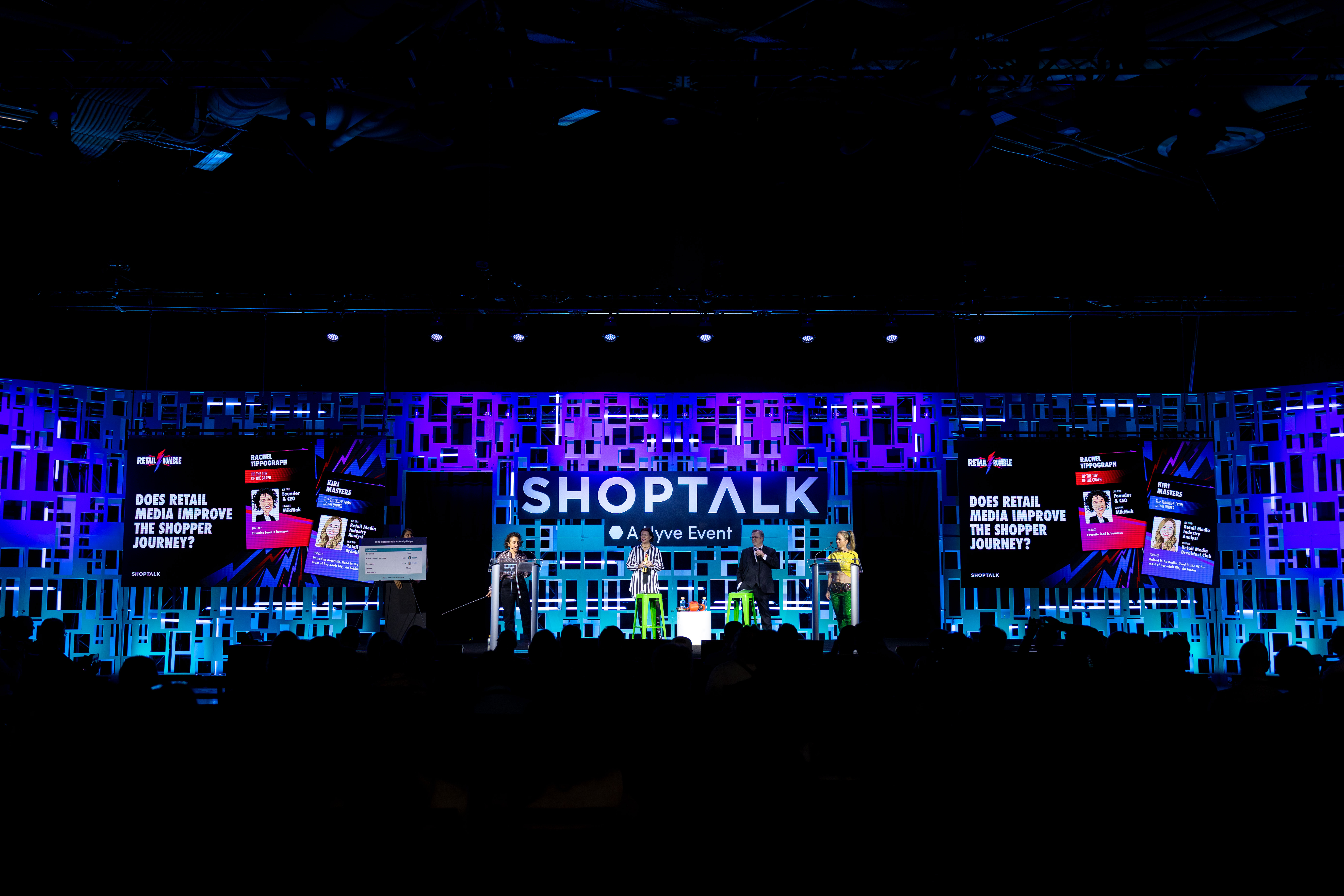
At a Shoptalk press breakfast, Zia Daniell Wigder, the Global President, Connected Commerce at Hyve (owner of Shoptalk, Groceryshop, POSSIBLE & Manifest) shared a small detail that spoke volumes: one AEO/SEO session was so oversubscribed that attendees were sitting on the floor. Zia also noted that Shoptalk has been adding other practical content — things like building your personal brand on social media, developing retail pop-ups, selecting influencers. These were packed too.
That tells you something about where retail leaders are right now. The main-stage inspiration still draws crowds, but the real demand is for practical content that helps people solve immediate problems and roll up their sleeves. Because people are under pressure to solve urgent operating problems around AI, discovery, and measurement.
Here’s some more of what I heard in the corridor track and in interviews that I conducted for upcoming content in The Drum.
SPONSOR: MIRAKL ADS
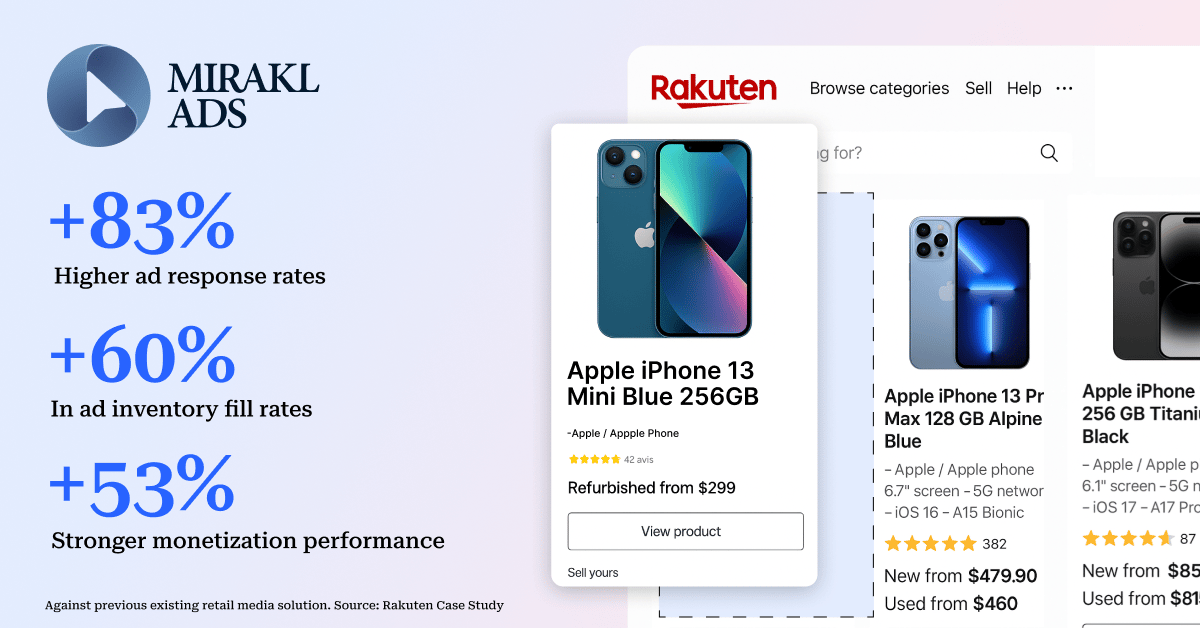
Retailers know that a marketplace model can dramatically boost product assortment, shopper engagement, and total revenue.
But, to get the most out of your marketplace, you need an ad tech solution that can really engage sellers.
Mirakl Ads is powering the future of retail media for leading retailers — to activate both 3P sellers and 1P brands.
Discovery Is the New Battleground
Doug Straton, CMO at Bazaarvoice, shared a conversation he'd had with PepsiCo's CMO a few months ago, which surfaced that the new battleground is discovery. In a world where AI summaries recommend fewer results, where the digital shelf is being compressed by answer engines, how do brands make sure they're one of the products being surfaced?
Doug's angle on this is organic visibility — not just paying for placement, but making sure your product data is rich enough that AI engines pull you into the conversation naturally. He pointed to the Edelman Trust Barometer and noted that trust in media, institutions, and companies keeps eroding, but two things still hold sway: brands and other people. That's where UGC, creator content, and authentic reviews come in — they're the raw material that AI engines are drawing from when they make recommendations.
Scot Wingo, who I know well from his work at ReFiBuy (disclosure: I'm an advisor) and his blog Retailgentic, got much more specific about the operational side of this during a live recording with Rick Watson on the ShopTalk floor. Scot described what he calls a "multi-level PDP" — a product detail page with three layers. The top layer is for humans: the visual, editorial product page shoppers see. Below that, an SEO layer. And below that, an AEO layer — metadata designed to be picked up by LLMs like Claude and ChatGPT.
What goes into that AEO layer? Scot's team pulls from on-site reviews, customer service logs, and — this one surprised me — whatever brands use to train their store associates. The reasoning is that a great store associate knows the product inside out. They know what occasions it's used for, where it fits in the product line, what differentiates it from similar items. That knowledge has lived in training manuals and never made it to the PDP. Now it needs to, because the LLM is essentially your new store associate.
The "Next Best Dollar" Isn't a Media Question Anymore
Drew Cashmore, chief strategy officer at ad-tech company Vantage, made an observation that I suspect will resonate with anyone managing brand budgets. Brands aren't just thinking about media holistically anymore — they're thinking about their total investment holistically. Media, packaging, supply chain, how they get incremental shelf space. The "next best dollar" decision has moved well beyond a marketing conversation.
That's an important reframe for retail media. If brands are evaluating their retail media spend against packaging investments or supply chain efficiencies, then the measurement conversation has to stretch further than ROAS and attributed sales.
Michael Krans, who leads Macy's Media Network, reinforced this from the retailer side. His advice to CMOs: build a whole-picture measurement framework at the beginning of the year and commit to it. Don't knee-jerk after a month or two of soft results. "Allow time for those strategies to have an impact," he said, "because I think there's sometimes a knee-jerk reaction to retract and go back to the tried and true — but that might not be the best thing for long-term growth."
In other words, once the “next best dollar” becomes a business-wide decision, measurement has to become more patient and more strategic too.
The Real Bottleneck Is Change Management
Rick Watson described brands forming AI councils and immediately killing innovation. "Look what the council did to the Jedi," he joked. The first person to join is the compliance officer. The last person who wants to attend is the CMO. And in the meantime, nothing ships.
Scot Wingo echoed this. He's seen brands where updating a PDP takes six to nine months once you factor in translation workflows, legal review, and brand verification. In a world where you need to update product metadata to stay visible in AI engines, that kind of cycle time is a competitive disadvantage.
Both landed in the same place: the brands moving fastest on agentic readiness have CEO-level buy-in that this is a priority. Without it, every other team leans away. As Scot put it, the companies that are cracking on have figured out how to separate the things that genuinely need compliance review — PII, regulated claims — from the things where the risk is minimal and speed matters more.
Back at that press breakfast , Zia flagged another content trend from the event that cuts across all of this: the creator economy and social commerce are "exploding in the background" while everyone's fixated on AI. A new partnership between Glance and DirecTV showed what commerce embedded in media environments looks like in practice — shopping agents on television screens.
It's a reminder that discovery isn't moving in one direction. Brands are dealing with a more splintered discovery environment than ever.
And that’s ultimately what drew the biggest crowds and dominated hallway conversations this year: not abstract hype, but practical guidance for navigating where it already is.