Publicis acquired LiveRamp for $2.2 billion on Sunday. That's all you probably saw on LinkedIn yesterday.
Just a couple of months ago I was at LiveRamp's RampUp conference in San Francisco, where it had become the destination event for the data collaboration conversation in retail media. RampID was the identity layer underneath most of those conversations.
None of that disappears overnight — but a Sunday afternoon press release does change what assumptions you can make about who owns the plumbing.
I've spent the last day reading the reactions and talking to people in retail media about what this means. Here's what stuck with me.
The hot takes, roughly grouped
The discourse on LinkedIn has clustered into about five themes.
The bull case: this is a steal. Auren Hoffman, LiveRamp's former CEO and co-founder, thinks the company should be a $100 billion business on its own and that new ownership could be the renaissance the product needs.
The agentic story: Arthur Sadoun has framed the deal as Publicis positioning for the AI agent era. Ari Paparo at Marketecture pressure-tested that — his read is that it works if Publicis modernizes LiveRamp's product into something agents can actually use in real time. Hoffman himself was drier in a comment under his own post: "All press releases need the word AI and agentic these days."
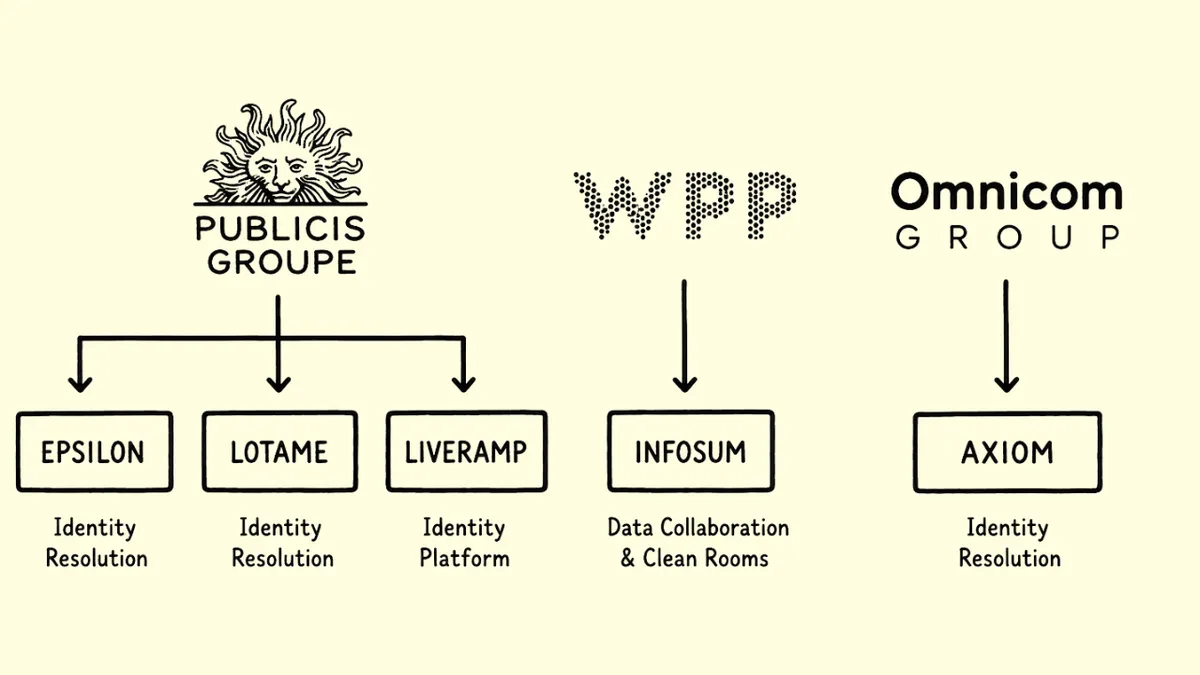
The neutrality concern: with WPP owning InfoSum, Omnicom now owning Acxiom via the IPG deal, and Publicis owning LiveRamp, the independent identity layer of the ad industry has been almost entirely consolidated into the holdcos in about 18 months. Ben Day, founder of the Data Clean Room Institute, summed it up: Publicis can fix the product, but maintaining methodology neutrality across competing holdco-aligned brands is a different problem entirely.
The end-of-an-era read: another major independent comes off the board, the holdcos double down on proprietary tech, and the open ad-tech ecosystem keeps shrinking.
And the one I want to spend more time on — the retailer-specific angle. I wrote about this for The Drum today. the question of whether RMNs and retailers own their identity infrastructure or rent it just got more pressing. If you're in retail media, that piece is the one to read.
Mirakl Ads is the only retail media solution designed for both 1P & 3P marketplace brands. Why does that matter?
Marketplace sellers demand a seamless advertiser experience that still offers full-funnel ad formats. And retailers need a flexible solution that allows you to scale your media business.
Three POVs
Three takes stood out from the rest for the substance behind them.
Auren Hoffman wrote a candid post about the sale, and the most interesting thing in it isn't the celebration — it's the diagnosis. He argues LiveRamp's core product has barely changed in a decade. The metric he says matters most is connections per customer, and he says most customers are stuck at around 10 connections when the system should support 400, 500, even 1,000. Customers want more, in his telling, but the product is too expensive, too slow, too bureaucratic. Hoffman - and remember he is one of LR's cofounders – is bullish on what new ownership could unlock. But he's also describing a product that hasn't kept pace.
Jon Flugstad, chief business officer at MetaRouter (disclosure: MetaRouter is a client of mine), is looking at the same product and reaching a different conclusion. His view: the acquisition can't fix what's structurally broken. He knocks LiveRamp for its 30-hour audience syncs in a world that decides in milliseconds. Per-record economics that punish you exactly as your data scales. A graph you don't own, can't audit, can't take with you. And a roadmap now governed by a holdco.
But here's a more positive perspective, from inside the belly of the beast. Not Publicis, but another holdco agency. An executive leading data initiatives at a major holdco agency told me their team has been recommending clean room infrastructure to clients for the last year — specifically their agency's own platform. This exec's case: holdco-owned doesn't have to mean compromised. The technology is scalable, the legal timelines are shorter than running independent clean rooms, and clients are running real audience validation, insights, and measurement use cases through it. Their view, in short: this is increasingly just how the industry's data infrastructure works, and operators are getting on with building real client value on top of it.
Both Flugstad and the holdco executive have skin in this game — MetaRouter sells the alternative; and the agency exec's parent company is bought into the model they're describing. But it's still worth taking each viewpoint seriously.
The retail media question
I'll keep this brief because The Drum piece is where I make the full argument. The short version: with three of the four major holdcos now owning identity infrastructure that retail media has been building on top of, the question of who actually controls your customer graph has moved from theoretical to practical. RMNs that have been deferring this question — and most have — just had their bill come due.
What I'm watching from here:
- Does Publicis actually fix the product Hoffman describes, or do the structural concerns Flugstad raises hold up?
- Do other retailers and RMNs accelerate their owned-graph investments? Costco's modular tech stack (which I've written about) suddenly looks even more prescient than it did two weeks ago.
- Does the conversation around cross-CMN collabortation,federation and consortiums reset around different infrastructure assumptions?
Six weeks ago at RampUp, the working premise was that data collaboration would be where the next phase of retail media gets won. That's still true. What changed on Sunday is who owns the racecourse.