

A version of this article was published to my column at The Drum. It has been reproduced here with permission.
Early in January, Costco's assistant vice president of retail media, Mark Williamson, walked into a major retail industry event with a slide deck that would make most retail media executives squirm: showing his entire tech stack to a room full of industry peers, observers and competitors.
The reaction in the otherwise subdued room was instant. Nearly everyone raised their phones to photograph the slides showing Costco's advertising infrastructure—from identity resolution vendors to DSP partnerships to clean room providers. For an industry that treats technology choices like classified information, this was kind of thrilling.
I've written extensively about why retailers are implausibly squirrely about the technology powering their retail media businesses. A poll I ran on LinkedIn last year showed that 88% of brands say a retailer's tech stack influences their advertising spending decisions (N=67). Yet most retailers won't reveal their choices even after contracts are signed.
Williamson, speaking at “What's In Store For Retail Media,” a daylong event in New York organized by Stratacache and the National Retail Federation, took a different approach. But the tech stack itself wasn't the point. The reveal was in service of a bigger argument: that retail media at Costco exists to accelerate merchandise sales.
"Costco retail media is merchant focused because the objective—shocker—is to sell merchandise,” Williamson told the audience.
Transparent objective, transparent tech stack.
SPONSOR: MIRAKL ADS
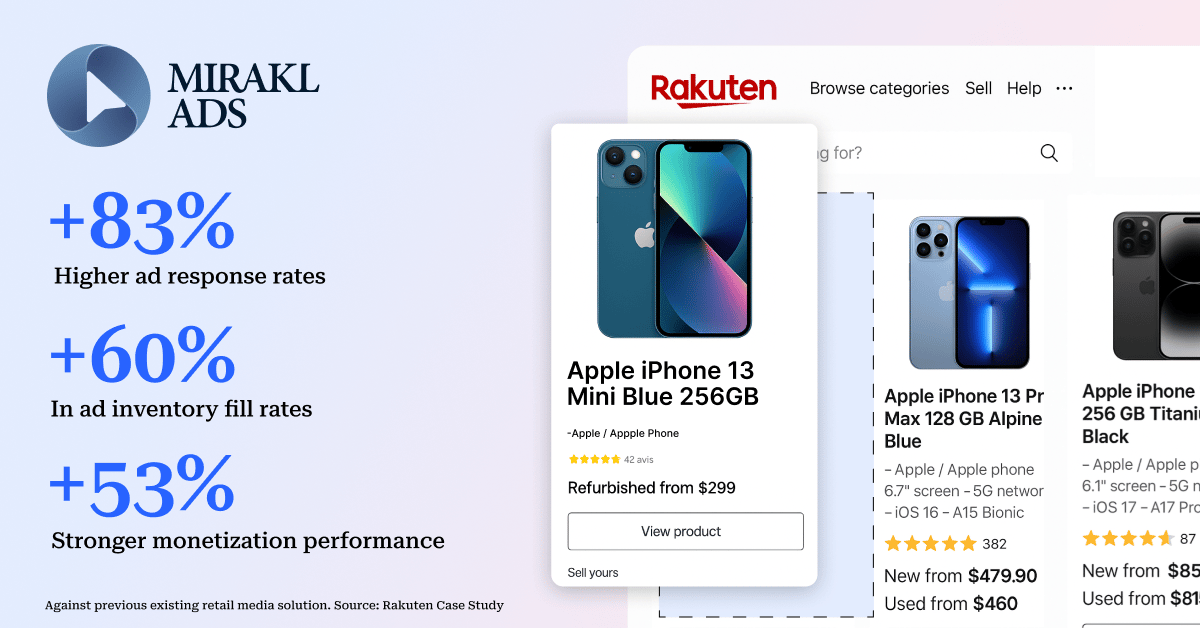
Did you know leading retailer media networks drive 85% of their ads revenue through mid- and long-tail advertisers?
Mirakl Ads provides full funnel ad formats tailored to both 1P and 3P advertisers, leveraging unique AI-capabilities that provide unprecedented levels of relevance and engagement.
Retailers who want to capture ad spend from the long tail of 3P marketplace sellers use Mirakl Ads in their tech stack.
The Order of Operations
Retail media generates high-margin revenue. That's attractive. But Williamson argues it creates a dangerous temptation for retail media leaders: chase advertising profit at the expense of merchant outcomes, at some point the whole thing will fall apart.
"It's not necessarily either or,” he explained. “It's, what's the order of operations? What's the hierarchy? If you chase just after profitable media revenue, you may undermine your efforts to drive real customer value."
Costco's hierarchy is explicit. Sales velocity comes first. Costco's inventory already turns faster than any competitor—sales per square foot is best in the industry, Williamson noted. But for Costco merchants, it's never quick enough. Every technology choice has to prove it accelerates that velocity, or merchants won't support it.
This creates an unusual dynamic. Transparency serves two audiences: merchants who control supplier relationships need proof that advertising accelerates their goals, and advertisers need to understand how the system works well enough to trust it.
"For my merchant partners, the ones that I rely on for support driving incremental sales, sales velocity is a prerequisite for their support,” Williamson said. “If we can't help them turn more product, then what's the point?"
I've profiled this dynamic before—Molly Hjelm at Ace Hardware argues retail media should show up in the merchant's P&L rather than operating as a separate profit center. Williamson is making the same bet, just at significantly larger scale.
Costco's Tech Stack
Costco's advertising infrastructure divides into four layers, each designed around a specific function in service of that sales velocity goal.
The Unified Data Foundation runs on a private Google Cloud instance, consolidating Costco's 100% member-identified transaction data. MetaRouter and LiveRamp handle identity resolution. Transcend manages privacy with what Williamson describes as “over-compliant” data handling. GrowthLoop uses AI to segment members and propose customer journeys.
Everything flows from membership data because “membership is the number one item sold at Costco.” Without members, there's no one to sell anything to. Retail media that disrupts member retention breaks the flywheel.
The Activation Channels split into three environments:
Onsite uses a new ad server (not yet announced) partnered with Criteo, supporting self-serve and automated bidding for native, display, and product ads on Costco.com and the app.
Offsite connects first-party data to DSPs including The Trade Desk, Google, Yahoo! DSP, Epsilon, and StackAdapt—extending audience targeting across the open web and social platforms.
'In Real Life' includes a pilot for fuel ads at gas pumps, warehouse TV via PRN (Stratacache), digital out-of-home, and traditional print including Costco Connection magazine.
The Measurement layer uses Habu-based clean rooms, providing closed-loop reporting on new-to-brand and new-to-category metrics. The system connects digital ad exposure to both online and in-warehouse transaction data—essential for proving whether campaigns actually accelerated sales velocity or just shifted existing demand.
The Operations side is built to support a Self-Serve and Direct model, focusing on standardized operations and automated workflows.
By partnering with established vendors at each layer rather than building proprietary systems, Costco made choices that aligned with their merchant-first approach and need for speed to market. Amazon, Walmart, and Instacart built their advertising ecosystems largely in-house.
The right choice depends on a retailer's scale, objectives, and internal capabilities. Costco determined that vendor partnerships would get them to market faster with proven technology, which mattered more than proprietary control.
Fuel on the Flame
Williamson described Costco's merchandising strategy in simple terms: value, quality, assortment, newness, promotion. That's what keeps members returning. Retail media's role, if it's working properly, “should just be fuel on the flame."
The willingness to reveal the stack publicly signals something important to advertisers: Costco views them as partners worth being transparent with. Transparency builds trust—that's true of both consumers and media buyers. Agencies and brands continuing to invest in retail media want to know their dollars are being shepherded effectively and efficiently. What better way to demonstrate investment in the advertiser relationship than showing exactly how you're using best-in-class solutions across the value chain?
Most retailers guard these choices when there's little benefit to doing so. The secrecy creates friction and suspicion. Williamson's approach suggests an alternative: that openness about infrastructure can strengthen partnerships rather than weaken competitive position.
What This Means for Everyone Else
What separates successful retail media networks from those stuck in the doom loop? It's whether retail media operates as a profit center extracting value from existing relationships, or as infrastructure that genuinely accelerates the shared interest of the retailer and brand partners, which is to drive actual product sales.
Williamson's presentation shows Costco chose the latter. The lesson for other retailers isn't to copy Costco's specific vendor choices—it's to get clear about your own strategic objectives and build accordingly, then be transparent about those choices with the partners who need to understand them.
That transparency enables collaboration at multiple levels. Vendors understand what problems need solving. Other retailers can learn from the strategic approach without copying the specific stack. Advertisers can make informed decisions about where to allocate budgets based on actual infrastructure rather than marketing claims.
Retailers maintaining secrecy should ask themselves: what are we really protecting? And is it worth the cost in advertiser trust and ecosystem collaboration?
More related posts from me:
Why RMNs Keep Their Tech Stacks Secret
Why Retail Media Networks Hide Their Tech Stacks From The Very Brands They Want To Attract.
Costco: The Retail Media Network That Refuses to Promote Itself
No splashy announcements, no media kits circulating at industry conferences, no vendor partnerships trumpeted in press releases. Mark Williamson, assistant vice president of retail media at Costco, freely admits the company is a "last mover" in this space.
Until tomorrow,
Kiri