Last year I spent a lot of time in Thailand while my family and I were waiting for our US green cards to be processed. Living in Thailand means riding motorcycle scooters — a lot — and I got pretty comfortable with it. I was navigating traffic that has no rules, dodging wild dogs, driving my eight-year-old son to school. (Don't judge.)
And then my sister-in-law came to visit and hopped on the back of my scooter, and I immediately nearly ran into a building.
Same scooter, same road. But the extra weight changed the balance in ways I didn't expect. What felt stable and familiar suddenly wasn't.

That's a bit like what happens when you compare retail media across different markets. From a distance it looks like the same vehicle — but the weight is distributed completely differently. Different regulations, different retail structures, different org charts, different histories. And that changes how the whole vehicle handles.
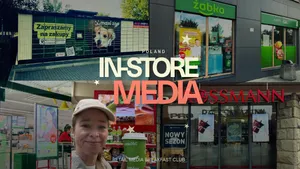
A few weeks ago I wrote a piece exploring exactly this — why US and European retail media evolved so differently, and whether the comparisons people keep making actually hold up. [Read: Why US Retail Media Hits Different]
The comments on LinkedIn lit up much faster than usual, but in the best way — operators with real experience exposing new ideas and examples that I hadn’t included.
And yesterday, I got on the FMCG Guys podcast with Daniel Torres Dwyer and Adam Smith, head of retail media at UK retailer Iceland, and we hashed things out further.
Between the comments and that podcast, my network surfaced perspectives I didn't fully cover in the original piece. So here's what they added.
SPONSOR: MIRAKL ADS

Retailers know that a marketplace model can dramatically boost product assortment, shopper engagement, and total revenue.
But, to get the most out of your marketplace, you need an ad tech solution that can really engage sellers.
Mirakl Ads is powering the future of retail media for leading retailers — to activate both 3P sellers and 1P brands.
Not ahead, not behind — just different starting points
The strongest thread in the responses was a rejection of the "maturity" framing. Stephen Howard-Sarin, Managing Director of Retail Media, Americas at Criteo said he loves the topic but would "keep my mouth shut because Americans analyzing EU retail media is kinda tacky" (love it). He also rejects the labeling “that one is more 'mature' than another." I appreciate the honesty. I almost exclusively cover the US market, and I've been wary of writing this piece for a while, knowing I must have blind spots. That's partly why I wanted to publish it — to see what my network would add.
Julian Sneeuwjagt, a Sales Director at Kevel coming from the UK market, made a similar point — this is about structural DNA, not competitive advantage. Amazon's share in grocery is lower in the UK, store networks are denser, and retailer-supplier relationships are tighter. The revenue mix looks different because the starting conditions are different.
Retail strategist Bryan Gildenberg added the most important historical layer my original piece was missing. He pointed out that global companies based in America routed dollars into "media" spend at European retailers to stay under global guidelines for trade spend — in markets where retailers hold more power and charge higher trade rates. Retailers were receiving media money before they even realised they were media platforms. This predates not just retail media, but ecommerce itself — it started with P&G and Tesco/dunnhumby. Maurits Priem, who spent decades on all sides of this as the VP of Monetization at Ahold Delhaize (Europe & Indonesia), confirmed the pattern, noting that a couple of large FMCG multinationals — P&G chief among them — had solid global trade spend caps that shaped how the money flowed.
That's a structural explanation I hadn’t included in my original piece. The trade-to-media pipeline in Europe was partly a workaround for global budget constraints.
Where the RMN sits inside the retailer matters
Adam Smith of Iceland raised something else I didn't cover: organizational placement. At Iceland, the retail media team sits within the trading (buying) function and reports up through it. His view is firm — any network that sits on the periphery, without a daily relationship with the trading team, "is gonna really struggle." Once you're sidelined, he said, the same conversations become ten times harder. He was also candid that in-store digital is still early innings across the board: "there's more examples of it being done badly at the moment than there is of it being done well."
This maps to a pattern I'm seeing in the US too — growing interest in aligning RMN teams more closely with the merchant organization. It's another self-imposed barrier worth challenging: where you put the team on the org chart shapes what it can accomplish.
What’s AI got to do with it
Greg Stevens, CEO of Europe & Americas for ad-tech comapny Osmos, challenged me on what could unlock rapid in-store growth in the US. My view is that AI-enabled shopping poses a real threat to the digital ad formats that currently dominate retail media. As that threat sharpens, some of the ad budget will migrate to in-store formats that are resilient to disruption.
Retail industry veteran Ricardo Belmar echoed this — even though capex for in-store media has come down, the looming risk of AI "stealing" online traffic may be the defensive push that finally drives the investment.
What I'm taking from all this
The responses sharpened my thinking in a couple of ways. First, the trade-spend-as-media-origin story that Bryan and Maurits described is a genuinely different structural explanation from the five barriers I laid out — and it helps explain why European retailers were better positioned to professionalize in-store formats. Second, where the RMN sits on the org chart deserves its own spotlight. I treated barriers as mostly external (regulation, geography, data laws) but the internal ones — P&L fights, team placement, investment appetite — might matter just as much.
No one market has the answer. But the comments section got closer to the full picture than I did on my own — which is exactly the point of publishing it.
Listen to the podcast episode on the FMCG Guys podcast here