
This is part 3 of my series on MTA, which has provoked a lot of comments and pushback from the industry in the comments on LinkedIn! It's been a really interesting journey to explore this particular area of media measurement and learn how various retailers and solution providers are approaching it. Today, I'll share more on the case for MTA, especially in its newest iterations, and whether media buyers could even act on perfect information.
Catch up on the series:
- Do brands really want MTA?
- Why retailers are reviving MTA
- Is MTA past its expiration date? [What you're reading right now!]
How MTA got its bad name
Albertsons Media Collective and Best Buy Ads both launched multi-touch attribution (MTA) in September. Best Buy built its own, and Albertsons built its version with LiveRamp, who is reaaallly trying to avoid actually calling it MTA.
Jack Foster, head of measurement products at LiveRamp, says the company avoids calling it MTA specifically and that this is "kind of its own solution."
LiveRamp sells it as Cross-Media Intelligence. Albertsons named its product Retail Media Incrementality-Based Multi-Touch Attribution. When the vendor won't use the name and the retailer feels it needs a prefix, it suggests the name itself is giving the ick.
Foster blames the traditional data inputs. In his telling, older MTA systems had data issues that compounded:
- They combined two kinds of exposure data that didn’t fit together. Row-level data, such as the logs from a DSP, ties each impression to a specific device through an IP address, mobile ID or cookie. Cohort and panel data only says that some of a few thousand people in a zip code saw an ad, without saying which ones.
- To make the two line up, they randomly marked people in the cohort as exposed.
- They then matched the result against a retailer’s loyalty card data.
By the end, Foster said, the group you were learning from “might be in the tens or hundreds of people and you’re going to make a multimillion dollar decision off of” what they did.
Clean rooms let LiveRamp match publishers' own logs person by person, and it turns down cohort feeds.
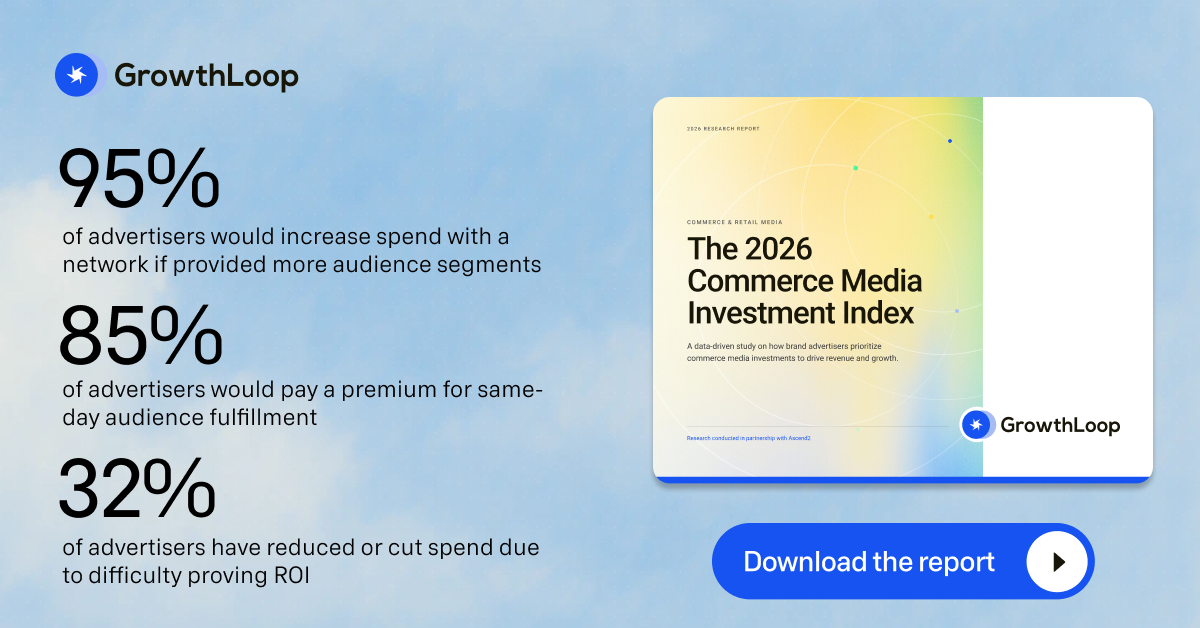
85% of advertisers plan to increase spend with media networks in the next year. So, how do you get a bigger share of those budgets?
New research from GrowthLoop & Ascend2 reveals that activation speed and audience options are decisive factors in where advertisers place their dollars.
- 86% would reduce spend or leave a network if their audience fulfillment is too slow
- 85% would pay a premium for same-day fulfillment
- 32% have reduced or left a media network because of difficulty proving ROI
For more insights into what brand advertisers are looking for in media network partners, download The 2026 Commerce Media Investment Index.
What would a brand do with it?
Part one of this series drew a lot of impassioned comments on LinkedIn about whether MTA is still relevant.
Evan Walsh, senior director at ad measurement company Incremental, described "8 Banners with size 4 font loaded around the page and can't NOT get credit with view-based attribution." Better data doesn't fix that. Counting those impressions accurately still gives them credit for simply loading.
A consultant who works with retail media networks argued in part two that retailer MTA isn't worth building if a brand can't act on the output. They've since pushed further. "If a brand sees 15% attributed to social, 25% to offsite display, 10% to CTV, 20% to onsite display and 30% to sponsored products, what exactly should they do differently?" they asked. To decide, they argued, a brand would need to know:
- how much it spent on each tactic relative to the credit it received
- which audiences were reached, where, and how often
- how much the tactics overlapped, and whether the order of exposures mattered
- which tactics are saturated and which have room to grow
- "what evidence do we have that shifting the next dollar from one tactic to another would actually generate more incremental sales?"
How many media buyers would even act this way?
Here's the issue though. I haven't met a media buyer with perfect information, plenty of time, and the freedom to move money as soon as results come in.
Most media buyers are satisficing, allocating as well as they can within their constraints. CPGs are often committed to spending a set amount with a retailer under a joint business plan, capped on total spend, or bound by other minimums in their media plan that pull them away from spending optimally. And they're short on time and people.
That buyer needs to split committed dollars across one retailer's tactics, without time to research overlap and saturation first. A within-retailer MTA gives them a better basis than last click, imperfect as it is.
The retailer MTA that answers (some) objections
The fullest answer might actually come from Amazon, who announced its MTA in October 2024. Going by that announcement and an August 2025 paper Amazon researchers describe checking its credit against holdout experiments, where some shoppers are randomly kept from seeing a campaign. That's designed to stop an ad earning credit just for loading.
Keep in mind this is Amazon describing its own system, and the paper doesn't say how accurate the model has turned out to be. Amazon is also grading its own ads, which is a lot like marking your own homework.
It doesn't answer the consultant's question either. Amazon shows the multi-touch figures next to its standard last-touch ones, and the brand still decides what to do with them. And like any retailer's MTA, it only counts ads bought through that retailer and purchases made there. Albertsons and Best Buy have the same limit: each counts only purchases at its own stores and sites.
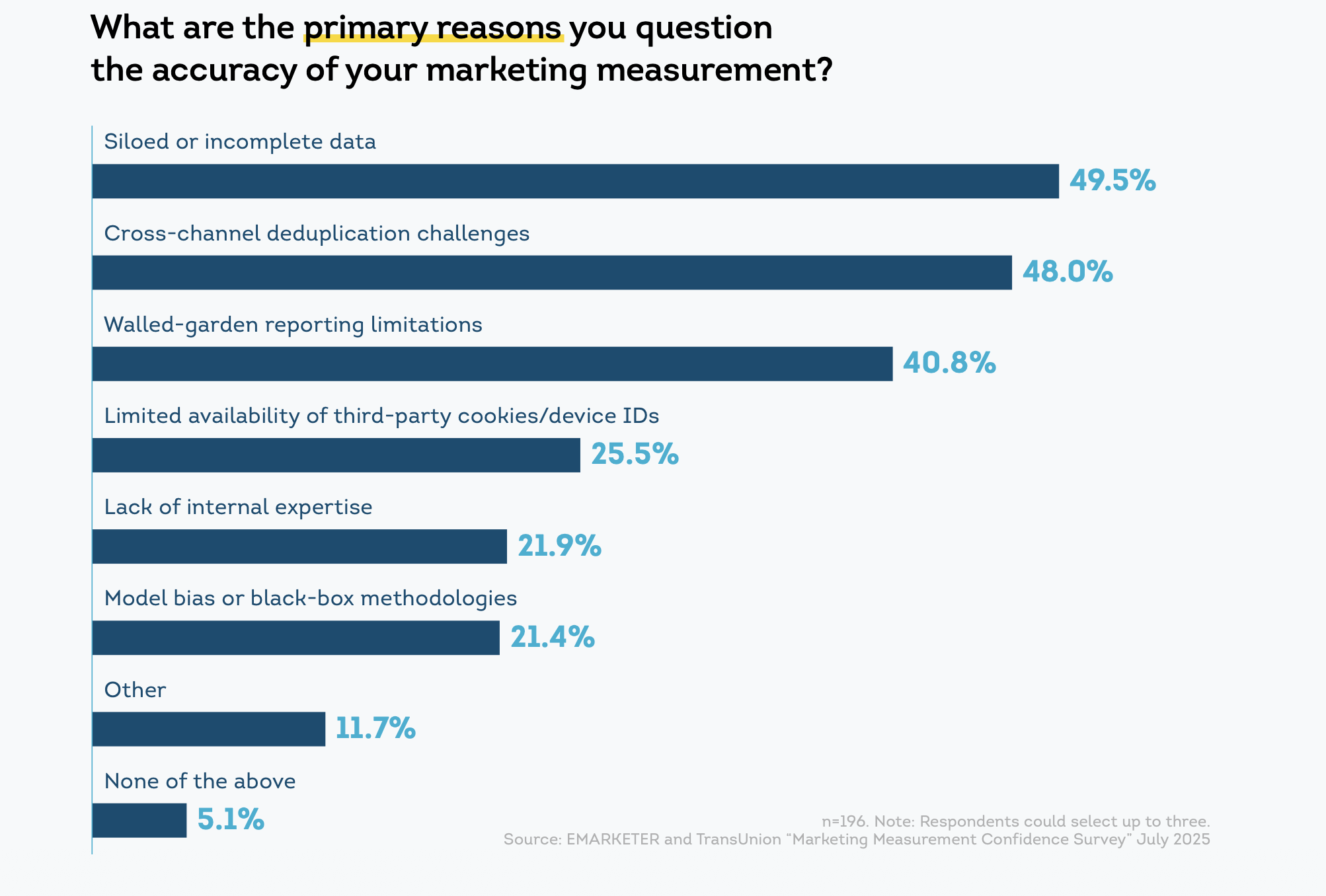
That's the problem marketers say they have most. Siloed or incomplete data was the top reason marketers gave for doubting their measurement (49.5%) in a July 2025 survey of 196 US marketers by EMARKETER and TransUnion. (TransUnion sells its own MTA, so it has an interest here too.)
So every retailer MTA, Amazon's included, hands the brand a set of percentages and leaves the decision to them. Foster thinks that's the point. "I think we need to trust brands. And the retailer partners to be able to make decisions and not spoon-feed them an answer and have us all pretend that it's 100% accurate," he said.
Why it hangs on
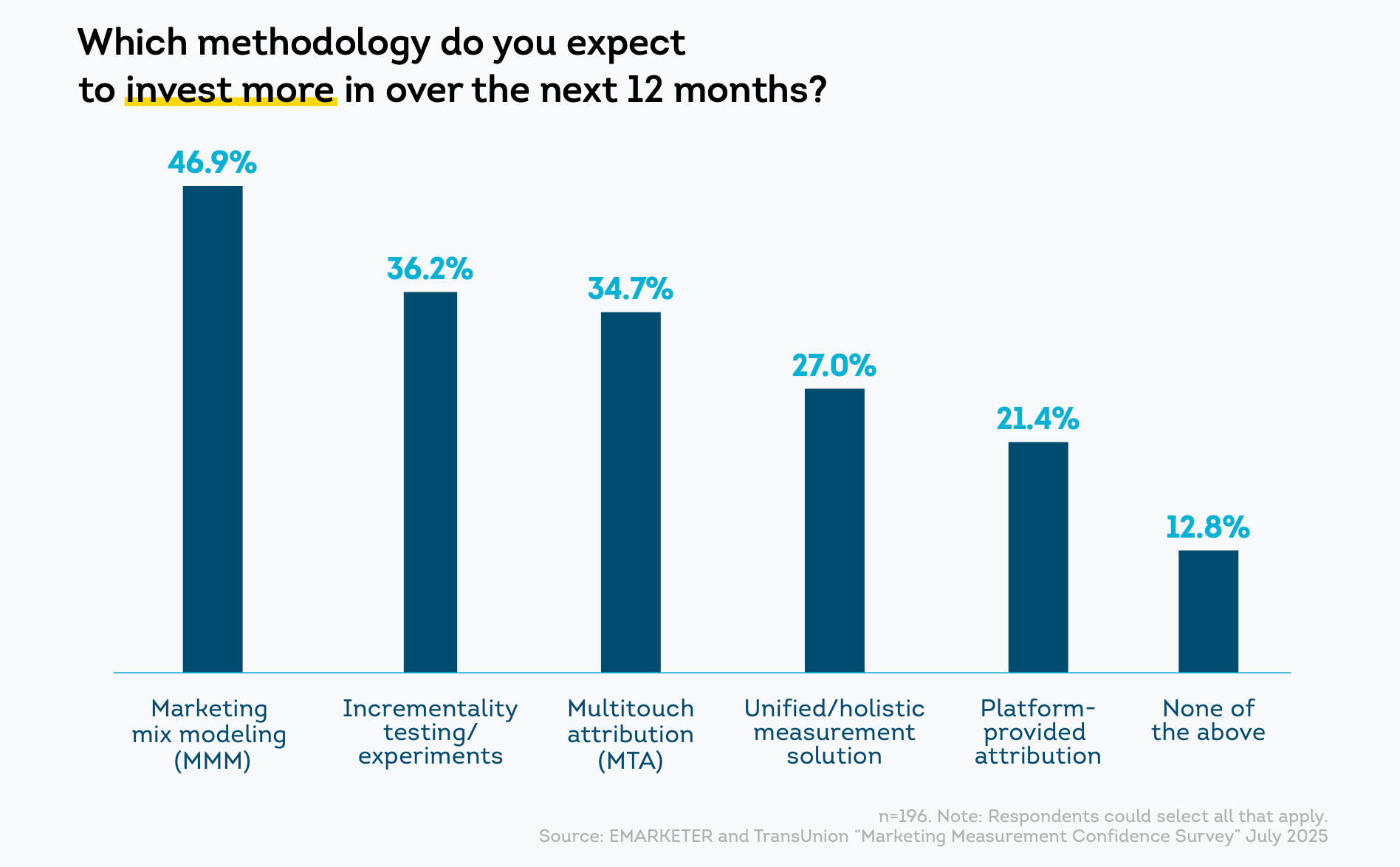
The marketers in that survey aren't finished with MTA. A third (34.7%) plan to invest more in it over the next 12 months, close to incrementality testing (36.2%) and behind mix modeling (46.9%).
Collin Colburn, VP of commerce and retail media at the IAB, offered a less flattering reason in the comments on part one. "Part of why it still has a seat at the table is because so much of the ecosystem relies on it for compensation (i.e., performance and affiliate channels)," he wrote.
Fully-armed, fully-resourced media buyers are thin on the ground. Most buyers are splitting money they've already committed, and for them, a retailer's MTA only has to beat last click.