
A version of this article originally appeared in my column for The Drum on October 16, 2026. It is reproduced here with permission.
To have a snowball's chance in hell of standing out in a crowded retail media landscape, a retail media network (RMN) has to lean into what makes its retailer special. I call it finding what's holy: the moat that keeps customers coming back, which the ad business should exploit and never damage.
Gopuff, the app with roots in college campuses and youth culture, has just partnered up with Instacart to run its onsite ad capabilities. That’s a company which it has historically competed with in rapid delivery. It’s the ultimate signal of what I call recognizing what’s holy about the core retail business, and unburdening the media business of distractions.
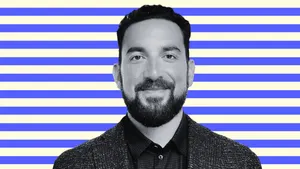
For Michael Peroutka, Gopuff's head of ads and strategic partnerships, its about being able to move at the speed of youth culture, and enabling its brand partners to hook into those key cultural moments. In this conversation, Peroutka laid out all the practical reasons why the partnership with Instacart made sense, and how the company is upping the game with experiences instead.
My read is that Gopuff has worked out what's holy, and the onsite ad stack ain’t it. The late-night delivery bag is.
“I’m a realist”
In case you missed the deal that announced in September, here are the broad strokes: Gopuff joins the Instacart Marketplace, filling orders from its own warehouses in as fast as 15 minutes, and uses Carrot Ads, Instacart's white-label ad technology, on its own app and site. Gopuff's ad team keeps selling bespoke campaigns directly.
As I wrote in my newsletter at the time: The ceiling on an ads business without self-serve is how many brands a sales team can personally reach. That’s a sales problem, and building your own ad-tech doesn't fix it. Peroutka agrees. Gopuff launched its own platform three years ago, and the pitch was control: brands and agencies should decide who sees their media, not a black box. Carrot Ads shares that belief in audience-based buying, and brings in more than 9,000 brand advertisers plus a 300-person Instacart sales team.
"I'm a realist," Peroutka says. "I understand where we sit on the food chain, and we do need to fight for every dollar." Tapping that demand generation from Instacart gives him a solid revenue base, and frees his team to "go for the home runs": the creative, managed activations only Gopuff can run.
Every RMN, he points out, is expected to grow faster than its core business, though much of the money is reallocated from budgets brands already had. This is an example of what I've been sharing for a year, a movement toward alliances between retailers. Gopuff competes with Instacart in some respects, which makes its trust a major endorsement of the model. If Gopuff can trust Instacart, others might too.
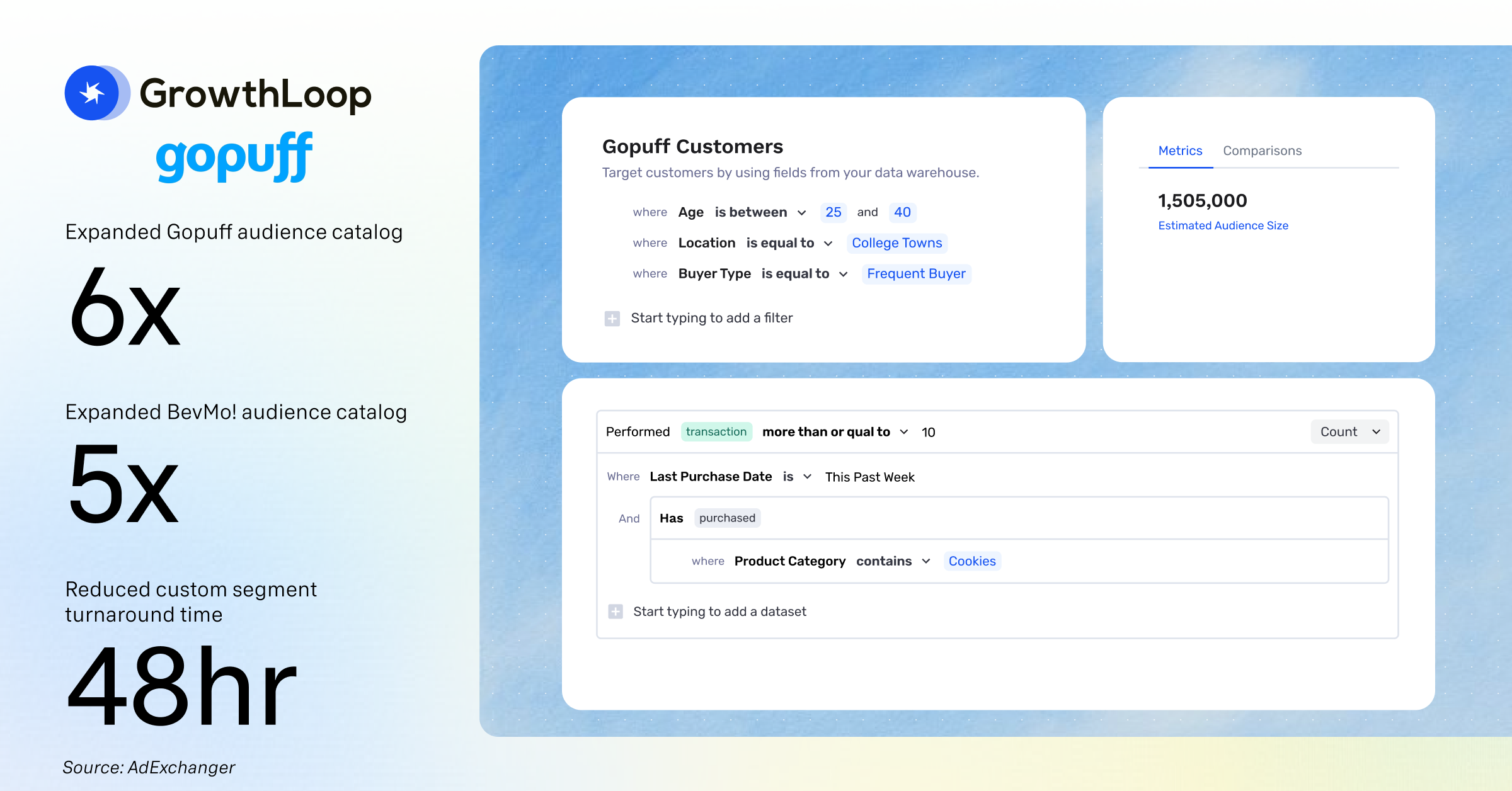
Poor audience targeting is frustrating. But for retail media teams, it can be costly, too.
With GrowthLoop’s Composable Commerce Media solution, you can turn your first-party data into hundreds of high-value audience segments and launch campaigns faster.
After partnering with GrowthLoop, instant commerce pioneer Gopuff scaled from 100 syndicated audience segments to more than 600. And it now takes less than 48 hours to turn around a custom segment for one of their brand partners.
Learn more about how GrowthLoop is powering Gopuff’s best-in-class retail media operations.
What's holy: the bag
Peroutka came armed with one-off, experiential campaigns. Together they show what's unique about Gopuff's audience, which he says is 80% aged 18 to 34, and how fast his team can turn a cultural moment into a campaign.
Keebler is ran one last month. Select Gopuff customers can add free Chips Deluxe Fudge Filled cookies to their delivery, with Keebler covering the delivery fee and the driver’s tip.
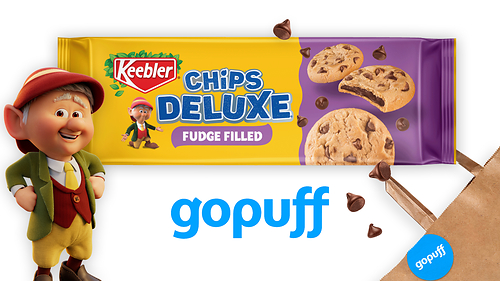
Sampling is a sweet spot: new products launched with sampling had sales 70% higher at month four, he says, based on Gopuff's own analysis of two years of campaigns.
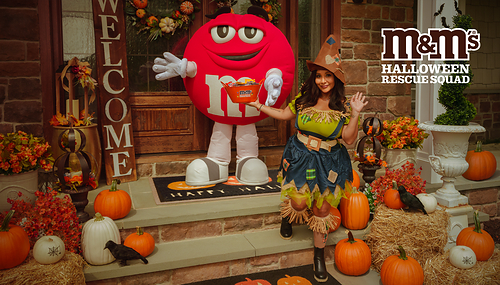
M&M's Rescue Squad is the cleanest case. For three years a standalone site has offered a free bag of candy to anyone who ran out on Halloween, with Gopuff as the fulfillment partner behind the scenes. Gopuff says last year's went live at 5 pm Eastern, orders peaked at 5:04 pm and the shelves were empty by 5:35 pm.
This all depends on owning the last mile. Gopuff is itself a retailer that owns its inventory. This means the company can act on a cultural moment in a way the intermediaries and the marketplaces that they oftentimes sit alongside cannot. Its pitch to advertisers, Peroutka says, is having the infrastructure "to move products and fulfill anything," and speed of activation matters as much as speed of delivery.
And that’s Gopuff’s holy trinity:
- The youth audience, with the roots and street cred that give Gopuff a backdoor key to youth culture.
- Vertical integration, which lets the media team move fast on opportunities.
- A shelf too small to be the everything store.
That mix is what the ads exist to exploit.
“Cubic Profitability” as a shared north star
"I also have a relatively young business," Peroutka tells me. Gopuff is 13 years old, and his merchandising team "maybe isn't as traditional when it comes to their ways of working together."
I took that to mean the turf wars I hear about between a media team there to build ad revenue and a merchant team there to sell product. You'd imagine those motives to be symbiotic. But what so often happens is that the merchant is the de facto protector of the customer experience, highly attuned to any irrelevant ad. And shopper marketing dollars that once sat in the merchant's P&L, for in-store signage and promotions, are migrating to the retail media P&L.
Gopuff's answer is a shared metric. Peroutka and his head of merchandising both report to the co-chief executives and both work toward total contribution profit.
That, combined with the preciousness of shelf space, both conflate in what Peroutka calls “cubic profitability” -- a north star concept which relates both to the total contribution profit objective, and need for every item on the shelf to turn fast enough to earn the space it takes up.
What is retail media -- retail, or media?
Peroutka does not come from retail. "None of us actually came from another retailer," he says of a team made up of digital media, ad tech and programmatic people. He runs the ad P&L, has his own product and engineering team, and sells to Netflix, Hulu and FanDuel, none of which are on Gopuff's shelves. "I think of myself as a digital publisher as much as I think about myself as anything else."
Here is the test I'd apply to any RMN: if the ads business disappeared tomorrow, what happens to the retailer? At Costco, the answer is close to nothing. Mark Williamson, who runs Costco's retail media business, said on the Commerce Collective podcast that Costco will "happily walk away from free money" to protect its reputation with members. Despite believing that he could build a very large ad business at Costco, he knows where his bread is buttered. "We're in the business of selling memberships," he concludes.
On the continuum of RMNs I have profiled, I'd place Gopuff at the media-first end, rather than at the retail-first end like Costco. That’s based on its shared objective with the merchant team, the org placement and background of the ads team, and the strength and diversity of its ad offering. I suspect, though can't confirm since it is a private company, that the ad business is key to funding the core business.
Where a network sits on that continuum dictates what a brand can buy from it. A retail-first network like Costco will turn down money that could cost it member goodwill. A media-first one like Gopuff will build something custom if the idea is good enough, whether or not the brand sells a single item on its shelves (like Netflix). To have a real USP, retailers need conviction around where they sit.
Looking ahead
Peroutka did set his sights on one scourge in the retail media ecosystem during our conversation: performative vanity metrics like ROI and ROAS. He says his job is to move product, "because that's, at the end of the day, the one thing that cannot be gamed.”
The word from some advertisers is that the company is delivering on that promise, although it could be conflated with the growth the whole fast delivery ecosystem is experiencing. A senior agency-side media consultant told me that Gopuff and other fast-delivery networks are among their top-rated RMNs right now. Part of that is a good ad product, and part is a segment that’s growing quickly. Category growth can hide a multitude of sins.
The 10PM delivery bag is hard to scale, and there are well-heeled rivals ready to chip away at various aspects of Gopuff's value proposition. One of those rivals just became an ally. It will be up to both of them to keep delivering.