This post originally was published to my column at The Drum as The retail media lesson inside Dick’s World Cup push on June 20,2026.
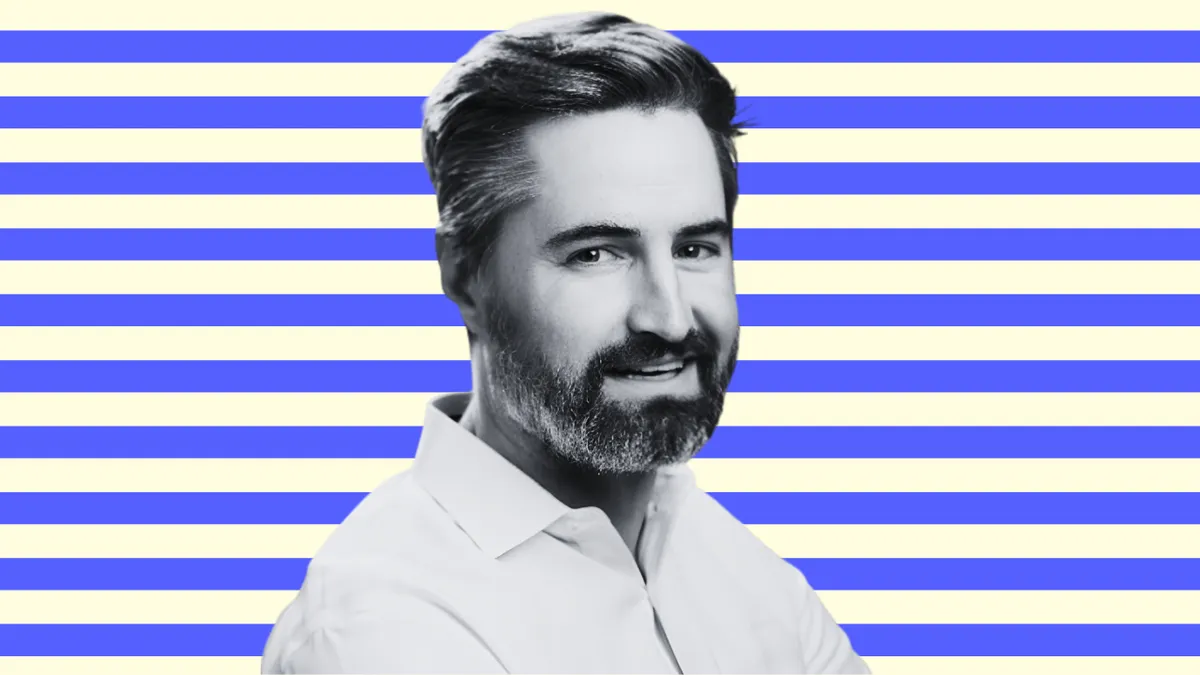
Dave Young counts how many times he's said "retail media network" in our interview. By his own tally it's about ten — "which is about as many times as I say it in a month internally."
That's deliberate. Young, who joined Dick's Sporting Goods as vice-president of retail media in late 2024, has decided the category he nominally leads is described by a term he'd rather not use. He calls what he's building a ‘commerce-enabled sports network’. The relabeling is positioning, partly. But the argument underneath it holds up: the standard retail media playbook was built around strengths most retailers don't have, and copying it is a way to lose slowly.
He's not the only one landing here. Lisa Valentino at Best Buy said she recently floated dropping the RMN label in an internal memo, too. Two executives at unrelated retailers, independently deciding the category's defining term has become a liability.
The playbook is the problem
Young's case starts with where the playbook came from. "RMN version 1.0," as he puts it, "is based on recreating a shared playbook that others drafted." That draft had authors: Amazon, Walmart, eBay. The format that dominates retail media — sponsored product listings on an e-commerce site — is the format those companies happen to be exceptional at, because they have the search volume and the transaction density to make it work.
So when a specialty retailer stands up an RMN by running the same sponsored-product motion, it has volunteered to compete on the exact axis where the incumbents are strongest. "If I'm just trying to be Meta, Meta is going to do Meta better than me," Young says. "Amazon, you could go down the list. If I'm just pulling their playbooks off the shelf, they're going to be able to do it better."
I’ve shared before how the ‘retail media doom loop’ that traps mid-tier networks isn't only about budgets running dry; the commodity format is prone to routing spend toward whoever has the most scale. Differentiation isn't a nice-to-have layered on top of the sponsored-product business, it’s a matter of survival.
The signal that isn't a purchase
The differentiation Young is betting on is a data asset that does not look like a typical retailer’s. Dick’s sits on signals spanning what he describes as roughly 45m athletes addressable via Dick’s Media. Key to the retailer's media universe is GameChanger – the youth sports app that has covered more games in a single spring weekend than played in the entire history of Major League Baseball.
It's worth being skeptical about what that actually buys him, because "we can predict what you'll buy next" is a claim every RMN makes. Kroger can see sunscreen and travel-size toiletries in your basket and conclude you're going on vacation. Amazon's entire recommendation engine is predictive. Inferring a life event from purchase history is table stakes, not a moat.
What's different at Dick's is the specific kind of input they’re getting. Game Changer produces a life-stage signal that isn't a purchase at all: a season starting, a roster changing, a family moving its team registration from Seattle to Chicago. A grocery loyalty file can only infer a move after you start buying moving boxes. Game Changer sees the team change before any related purchase happens, because it sits in a part of these families' lives that has nothing to do with shopping.
Whether that signal actually outperforms a smart read of transaction history is what the next few years will show.
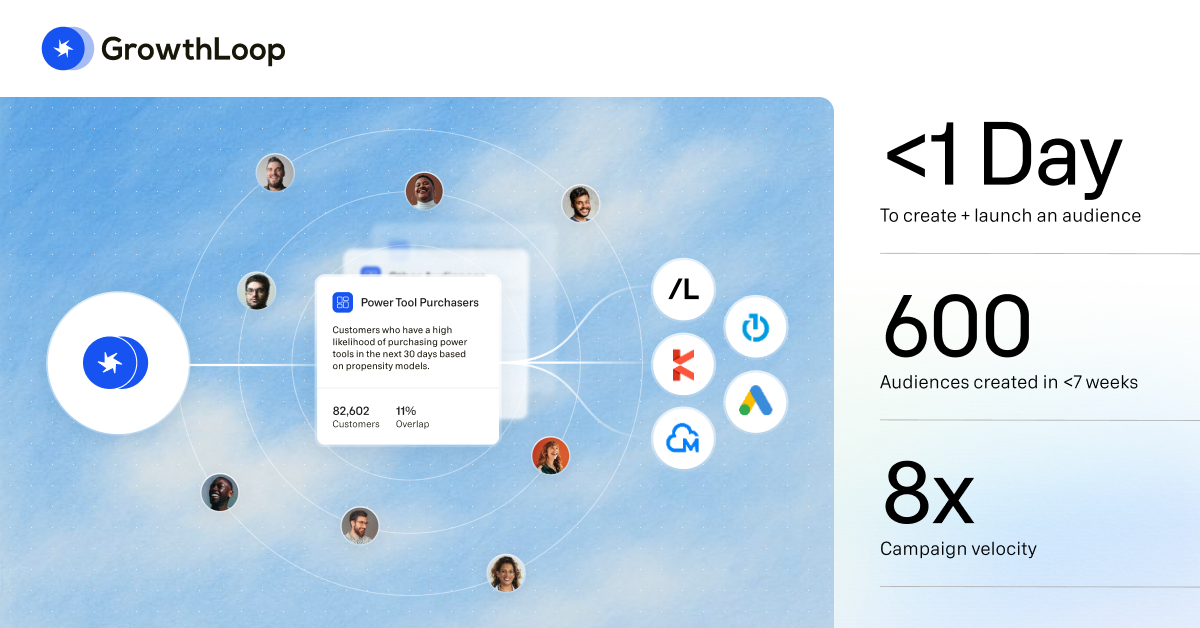
Your advertisers can’t wait weeks for audiences.
GrowthLoop’s Composable Commerce Media solution helps media teams turn first-party data into high-value audiences, launch campaigns faster, and prove what’s working across every channel.
Learn how retail media leaders at Costco, Fanatics, and Gopuff use GrowthLoop to create highly segmented audiences and deliver stronger results for their brand partners.
What a CMO reporting line offers
Young reports to the chief marketing officer, and he says it's what lets him "live in the art of the possible. Not just the P&L." Report into a CFO, he argues, and the conversation defaults to profit. Report into the merchant organization and the aperture narrows to vendor relationships. Sitting under the CMO is what lets him frame a campaign as "how is this going to drive outsized return for a partner like Adidas in addition to incremental return for DSG."
But where an RMN reports is a choice with a cost, and Young's framing is all upside. The reason most retail media networks don't sit under the CMO is that they're built as profit engines, and reporting into a commercial or finance org is what keeps them accountable to the revenue they were stood up to produce. Creative latitude is exactly what gets squeezed when a network has to defend its number every quarter. Young is betting that the latitude pays for itself — that brand-led, differentiated work generates revenue the sponsored-product motion can't. He’s upfront that the team still has to hit its number.
Going big with Adidas
The clearest expression of the thesis is the World Cup work with Adidas: a full omnichannel campaign — shared creative, broadcast, connected TV, e-commerce, social, programmatic — running into full store takeovers at Dick's House of Sport flagships. Young describes the in-store piece as building soccer culture in America.
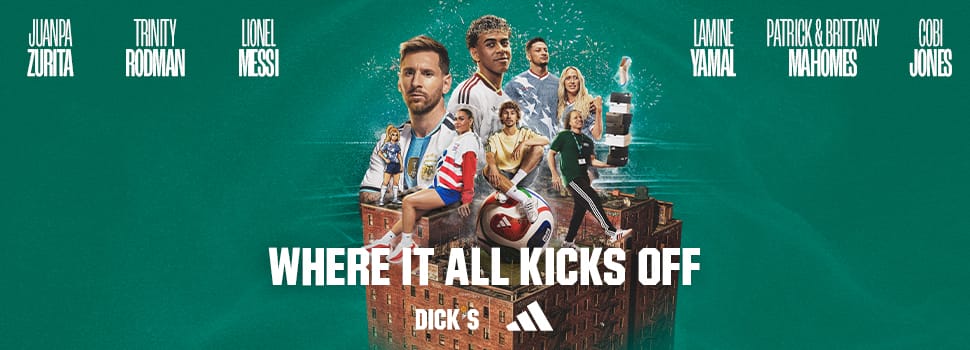
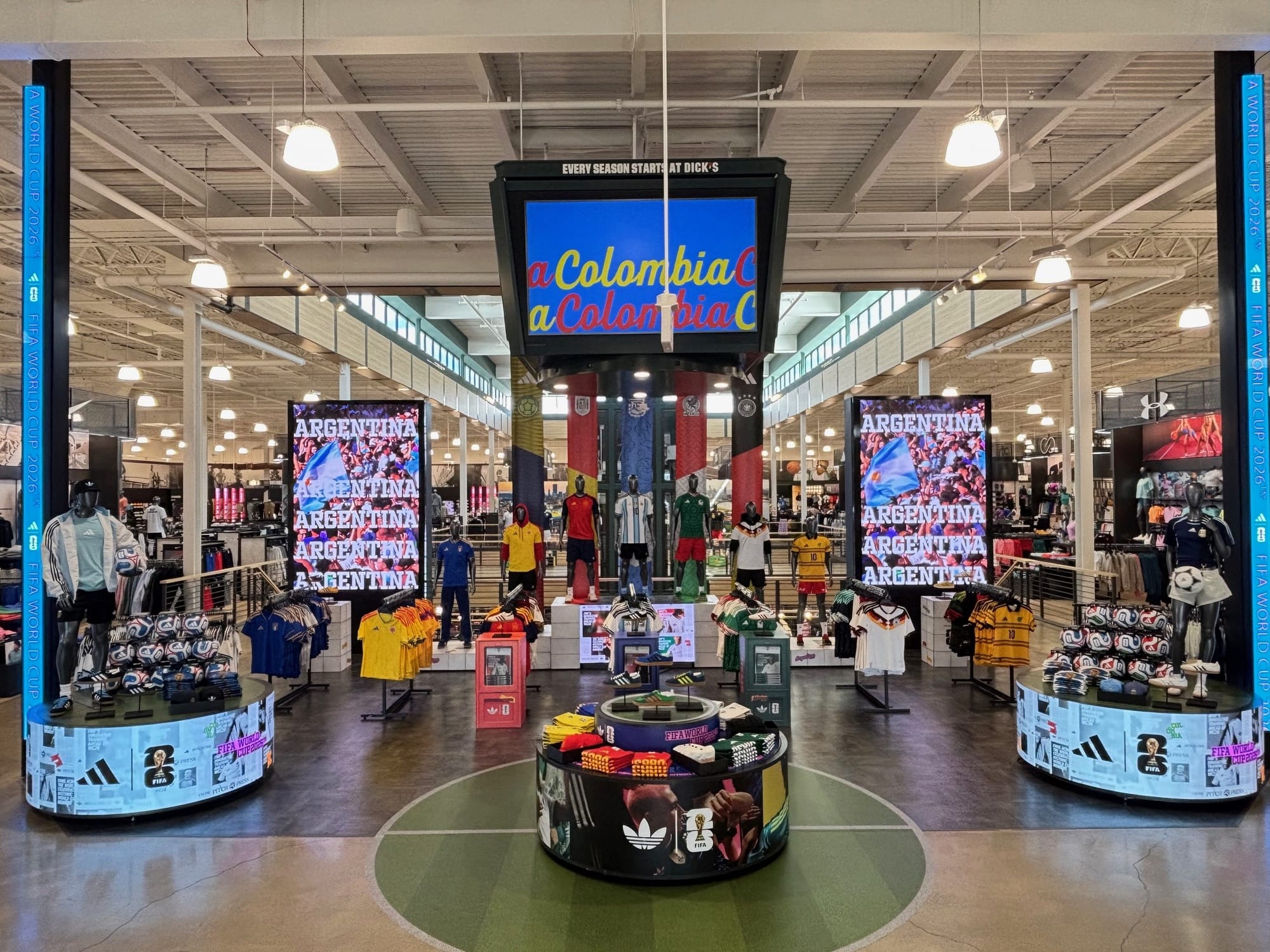
A sponsored-product network structurally cannot sell this. It's also the labor-intensive end of the business — most of it runs as managed service today, and Young is candid that self-serve is a few years out. He's not dismissing it; he's sequencing it behind the differentiated work, and only where it's "worth a login" rather than one more self-serve system an agency ignores among the 250 others.
A question of sequencing
He's not dismissing self-serve. He's sequencing it — deliberately behind the differentiated work, and conditional on it being "worth a login" rather than one more self-serve system an agency already ignores among the 250 others. That's a defensible read for a newer network. But it's worth setting against where a more mature specialty network has landed. Home Depot's Orange Apron Media, which has grown from roughly 30 people in 2020 to more than 400, used its upfronts this year to make self-serve the through-line of nearly every announcement — on the explicit logic that the next phase of scale can't come from adding headcount. As OAM's Stephanie Cattonar put it to me, managed service alone is a dead end.
The two aren't really in disagreement; they're at different stages of maturity. Both believe managed-service-only doesn't scale. A future question at Dick's will be whether the differentiated model survives the transition to self-serve intact — or whether the same scaling pressure that pushed Home Depot toward automation eventually pulls Young into the commodity formats he's defining himself against right now.
The non-endemic bet
Where the data gets most interesting is off the sporting-goods shelf entirely. Identify a household in the years when it's buying its first family SUV, choosing insurance, opening college savings, picking loyalty programs, and the natural advertisers aren't just cleat brands. They're financial services, auto, QSR, travel. "If I know when you're moving into college, when you're moving into your first apartment, when you're getting your first car, when you get your first job — I essentially know your future financial trajectory," Young says. Dick's is in what he calls "very real and substantive conversations" with financial-services partners about reaching families "almost hungry for a solution that's speaking the language of the life that they're living." Access runs through clean-room collaboration and managed-service campaigns rather than a self-serve front door.
He's clear-eyed that the breadth is also a sales problem. When Dick's first brought the non-endemic pitch to an agency, the response was: there's a lot of good stuff here, but I don't know where to start. That's the complaint that shows up everywhere in retail media — the agency that drops "retail media" onto a media plan as a single undifferentiated line item, as if it were one thing rather than fifty. Young's read on what breaks that open is unglamorous: "Storytelling, repetition, and a truly differentiated offering." He grew faster than search did, he points out, and search took years to become a line nobody questions.
He's also betting on an asymmetry. An offering that merely rhymes with an established channel rarely gets carved off a media plan for a test; something genuinely new is more likely to. The differentiation isn't only about standing out — it's about being unfamiliar enough that a buyer has to evaluate it on its own terms rather than slotting it next to the channel it resembles.
Young is openly recruiting for this, too — he says he's looking for a holding-company agency partner to build out the offering.
Running its own playbook
It's a fool's errand to beat Amazon at its own game — I've made that argument before and Young makes it from the inside. The networks that win won't be the ones that ran the sponsored-product motion most competently. They'll be the ones that leaned into what they actually have: as retailers, the category expertise, the store footprint, the brand love a generalist marketplace can't manufacture; and as media networks, a model genuinely shaped to fit the retailer behind it rather than borrowed wholesale from the companies that wrote the original playbook.
What that fit looks like is different at every retailer, which is the part the industry keeps trying to flatten into one template. For Young it's the CMO reporting line and the youth-sports data. For another network it's the scale of the ambition and the speed its internal targets demand. For a marketplace serving a long tail of advertisers, it's self-serve as the core product from day one. For one selling to a handful of large, flexible brands, it's the opposite — high-touch, bespoke, notable. The retailers with successful networks know who they are and build a media operation that reflects their strengths and limitations.
That's what Young's relabel is really conceding. "Commerce-enabled sports network" isn't a cleverer name for the same thing; it's sending a message that doing the same as everyone else is not going to work here. Dick's knows who it is and how it can compete. It's running its own playbook — which, for a retailer that isn't Amazon, is the only one worth running.