
On Tuesday I wrote about Brian Spencer, marketing director at Kroger Precision Marketing, and his claim that only 10 or 20 retail media networks really count. [Read: Does Size Matter In Retail Media?] Brian joined the comments to defend his scale test with an analogy: "A farm near a busy road can monetize the property with a billboard. The farm makes some extra profit - and the billboard works - but is the farmer a media network?"
I told him that was hitting a little close to home, given I was about to announce my nail salon media network. 💅
Consider the pot stirred! Tuesday's piece only had room for the first of Brian's three tests, scale. The other two were addressability and technology. Today we'll turn to addressability, which in practice means audiences.
This is great timing because the sponsor of this newsletter, Growthloop, actually just launched some research into this very topic. GrowthLoop sells audience tools to retail media networks, so I read it with that in mind, and I'll show you where I pushed on it.
Two kinds of audience
"Audience" as a concept can mean two different things:
- Who shops there. A retailer's customer base is either full of the people a brand wants to reach, or it isn't.
- What an advertiser can do with those shoppers: target a segment, screen out existing customers, upload their own customer list, and get a campaign live quickly.
1 - Who shops there
A leader at a specialty retail media network messaged me after Tuesday's piece to say I'd missed the difference between specialty and mass-market retail. Lowe's, Ulta, or Chewy don't have the scale of Amazon, Walmart or Kroger, "but I'd argue they are as important and have likely better audiences for national dollars from Kohler, Neutrogena, or Purina." (examples mine to preserve anonymity)
What's more important is counting the right people. Mass retailers have more shoppers in total. But count only the people actually in the market for a category, and specialty retailers are often level with them, or ahead relative to their size. They put it as a question: "If you're selling couches, are there more active couch buyers at Wayfair or Walmart?"
Advertisers weigh this too. In GrowthLoop's survey, 34% of media buyers rank the relevance of a retailer's customer base to their target audience among the factors that most influence which networks they choose.
But specialty networks still need the audience tools and ease of use of the big players to win those dollars. That's the second kind of audience.
2 - What advertisers can do with them
GrowthLoop and research firm Ascend2 surveyed 291 US and Canadian advertisers who actively spend with retail and commerce media networks, in August 2026.
Acquiring new customers was the top objective, at 40%. That's the promise of retail media audiences: pay only to reach the customers you want. Screen out loyal buyers, go after lapsed ones, time ads to replenishment cycles.
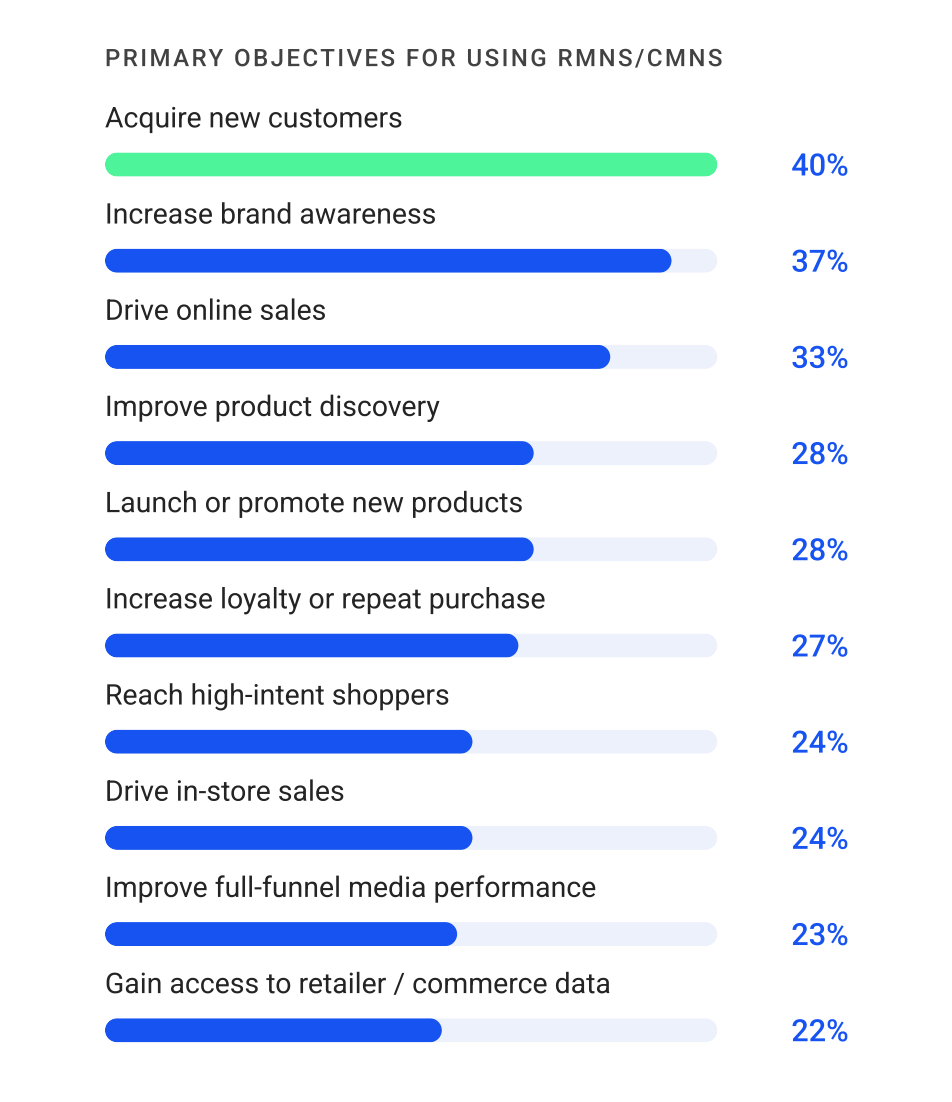
Here's what else advertisers want to do with this audience data:
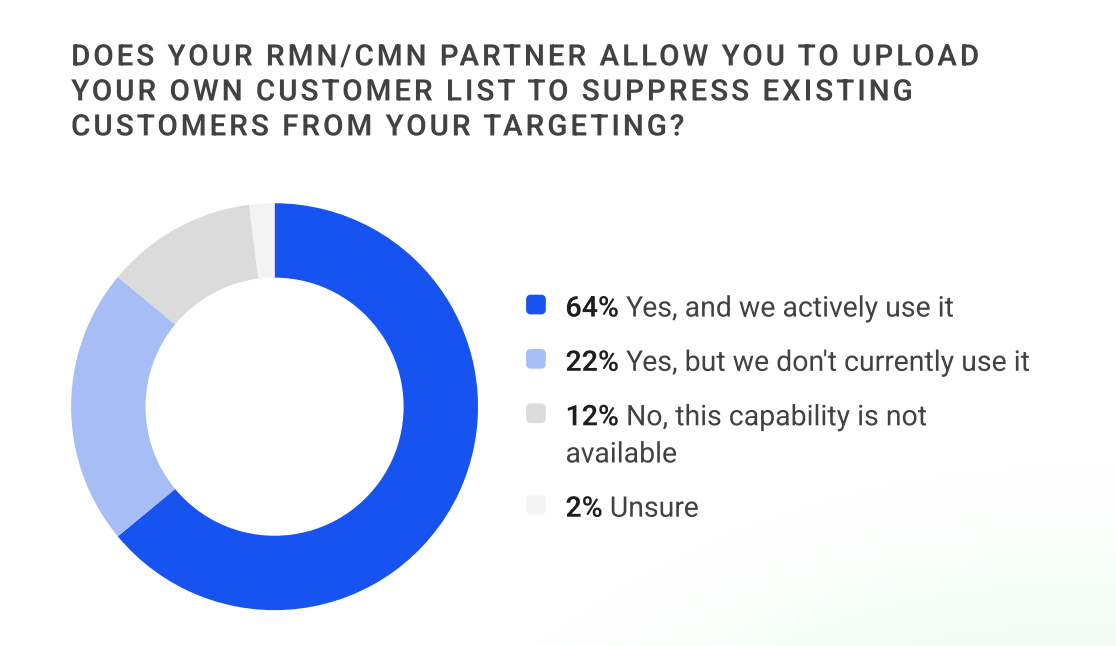
- Augment retailer audiences with their own. 86% say their networks let them upload a customer list to exclude existing customers, and most of those advertisers actively use it.
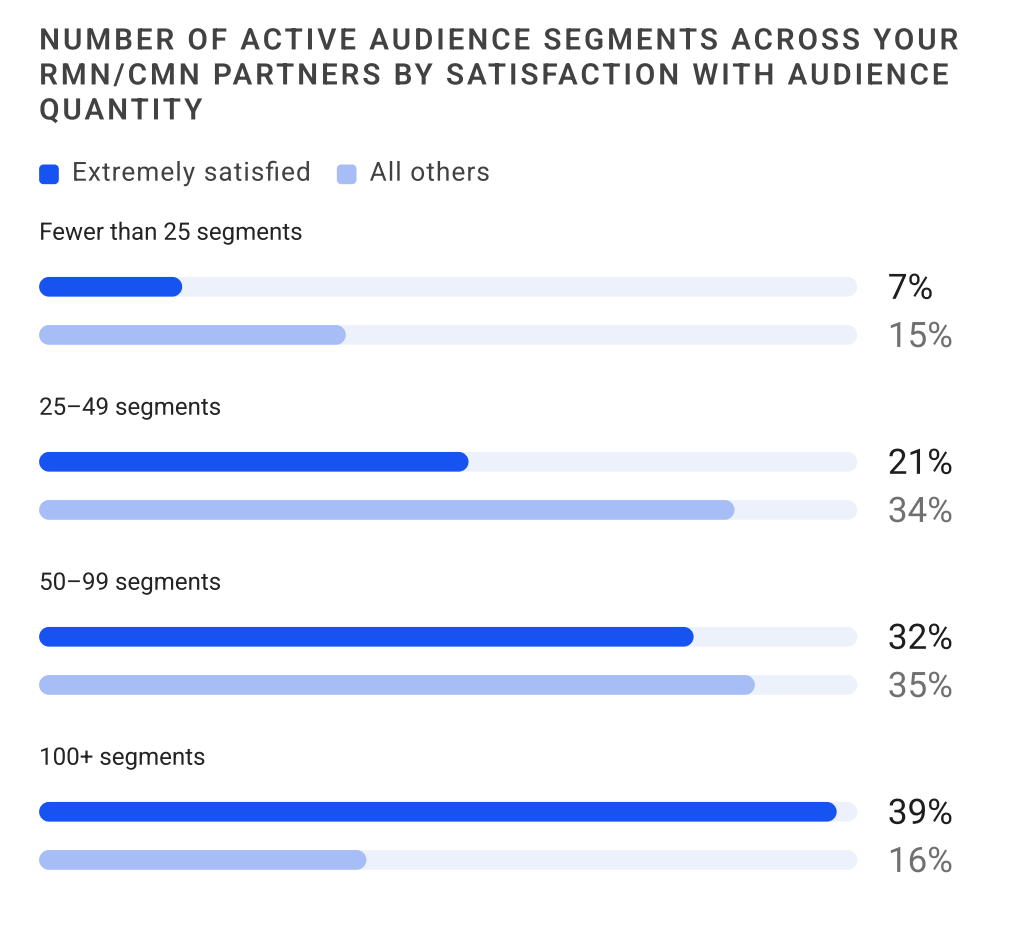
- Unlock a long tail of discrete & unique audiences. Advertisers with access to 100+ active audience segments are over 5x more likely to plan a 25%+ increase in RMN/CMN spend than those with fewer than 25 segments. he report says that's because That's because advertisers expect availability of more segments to improve campaign execution (in particular, speed) as well as results.
GrowthLoop's prescription is faster "audience fulfillment," meaning advertisers would spend more with a network that could deploy audiences and report results back faster. 92% say faster fulfillment would make them more likely to increase spend, and 85% say they'd pay more for same-day fulfillment.
Sure, that reads like a self-serving finding from a company that sells that very capability. And my question while reading it was, sure, I'd like a Porsche, but I'm not willing to pay for one.
And that's the rub: across all respondents, pricing and fees is the top factor in choosing a network (47%), with audience targeting capabilities just a hair behind (46%).
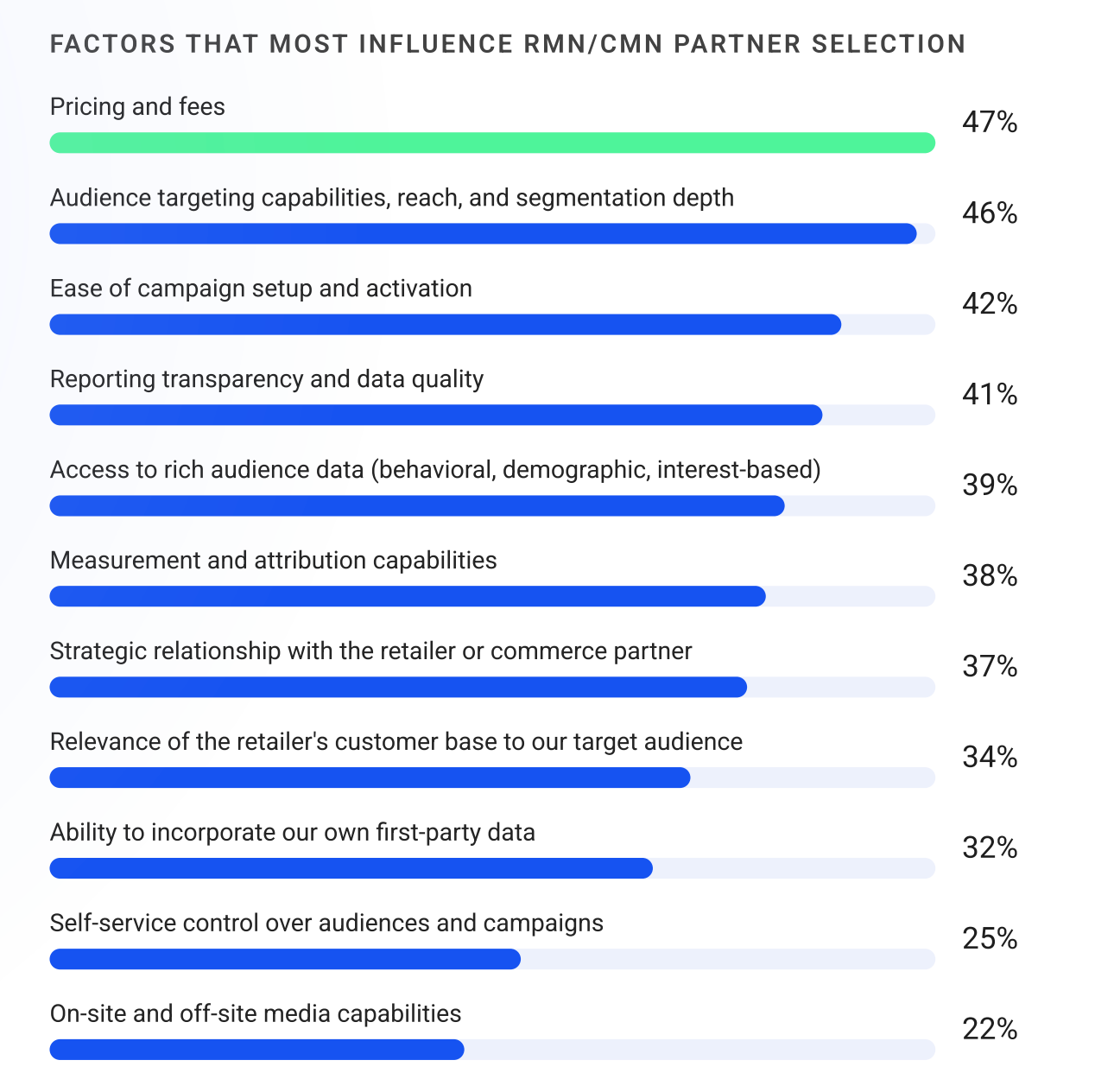
But the split by buyer type is more useful. The most aggressive buyers of retail media (those media buyers allocating 30% or more of their budgets to commerce media networks) actually put audience targeting (48%) and strategic retailer relationships (44%) ahead of cost.
And media buyers who buy across more CMNs and RMNs (7 or more) also care less about pricing and fees than audiences, data sophistication, and measurement factors.:
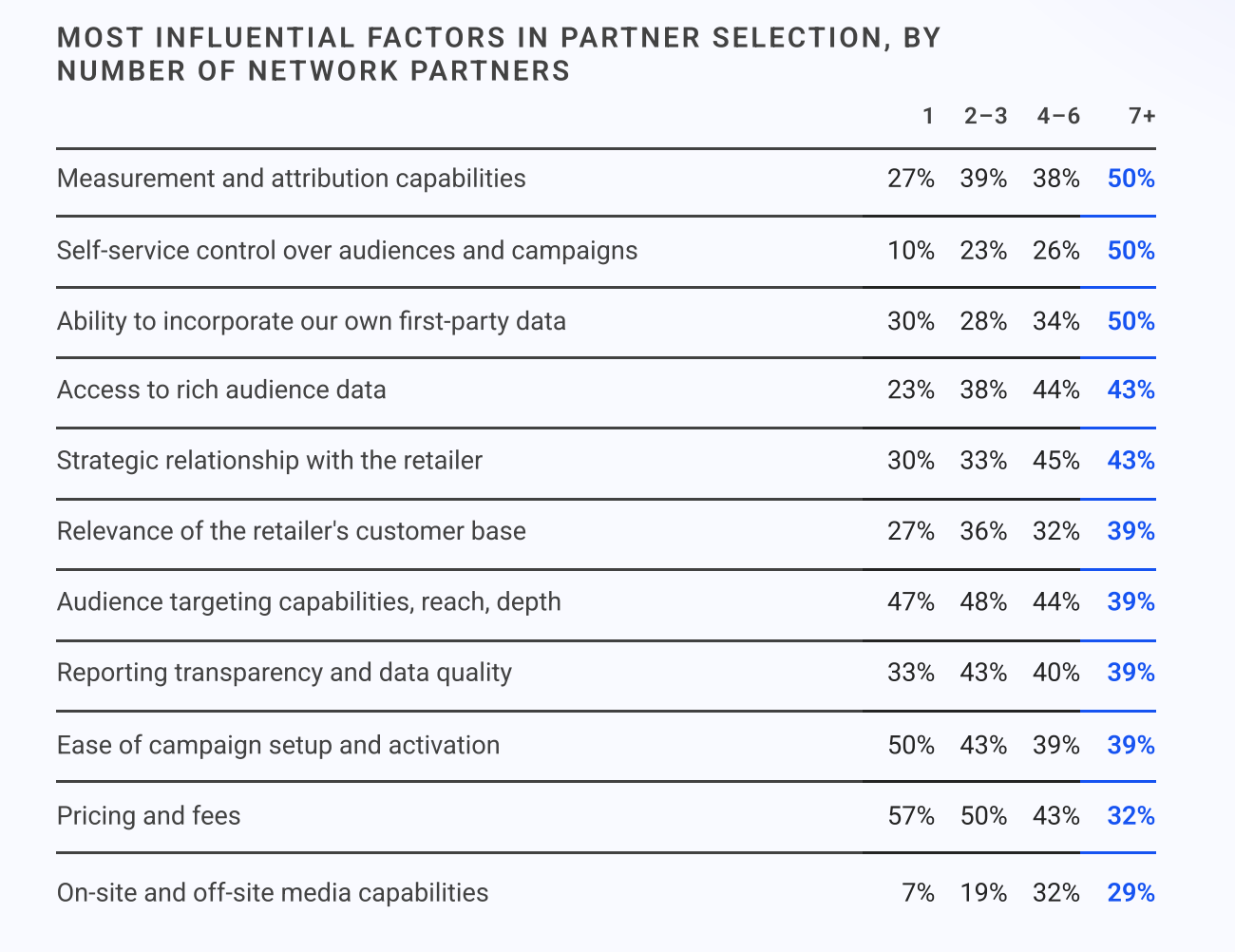
The buyers who'll pay for the Porsche are the ones spending the most and juggling the most networks. Those are the budgets a mid-sized network is competing for.
An audience wasn't enough for United
United Airlines launched Kinective Media in 2024, using its data about travelers to serve personalized ads on seat-back screens.
ADWEEK reported this week that United has folded Kinective's media sales and operations team into the partnerships team for its MileagePlus loyalty program, after a string of leadership departures this year.
In a letter to staff, United's chief commercial officer, Andrew Nocella, wrote that Kinective is profitable. By his account it is still missing what it needs to be a "success at scale": seat-back screens and Starlink Wi-Fi across the fleet, plus its own software for a customer database, ad delivery, and measuring what passengers see. Until that's in place, he wrote, the highest returns are "closer to home," in United's own products, MileagePlus, its credit cards and its MileagePlus partners.
United has rich data on its travelers. What it doesn't yet have is the screens to reach them on every flight, or the tools to show advertisers what those ads did.
A leader at a non-retail commerce media network made a related point after Tuesday's piece. The core of the business, they argued, is endemic advertisers buying onsite inventory, typically on outcomes. "If you can't play in that game you probably are going to struggle to grow your business," they wrote. "Otherwise you should consider yourself DOOH/linear TV advertising."
Of Brian's three tests, audiences is the one where a smaller network can beat a bigger one, at least for specific shopping missions or category buyers. United's reorg shows that audience alone isn't enough – having the technology to reach and measure those outcomes is another pre-requisite.
Get the Growthloop report here: The commerce media investment index

![RMNs Are Launching MTA. Do Brands Want It? [Part 1]](https://storage.ghost.io/c/fd/2e/fd2ea2dc-8a41-4dfb-987b-e5e3b2c38c09/content/images/size/w300/format/webp/2026/10/NEW-Thumbnail-designs--4-.png)