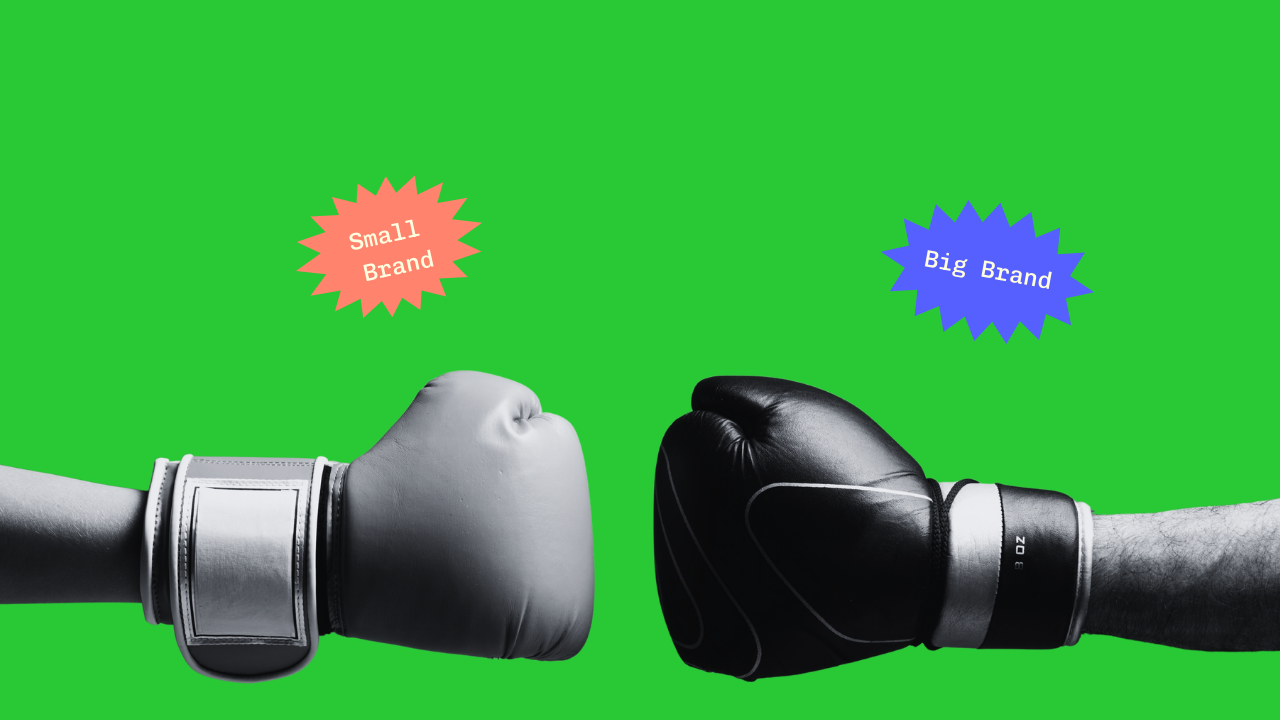
There's this conversation that happens constantly in retail media circles, and it goes something like this: challenger brands look up at the big legacy CPGs and think, "If only we had that budget, that analytics team, that scale—everything would be easy." Meanwhile, those same enterprise brands are looking down at the scrappy challengers thinking, "If only we could move that fast, make decisions that quickly, pivot without seventeen layers of approval."
It's the ultimate grass-is-greener situation. And honestly? Both sides are right—and both are missing something.
On a LinkedIn Live last week, I sat down with Jordan Witmer, who leads retail media strategy at the agency Salt, to dig into this dynamic. Jordan has an interesting vantage point here—he spent years on the big CPG side before moving to agency life, where he now works with brands across the entire size spectrum. So he's seen this from every angle.
What we landed on is that the retail media playbook really does need to be different depending on your brand's size and stage. Sponsored products aren't a compromise for smaller brands—they're often the highest-value investment you can make. But there's a tipping point where that math flips, and knowing when you've hit it changes everything.
SPONSOR: MIRAKL ADS
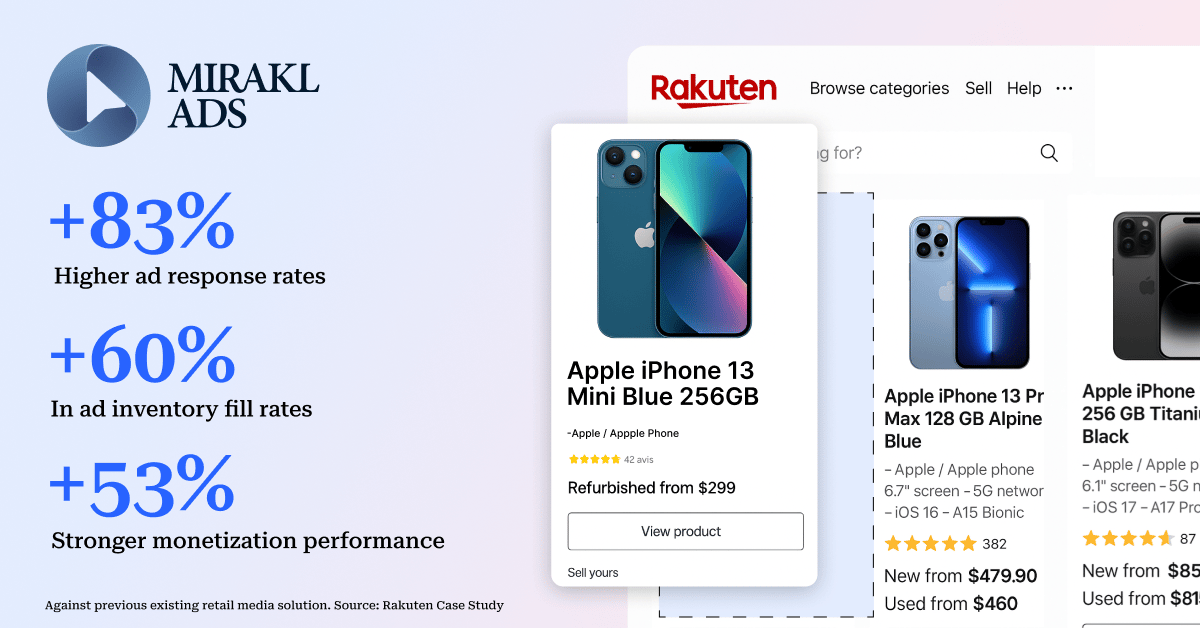
Did you know leading retailer media networks drive 85% of their ads revenue through mid- and long-tail advertisers?
Mirakl Ads provides full funnel ad formats tailored to both 1P and 3P advertisers, leveraging unique AI-capabilities that provide unprecedented levels of relevance and engagement.
Retailers who want to capture ad spend from the long tail of 3P marketplace sellers use Mirakl Ads in their tech stack.
On why both sides have it wrong:
Jordan says:
"You see a lot of big brands that look at challenger brands with envy. They can move fast. They make decisions really, really quickly. They're agile, they're scrappy. And you also see it from the challenger or smaller brands side. They look up at the legacy category-leading brand and go, my goodness, if we had that budget, if we had that analytics team, if we had that robust finance process, it would be so easy. Everything would be great."
It's the classic greener-pastures conversation. But as Jordan pointed out, what matters isn't what the other side has—it's understanding what your next best dollar actually buys you.
On why challenger brands shouldn't apologize for being sponsored products-heavy:
"Don't be ashamed by the fact that your budget's mostly sponsored products. It doesn't mean that you can't do what the big brands do. It means that's the most valuable thing that you can do with your next dollar."
This reframe is important. Smaller brands often feel like their heavy allocation toward bottom-funnel tactics is somehow unsophisticated—like they're not playing the "real" retail media game. But Jordan's point is that sponsored products are the right investment when your core challenge is distribution and discoverability.
I added some context here from conversations I've had with large CPGs. They often get benchmarked by retailers against these challenger brands—and the comparison isn't apples to apples. Enterprise brands have trade spend obligations, in-store costs, and legacy expenses that challengers simply don't carry. Those smaller brands can throw a bigger percentage of their total marketing budget into high-return, easy-to-optimize retail media. That flexibility is a genuine competitive advantage.
On when the math flips for enterprise brands:
"At some point that value equation flips. When you're a massively available-everywhere type of brand, you've already got all that distribution work done. You might be more efficient at driving your next incremental dollar of sales doing something else—like foregoing the next 1% of presence on a certain keyword, and instead investing in reaching another point larger of your audience."
This is where enterprise brands need to think differently. When you already own shelf space and digital presence, the incrementality math changes. Sometimes the better move is pulling back on keyword dominance and investing in brand-building or upper-funnel tactics instead.
On finding the tipping point:
So when should a brand shift from harvesting existing demand to generating new demand? Jordan acknowledged this is where things get technical—and category-specific.
"What we're generally trying to look for is: are we gonna be more efficient at harvesting demand that already exists for the category and winning jump balls in sponsored products? Or can we generate more value from getting more people to seek us out? Can I get somebody to search for [my brand] versus having to win a jump ball for [the category]? That's kind of the tipping point."
The answer depends on how consumers shop your category. Is it brand-first? Claims-based? Flavor-first? The measurement approach differs dramatically between a small brand and an enterprise one, but the structural framework is the same.
On advice for early-stage brands:
"If you're early stage, you've just gotta be findable. You've gotta be available—whatever that means to your category. If most discovery is happening on a social platform, then you've gotta be readily available there and expect that to translate into demand on a retail property. If you're in a super heavy e-commerce search category, like TVs or laptops, then your path to being found is showing up when somebody searches the really core functional term."
Jordan pointed to skincare and OTC categories as examples where claims-based search behavior creates opportunities for challenger brands. People don't just search "lotion"—they search "lotion with X" or "lotion for Y." Those margins are where smaller brands can win, especially when their product is built for that specific need.
Now what
What I keep coming back to from this conversation is that retail media strategy isn't one-size-fits-all—and that's a feature, not a bug.
If you're a challenger brand, lean into your advantages: speed, flexibility, and the ability to concentrate spend on high-return tactics without legacy obligations weighing you down. A sponsored products-heavy mix isn't a sign you're behind. It's a sign you're being smart about where your next dollar goes.
If you're on the enterprise side, recognize that the playbook that built your category leadership might not be the most efficient path forward. When distribution is solved, the incrementality math changes.
The real skill is knowing where you are on that spectrum—and being honest about when it's time to shift.
You can watch the full LinkedIn Livestream with me and Jordan Witmer here. Jordan leads retail media strategy at Salt.
In Other News
I was stoked to join a podcast I have been a fan of for a long time, Next In Media with Mike Shields. The podcast is great, as is Mike’s Substack.
So I fan-girled out when Mike asked me to come onto the podcast to talk about ChatGPT ads and where AI shopping may (and may not) be headed. Tune in or read the post here.
Until tomorrow,
Kiri