
I have been thinking about this question a lot lately: as agentic workflows and tools are introduced to retail media, who gets disrupted?
Will the way that a dollar flows through the retail media ecosystem today still be alive and well in 1 or 2 years?
 Kiri Masters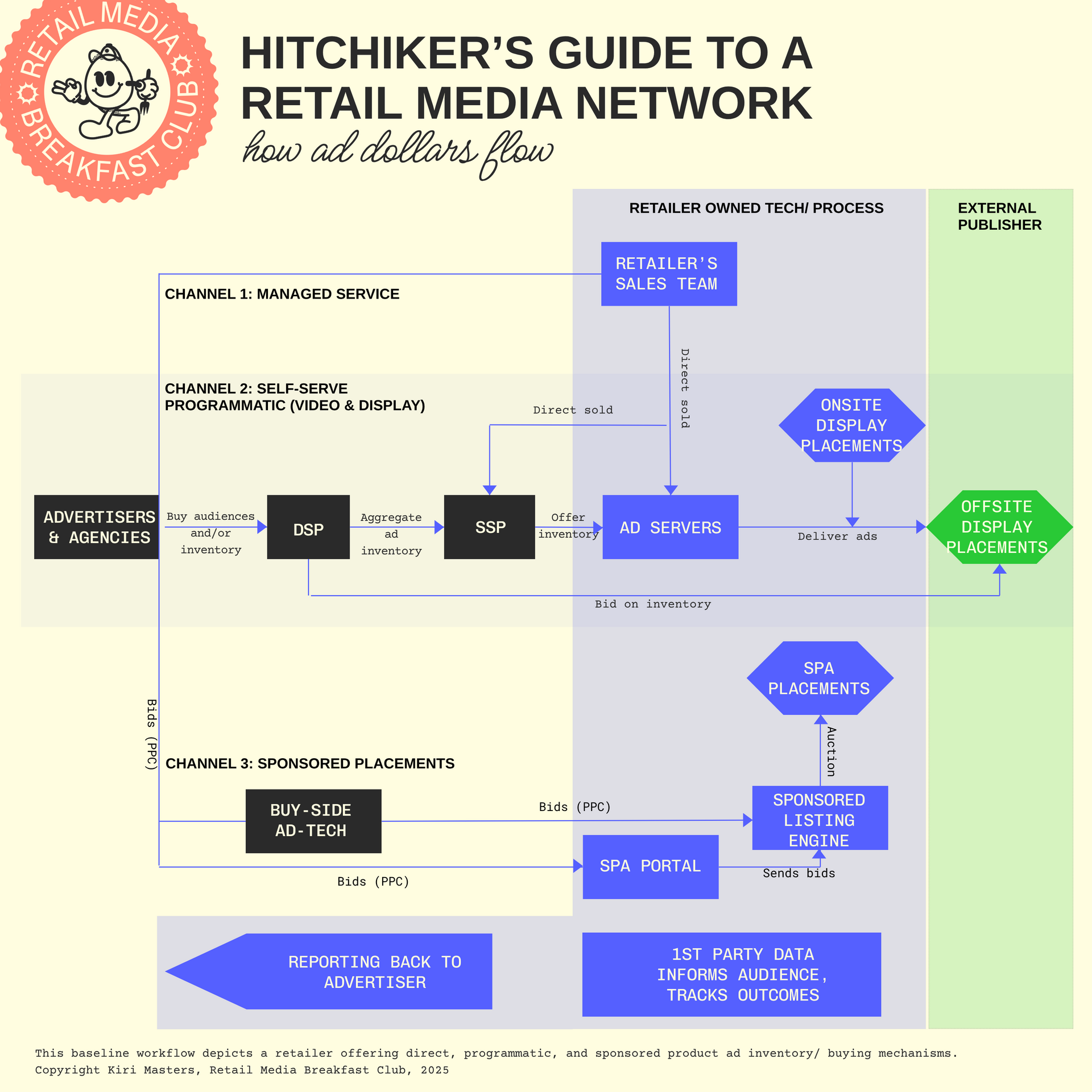
I have been posing this question to industry folks on 1:1 calls and even taking a stab at another industry map with various scenarios playing out.
But before I went on vacation over the summer I also posed this question publicly to Scott Messer and Jana Meron, the two big brains behind a new podcast called AdTech Therapy.
In the episode 'Where the Puck Are We Going?', published on July 14, I asked:
Is agentic media buying going to be the end of us all? Platforms and retailers are building algorithmic media buying black boxes. Agencies and brands are building their own agents. The current state is layers upon layers of tech and hands-off between media management, platform, DSP, SSP, and ad server, and back again with measurement. Will agentic media buying slash through some of these layers? Which one? Who's left?"
Scott and Jana provided a thoughtful response, which I'll paraphrase below.
Fear is natural, possibly even helpful
When the rhetoric is that the technology that's being built right now will potentially eliminate some forms of human work, it's a rational response to be cynical or even fearful.
Scott's read is that the fear is doing a job. Humans run doom-and-gloom cycles, and he doesn't think that should stop anyone sounding the alarm. The fight-or-flight response is part of what keeps you out of the doom in the first place.
And there could really be a helpful aspect to that fear. Answering the broader question about whether agentic buying will collapse the stack he admitted: "you're gonna use the same stuff with fewer people."
But for Jana, the history of programmatic advertising gives her comfort that we'll all still be around:
"People were saying the same thing about ad salespeople and direct sales businesses, and they're still here, and there is a flourishing multi-billion dollar industry around it," she said.
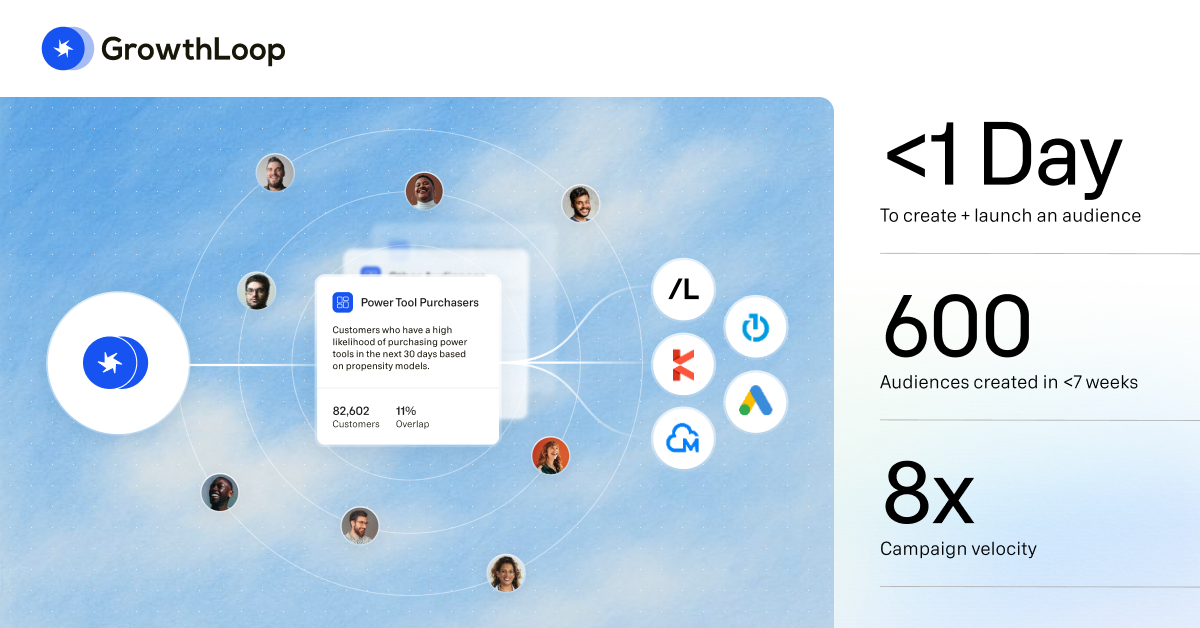
Your advertisers can’t wait weeks for audiences.
GrowthLoop’s Composable Commerce Media solution helps media teams turn first-party data into high-value audiences, launch campaigns faster, and prove what’s working across every channel.
Learn how retail media leaders at Costco, Fanatics, and Gopuff use GrowthLoop to create highly segmented audiences and deliver stronger results for their brand partners.
Agents will oversee the stack
With the existential dread pushed temporarily to the side, Scott went on to answer my question about the current tech ecosystem and which, if any, components would be eliminated.
He believes that agents will move upstream as an orchestration layer routing through existing layers, not around them: "you're building tech on top of the systems to operate the systems better...
Agentic tooling gets built on top of the existing systems to run those systems better, which is a different job from removing them. Measurement doesn't go away. Trafficking doesn't go away. "Maybe your insights get better, your analytics get faster, your trafficking gets easier, but that doesn't slash the layers."
The layers were already collapsing
Part two of his answer was recognizing a re-org that's already underway, citing a broader trend of DSPs going publisher-direct.
What does that mean?
In the standard programmatic chain, an advertiser's budget moves through a DSP, which bids into an SSP, which sells the publisher's inventory. That's a number of layers, each with their own integrations and price markups.
Publisher-direct means the DSP skips the SSP and plugs into the publisher itself.
In onsite retail media ads (the dominant format right now, at least in the US market) we often don't have an SSP or an exchange. A brand buys through the retailer's console, or through a management platform like Skai or Pacvue that integrates with the retailer's ad console over an API, and the retailer's ad server runs the auction and serves the ad. Auction, ad serving and reporting all sat with one vendor, and we never really had this layer that the open web been recently trying to sidestep.
Ironically, there's a recent trend in retail media to introduce SSPs into the fray. Last October, The Trade Desk began selling Gopuff's onsite sponsored products inside its own DSP, with ad server Koddi connecting the two as a 'commerce SSP'. There's some discourse in the retail media adtech space about whether or not this is a good thing.
This is where Jana landed too, pointing out that there wasn't always a separation between a DSP and SSP in the traditional programmatic space.
She recounts Google AdWords' second-price auction advertising as the catalyst for the unbundling of the SSP and DSP, paving the way for programmatic advertising and changing the way ads were bought and sold both in search and in display.
Jana is positing that the layers which we have today may morph and evolve. "They may not be these layers, but there will still be layers," she said.
My take
The part about the re-org is what's probably of most interest to people in the space, and where I want to push a little further. I do think there's the potential for some meaningful changes in how ad dollars get routed through the ecosystem, and I have collected some diverging POVs from other industry folks that I'll be sharing in the coming weeks. More to come on this topic.
By the way, you should check out the AdTech Therapy podcast and consider submitting a question through their patient portal.
What I appreciate as a real adtech outsider, is Scott and Jana's tenure in the space. They have seen this movie play out several times over in earlier eras of programmatic advertising. And while history doesn't repeat itself, it does rhyme. Or at the very least, it gives us some scenarios to play with.