A few weeks ago I sat down with Heike Lari, Director Partner Marketing & Consultancy at Zalando for her podcast Inside Fashion Marketing.
We had one of my favourite kinds of conversations… the kind where you start with “what were the big trends this year?” and accidentally end up talking about the future of the entire retail media model.
Because honestly, 2025 felt like the first year where AI-enabled shopping stopped being a blue-sky concept and started becoming like a real participant in shopping behavior.
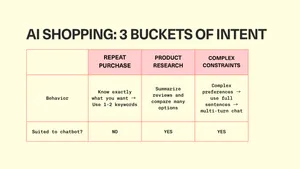
People are using AI to research… compare… ask questions… shortlist products… and increasingly, they’re doing all of that before they ever land on a retailer site.
And all of that has some pretty profound implications for retail media.
Today I’m sharing some highlights from our conversation 👇
(but you should certainly check out the full episode here)
SPONSOR: MIRAKL ADS
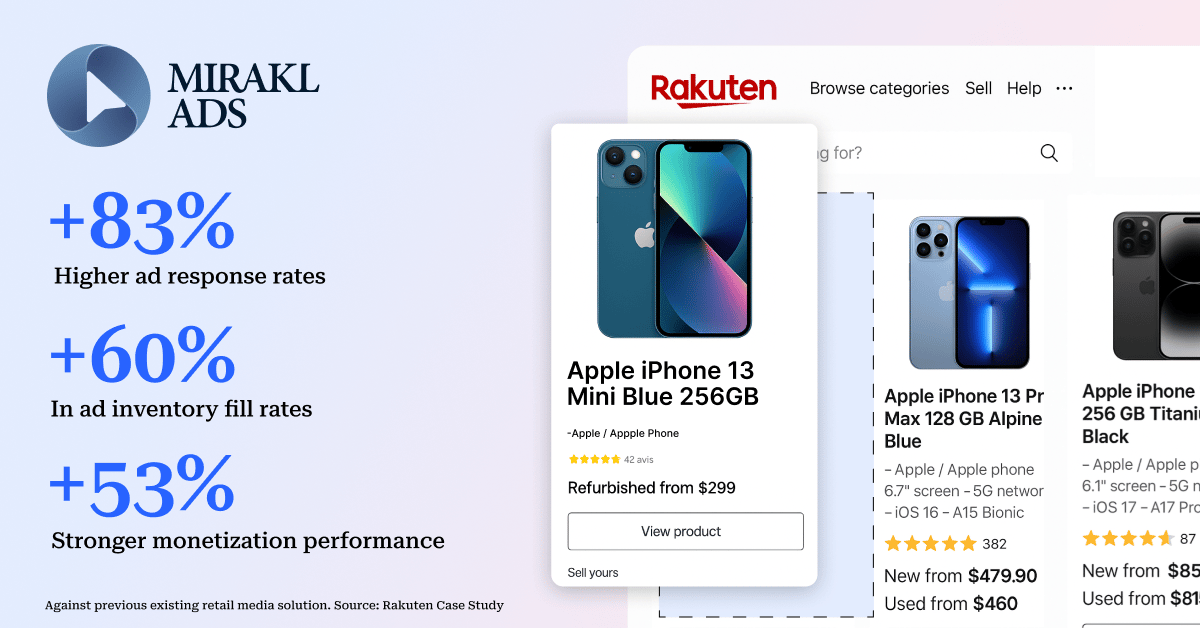
Did you know leading retailer media networks drive 85% of their ads revenue through mid- and long-tail advertisers?
Mirakl Ads provides full funnel ad formats tailored to both 1P and 3P advertisers, leveraging unique AI-capabilities that provide unprecedented levels of relevance and engagement.
Retailers who want to capture ad spend from the long tail of 3P marketplace sellers use Mirakl Ads in their tech stack. » Learn more
AI Companions Are Eating the Research Phase
When Heike asked what topic dominated my year, the answer was clear: agentic commerce and AI-enabled shopping. Not because the tech suddenly appeared in 2025, but because this was the first year we saw meaningful consumer engagement with AI platforms at the start of their shopping journey.
People are using ChatGPT, Perplexity, and Google's AI modes to research products, compare options, and narrow their choices before they ever land on a retailer's site. Just before Black Friday, we saw a wave of new capabilities launch—price drop automation, price tracking across retailers, and features like Google's ability to call stores directly to check inventory.
Amazon's Rufus rolled out persistent memory about customer preferences, lifestyle, and brand loyalties. I explored how Rufus's expanding memory capabilities are transforming Amazon from a search tool into something closer to a relationship—and what that means for switching costs and brand loyalty.
For retail media, this creates a problem. If shoppers are doing their heavy lifting in the research stage with an AI assistant instead of on your site, what happens to your onsite sponsored products and display ads? Retailers are apt to lose both onsite ad inventory AND data exclusivity for their offsite media capability.
What Brands Can Actually Control In Agentic Shopping
In our conversation I told Heike that my advice to brands differs depending on whether we're talking about optimizing for AI-driven discovery or managing retail media spend.
Here's the reality: when it comes to getting your products to show up in a ChatGPT or Google AI mode ‘product card’ (the agentic commerce version of a PDP), most of the optimization work sits with the retailer, not the brand. If a retailer is doing proper SEO and structuring their product data correctly for LLM consumption, your products benefit and will show up in these LLMs as shoppable. If they're not: as a brand, you’re kind of stuck.
This is why brands need to ask their retail partners a direct question: How are you thinking about AI-enabled commerce?
The economic implications are stark. Retailers have wildly different views on whether AI shopping is a friend or foe. Amazon's Q2 earnings revealed this philosophical divide clearly: while Walmart builds toward a future where external AI agents can shop their site, Amazon is blocking these agents and betting on proprietary assistants.
The Black Box Algorithm Surprise
Heike asked what surprised me most this year. My answer: the number of retailers rushing to launch algorithmic bidding platforms, despite sophisticated media buyers generally having mixed feelings about these systems.
Amazon announced algorithmic bidding at Unboxed—I covered the full announcement and what Amazon positioned as a "crystal box" alternative to Google and Meta's opaque systems which have historically drawn the ire of sophisticated media buyers.
In retail media land, Instacart rolled out algorithmic buying capabilities, and Brian Monahan of Albertsons Media Collective hinted at a similar development.
Large CPG brands with dedicated media buying teams generally don't want to surrender control. They have specific guidance on how budgets should be allocated across brands, products, and stages of the funnel. They want transparency into where every dollar goes.
But I understand why retailers are building these systems anyway: they're positioning them for less sophisticated advertisers who love the idea of handing over a budget and letting automation handle the rest. These advertisers don't have dedicated media teams or work with fancy agencies. Enabling a broader range of advertisers to activate on ad inventory is certainly one way that retailers can buffer their media business against upcoming headwinds.
The Funnel That Is No More
The traditional funnel—awareness at the top, consideration in the middle, conversion at the bottom—assumes a linear journey through a retailer's owned properties. That assumption is dying.
When consumers spend the awareness and consideration stages talking to an AI assistant, retailers only see them at the very end, if at all. The retail media playbook built for the old funnel doesn't work in this new reality.
The retailers who survive this transition won't be the ones with the most sophisticated AI—they'll be the ones who reimagined their loyalty programs and treated AI agents as VIP customers.
The brands and retailers who adapt fastest won't be the ones with the biggest ad budgets. They'll be the ones who understand that the game has changed.
You can listen to my full conversation with Heike on the Inside Fashion Marketing podcast.
Further reading
- My latest column for The Drum: Why OpenAI’s ad announcement should worry retail media networks shares why last week’s ad announcement is just the beginning, and what could be coming next.
- For more on how AI shopping is reshaping retail media, see my series on agentic commerce: Part 1, Part 2, and Part 3.