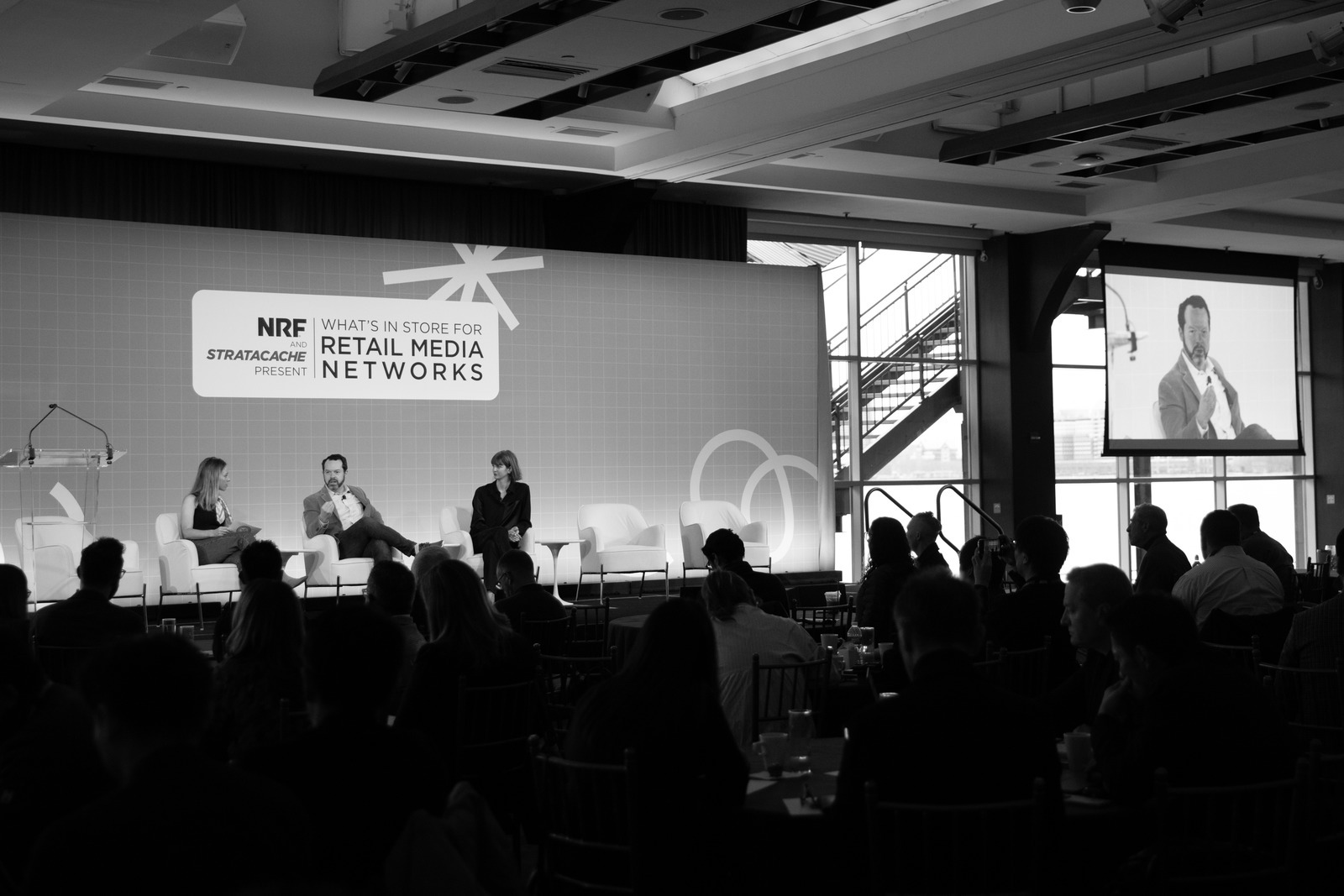
Last week at NRF’s Big Show, I co-hosted an intimate salon-style dinner with the sponsor of this newsletter, Mirakl Ads.
RMN leaders from major retailers talked shop following the NRF X STRATACACHE ‘What’s In Store For Retail Media’ event that had taken place earlier that day. While we all had in-store retail media on the brain, our conversation also veered into whether retail media tech should be build in-house or through partners, and how shopper behavior is evolving.
As usual, there’s no silver bullet best practice that can be applied to every retailer. Context matters. Let’s jump in to some anonymized insights from the group.
SPONSOR: MIRAKL ADS

Mirakl Ads is the only retail media solution designed for both 1P & 3P marketplace brands. Why does that matter?
Marketplace sellers demand a seamless advertiser experience that still offers full-funnel ad formats. And retailers need a flexible solution that allows you to scale your media business.
Jason Del Rey nailed it in his newsletter The Aisle this week:
"The not-so-dirty secret of mega trade shows is that they are almost never about what actually happens onstage, even though that's what gets marketed the most. Big-name speakers can help lend credibility and sell some tickets, but the value for many attendees often comes from the leads, collaborations, and intel on the expo floor; in the windowless, stuffy meeting rooms on the periphery; and at the private dinners and cocktail parties that surround the event."
Last week at NRF’s Big Show, I hosted one of those private dinners with my sponsor Mirakl Ads—the kind where Chatham House rules apply and senior leaders from retailers like Costco, Lowe's, CVS, and others could speak freely about what's actually happening behind the scenes. What emerged wasn't the polished narrative you'd hear on a conference stage. It was messier, more honest, and way more useful.
Here's what’s on their mind.
The In-Store Media Paradox: Your Customers Are In The Way
Everyone wants in-store digital media to work. The math is too good to ignore—more impressions than the Super Bowl, captive audiences, proximity to purchase. But there's a problem: shoppers moving through the store are the thing preventing in-store media from scaling.
One retail media leader described the ironic tension when considering screens at store entrances— customers stopped in their tracks, staring up at displays, creating bottlenecks at the entry point. For retailers where sales velocity depends on people velocity, that's a dealbreaker.
Multiple execs echoed versions of the same concern: their stores can't accommodate shoppers lingering and blocking throughput. The irony is raw. Retailers spent decades optimizing stores to keep people moving, and now media teams want them to stop and engage with content.
The cooler screens pitch came up as the perfect example. Sounds great in theory—dynamic content on refrigerator doors. In practice, people standing in front of merchandise, staring, and blocking access for other shoppers.
Getting in-store right means understanding that placement matters differently than digital. Put media where people are already pausing—checkout lines, beauty consultation areas—not where you need them to keep moving. Operations teams have to sign off alongside merchants, and that's a much harder sell than most media teams anticipated.
Build, Buy, or Partner: The RMN Version of Marry, Kiss, Kill
When we turned the conversation to RMN tech stacks, a dichotomy emerged in the group. Some retailers have engineering teams that want to build everything in-house. Others own no engineering team that could be get tempted. Others are finding a third way.
Several leaders described ongoing battles with internal tech teams insisting they could build ad servers, measurement platforms, or other core infrastructure. The retail media teams pushed back hard—they recognize the need partner with specialized vendors, not wait years for internal builds that might never materialize or get de-prioritized when an urgent project bumps them down the list.
On the flip side, other retailers acknowledged they don't have engineering resources who would even attempt to build this kind of specialized infrastructure, which has become an odd competitive advantage.
The middle path—what one leader described as the ‘Uber’ model—is assembling best-of-breed partners into a cohesive stack rather than betting on a single monolithic platform or drowning in multi-year internal builds. Yes, it means managing a dozen vendor relationships. Yes, it's a different kind of chaos. But it also means you can swap out components when better options emerge without ripping out your entire foundation.
The requirement everyone agreed on: pre-integration. If you're bringing in a new ad server, they must commit to working with your identity provider before the contract is signed.
The Customer Journey Is Evolving
Multiple leaders mentioned behavioral shifts they're seeing that change the in-store equation entirely. Shoppers are using mobile apps before they even enter the store to map their route. They're seeking out products they discovered on social media—the "viral merchandising" phenomenon where TikTok drives what ends up in physical carts.
Several execs described their own shopping behavior—pulling up the retailer app in the parking lot to locate exactly what they need before walking in. The pre-shop is happening on mobile, which creates both opportunities and challenges for in-store media strategies.
The conversation turned to how social discovery is blending with in-store fulfillment in ways that weren't anticipated. Customers actively seek out specific products they've seen their networks share online, creating a pull dynamic that traditional in-store advertising doesn't account for.
And here's a stat I shared on the NRF main stage that got heads nodding at dinner: 30% of global consumers are now using AI and LLMs while in-store to help with purchase decisions. For Gen Z and Millennials, that jumps to 40%. (Source: Salesforce 2025)
That means your in-store experience is increasingly competing with—or complementing—an AI assistant whispering product recommendations in your customer's ear while they browse your aisles.
What They Won't Say On Stage
The most valuable part of these conversations is what doesn't make it into earnings calls or conference keynotes. These leaders are wrestling with hard tradeoffs—merchants who don't want their carefully curated endcaps hijacked by media placements, finance teams skeptical of cannibalizing existing trade dollars, and the nagging reality that some of the most hyped opportunities might not be worth the operational headache.
The group consensus landed on a shared challenge: finding a middle path between the extremes of building everything in-house or handing control to a single vendor. That approach—messy, complex, full of compromises—might be the only realistic option for most retailers.
The dinner wrapped with everyone swapping vendor war stories and reference calls they wished they'd made earlier. Which, honestly, might be the most valuable currency in retail media right now: knowing who tried what, and whether it actually worked.
COMING UP
Challenger vs Incumbent Brands: Your Retail Media Strategy Must Be Different

Challenger brands and big incumbents are playing on the same digital shelf—but they shouldn’t be running the same retail media playbook.
In this live session I talk with Jordan Witmer (Salt XC) a recovering brand-side media buyer who’s sat on both sides of the fence: leading Retail media inside large CPGs and now helping mid-sized challenger brands punch above their weight.
We’ll dig into how challengers win their first surge with speed and product–market fit, where big brands get stuck in bureaucracy and “one true metric” thinking, and how both sides misalign their spend between sponsored products, search, and brand building.
We’ll talk about when it’s time to stop behaving like a challenger and start acting like a brand, how incumbents can avoid suffocating acquired challengers, and why measurement anxiety quietly distorts strategy in both camps.
We’ll also answer a real audience question from a global CPG and take live Q&A—so bring your questions (and your measurement hot takes).
Until tomorrow,
Kiri