
In a 2004 psychology study, participants were asked to rate the quality of various suits of armor.
The armor that was described as being more difficult and laborious to make got rated higher.
The effect got stronger when the object's quality was harder to judge. People who couldn't evaluate the armor on its merits, leaned harder on another cue: effort.
Just like most of us don't have the training to evaluate a suit of armor beyond some surface level criteria, most media buyers cannot evaluate all the technical aspects of a media network.
To be clear, I count myself among those people. I'm not an adtech person or a measurement expert. But I have spent a lot of time agency-side, representing brand-side media buyers. And I can see the same phenomenon playing out. There's an overwhelming number of RMNs on offer, on one hand touting similar USPs about their audience scale and uniqueness, on the other hand being "volun-told" to spend a certain amount on media during a JBP.
When I'm sizing up a network I can't evaluate on the merits, I go with the one that looks like somebody's really trying.
Poor audience targeting is frustrating. But for retail media teams, it can be costly, too.
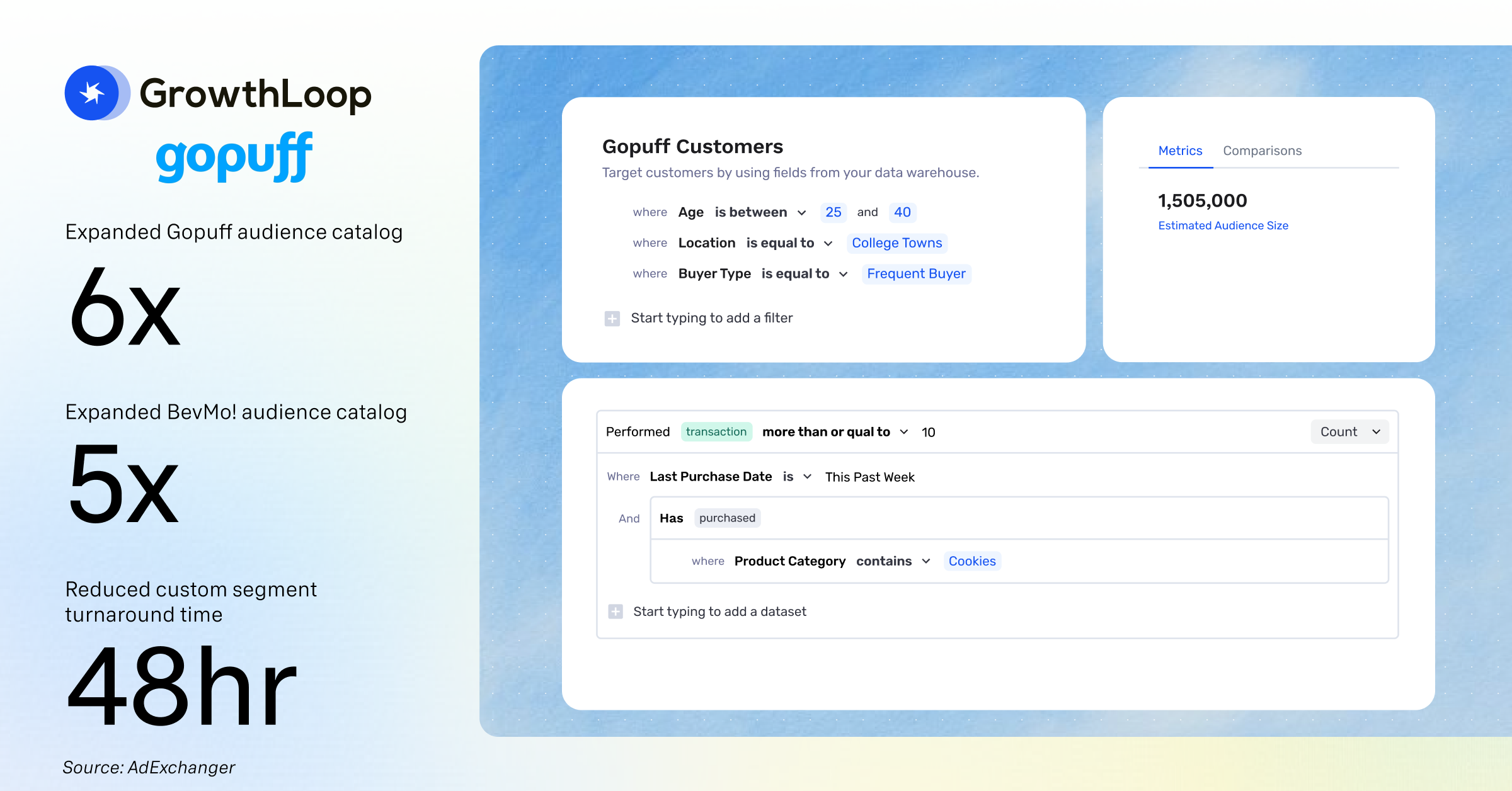
With GrowthLoop’s Composable Commerce Media solution, you can turn your first-party data into hundreds of high-value audience segments and launch campaigns faster.
After partnering with GrowthLoop, instant commerce pioneer Gopuff scaled from 100 syndicated audience segments to more than 600. And it now takes less than 48 hours to turn around a custom segment for one of their brand partners.
Learn more about how GrowthLoop is powering Gopuff’s best-in-class retail media operations.
The psychology framework by Kruger, Wirtz, Van Boven and Altermatt is called The Effort Heuristic.
In the study, participants were told how much effort went in. Media buyers aren't told. To play with this heuristic, an RMN has to make effort visible.
Here's how I see this playing out in the retail media world, from the buyer's position: illegible cross-retailer benchmarking, doubt over the dates in the roadmap, skepticism on self-reported numbers, a suspicion the same shopper is reachable somewhere else for a bit less.
With that blurriness, buyers judge on what's observable. Where the money's going. Who a network will admit to working with. Whether it'll say anything at all.
I ran a poll some time ago asking my audience if knowing a retailer's tech stack would have any bearing on their perception.

If and how that translates to real media dollars is another question. The point I can confidently make is that a lot of retailer-side folks give brand-side media buyers a lot less credit around their technical sophistication.
Costco: aloof but hard-working
I called Costco the cool kid of retail media in January when its RMN leader Mark Williamson got on stage with some charts of its complete tech stack. It was newsworthy (in fact it was the article with the most traffic on The Drum the week that they ran my post about it) because naming tech partners and showing the plumbing is a radical concept among retailers right now.
The effect it had, from my seat, was to demonstrate the strategy, the change management, the internal dev-work required to build this whole thing. The effort showed up right there, on a slide.
The hazard with showing effort
But there's a tipping point. Taken too far, suddenly the opening of an envelope is being announced. A "new" feature is touted that actually shipped last year. Hyping something as an industry first when it's not.
When everything is an announcement, the market stops being able to tell real development from packaging, and they get suspicious. Ask me how I know.
Who can afford to opt out
Retail media ad spend is wildly concentrated among a couple of big players. They play a different game, because their product is directly observable. Buyers already have data, benchmarks, and a history there.
Networks that haven't yet won a permanent slot on the media plan aren't being evaluated on evidence. They're evaluated first on cues, then on a test budget, and finally on performance.
What next
There’s so many interesting things happening in retail media that people aren’t allowed to talk about publicly. Many of the background calls I have during the week are with vendors who aren’t allowed to say which retailers they are working with, and its a shame because I really think there's a win-win to be had there.
I understand that most RMNs are operating within public companies so there’s very specific rules around what and when they can make announcements. In some cases, playing your cards close to your vest is the correct move, perhaps even the only legal move.
But when there is room to play, I do think its better to show your work. Contribute to the group project, and maybe even let a friend copy your notes sometime. Because that’s the only thing the star student at the front of the classroom isn’t going to do.