

This is a condensed version of a piece I originally wrote for my column for The Drum on November 5, 2026. This version includes comments from the LinkedIn discussion it started.
"What ROAS can you get us?" was the question I heard most often from prospective clients while running my agency.
In my more petulant moments, I told them: any number you want. The system is entirely gameable: we'll simply bid on the long-tail, high-intent keywords that always convert. If the assignment is to pump ROAS, we'll deliver, with one catch: your sales won't grow.
Retailers' measurement choices can move the number too: counting sales from the whole household instead of the shopper who saw the ad. Stretching the attribution window. The ROAS goes up, and nobody has sold an extra unit.
Earlier this year I wrote Why ROAS Refuses to Die. Everyone agrees it's flawed and most brands keep using it, because it's fast, cheap and easy to explain to the boss. I still think that. And if ROAS is staying, the least the industry can do is explain what's inside it.
Four of seven networks went on the record
Earlier this month, the agency Ovative Group published its Commerce Media Measurement Transparency Guide. Ovative asked seven retail media networks the same questions about how they calculate ROAS for onsite sponsored products and display ads.
Four agreed to have their answers published side by side: Albertsons Media Collective, Orange Apron Media (The Home Depot), Instacart and Walmart Connect.
"This is information that we collect, that we use internally to normalize our measurement results," Chelsey Lang, director of retail media at Ovative, told me. Instead of every brand asking each network the same questions, Ovative put the answers in one place.
Ovative has a commercial interest in showing advertisers how hard measurement is. (I covered its last report, iROAS Demystified, in March.)
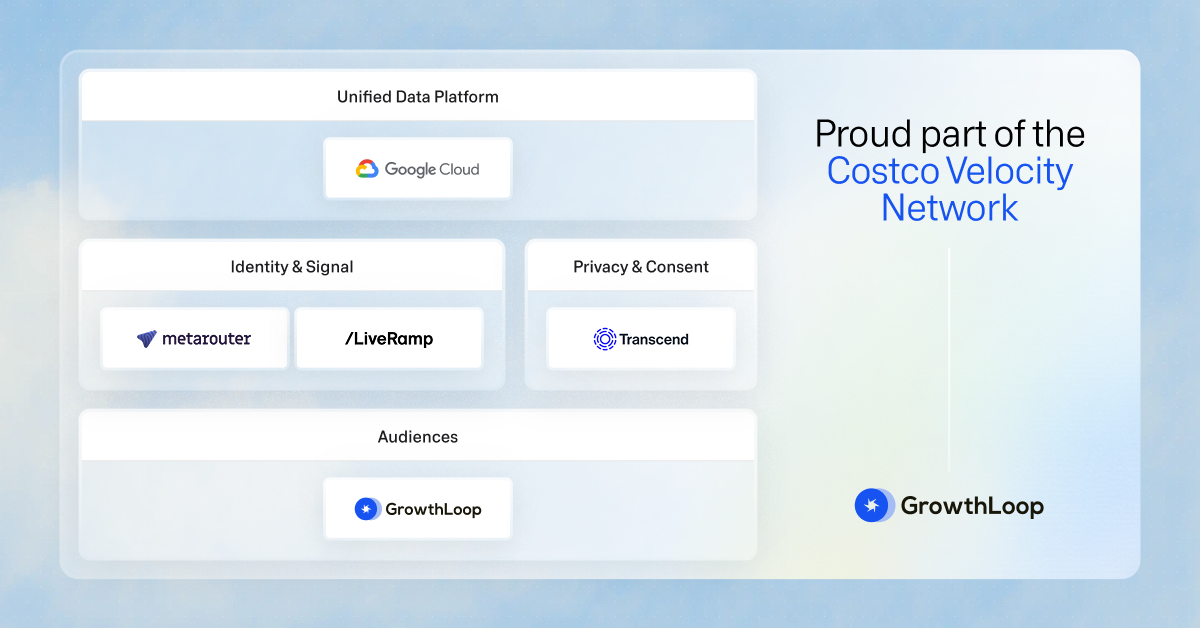
Costco isn’t scaling its RMN with legacy adtech and manual solutions. It’s leaning into a cloud-centric, composable stack.
As part of the Costco Velocity Network, GrowthLoop empowers the retail media team to build audiences directly from the data cloud, enabling faster activation, greater relevance, and better performance — all while maintaining privacy and governance standards.
The result? Exceptional value and experience for Costco members and better ROI for brand advertisers.
Learn why the GrowthLoop Composable Commerce Media solution was the right choice for Costco’s Velocity Network.
Same sale, four answers
The one thing all four networks share is a 14-day default attribution window. In the LinkedIn comments, Leah Logan, head of growth strategy at the experiential sampling company Recess, questioned even that in the comments on my LinkedIn post: "I find it interesting to have the same attribution window for purchases at a home improvement store as well as a grocery store. The trip frequency is vastly different and buyer path for core items is very different."
One thing they split on is how a sale gets credited when a shopper sees more than one ad before buying:
- Walmart Connect gives full credit to a single campaign, the most recent touch, favouring clicks over views.
- Instacart splits credit equally across the ads on the path.
- Orange Apron Media uses time decay, giving more credit to the ads closest to the purchase.
- Albertsons Media Collective uses last click or view with duplicated credit, so one sale can count towards more than one campaign.
"Not a single one is even using the same approach to attribution methodology," Lang told me. She sees this as the biggest driver of the gap, because it decides whether a sale is counted once or more than once. A brand running display and sponsored products on Albertsons could see one purchase credited to both campaigns. On Walmart, it goes to one. The same mix of ads could report quite different ROAS on each network, and neither would be wrong by its own rules. "Am I looking at duplicated results by channel?" is the question Lang wants brands to ask first.
The brands still running on ROAS
Ovative works with both retailers and brand-side media buyers, so Lang hears the comparison problem from both sides. Brands ask whether a dollar at Walmart is the same as a dollar at Instacart, and if not, "what math do I need to do to make those numbers be more apples to oranges, than apples to pumpkins." Networks hear the reverse. Advertisers tell them they can't invest more because "your ROAS is half what I see at another RMN," when the two numbers were never built to be compared.
Lang says size decides who needs this most. Larger brands with incrementality studies or media mix models aren't making budget calls on attributed ROAS. But "there's thousands, if not hundreds of thousands, of long-tail brands who don't have access to larger studies," she said, and they rely on the numbers networks report.
Who isn't in the grid
Lang told me getting networks on board wasn't that hard. Even so, three of the seven networks Ovative invited aren't in the guide, including Amazon, which couldn't provide the releases Ovative needed. Lang called Amazon's public methodology documentation fairly transparent, and suggests Amazon-heavy advertisers use the guide "as a discussion point with Amazon."
The guide also covers attributed ROAS on onsite placements only. Lang said more channels and metrics are planned for later editions.
Lang's case for the guide was that everybody says they want transparency, "so it shouldn't be hard."
The IAB, MRC and ANA might beg to differ. They've spent the past few years trying to get networks to agree on how to measure. Ovative only asked networks to say how they measure today, and even with that low bar, four of the seven agreed.
Dany Satine, head of retail media at the solution provider F11 and formerly group head of retail media at UK home improvement retailer Kingfisher, pointed out that retailers should be motivated to be involved by self-interest: the lack of comparability "makes it harder for the best-performing networks to prove they're actually better."
But it's also a reminder of how much is still left to the advertiser to ask.
Rick Watrall, founder of mlogics.ai and longtime media ad agency leader, wrote a deeply cynical comment that I'm sure many readers would privately agree with or have a strong physical reaction to:
"Let's combine the flaws of last-click attribution with different calcs to compare and sprinkle in biased methods. Then we can ask advertisers and their agencies to understand and navigate all this across partners as if they have unlimited resources. If none of that works and they spin up their own measurement solutions that conflict or make us look bad, we'll partner with a 3rd party to focus only on our silo, and gaslight them into believing it's not a fox-henhouse situation."
So why not just measure incrementality?
Lots of good food for thought here. Interestingly, the most common response from readers on LinkedIn was to skip the comparison and "just measure incrementality instead." It sounds incredibly obvious, so why aren't more networks reporting that way? Either it's harder than it looks, or retailers don't have much reason to. I'll dig into that in Part 2, next week.