
Arming the Rebels is a four-part series with Anthony Rotio, co-founder and co-CEO of GrowthLoop, for every retail media network that isn't Amazon or Walmart. The series is brought to you courtesy of GrowthLoop.
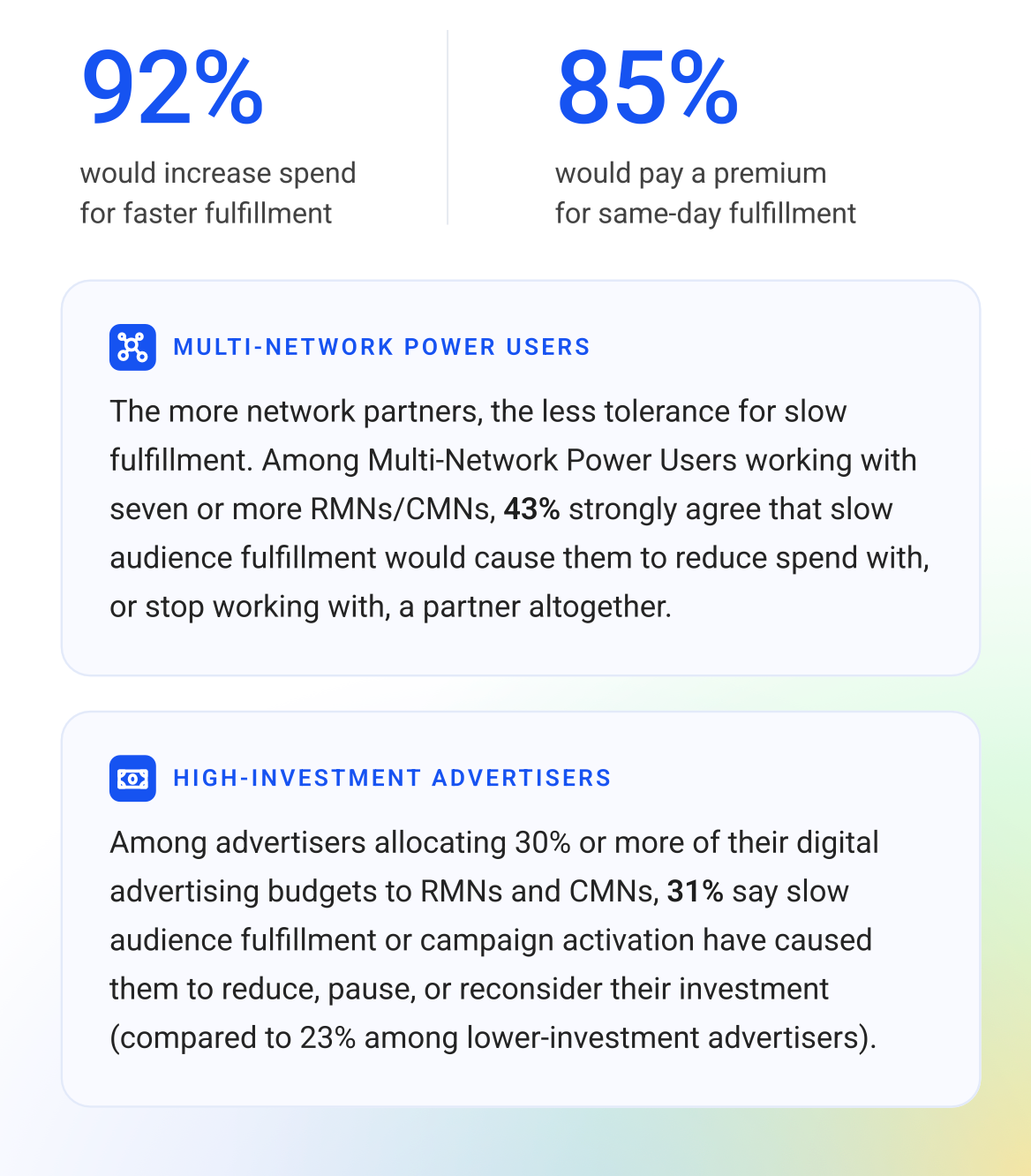
When GrowthLoop published its Commerce Media Investment Index a few weeks ago, I covered it in a piece called "Are Audiences the Golden Ticket for RMNs?". The report's prescription was faster audience fulfillment. 92% of advertisers said faster fulfillment would make them more likely to increase spend with a network, and 85% said they'd pay a premium for same-day fulfillment.
My reaction while reading it was, sure, I'd like a Porsche, but I'm not willing to pay for one.
And that's the rub: across all respondents, pricing and fees is the top factor in choosing a network (47%), with audience targeting capabilities just a hair behind (46%).
GrowthLoop is sponsoring this series, and I put the Porsche question to Anthony, the company's co-CEO.
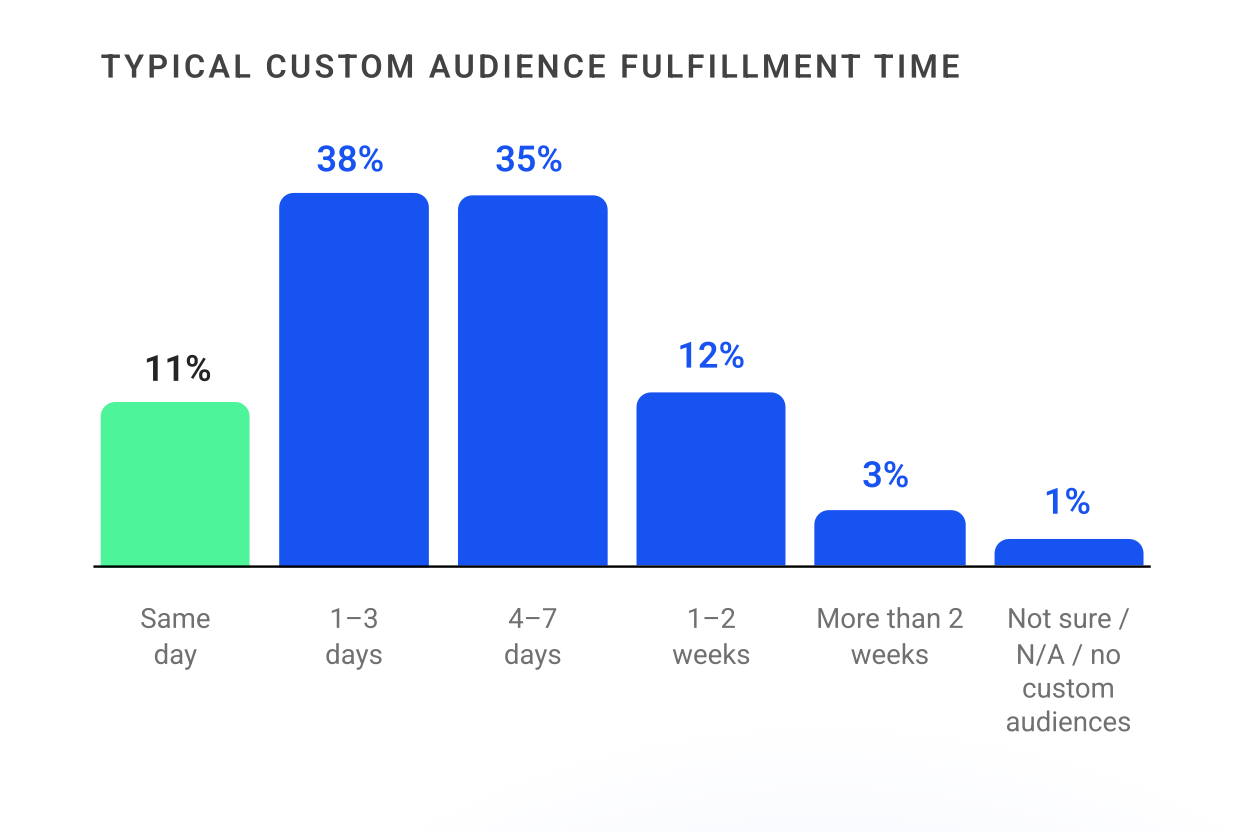
Growthloop sees audience fulfilment speed as a distinctive competitive advantage amongs its commerce media customers. Half of advertisers wait four days or longer for a custom audience, and only 11% get one the same day – and that's a deal-breaker to many advertisers. So for our final part of these series, I asked Anthony where do those days go?
This interview has been edited for length and clarity. You can listen to the full interview on the podcast feed or watch on YouTube.
Four days and a Jira ticket
Kiri: Tell me about a time a brand asked a network for an audience it couldn't deliver in time. Where has speed actually killed an investment?
Anthony: In our research, 86% of buyers say slow fulfillment would make them cut spend or stop working with a network. And that's a huge opportunity for mid-market networks that can move with more agility. We see this time and time again: 80% of the budget comes from 20% of the buyers. Those get the white-glove managed service treatment, but even then it can be slow to turn around custom audiences. The rest, that long tail and middle tail, is a ripe opportunity to serve better with technology. With some of the capabilities we've added, a brand can upload a brief, the brief gets matched to the retailer's data, and within a minute or two the retailer has an audience it can review and approve.
I was on the brand side. When part of a giant activation runs through your retail partners, a lot of times you're late internally, and you've gotta get those dollars activated in the right window. If you're not getting served quickly, you're gonna take those dollars somewhere else.
Kiri: What does that look like in practice?
Anthony: We have a large customer in Europe whose brand partners' media budgets suddenly open up around the end of the year. Last year on November 29th, I think seven or eight briefs came in on the same day for Christmas campaigns, in several languages. They said, "We just can't do this in time." I said, "Well, have you tried just dumping them into AI Studio and seeing what comes out?" So they did. Meanwhile, the team was building some by hand, anxiously working over the weekend.
We had measurement turned on for some of these brands, and the audiences the agents generated outperformed the hand-built audiences on CPM and ROAS by 20% to 30% in some cases. And that was last Christmas, so think about how much better the AI technology has gotten since then. Something like that only became possible in the last 18 months or so.
Kiri: Where does the time actually go between a brand's request and a live campaign?
Anthony: I'll spell it out, and it'll probably be painful for some listeners because it'll sound all too familiar:
- A request comes in from the brand in a different format from the last seven requests.
- Someone manually inputs it into a form, or maybe an agent tries to map it to a form.
- The form goes to a Jira ticket.
- The Jira ticket goes to the tech team.
- Someone writes SQL to build the audience, based on what they think is in the form.
- That goes back over the fence on the Jira ticket to the managed services team. They take a look at it. It's wrong. It goes back again.
Around holidays or weekends, suddenly it's a week, two weeks. If you're using an onboarding partner, you add 30 or 40 hours in some cases to get it matched. Then someone has to select it and forecast the avails to check there's enough to spend the budget. When you map the end-to-end steps, the map gets really long really quickly.
Speed as a signal
Kiri: Have you seen smaller networks punch above their weight by being faster than their larger counterparts?
Anthony: Absolutely. Gopuff is a great example. They move really fast. We see it with some of our sports media partners as well. When you respond really quickly to brand-side folks who aren't used to getting quick responses, suddenly they lean in. Then if you have a new offering on measurement, or micro-segmentation where they might have only been looking for scale originally, they'll pay attention to the more custom things you're trying to do with them.
Speed is an indication of partnership in most cases. When brands see speed, they see someone who cares about them, and that makes them much more open to you being a strategic partner instead of just another marketplace to go grab something from.
Kiri: When I covered your research, I said, sure, I'd like a Porsche, but I'm not willing to pay for one. Is there a trade-off between speed and cost?
Anthony: In a media network's margins, the technology is kind of the cost of goods sold. So look at the stack, which sometimes looks like a spaghetti diagram on the architecture page, and ask: "Am I being held hostage by any specific partner? Are my costs usage-based, so they scale the more buyers I have?" Those are ripe opportunities to increase your margins as a retailer.
The Porsche question
Anthony answered my facetious question (gracefully) the retailer's side of the table: what speed costs a network to deliver. Whether brands will pay more to get it is still open. The 85% figure counts what advertisers say they'd pay for same-day audiences, and with only 11% getting same-day today, few have had the chance to show it with their budgets.
The stronger evidence is in what some advertisers have already done.
Among advertisers putting 30% or more of their digital budgets into retail and commerce media, 31% say slow fulfillment or activation has already made them reduce, pause or reconsider their investment, compared with 23% of everyone else. Those are the budgets a mid-sized network is fighting for, and they're the least patient. The advertisers reporting the strongest ROI are also 5X more likely to get custom audiences the same day (31% vs 6%), though the research can't say whether speed drives the results or the best-run advertisers simply get the fastest service.
Anthony's partnership point also finishes the thought from Part 1: What's Holy, where we talked about the distinctive value prop for its customer that it can never betray. A distinctive audience gets a network into the conversation, and a fast answer earns it the chance to sell the micro-segments and measurement a brand would otherwise skip.
His parting advice was to find a few places where the network has an edge and get started quickly. For most networks, the trip from brief to Jira ticket to SQL and back is a good place to start.
That's the end of Arming the Rebels. If you missed one, start with whichever problem your network has right now. Thanks to Anthony and to GrowthLoop for bringing us this series.
The 'Arming the Rebels' series
- What's Holy? How much of the customer relationship a retailer should let brands use.
- Martech Before Media. Why the first job for many new retail media leaders is fixing the marketing team's customer data.
- Build, Buy or Rent? Why a retailer with a big engineering team might still rent some of its ad tech.
- Speed Beats Size. You're reading it 😄