
A lot of people reading this newsletter spent the 2010s trying to talk shoppers into buying online. I launched my first ecomm business in 2012, and I spent years after that helping brands grow online.
So I'm really feeling those gray hairs when the generation raised on screens now treats a Black Friday trip to the mall the way it treats vinyl and paper magazines – with borrowed nostalgia for "ancient" rituals of their forbears.
Online sales were 17.1% of US retail in the second quarter of 2026, up from 16.3% a year earlier, according to the Census Bureau. But some research landing on my desk ahead of next week points to a Black Friday that is bifurcating. Shoppers are calling in their AI sidekicks before and after they buy, and more of them are planning to do the buying in person. And even perhaps, all these things at once.
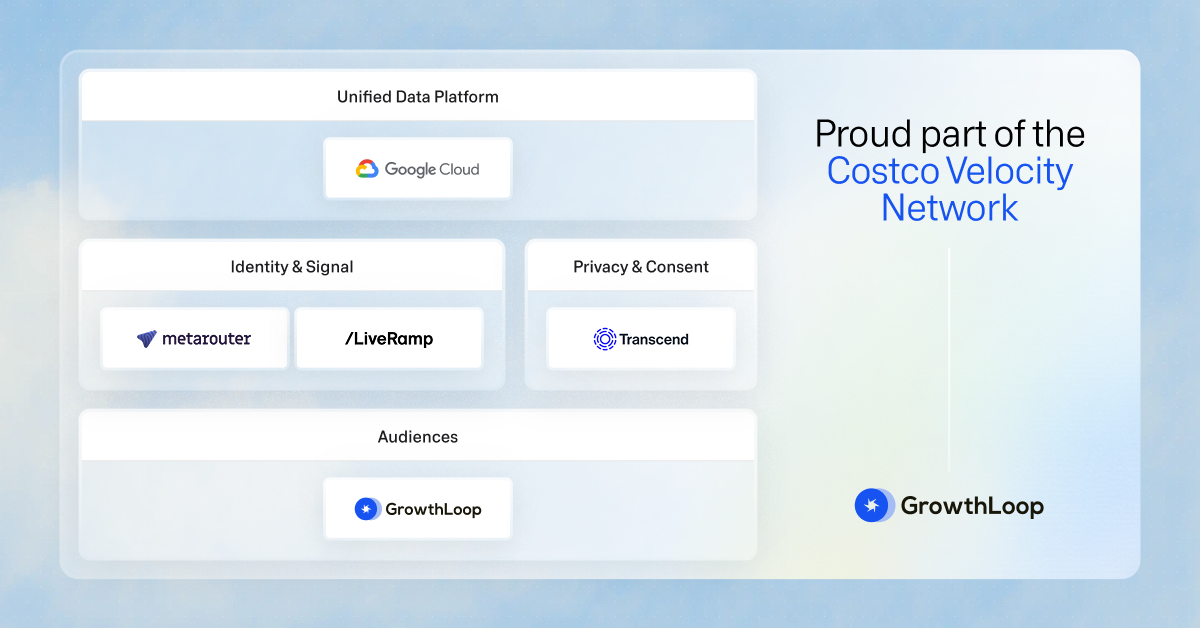
Costco isn’t scaling its RMN with legacy adtech and manual solutions. It’s leaning into a cloud-centric, composable stack.
As part of the Costco Velocity Network, GrowthLoop empowers the retail media team to build audiences directly from the data cloud, enabling faster activation, greater relevance, and better performance — all while maintaining privacy and governance standards.
The result? Exceptional value and experience for Costco members and better ROI for brand advertisers.
Learn why the GrowthLoop Composable Commerce Media solution was the right choice for Costco’s Velocity Network.
Agents everywhere except the register
Most of the industry's agentic work is aimed at checkout, but Riskified's November survey found US shoppers are nearly twice as likely to have used AI to handle a return or refund as to have completed a purchase directly through AI. Nearly half expect the AI platform, rather than the retailer, to issue the refund when an agent buys the wrong thing. Holiday returns run well into January, so that expectation is about to be tested at volume.
Accenture's "Talk to My AI Agent" report, part of its 2026 Consumer Pulse research, shows where that line sits.
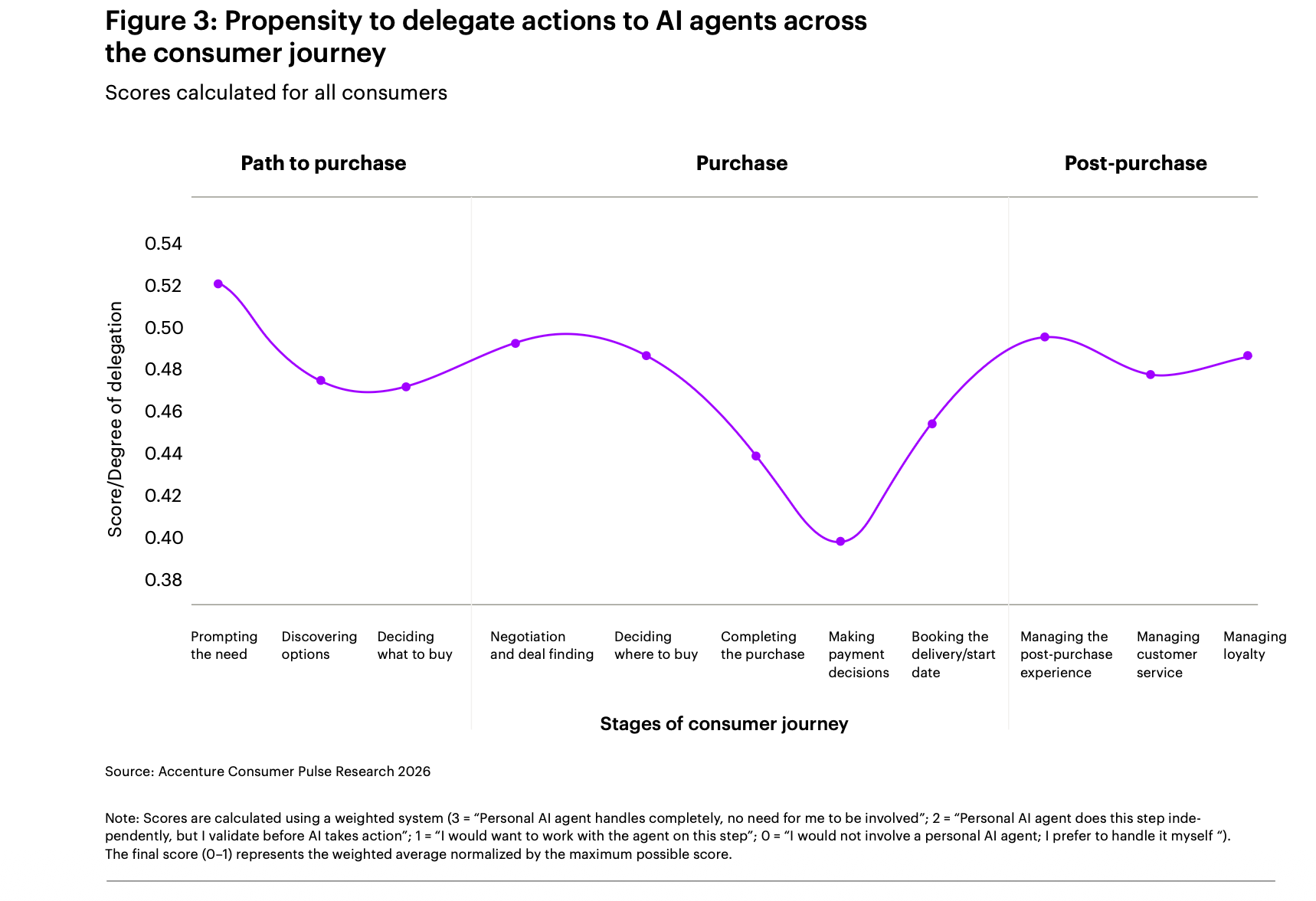
It scored how willing consumers are to hand each step of the shopping journey to an AI agent. Willingness is highest at the start (working out what you need) and stays high after the purchase (managing the post-purchase experience). It bottoms out at making payment decisions. Shoppers will let an agent find the options and chase the refund, and they want to be the one who pays.
Pinterest brings visually native AI shopping to the masses
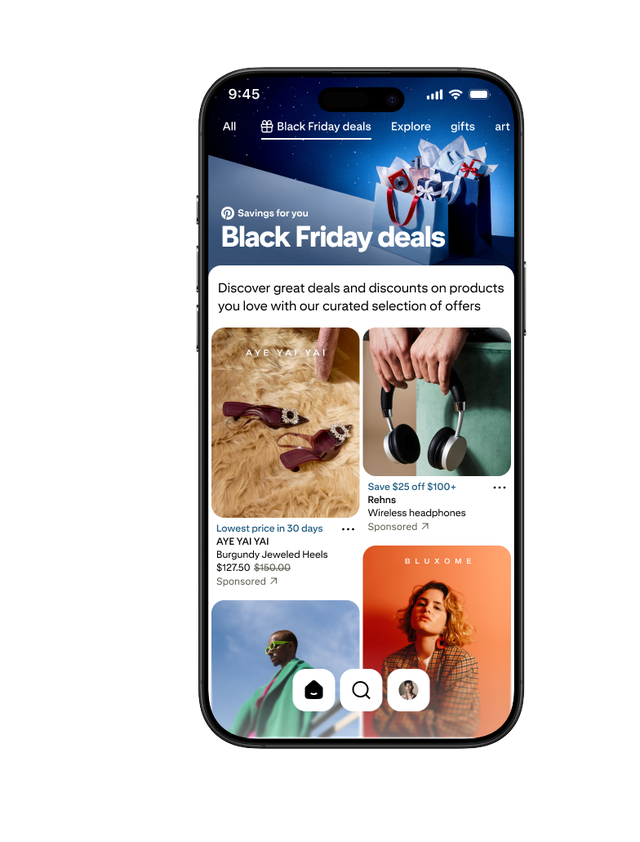
I've heard plenty of skepticism about Pinterest's role in AI shopping. But the recently released Pinterest Intelligence features look thoughtful to me, because they're built for the part of gift shopping that text-based chatbots render in an uninspiring format.
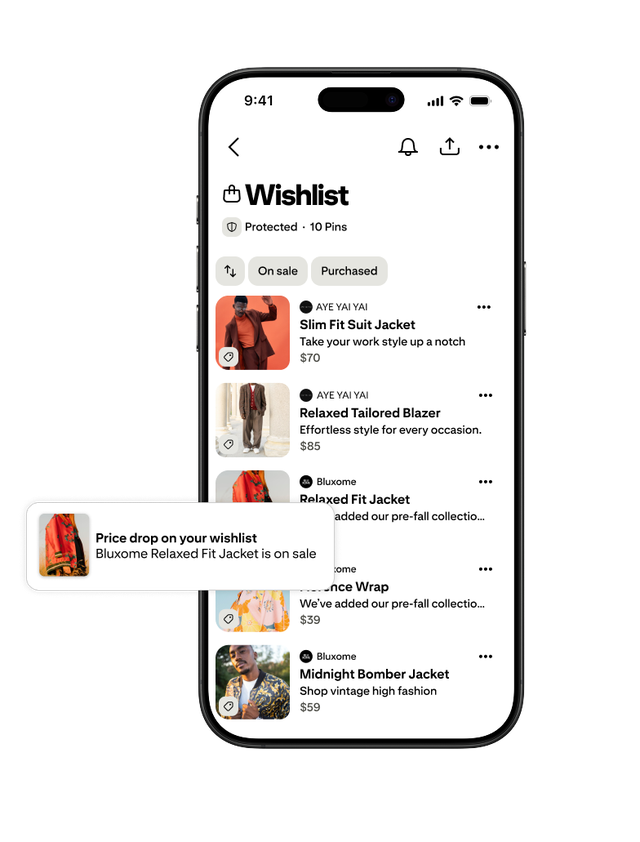
These features demonstrate a more visual-native AI experience that is suited to the casual browser. I love the idea of deal alerts on my wishlists, rather than saying RIP to my inbox for signing up for a dozen brand email lists.
Shoppers can see similar products side by side, with information like price, availability and reviews, making it easier to choose the right gift before they buy.
Pinterest isn't trying to bypass the merchant, they are aggregating inspiration, lists, and deal tracking in a visual interface, then leaving the where-to-buy to the consumer.
Where retail media fits
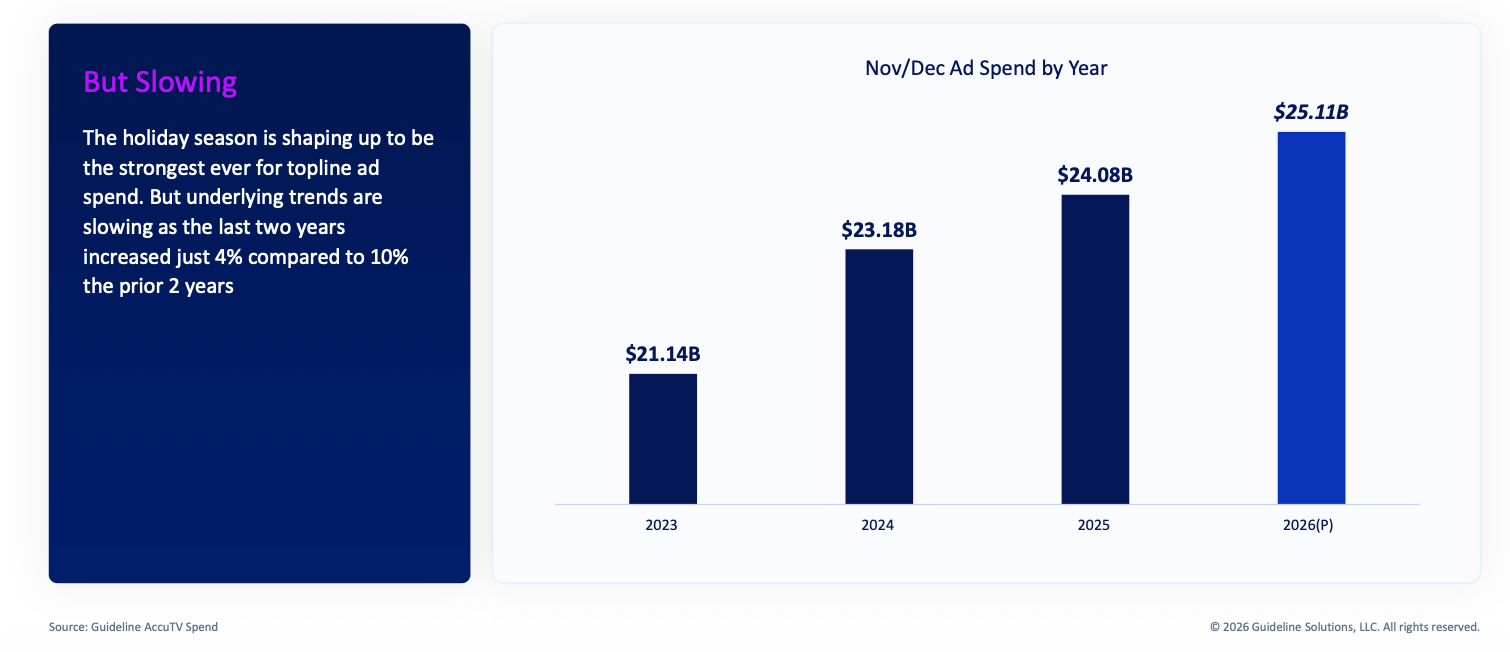
Guideline, an ad intelligence firm that tracks spend through agency billing data, projects November–December ad spend will reach a record $25.11 billion, up from $24.08 billion last year. That's a record in dollars, but growth has slowed to about 4% a year over the last two years, down from about 10% in the two years before.
The default holiday plan sends a big share of that budget to sponsored products, the ad sitting right before the transaction. That ad depends on the shopper being on the retailer's site at the moment of purchase. This year, more of them plan to be standing in an aisle.
The National Retail Federation's holiday survey found 53% of shoppers plan to buy online this year. Online is still the most popular destination, but that is the lowest share since 2015.
I've argued before that in-store retail media is the part of this business AI can't route around. A store-heavy Black Friday also puts the rest of retail media's job back in view: building awareness in the weeks before, and winning consideration at the shelf on the day.
What's next
I think we'll be spotting some entirely new shopper behavior: shoppers asking an agent to build their wish list, then driving to the mall to buy it on Black Friday. Then, they'll ask the agent to handle the return in January.
Later this week I'll also be sharing some more projections over at my column for The Drum, so stay tuned there.
In other news
When I launched the new Adgentic Podcast, Debra Aho Williamson was top of my list to interview. Why? She's seen it all before.
Debbie was a media analyst at eMarketer at the dawn of social media, and a lot of things she's hearing and seeing are eerily familiar:
1️⃣ Companies building their own AI assistants > Companies building their own social media networks (!?)
2️⃣ Brands percieve AI ads to be like search > Brands percieve social ads to be like search
3️⃣ Early ad units are unobtrusive and performance frankly underwhelming > samesies
History doesn't repeat itself exactly, but it rhymes. And Debbie's recent research with WARC also lays out side-by-side how the search, social, and retail ad ecosystems evolved, and what those patterns tell us about where AI ads are headed. Read the interview | Watch on YouTube